politics
Politics does not dictate our collective cultural mindset as much as it simply reflects it; We've got to look in the mirror sometimes, and we've got one.
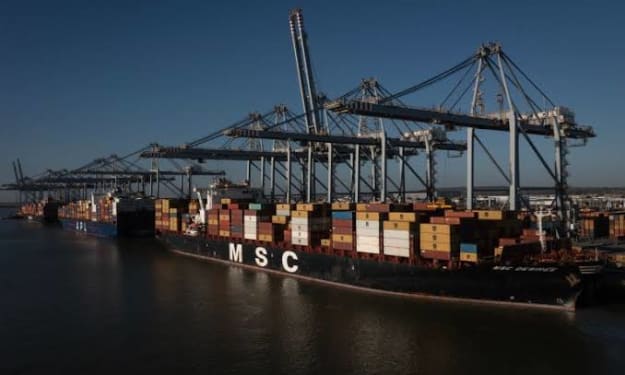
Shipping Giant MSC Facilitates Trade From Israeli Settlements Through EU. AI-Generated.
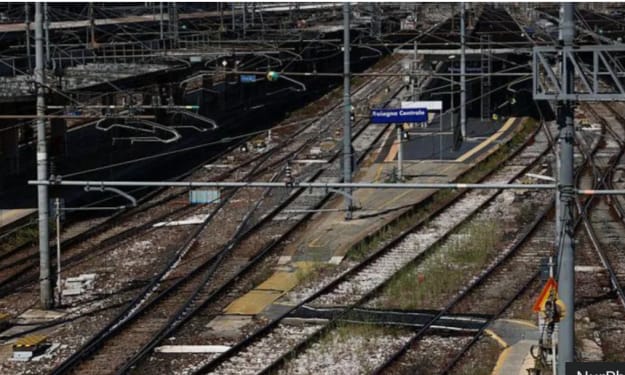
A major international shipping company, Mediterranean Shipping Company (MSC), has come under renewed scrutiny following reports that its logistics network is being used to transport goods originating from Israeli settlements in the occupied West Bank into European Union markets. Human rights groups and trade watchdogs say the practice raises serious legal and ethical concerns, as EU policy does not recognize Israeli settlements as part of Israel and considers them illegal under international law. According to investigative findings shared with European regulators, cargo linked to settlement-based agricultural and industrial producers has been shipped through MSC’s Mediterranean routes and distributed via ports in Italy, Spain, and the Netherlands. The shipments allegedly entered the EU supply chain without clear labeling of their true origin, making it difficult for customs officials and consumers to distinguish settlement products from those produced within Israel’s internationally recognized borders. Legal and Political Sensitivities The European Union has long maintained that products from Israeli settlements must be labeled differently from those made in Israel. In a 2019 ruling, the European Court of Justice required settlement goods to be clearly identified so that consumers could make informed purchasing decisions. However, campaigners argue that shipping companies play a critical role in enabling settlement trade by providing transport services that obscure the origin of goods. “Without global shipping firms, these products could not reach European markets at this scale,” said Marie Keller, a spokesperson for a Brussels-based trade ethics organization. “This is not just a commercial issue. It has direct political and legal consequences.” MSC has not been accused of violating EU sanctions, but critics say its involvement demonstrates gaps in enforcement and oversight within international supply chains. Company Response In a brief statement, MSC said it complies with all applicable international and local regulations and does not knowingly transport prohibited goods. “MSC operates as a neutral carrier and does not determine the origin of the cargo beyond the documentation provided by exporters and authorities,” the company said. “We adhere strictly to customs and trade laws in all jurisdictions in which we operate.” The company also stressed that responsibility for labeling rests with exporters and importers, not with shipping firms. Despite this, activists argue that large logistics providers have a responsibility to conduct due diligence on the origin of goods, especially in conflict zones where trade may contribute to violations of international law. Pressure From Rights Groups Several European human rights organizations have urged EU governments to investigate whether shipping routes from Israeli ports indirectly serve settlement producers. They claim that some settlement companies use Israeli-based intermediaries to export goods, allowing them to bypass labeling requirements. “These are not isolated cases,” said Omar Haddad, a researcher specializing in supply chain transparency. “There is a systemic problem where settlement goods are integrated into Israel’s export system and then shipped worldwide.” Advocacy groups have called for stricter customs checks and for shipping firms to publish more transparent data about their cargo origins. Diplomatic Impact The issue comes amid growing tensions between European governments and Israel over settlement expansion. Several EU member states have reaffirmed their opposition to settlement activity and expressed concern that commercial ties may indirectly support it. A senior EU official, speaking on condition of anonymity, said Brussels was reviewing trade compliance mechanisms. “We expect companies operating within the EU to respect both the letter and the spirit of European law,” the official said. “This includes ensuring that goods from disputed territories are not misrepresented.” Broader Trade Implications The controversy highlights the complexity of modern global trade, where goods often pass through multiple countries and intermediaries before reaching consumers. Experts say this makes enforcement of ethical trade policies difficult, especially when shipping companies handle millions of containers each year. “Supply chains are opaque by design,” said Dr. Elena Rossi, an international trade analyst in Milan. “Unless there is mandatory disclosure and digital tracking, it is extremely hard to verify where products truly come from.” The European Commission is reportedly considering new measures that would require greater transparency from logistics companies and importers, particularly for goods originating in conflict-affected regions. Looking Ahead For now, MSC continues to operate its Mediterranean routes as usual, while pressure mounts from activists and lawmakers for greater accountability. The debate underscores a broader question about the role of multinational corporations in politically sensitive trade and whether neutrality is possible in deeply contested regions. As investigations continue, the case is likely to fuel calls for tighter regulation of shipping firms and renewed scrutiny of EU-Israel trade relations. The outcome could set an important precedent for how international logistics companies are held responsible for the origins of the goods they transport.
By Fiaz Ahmed a day ago in The Swamp
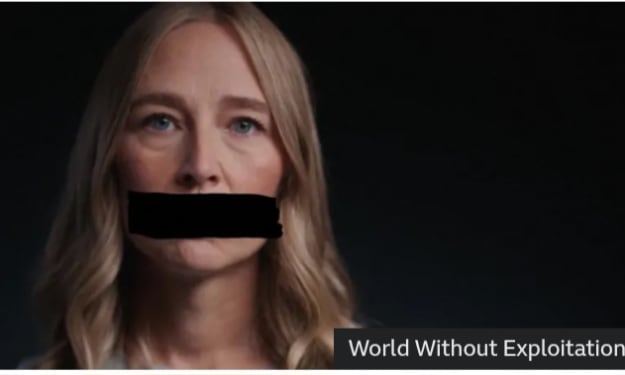
Epstein Survivors Call for Full Release of Files. AI-Generated.
Survivors of abuse linked to Jeffrey Epstein are once again raising their voices, calling for the full and unredacted release of all remaining files connected to the case. Their renewed demand follows the circulation of a video that has reignited public attention and reopened painful questions about accountability, power, and the protection of victims. For survivors, this is not about curiosity or sensationalism—it is about truth, justice, and the right to be heard.
By Ayesha Lasharia day ago in The Swamp
Morocco and Dozens of African Nations Face Major U.S. Travel Setback as Immigrant Visa Processing is Frozen
The United States government has recently made a surprising and impactful decision: halting immigrant visa processing for nationals from over 26 African countries, including Morocco, Nigeria, Egypt, Ghana, Algeria, and Senegal. This policy, which took effect in February 2026, is part of a broader effort to ensure economic stability and reassess visa applicants’ ability to financially support themselves in the U.S. While non-immigrant visas like tourist or student visas are not directly affected, this move has caused widespread uncertainty among families, professionals, and students hoping to start a new chapter in the United States.
By Ayesha Lasharia day ago in The Swamp
Morocco and Dozens of African Nations Face Major U.S. Travel Setback as Immigrant Visa Processing is Frozen. AI-Generated.
The United States government has recently made a surprising and impactful decision: halting immigrant visa processing for nationals from over 26 African countries, including Morocco, Nigeria, Egypt, Ghana, Algeria, and Senegal. This policy, which took effect in February 2026, is part of a broader effort to ensure economic stability and reassess visa applicants’ ability to financially support themselves in the U.S. While non-immigrant visas like tourist or student visas are not directly affected, this move has caused widespread uncertainty among families, professionals, and students hoping to start a new chapter in the United States.
By Ayesha Lasharia day ago in The Swamp
Morocco Joins Nigeria, Egypt, Ghana, Algeria, Senegal, and Others in Facing a Travel Setback to the US as the Government Cracks Down on Economic Stability by Freezing Visa Processing for Nationals of Over Twenty-Six African Countries Starting This Month. AI-Generated.
In a move that has sparked concern across the African continent, the United States government has announced a temporary freeze on visa processing for nationals of more than twenty-six African countries, including Morocco, Nigeria, Egypt, Ghana, Algeria, and Senegal. Beginning this month, applicants from these nations are facing new delays and uncertainty as U.S. authorities tighten immigration controls in response to what officials describe as concerns over economic stability and immigration compliance.
By Sajida Sikandara day ago in The Swamp
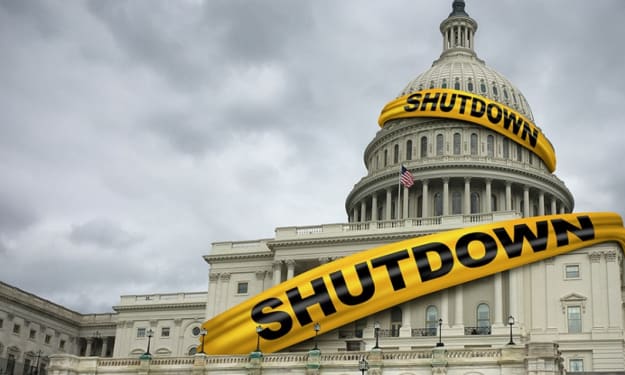
Government Shutdown DHS Funding: What Happens When Safety Is at Risk
A government shutdown is not just a headline. It is a quiet disruption that reaches into homes, airports, borders, and paychecks. When the words government shutdown DHS funding appear together, they signal something more personal than politics. They point to uncertainty for workers who protect borders, respond to disasters, and keep transportation moving. For many Americans, these debates feel distant until flights slow, security lines stretch, or emergency services strain. This article explores what government shutdown DHS funding really means, why it keeps happening, and how it affects real people in ways that are often overlooked.
By Muqadas khana day ago in The Swamp
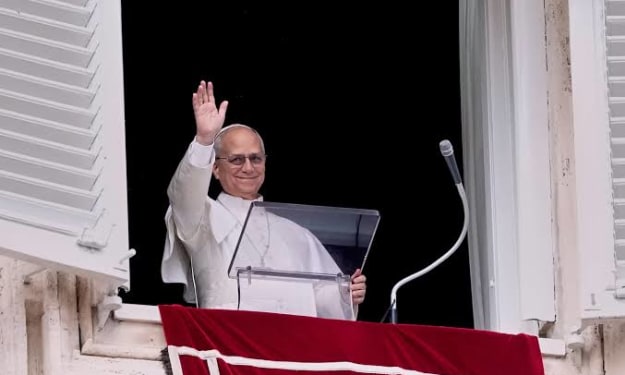
Vatican Announces Pope Leo Will Not Visit the United States This Year. AI-Generated.
The Vatican has confirmed that Pope Leo will not make a planned visit to the United States this year, citing scheduling constraints and health considerations as the pontiff continues to focus on domestic church priorities and diplomatic missions closer to Rome. The announcement, made through an official statement from the Holy See Press Office, has prompted disappointment among American Catholics who had hoped for the Pope’s first pastoral trip to the U.S. since his election. Vatican spokesperson Matteo Bruni said the decision was reached after careful review of the Pope’s international travel calendar. “Given the demanding nature of the Holy Father’s pastoral commitments in 2026 and the need to prioritize regional visits and internal church affairs, a journey to the United States will not take place this year,” Bruni said. The Vatican emphasized that the decision does not reflect any diplomatic tension between Washington and the Holy See but rather practical and pastoral considerations. High Expectations for a U.S. Visit Speculation about a U.S. visit had grown over recent months following invitations from American bishops and senior political figures. The Catholic Church in the United States, which counts more than 70 million members, had hoped to host Pope Leo for major events, including youth gatherings and interfaith meetings. Several dioceses had begun preliminary planning for possible large-scale Masses and public appearances, particularly in cities such as New York, Washington, and Los Angeles. Church leaders said they respected the Vatican’s decision but expressed hope that a visit could take place in the near future. Cardinal Timothy Dolan of New York said in a statement that American Catholics “remain eager to welcome the Holy Father when circumstances allow,” adding that the Pope’s message of unity and peace would be warmly received. Health and Travel Demands Although the Vatican has not disclosed specific medical concerns, officials acknowledged that Pope Leo has faced a demanding schedule since taking office. In recent months, he has undertaken trips to Latin America, Eastern Europe, and parts of Africa, focusing on conflict resolution, humanitarian issues, and strengthening ties with developing nations. Sources within the Vatican said advisers urged caution regarding long-haul travel, particularly to destinations that would require multiple large public events and extensive security arrangements. “International trips, especially to countries as large as the United States, require enormous physical and logistical effort,” said one Vatican official familiar with the planning process. “The Pope wants to conserve his strength for regions where his presence is most urgently needed.” Diplomatic Implications The absence of a U.S. visit this year also has diplomatic significance. Traditionally, papal visits to the United States include meetings with the president and appearances before Congress or at the United Nations, offering an opportunity for the pontiff to address global issues such as climate change, migration, and nuclear disarmament. Analysts noted that Pope Leo has so far focused his diplomacy on regions affected by war and economic instability, reflecting his emphasis on what he has called a “Church of the periphery.” “Not going to the U.S. this year fits his pattern of prioritizing countries that feel forgotten or marginalized,” said Lucia Ferrante, a Vatican affairs expert based in Rome. “It is a symbolic choice as much as a practical one.” Reaction from U.S. Catholics The announcement was met with mixed reactions among American Catholics. Some expressed disappointment, while others said they understood the Pope’s need to limit travel. “I was hoping to see him in person,” said Maria Sanchez, a parishioner in Texas. “But I respect his decision and pray for his health.” Catholic advocacy groups also pointed out that the Pope remains connected to U.S. faithful through regular messages and virtual addresses. In recent months, he has sent letters to American bishops addressing issues such as gun violence, racial justice, and the role of young people in the Church. Future Possibilities The Vatican made clear that the decision does not rule out a U.S. visit in 2027 or beyond. Officials said discussions with American church leaders would continue and that a future visit remains “very much desired.” In the meantime, Pope Leo is expected to travel later this year to several European and Middle Eastern countries, including a possible visit to Lebanon and Greece, as well as participation in major Vatican events marking the Church’s jubilee celebrations. As the Catholic world adjusts to the Pope’s evolving priorities, the message from Rome remains one of patience and continuity. “The Holy Father carries the United States in his prayers,” Bruni said. “When the time is right, he looks forward to visiting and strengthening the bonds of faith with the American people.” For now, U.S. Catholics will have to wait, watching from afar as Pope Leo continues to shape his global mission from Rome and beyond.
By Fiaz Ahmed a day ago in The Swamp