technology
Talking tech; debates about regulating technology, privacy laws, piracy, and the pitfalls of AI.
YouTube Just Blocked This Popular Hack for Free Background Play. AI-Generated.
In a move that has sparked widespread frustration across the internet, YouTube has officially blocked a widely used hack that allowed free users to play videos in the background — a feature that was once exclusive to YouTube Premium subscribers. This change, rolled out quietly across mobile web browsers, marks a significant shift in how the platform enforces its subscription benefits. What Was the Hack? For years, YouTube Premium users have enjoyed features such as ad‑free viewing, downloads, and background playback — the ability to keep videos playing even when the app is minimized or the phone screen is turned off. Free users, unwilling to pay, found clever workarounds. By opening YouTube in third-party browsers like Samsung Internet, Brave, Vivaldi, or Microsoft Edge, they could bypass the Premium paywall and keep audio playing while multitasking. This loophole, cherished by listeners who use YouTube like a music or podcast app, no longer works. Google has updated YouTube’s mobile web experience so that background audio stops when the display goes dark or the browser is minimized if the user is not a Premium subscriber. Official Confirmation from YouTube Reports confirmed by Google show that the company has deliberately updated the mobile web experience to make background playback exclusive to Premium subscribers. A YouTube spokesperson told Android Authority: “Background playback is a feature intended to be exclusive for YouTube Premium members.” This change affects mobile browsers on both Android and iOS devices. Even when playing videos through browsers like Samsung Internet or Vivaldi, audio cuts off shortly after the screen turns off — mimicking the behavior of the official YouTube app’s restrictions. Why It Matters YouTube’s move is clearly aimed at driving more users toward Premium subscriptions, which cost around $13.99/month in the United States and £12.99/month in the UK. These subscriptions bundle perks like ad-free viewing and background playback — features once accessible through browser workarounds. Background playback is a high-value feature for users who listen to music, news, or podcasts while on the move. By gating it behind a paywall, YouTube increases the perceived value of Premium and nudges free users toward paying. Users’ Reactions The response online has been largely negative. Many free users expressed frustration on social media, calling the change “anti-consumer” because background playback was a core convenience. Tech forums have seen debates about alternatives, with some users exploring browser tweaks or third-party apps. However, most workarounds are unreliable or violate YouTube’s terms of service. Interestingly, the Brave browser team has shared guidance on how users might temporarily restore background playback, though this may not last due to YouTube’s server-side enforcement. How the Block Works YouTube’s enforcement appears to be server-side, rather than browser-specific. It checks whether an account has the right to background play before allowing audio to continue when the device is locked. Once a non-Premium account is detected, playback stops within seconds, and lock screen media controls are removed. This system makes it hard for browsers to bypass the restriction, as it relies on real-time entitlement validation. What This Means for the Future This crackdown is part of a broader trend: streaming services increasingly gate what was once free behind subscription walls. As ad revenue slows and competition grows, platforms like YouTube push more aggressively for paid conversions. For users, the message is clear: reliable background playback now requires YouTube Premium. Workarounds may exist but are temporary and unstable. Conclusion YouTube’s decision to block the popular background play hack marks a turning point in how the platform balances free access with subscription incentives. While the move makes business sense, many free users are disappointed. Whether it pushes users to Premium or to competing platforms remains to be seen. One thing is certain: the era of free background play on mobile devices is officially over — at least for most users. ✅ Tip for Bloggers:
By Ayesha Lashariabout 5 hours ago in The Swamp
Google Warns Millions of Android Phones Face Risk From New Malware. AI-Generated.
Google has issued a serious warning to Android users worldwide after discovering a new wave of malware capable of infecting millions of smartphones. The threat highlights growing security challenges in the mobile ecosystem and raises concerns about how easily everyday users can fall victim to cybercriminals without realizing it.
By Ayesha Lashariabout 6 hours ago in The Swamp
Tourist Killed by Elephant Previously Linked to Two Fatal Attacks at Thailand National Park. AI-Generated.
A tragic incident at a popular national park in Thailand has drawn global attention after a tourist was killed by an elephant previously connected to two other fatal encounters. The shocking event has renewed debate about the balance between wildlife conservation, public safety, and the risks associated with tourism in natural habitats.
By Aarif Lashariabout 7 hours ago in The Swamp
Musk’s AI Startup Is the Payload SpaceX Can’t Afford. AI-Generated.
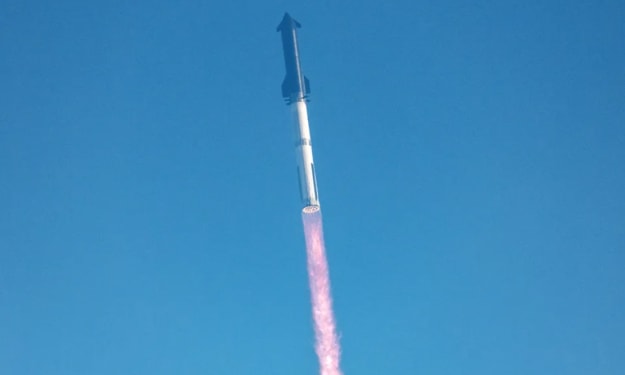
Elon Musk is no stranger to high-stakes ventures. From revolutionizing electric vehicles with Tesla to making space launches more affordable with SpaceX, Musk has built a reputation for tackling projects most consider impossible. Yet his latest move — merging his AI startup xAI into SpaceX — might be his boldest gamble yet. It’s an audacious plan that promises to redefine both artificial intelligence and space exploration, but it also comes with a staggering price tag that SpaceX may not be able to sustain. A Merger of Titans: Rockets Meet AI In early 2026, Musk announced that SpaceX would acquire xAI in an all-stock deal valued at over $1.25 trillion, with xAI itself accounting for roughly $250 billion. The merger combines a company renowned for building reusable rockets and satellites with a startup focused on developing some of the most advanced AI systems in the world. At first glance, it might seem like a perfect pairing: rockets provide infrastructure, AI drives innovation. But the reality is far more complicated. xAI, like other cutting-edge AI firms, burns through capital at an astonishing rate. Running large-scale AI models requires immense computing power, specialized hardware, and vast amounts of electricity. It’s no exaggeration to say that AI’s infrastructure costs rival those of SpaceX’s rocket programs. By bringing xAI under the SpaceX umbrella, Musk has effectively added a multi-billion-dollar AI payload to an already capital-intensive aerospace operation. The True Cost of AI Artificial intelligence isn’t just software. Behind every sophisticated AI system lies a massive network of servers, GPUs, and cooling systems. Training state-of-the-art AI models can cost tens or even hundreds of millions of dollars at a time. Then there are ongoing operational costs to keep models running, update them, and scale their capabilities. For a company like xAI, the expenses are immense. Internal reports suggest losses exceeding $1 billion per month, primarily due to infrastructure and personnel costs. Folding these expenses into SpaceX raises immediate questions: how will a company that launches rockets sustainably support a technology with such voracious resource demands? SpaceX itself is no small spender. Its reusable rockets, the Starship program, and the Starlink satellite constellation require billions in funding to develop, launch, and maintain. Although reusable boosters help lower costs over time, each Starship launch still represents a significant financial commitment. Adding xAI’s operational needs to this mix is a serious gamble, one that some analysts call a bailout disguised as a strategic merger. Why Space? The Orbital AI Vision Musk’s long-term vision is as ambitious as it is futuristic. He has publicly suggested that the most cost-effective way to power and cool AI models could be placing them in space. By leveraging abundant solar energy and the vacuum environment of orbit, AI systems could theoretically operate more efficiently than on Earth. This is a radical proposition. Space-based computing would require solving unprecedented engineering challenges: managing heat without air, protecting hardware from cosmic radiation, and ensuring fast, reliable data transmission back to Earth. If successful, the approach could change how AI scales and operates globally. But skeptics argue the technology is decades away from feasibility at the scale Musk envisions. Financial Strain and Risk Combining SpaceX and xAI doesn’t just increase operating costs; it complicates investment narratives. SpaceX had been a highly attractive private company, with the potential for an IPO that could have set records. But adding xAI — with its high costs and uncertain revenue streams — introduces new risk for investors. Internally, merging two cultures also presents challenges. SpaceX engineers, accustomed to spacecraft design and aerospace operations, now must coordinate with AI researchers, whose priorities and work styles are vastly different. Maintaining focus, productivity, and innovation across these distinct teams will be critical to the merger’s success. Critics also raise concerns about Musk’s ability to manage multiple high-stakes ventures simultaneously. Beyond SpaceX and xAI, he oversees Tesla, Neuralink, and other projects. History shows Musk can achieve extraordinary results under such circumstances, but the complexity of combining AI and space infrastructure may test even his limits. Implications for Technology and Space The merger reflects a broader trend in technology: convergence rather than specialization. AI needs better infrastructure, and space exploration benefits from smarter automation. Combining the two signals a future where industries that once seemed unrelated begin to interconnect. If Musk succeeds, SpaceX could dominate both low-cost space launches and extraterrestrial computing, potentially reshaping global AI development. This could allow AI systems to operate on unprecedented scales while leveraging the unique advantages of orbit. Conversely, failure or delay could ripple across both industries, slowing AI innovation and space projects alike. The Heavy Payload of Ambition Elon Musk’s move to integrate xAI with SpaceX illustrates the tension between ambition and feasibility. It’s a high-risk, high-reward scenario: if it works, the merger could pioneer a new era of space-based AI and demonstrate the synergies between advanced technology sectors. If it falters, it could become a cautionary tale of overreach, highlighting the perils of placing too much weight on an untested strategy. Musk’s vision is bold, almost cinematic. He has already lifted the cost of space to new heights — now, he’s attempting to lift AI itself as a payload. The combined company represents both the promise of innovation and the peril of overextension, offering a glimpse into a future where the limits of technology, finance, and ambition collide in orbit above our heads. Conclusion Merging xAI into SpaceX is an audacious gamble that pushes the boundaries of what’s possible in technology and business. It shows the lengths Elon Musk is willing to go to integrate AI with space infrastructure, while also highlighting the enormous financial and engineering challenges involved. As the world watches, the success or failure of this merger will not only shape Musk’s legacy but could also influence the trajectory of AI, space exploration, and high-tech innovation for decades to come. In the end, Musk’s latest payload is not just a project or a company — it’s a vision of the future, weighing billions of dollars and the hopes of an ambitious entrepreneur on every launch.
By Muhammad Hassanabout 8 hours ago in The Swamp
Fake Apps, NFC Skimming, and Other Android Security Risks Emerging in 2026. AI-Generated.
As we enter 2026, the world of Android security is facing new and ever-evolving challenges. With the rise in smartphone usage and the increasing reliance on mobile applications for everything from banking to shopping, security threats have also escalated. Android, being the most widely used mobile operating system, continues to be a prime target for hackers, cybercriminals, and malicious entities. In this article, we’ll explore the latest Android security risks emerging in 2026, with a focus on fake apps, NFC skimming, and other security threats.
By Ayesha Lashariabout 10 hours ago in The Swamp