white house
The epicenter of DC and by extension, the country: The White House is US government incarnate, it's hard to discern what goes on behind those walls...
🇺🇸🇺🇦 Trump’s Controversial Ukraine Plan: Division, Diplomacy, and Global Reactions
🕰️ Background: How We Got Here In recent weeks, reports have emerged claiming that Donald Trump is pushing a radical new diplomatic strategy: a proposal to divide Ukraine into zones of influence. According to leaked briefings and confidential sources, this “Trump Plan” allegedly gives major powers — particularly Russia — significant control over parts of Ukraine, while leaving the remainder as an autonomous or Western-aligned region.
By Filmon Ke Raaz | Movie Mysteries Explained2 months ago in The Swamp
**🇸🇦💴 Is Saudi Arabia Really Planning to Sell Oil in Chinese Yuan? Is the Petro-Dollar System Finally Crumbling?**
📌 Introduction: A Question the World is Afraid to Ask What happens if the world’s largest oil exporter stops using the U.S. dollar?
By Filmon Ke Raaz | Movie Mysteries Explained2 months ago in The Swamp
Beyond Captions: Why the White House Lawsuit Affirms ASL Interpreters as Essential Public Access
The current federal court order, which mandates the Trump Administration to immediately reinstate live American Sign Language (ASL) interpreters for its press briefings, has ignited a critical, high-stakes conversation. This legal victory for the Deaf community is a direct challenge to the administration's decision to discontinue the service implemented by the previous White House.
By Tracy Stine3 months ago in The Swamp
🌍 Global Surge in Electricity Prices: A Political Time Bomb Before 2026 Elections
⚡ Introduction: The Price of Power in a Polarized World The world today stands at a volatile intersection of economics and politics — and electricity lies at the heart of it. Over the past three years, global energy markets have witnessed historic fluctuations. The combination of post-pandemic recovery, geopolitical tensions, and supply chain breakdowns has pushed power prices to levels unseen in decades.
By Filmon Ke Raaz | Movie Mysteries Explained3 months ago in The Swamp
Government Shutdown 2025: Senate Reaches a Deal to Reopen the Government
After weeks of tension, uncertainty, and political standoff, the government shutdown 2025 appears to be nearing an end. Following a heated round of negotiations, the U.S. Senate has voted in favor of a bipartisan deal to reopen the federal government, bringing much-needed relief to millions of Americans impacted by the prolonged closure.
By KAMRAN AHMAD3 months ago in The Swamp
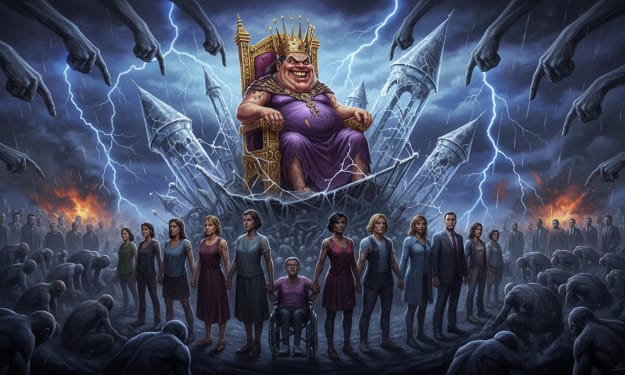
Cruelty isn't a side effect of Trump's policies. It IS the policy.
It seems that Trump’s administration will not rest until the poor die from starvation and disease, after toiling their lives away for slave wages to enrich these stupid, lazy, bloated, evil creatures who congratulate themselves for holding the whip.
By Heather Holmes3 months ago in The Swamp
The Big Change: What's Going on Mali?
Something serious is happening in Mali, but few in the wider world are paying enough attention. The landlocked West African nation is standing at a turning point that could reshape not only its own destiny but perhaps signal something greater happening across the Muslim world. For months now, reports have been emerging that Al-Qaeda’s regional affiliate, known as Jama’at Nusrat al-Islam wal-Muslimin (JNIM), has advanced deep into government-held territories and is cutting off key supply routes, fuel lines, and trade connections leading toward Bamako, the capital. Many analysts are calling it one of the most strategic insurgent moves in recent history. If the government loses control of the major supply lines, Bamako could fall into crisis. If that happens, it would be the first time in modern history that an Al-Qaeda-aligned force could potentially seize control of an entire capital city; something the world has never witnessed. The political backdrop in Mali is already fragile. Since the 2020 and 2021 coups, the country has been ruled by a military government under Colonel Assimi Goïta, who has postponed elections several times, citing security reasons. Some argue that this military authority has failed to unite the people or provide lasting peace. Instead, the void of governance and international isolation have opened doors for militant expansion. The Malian people, many of whom are Muslim and deeply tied to their traditions, find themselves between two realities: the demand for peace and the rising power of armed groups who claim to defend Islamic identity. The economic situation only deepens the despair. Mali depends heavily on imported fuel and goods, especially from neighboring countries. As the insurgents block highways and borders, the cost of living is skyrocketing. Power shortages are common. Transport has slowed. Fuel stations are empty. People queue for hours hoping to get just a few liters to keep their vehicles running. And all of this while international organizations warn of a humanitarian disaster. The West watches nervously, but its options are limited. The UN peacekeeping mission withdrew earlier this year after repeated tensions with the junta. France, which once led counter-terror operations in the Sahel, has also left. Mali’s government turned toward Russia and the Wagner mercenary group for support, but those forces cannot control such a vast desert landscape. Now, Mali faces an uncertain future where its capital might soon be surrounded, its economy paralyzed, and its people forced to choose between surrender or survival. Yet beyond the immediate crisis lies a broader question: what does Mali’s story represent for the Muslim world today? Across the globe, we can sense a return — not a violent one in every place, but a reawakening of identity, a spiritual and political shift. In different forms, Muslim societies are rising again after long decades of suppression, colonization, and division. Take Afghanistan. The world witnessed the Taliban return to power after twenty years of war, defying predictions that they would collapse within months. Take Syria, where despite immense suffering, the people’s faith has not died; the country remains a symbol of endurance. Take Bangladesh, where Islamic sentiment is becoming stronger among youth despite modernization pressures. Even in the West, we see surprising symbols of this trend — such as the current Mayor of New York, who is Muslim, standing as a reflection that Islam is no longer limited to certain regions but part of a global civic life. In Mali, what we see might not just be a conflict over land but a deeper historical wave. It may represent a chapter in which Muslim movements seek self-determination after generations of external interference. However, this also raises concerns. If such groups seize power through conflict rather than consensus, they risk repeating the same cycles of violence that have plagued the Muslim world for decades. The challenge, therefore, is not whether Islam rises again — because that rise is visible already — but whether it rises through wisdom, unity, and justice, or through endless struggle and internal division. Looking ahead, analysts believe that if JNIM captures Bamako, it could mark a new era of militant governance that might spread across borders to Niger, Burkina Faso, and beyond. It would be a geopolitical earthquake — the first instance where an Al-Qaeda-linked group would control a national capital. That possibility alarms the West but also forces a reevaluation of the world’s balance of power. The Sahel region is becoming a theater of the 21st-century confrontation: where ideology, resource competition, and survival all intersect. But history doesn’t end there. Every major global change starts in seemingly isolated regions. Some believe that the world is moving closer to a period of intense conflict and spiritual awakening. The chaos in Mali, the wars in the Middle East, the shifting alliances of global powers — all might be leading toward the kind of revelations that scriptures have long described. Some scholars even speculate that the great upheavals of the end times, or the revelation foretold in Islamic traditions, might begin from unexpected lands like Pakistan, where tensions between power, faith, and global politics continue to grow. It may sound prophetic, but history often repeats itself in ways that make prophecy look like foresight. Mali’s story is not just Mali’s story. It’s the echo of a world changing under pressure — a world where the map of power is being rewritten not by superpowers, but by those who refuse to disappear. Whether that leads to peace or greater conflict depends on what kind of leadership emerges next: one that seeks balance, or one that seeks domination. The rise of Islamic consciousness across continents is undeniable. What remains uncertain is whether humanity will learn to harmonize it with justice and knowledge. As Mali stands on the edge of transformation, its struggle becomes a mirror for us all — a reminder that nations fall not only through wars but through forgetting who they are. Perhaps what’s going on in Mali is not just a political crisis but a message — that history’s tide is turning once again.
By Keramatullah Wardak3 months ago in The Swamp
🇺🇸 Generation Z: The New Political Force Reshaping Global Power
Introduction: A New Wave of Political Energy Across continents, the rise of Generation Z — those born between the late 1990s and early 2010s — has sparked a wave of activism, digital organization, and political awareness unlike any before. From climate marches in Europe to democracy protests in Asia and social justice movements in the United States, Gen Z is redefining what it means to participate in politics.
By Filmon Ke Raaz | Movie Mysteries Explained3 months ago in The Swamp
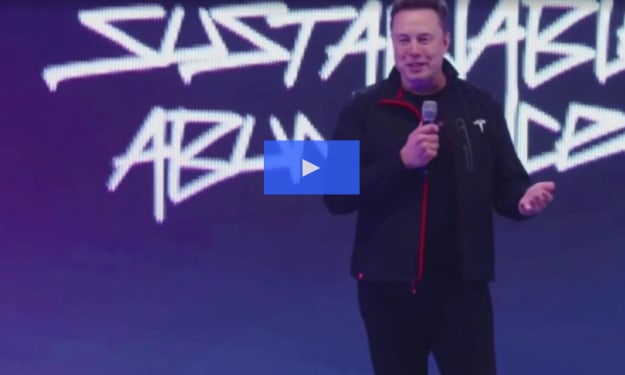
Elon Musk’s Tesla Pay Package Sparks Global Attention
When you think of the world’s most influential business leaders, Elon Musk inevitably tops the list. Known for his bold ideas, futuristic vision, and sometimes controversial statements, Musk has turned Tesla into one of the most valuable and admired companies on the planet. Yet today, it’s not Tesla’s cars or technology that dominate the headlines — it’s Musk’s massive Tesla pay package and the debate surrounding it.
By KAMRAN AHMAD3 months ago in The Swamp
Swing States: The Deciding Power in America’s Elections 🗳️🇺🇸
In every U.S. election, a handful of states capture the country’s attention more than any others. These are the swing states, also known as battleground states — regions where neither Democrats nor Republicans hold a guaranteed majority. Their voters swing between parties from one election to the next, making them the true deciding force behind America’s political direction.
By KAMRAN AHMAD3 months ago in The Swamp