
Unsung Heroes Always Sing
The Legacy of Kenneth McCullum

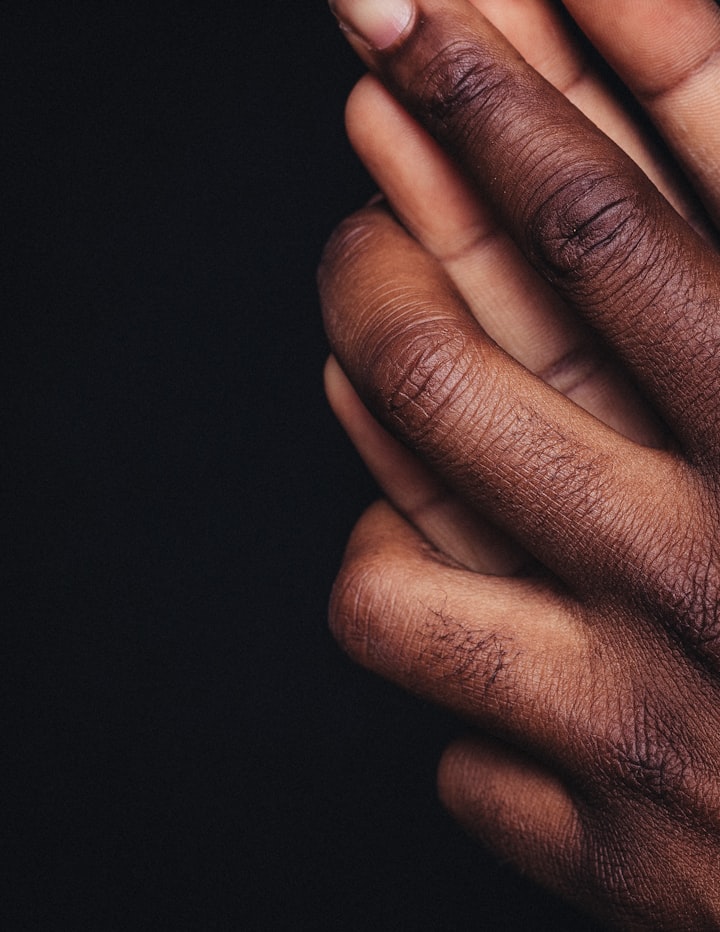
This isn't about a kid who started with a dollar and a dream and struck it rich, however this man has brought us diamonds and gold. This isn't about a photographer who captures breathtaking images of his environment; this man shares beauty by lending his eyes. He doesn't paint fabulous murals but instead hands the paintbrush to those in pain and whispers, "reveal yourself."
He is no scientist but he is engineering a revolution.
With a beautiful balance of humility and swagger he walks among his people. His pristine sneakers stay clean, though he trudges through the mud. He treads lightly, though he carries the heavy burden of his past. He bears witness to the heart-wrenching trauma of the communities of Watts, Los Angeles.
A proud and confident black man sprouted from this neglected garden, he aims only to spread his roots and nourish those around him.
He works for an LA-based non-profit that is aligned with LAPD and the mayor’s office to offer services to those in need. “Gang Reduction and Youth Development'' is his charter and helping the people of Watts is his mission. Yet, this all seems nonconsequential to those fortunate enough to be close to him, to witness his nature.
He has helped countless youth via his innate curiosity.
He has helped countless adults via his natural wisdom.
He has helped countless gang members via his terminal loyalty.
He is a lieutenant in the growing army of hood heroes. Heroes not for the music they make but for the symphonies they witness in the souls of the impoverished. Heroes not for the cars they drive but for the people they stop and pick up along the way. Heroes not for the things they do but for the things they show us that we can all do.
If you stand on the corner of 103rd and Compton and quiet the street-food vendors and knock-off Fendi peddlers, the Obama-phone hucksters and bus-stop preachers, take a deep breath. You will notice out of the infamous LA smog rises the gentle perfume of his work.
I believe his ministry began long before it was his profession and will continue long after he is gone.
From the Nickersons to Imperial, from Jordan Downs to Gonzaque, from the Bounty Hunter Bloods to the Grape Street Crips, nowhere is he unwelcome. No badge need protect him and no OG need vouch for him. He is protected by his past and unknowingly, his future. He has touched brothers, sisters, cousins, uncles and aunties.
If you ever find yourself moving through the infamously violent and secretly beautiful streets of Watts, you might think to yourself, “this isn’t so bad.” But it doesn’t stay peaceful by accident. Dig deeper and you will uncover him and people like him holding it all together. Out of the clamor of gunshots, he offers the quiet of healing. Out of the eruption of revenge, he offers the cool waters of understanding.
You don’t have to go far to find some perspective, especially if you live near LA. You don’t have to go far for inspiration either. He isn’t waiting for your approval and he doesn’t care if you notice. He isn't driven by the need to be validated like the rest of us. In that way, he honors the ones who came before him. He proves that they didn’t endure for nothing.
He chooses to live free. No wonder the unsung heroes of the world are always singing. They sing the songs of free men to the music of their enslaved ancestors.
Oh, and want to know the best part? He is just getting started.
About the Creator
Dillon Brady
an observer compelled to describe
Keep reading
More stories from Dillon Brady and writers in The Swamp and other communities.
Celeste
Black velvet, silky, dark, she moves between the raindrops, not wet but not dry. She maintains a balanced relationship with the shadows. Darkness gives liberally and takes what it needs. She silently pays each transaction, inhaling the void, exhaling pain -- spilling her breath upon those of whom she’s spilled blood, carnal energy vibrating gently through her long, wispy eyelashes. Calm chaos throbs patiently in her fingertips. With snake-like seduction, poisonous provocation, the young warrior stalks her prey unconsciously. The pitch-black ink of her gaze always leaves a fortunate stain. Slicing silence, removing reality, absorbing all, the panther woman smoothly sinks her curved claws into your unassuming soul.
By Dillon Brady5 years ago in Poets
Why Black History Matters in America?
The United States of America is celebrating their 250th anniversary in 2026. I'm proud to be an American and as someone who was born here, I wouldn't imagine myself living anywhere else. This is a country where opportunities are possible. Where anyone can be successful in anything they desire to do. Equality, community, and togetherness are the backbones of what America is and should be about. However, we have an administration who wants to erase and disregard those who have made positive, meaningful impacts in our country, specifically Black figures, such as Martin Luther King, Jr., Rosa Parks, and Maya Angelou. President Trump and his administration have been constantly complaining and fighting against what they call the "Woke agenda". They use this excuse as a distraction from other issues they refuse to address, such as the high cost of living, climate change, and inflation. That equality is dividing America, when in reality, it's bringing us together. Being woke is not tied to a specific political party. No matter where you stand on the political spectrum, you can still care about other people and their plights. Compassion and empathy for others isn't tied to a political party, either. We were taught as children to treat others the way we want to be treated and not judge others because they're different from us. Caring about others isn't a personal attack on your beliefs. It doesn't make you any less of a person. People who are easily offended over African American figures, past or present, or anything related to it, are grasping at straws. Current and future generations need to know who people like Harriet Tubman and Shirley Chisholm were, especially in the classroom. Black History is part of American History. It should be recognized, not hidden or forgotten. Besides, you can't shield children from everything, just because your feelings are easily hurt.
By Mark Wesley Pritchard 5 days ago in The Swamp
No, Billie Eilish, Americans Are Not Thieves on Stolen Land
Billie Eilish, the Grammy-winning American pop star, has recently stirred up controversy with a statement during one of her concerts where she remarked, "Americans are thieves on stolen land." While the singer’s intention may have been to highlight historical injustices, particularly in relation to the treatment of Indigenous peoples in the U.S., the statement is problematic for several reasons. It oversimplifies complex historical realities and misrepresents the modern-day American identity. The comment, though seemingly reflective of growing awareness about issues such as colonialism, exploitation, and displacement, does not fully acknowledge the nuances of U.S. history or the role contemporary Americans play in addressing past wrongs. While historical injustices are undeniable, it’s critical to examine what it means to be an American today and how we approach reconciliation with the land’s original inhabitants. The Historical Context: Colonization and Its Legacy It’s important to acknowledge the historic truths behind Eilish's statement. The United States was, indeed, built on the land that was originally inhabited by Indigenous peoples. European settlers, beginning with the arrival of Columbus in the 15th century, engaged in a systematic campaign to take control of Native American territories. These actions resulted in widespread violence, forced displacement, broken treaties, and genocide. The U.S. government’s policies of the 19th century, such as the forced removal of Native Americans to reservations and the expansionist doctrine of Manifest Destiny, contributed further to the devastation of Indigenous cultures and societies. The land was taken, and many Native communities lost everything — their homes, their land, and in many cases, their lives. This is a painful reality that cannot and should not be overlooked. However, the critical aspect here is that history cannot be reduced to a simple narrative of "thieves on stolen land." While the U.S. government’s actions in the 18th and 19th centuries have left a deep scar, modern Americans live in a vastly different context, one in which the acknowledgement of these wrongs and efforts toward justice and reconciliation are actively being pursued. Evolving America: A Nation in Flux To frame modern Americans as "thieves on stolen land" ignores the complexity of today’s U.S. and the efforts being made by individuals and groups to correct historical wrongs. Since the civil rights movements, the U.S. has undergone significant social and political changes. Laws protecting the rights of marginalized groups, including Native Americans, have been passed, and federal recognition of Indigenous tribes and nations has been a central part of the evolving American political landscape. In recent decades, Indigenous rights activists, politicians, and organizations have worked tirelessly to reclaim land, preserve culture, and revitalize Native languages. In addition to this, many non-Indigenous Americans support these movements and engage in ongoing conversations about the reparative steps that need to be taken. For instance, land acknowledgments — formal statements recognizing the traditional owners of land — have become a significant part of educational, cultural, and governmental institutions, including those that host concerts like Eilish’s. The recognition of past mistakes does not make contemporary Americans complicit in them. Many modern-day Americans are involved in reparative work, fighting for the rights of Indigenous peoples and acknowledging the painful legacy of colonialism. The U.S. is a country that has been shaped by numerous waves of immigrants, each of whom has their own unique history and connection to the land. This multi-ethnic and multi-racial identity cannot be erased by blanket generalizations, nor should it be. The Importance of Nuanced Dialogue While Billie Eilish’s comment may have been well-intentioned, it oversimplifies the narrative of American history and identity. Art, music, and performance can be a powerful means of raising awareness about social and political issues. Eilish has used her platform to speak out on climate change, mental health, and various social justice causes, which are undoubtedly important. However, statements like "Americans are thieves on stolen land" undermine the importance of nuanced discourse about the complexities of historical injustices and modern-day efforts for justice and reparations. Rather than adopting a defeatist view that casts contemporary Americans as inherently guilty of crimes they did not commit, it would be more constructive to focus on the path forward — on the steps that individuals, communities, and governments can take to redress past wrongs. For example, supporting Indigenous-led environmental initiatives, promoting the return of Native lands, and increasing public awareness of Indigenous cultures are all constructive ways to engage with this issue. Furthermore, such broad statements can alienate those who are already working toward a better future. The reality is that in a diverse country like the U.S., many people are committed to addressing the wrongs of the past and righting the injustices faced by Indigenous peoples. This commitment should not be dismissed. The Role of Native Voices in the Conversation It is essential to listen to and amplify the voices of Indigenous communities themselves in discussions about the land and historical injustices. The very communities that have been displaced for centuries are the ones that should lead the conversation on how the U.S. can move forward. It is their experiences, perspectives, and wishes that must guide the way the nation reconciles with its past. Acknowledging the pain of colonization and displacement is vital, but it must be done through meaningful engagement with Indigenous people rather than making blanket statements about all Americans. Native leaders such as Deb Haaland, the first Native American cabinet secretary in U.S. history, and Russell Means, the late activist and actor, have done remarkable work to bring awareness to the historical and ongoing challenges faced by Indigenous communities. Their leadership demonstrates that the focus should be on creating tangible change and supporting the right of Indigenous people to determine their own future. Conclusion: Beyond the Blanket Statements Billie Eilish’s comment may have been intended to spark conversation about the treatment of Indigenous peoples, but its oversimplification of a complex issue is problematic. While it is essential to recognize and confront the historical injustices committed by colonial powers, contemporary America is not a monolith. Rather than casting all Americans as guilty of past wrongs, we should focus on recognizing the efforts being made to correct these injustices and building a future where Indigenous voices are heard and respected. In the end, the conversation should not be about guilt, but about collaboration, empathy, and a commitment to justice. By focusing on the positive steps being taken to address historical wrongs, we can move towards a more inclusive future where all people, regardless of their background, can share in the prosperity and peace of the land.
By Fiaz Ahmed a day ago in The Swamp
Living in SillyVille, U.S.A.
U.S. President Donald Trump speaks at a ceremony held to dedicate a 4-mile stretch of road from West Palm Beach Airport to his Mar-a-Lago estate to be named as 'President Donald J. Trump Boulevard', at the Mar-a-Lago estate in Palm Beach, Florida, U.S., January 16, 2026. REUTERS/Kevin Lamarque.
By Novel Allen6 days ago in Poets



Comments
There are no comments for this story
Be the first to respond and start the conversation.