
Australia Grid Energy Storage Market to Surge Nearly Tenfold by 2033
Driven by renewable integration and grid resilience efforts, Australia’s grid energy storage segment is poised for rapid expansion with strong investor and policy support.

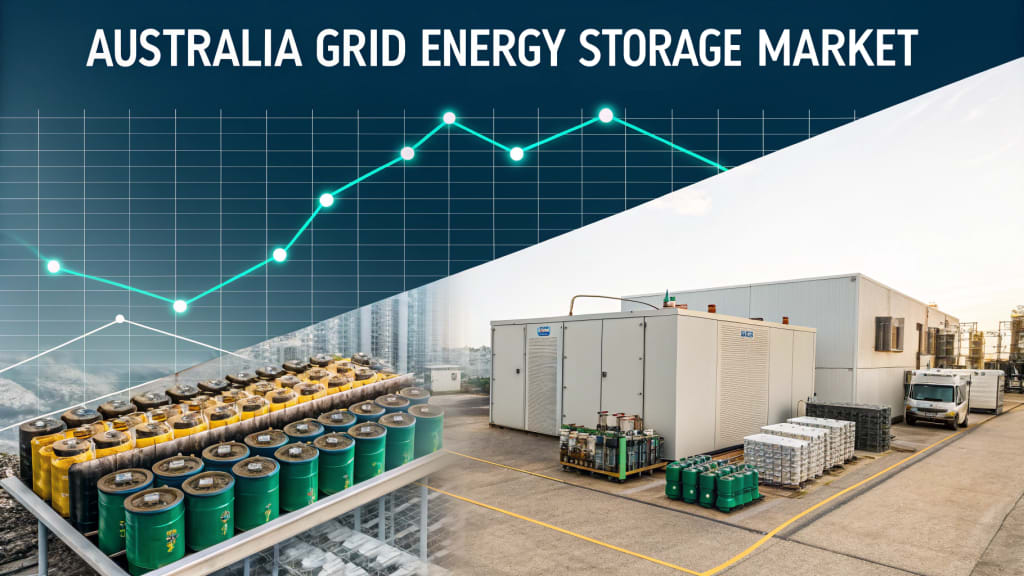
In 2024, the Australia grid energy storage market reached a value of USD 366.80 million. Industry projections indicate the market will grow exponentially to USD 3,941.14 million by 2033, representing a robust compound annual growth rate (CAGR) of 26.80% between 2025 and 2033. This strong growth outlook reflects accelerating adoption of grid-scale battery systems, policy engagement at federal and state levels, and the pressing need to manage renewable energy intermittency while reinforcing grid stability.
Grid energy storage encompasses a wide range of technologies and deployment models — including utility-owned and third-party systems across applications such as renewables integration, peak shifting, ancillary services, and backup power. As Australia transitions toward a more decentralized and decarbonized electricity network, grid energy storage is becoming a critical infrastructure backbone, enabling higher penetration of solar and wind power while enhancing overall reliability.
Why the Market Is Growing So Rapidly
1. Renewables Integration and Grid Stability:
Australia’s pursuit of ambitious renewable energy targets has accelerated the deployment of storage systems. Solar and wind generation — while abundant — are inherently variable, creating challenges in matching supply with demand. Battery energy storage systems (BESS) help bridge this gap by capturing excess generation during periods of low demand and releasing it when demand peaks, thus improving grid reliability and system flexibility.
2. Rising Demand for Large-Scale Storage Deployments:
Utilities and independent power producers are increasingly investing in large-scale storage projects. These battery systems can store gigawatt-hours of energy and provide services such as frequency regulation, network support and peak shifting, making them attractive both economically and operationally. Public and private sector interest in utility-scale battery hubs underscores storage’s rising importance in the energy mix.
3. Government Support and Policy Reform:
Australian federal and state governments are actively fostering grid storage deployment through a combination of incentives, grants, and supportive regulatory reforms. Initiatives aim to streamline grid connections, strengthen market rules for storage participation, and offer funding mechanisms that reduce capital costs and encourage investor confidence in battery projects.
4. Decentralization and Community Energy Resilience:
In remote regions and decentralized energy frameworks, storage systems are being used to enhance energy autonomy and reduce reliance on expensive and polluting diesel generators. Community-level storage — including neighborhood batteries that pair with rooftop solar — supports local energy self-sufficiency and resilience in the face of extreme weather events.
5. Technological Advancements and Cost Declines:
Rapid improvements in battery technologies, particularly lithium-ion and emerging chemistries, have boosted energy densities, lowered costs, and increased operational lifespans. Enhanced control systems and smarter grid software further improve storage performance, making large-scale and distributed solutions more financially viable.
What the Opportunities Are
1. Utility-Scale BESS Expansion:
Investors can capitalize on the growing pipeline of large battery projects that support grid stability and renewable energy dispatch. With project sizes scaling into the hundreds of megawatts, utility battery deployments are set to become major energy assets.
2. Ancillary Services and Market Participation:
Energy storage systems are not just storage — they are revenue-generating assets through services like frequency control and voltage regulation. Companies that optimise storage for grid services can unlock multiple income streams while advancing grid reliability.
3. Distributed and Community Storage Models:
Community battery programs and distributed storage supporting high rooftop solar penetration can attract investment in neighbourhood-based energy solutions, fostering new business models in energy sharing and local grid support.
4. Off-Grid and Hybrid Systems:
Remote regions and microgrid deployments present opportunities for hybrid renewable-storage systems that reduce dependence on diesel and provide cost-effective, sustainable power, particularly in mining, utilities and isolated communities.
5. Advanced Battery Technology Innovation:
Emerging technologies such as long-duration storage and flow batteries offer potential for longer energy retention, opening up markets beyond short-term grid services. Investors in these technologies may secure early mover advantages.
6. Policy-Linked Financial Instruments:
With supportive government policies and financial mechanisms such as grants and low-interest financing, storage projects can achieve more favourable economics, encouraging private capital deployment.
7. Data and Grid Integration Services:
As storage integrates with digital grid management systems and forecasting tools, demand for analytics platforms and grid optimisation software will rise, creating opportunities for tech-driven services that enhance storage efficiency.
Recent News & Developments in Australia Grid Energy Storage Market
• March 2025: Federal energy regulators updated connection rules for solar, wind and battery systems to the National Electricity Market (NEM), aimed at reducing project integration times and costs. These reforms are expected to accelerate grid storage deployments and enhance renewable grid integration across states.
• July 2025: The Clean Energy Council reported that Australia attracted USD 2.4 billion in large-scale battery investments in the first quarter of 2025, with six major projects — totaling 1.5 GW capacity — achieving financial close. This surge in capital underscores strong investor confidence and aligns with national clean energy transition goals.
• October 2025: AGL Energy announced plans to ramp up grid-scale battery storage with 1.4 GW of new projects across New South Wales and Queensland, reflecting rising energy companies’ commitment to renewable integration and grid flexibility services.
Why Should You Know About Australia Grid Energy Storage Market?
The grid energy storage market in Australia matters because it sits at the heart of the nation’s energy transition. For investors, the projected nearly tenfold market expansion by 2033 presents a rare opportunity for strong returns in renewable infrastructure. For utilities and developers, storage systems offer enhanced operational flexibility, multiple revenue streams and increased grid stability. For policymakers and communities, grid storage supports decarbonization goals, energy resilience and local economic benefits through job creation and technological innovation. As Australia navigates its energy future, storage technologies are not just supporting renewable deployment — they are transforming how energy is generated, managed and consumed.
About the Creator
Rashi Sharma
I am a market researcher.
Keep reading
More stories from Rashi Sharma and writers in Trader and other communities.
Australia Artificial Intelligence Market Set for Dynamic Growth as AI Adoption Surges
In 2025, the Australia Artificial Intelligence (AI) market was valued at USD 2,387.1 million and is projected to expand sharply to USD 8,017.3 million by 2034, growing at a compound annual growth rate (CAGR) of 14.41% from 2026 through 2034. This strong outlook reflects increasing demand for AI solutions across industries — from precision healthcare and financial services to manufacturing automation and logistics. As digital ecosystems mature and data availability expands, AI is rapidly becoming a cornerstone technology in Australia’s economic transformation.
By Rashi Sharmaabout 4 hours ago in Trader




Comments
There are no comments for this story
Be the first to respond and start the conversation.