
Stock Trading - Entry 46
My stock trading journey since Entry 12

This is kind of a snapshot before I start diving into the long-awaited analysis at the two-year mark. Yup, it has almost been that amount of time since I opened a trading account and setup various funds. To highlight certain flavours, this recap is organized into three sections; indicators, specific analyses, and external impacts. (I am not dispensing financial advice here or in any of my articles mentioned below.)
INDICATORS
The following is part of my investor's mindset evolution and particular things I take into consideration when selecting a publicly-traded company in which to invest.
Any fundamental analysis of a stock needs both numbers and non-numbers. Entry 20 explores the ones I continue to look at and why. I also explored investing in securities (bonds) and I took a look at RE Royalties (RE) when it comes to businesses that engage in royalty financing.
Entry 43 continues this discussion by focussing on some numerical indicators I have found that don't really tell me, a micro-investor, the truth. I also analyse a real application of an amazing tax loophole for a Canadian to pay very little in tax on an estimated annual income of a measly $2.6m.

When I wanted to take a look at the Canadian finance industry, I somehow stumbled across a goldmine of reports (which was also free), which I identified in entry 30. I am crossing my fingers it will continue to be available in future.
One piece of publicly available information is outstanding warrants, in other words, options put in place should people want to use them. (For a deeper dive on warrants, check out this article.) Commonly they are used to guarantee a set price, so if the market price is higher, then you have effectively bought stocks at a discount. When the market price exceeds the price in an outstanding warrant (one that hasn't been used yet), that's when price volatility can kick in. Since I want to avoid the negative aspects of that, I pay attention. Also in entry 14, I looked at Legend Power systems (LPS) as an example of how a primary source of funding will clearly impact the amount of time it will take before an investor (like me) can see significant returns.
ROI is often mentioned in investing circles and entry 42 outlines how I have been factoring that in to-date (plus my ROI in 2024 and the first five months of 2025). I also get into why I have been buying stocks that pay dividends as well as stocks that don't.
In addition to finding a cheap stock paying dividends, entry 27 left five questions unanswered, which I will address here - and thank you for your patience.
1. When the purchase price of a share is less than $2 each, when should I aim to sell those cheap shares according to whatever industry the company is in?
I have actually been basing this almost exclusively on share price (buying low and selling high some time later) and not over-investing in any one stock no matter what.
2. Are there additional considerations to influence a buy-decision for me for shares with a price of over $5 each compared to those over $15 each?
This involves portfolio allocation, not over-investing in any one stock, and understanding the floor price of a given stock.
3. What percentage of my portfolio should be in niche ETFs I throw money at versus active trading on my part?
I plan to evaluate those in late autumn, so stay tuned.
4. When should I sell a dividend-paying stock?
When I am over-invested and it is in the black OR the stock price jumps high enough OR I made a bad call in a company that can no longer hold its own (even if I sell at a loss because -50% is better than -75%).
5. Are there additional factors I need to consider when deciding to buy a dividend-paying stock?
I dive into those in entry 44.
SPECIFIC ANALYSES
The following articles I wrote contain an analysis of one or more specific stocks.
I look at a Canadian company that is leveraging its impressive structure and investments in bitcoin to reduce taxation in entry 33. While I learned nothing new by buying six stocks and holding them for several months, I managed to sell them at a higher price later.
In addition to my take on a Saturday morning email I frequently receive about my investments, entry 28 examines another cheap and solid dividend-paying stock I found.
My take on REITs, DRIPs, and a few stocks (some of which I bought) are outlined in entry 29.
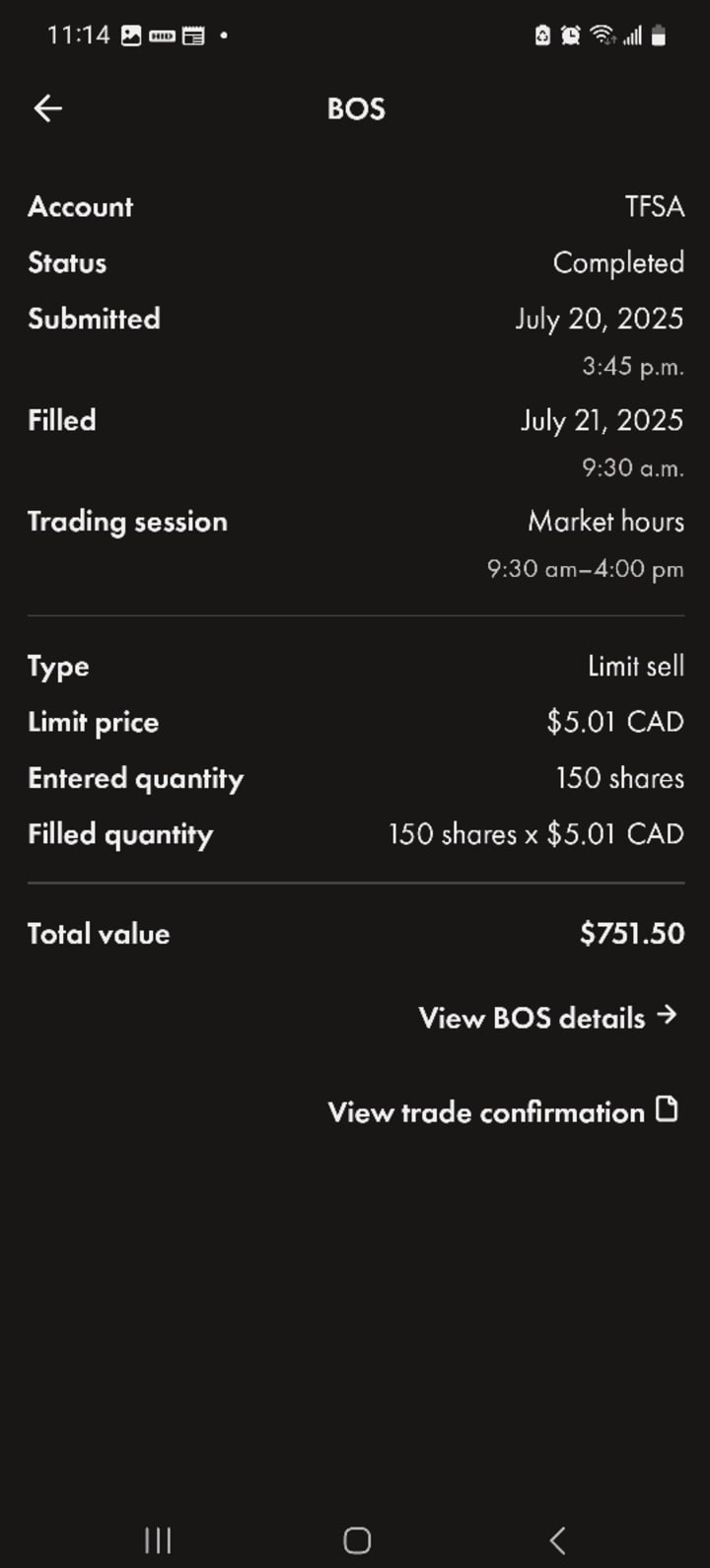
Entry 25 identifies dividend-paying stocks I bought in early autumn 2024. (I sold BOS in summer 2025 at a profit.)
As it turns out some stock and blockchain exchanges are publicly-traded companies. Entry 32 gets into those as well as which ones I bought.
One of my most comforting analyses done to-date was on Imperial Ginseng. Entry 15 explains why (briefly) along with the importance of determining some wiggle room before placing an order. I also took a look at Quizam Media (QQ) that got sued by the company who provided them with a big source of revenue generation. (That concept still makes me shake my head!)
If ethics piques your interest even with dividend-paying stocks, entry 24 examines Polaris Renewables that operates in Nicaragua.
EXTERNAL IMPACTS
The articles I wrote below talk about macro-level, bigger picture stuff.
Even I, a micro-investor, had to shift in response to the big auto deal in Canada of 2024. Entry 22 gets into the thick of it from my perspective.
In entry 26, I experienced a buy out of one of my stocks, what I did, and some lessons learned on three not-so-great trades.
Entry 31 describes a buyout of another one of my stocks that I would have been able to predict had I read what I wrote about in entry 30 at the point I bought those shares. I also found another cheap dividend-paying stock and why I sold my stocks in a battery company. Based in Canada. In 2024 no less! (And it turned out to be a good decision.)

The market dip in spring 2025 had me on a buying frenzy, but in entry 39 I looked at the impact of shorting as well as how I didn't lose sleep during the market dip.
And then, of course, after learning all these insights, and claiming success that is not mine to claim (except in dollars), entry 44 gets into how I changed my investment approach when my portfolio value passed $20k.
And there you have it.
To find out what I do or don't invest in next, subscribe for free below to become notified right when I publish those articles. Alternatively, you can bookmark this page that contains a list of all my entries in my stock and blockchain trading journey I publish on Vocal Media.
About the Creator
Richard Soulliere
Bursting with ideas, honing them to peek your interest.
Enjoyes blending non-fiction into whatever I am writing.
Keep reading
More stories from Richard Soulliere and writers in Trader and other communities.
Stock Trading - Entry 44
[https://todaysurvey.shop/trader/stock-trading-entry-43] My previous entry* ended with the realization that I had to figure out how my investment approach needs to change given that I have enough cash in my portfolio to invest in more than just a few shares in more than a few companies. Newsflash #23: When you have $20k in your portfolio, your investing approach will need a refresh. This article dives into that change for me - I am not dispensing financial advice.
By Richard Soulliere6 months ago in Trader
Australia Corporate Wellness Market Set to Expand Significantly Through 2033
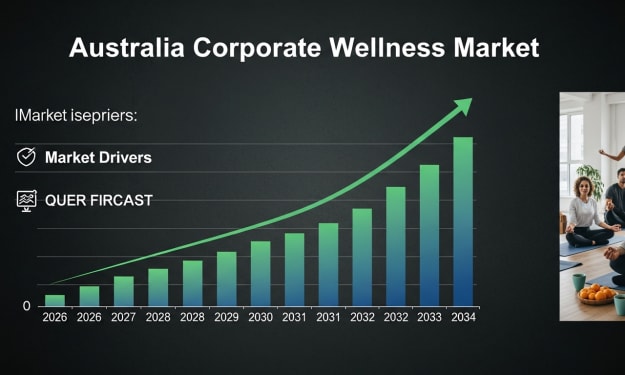
The Australia corporate wellness market achieved a valuation of USD 2.0 billion in 2024 and is forecast to climb to USD 3.6 billion by 2033, representing a compound annual growth rate (CAGR) of 6.30% between 2025 and 2033. This upward trajectory highlights the increasing prioritization of employee health and wellness among Australian organisations, driven by broader workplace wellbeing trends, mental health awareness, and evolving delivery models. As employers strive to enhance productivity, reduce absenteeism, and attract talent, comprehensive wellness initiatives are becoming a staple of corporate strategy rather than optional benefits.
By Rashi Sharma7 days ago in Trader



Comments
There are no comments for this story
Be the first to respond and start the conversation.