
Webflow Multi-Language Website Development: Build Global-Ready
User-Friendly Sites for International Audiences

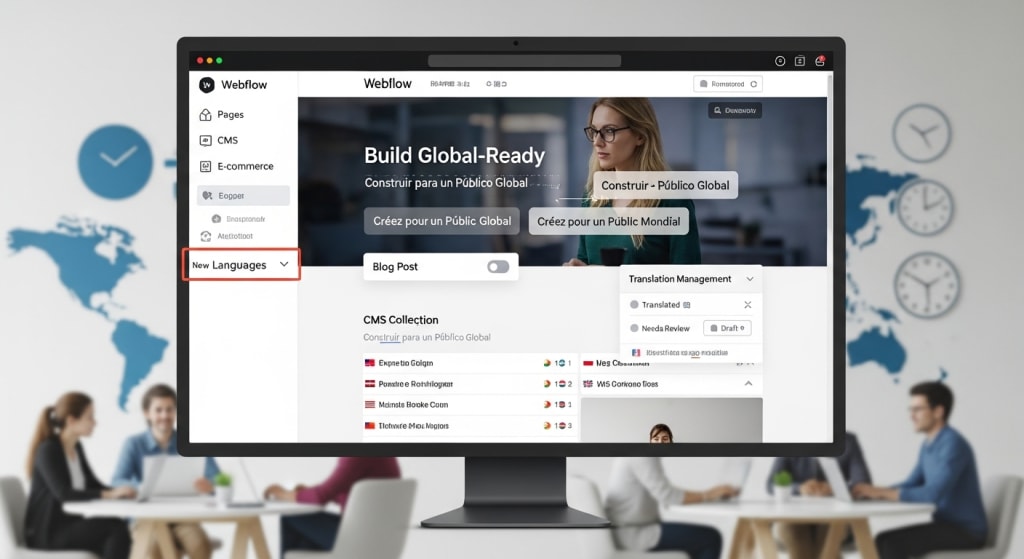
In today’s digital age, connecting with a global audience is no longer optional it’s essential. Businesses, bloggers, and organizations alike are seeking ways to make their websites accessible to users worldwide.
Webflow Development Agency Services multi-language website development is a powerful solution for creating websites that cater to diverse audiences, offering seamless navigation and content in multiple languages.
By integrating multilingual capabilities, brands can expand their reach, improve user experience, and increase conversions in international markets.
The Importance of Global Accessibility
In a world where over 4.9 billion people use the internet, speaking your audience’s language matters. Websites that only use one language may alienate potential visitors and limit growth.
By creating a multilingual website, you allow users from different countries to interact with your brand comfortably, fostering trust and engagement.
A multilingual website also shows respect for cultural differences, improving your brand’s credibility. For instance, translating product descriptions, blogs, and navigation menus into multiple languages can enhance user satisfaction and retention.
How Multi-Language Websites Enhance User Experience
User experience is the backbone of a successful website. Multi-language support allows visitors to navigate your website in the language they understand best. This reduces confusion, lowers bounce rates, and encourages repeat visits.
For example, an e-commerce store that offers French, Spanish, and German translations allows shoppers from Europe to easily find products, complete transactions, and engage with the brand without language barriers.
Key Features of Multi-Language Webflow Sites
Webflow offers a variety of tools and integrations to build multilingual websites. Some essential features include:
Dynamic Content Management: Easily manage translations for blogs, product pages, and other dynamic content.
Language Switcher Options: Provide a visible and intuitive way for users to switch between languages.
SEO Optimization for Each Language: Ensure search engines index every language version for improved visibility.
Customizable URLs: Unique URLs for each language version help boost search engine rankings.
These features make Webflow an ideal platform for building scalable and professional multi-language websites.
Selecting the Right Languages for Your Audience
Not all languages are equally valuable for every business. Start by analyzing your target markets and identifying the languages your audience speaks. Tools like Google Analytics can help determine the locations of your visitors and their preferred languages.
For example, a SaaS company targeting Europe may prioritize English, German, and French, while a tourism website might focus on English, Spanish, Chinese, and Japanese. Choosing the right languages ensures your website investment delivers maximum returns.
Streamlining Translation with Webflow
Manual translation can be time-consuming and error-prone. Webflow supports third-party translation tools and integrations that simplify the process. Popular options include Weglot, Localize, and Bablic, which automatically detect your website’s content and provide accurate translations.
These tools not only speed up development but also ensure consistency across pages. For businesses with frequent updates or dynamic content, automated solutions reduce maintenance headaches while maintaining quality.
Optimizing Multi-Language SEO
A multi-language website needs careful SEO planning to perform well in search engines. Each language version should have:
Unique meta titles and descriptions
Proper hreflang tags
Language-specific keywords
Localized content
By optimizing each language version individually, your site can rank in local search results, attracting more international traffic. For instance, a company offering online courses can target “online learning in French” separately from “online learning in Spanish,” improving visibility in both regions.
Enhancing Engagement Through Cultural Adaptation
Translation alone is not enough. Cultural adaptation, or localization, ensures that your content resonates with the audience. This includes adjusting:
Images and icons to suit local tastes
Date, time, and currency formats
Color schemes and design elements
For example, an e-commerce store in Japan might use visuals, layouts, and color schemes that are culturally appealing, improving user engagement and conversion rates.
Testing and Maintaining Multi-Language Websites
Once your multi-language site is live, regular testing is essential. Check that:
All language versions display correctly on desktop and mobile
Navigation and links work seamlessly
Content updates propagate across translations
Regular maintenance keeps your website fresh, accurate, and user-friendly, ensuring a consistent global experience.
Benefits of Multi-Language Webflow Development for Businesses
Investing in webflow multi-language website development provides several business advantages:
Increased Reach – Access new markets and expand your customer base.
Improved Conversion Rates – Customers are more likely to buy when content is in their language.
Enhanced Brand Reputation – Demonstrates professionalism and cultural awareness.
SEO Advantages – Multi-language sites rank higher in local search engines.
Companies that prioritize global usability position themselves for long-term growth and international recognition.
Common Challenges and How to Overcome Them
Building a multi-language website comes with challenges, but Webflow provides solutions. Common issues include:
Duplicate Content – Avoid by using unique translations and proper hreflang tags.
Inconsistent User Experience – Use language switchers and testing to ensure uniformity.
Translation Costs – Leverage automated tools for faster, cost-effective solutions.
Addressing these challenges proactively ensures your multilingual site remains efficient and user-friendly.
Future of Multi-Language Websites
With globalization and increasing internet accessibility, the demand for multilingual websites will continue to grow. Businesses that invest in webflow multi-language website development today are positioning themselves to thrive in an increasingly competitive digital landscape.
Webflow’s evolving capabilities, combined with advanced translation and localization tools, make it easier than ever to create websites that truly cater to international audiences.
Final Thoughts
In conclusion, webflow multi-language website development is a vital strategy for businesses seeking to reach global audiences. It enhances user experience, boosts SEO, and strengthens brand reputation. By choosing the right languages, leveraging translation tools, and optimizing for search engines, you can build a website that appeals to diverse markets worldwide.
About the Creator
IBM Share Price Hits New Heights: Secrets Investors Are Overlooking
The IBM share price has been making headlines as it climbs higher, catching the attention of investors everywhere. Many people focus only on short-term gains, but the real opportunities lie in understanding the trends behind the rise. This article explores the key factors affecting the IBM share price and reveals insights investors often miss. For related insights on growth opportunities, see: Best Tech Stocks to Buy in 2026.
By John.doe7987 days ago in Trader
Bitcoin and the Long Road From Internet Idea to Global Asset
Bitcoin did not arrive with a parade. It appeared quietly, almost shyly, during a time when trust in systems was already fragile. At first, it felt like an idea meant only for programmers and online forums. Years passed, and the word bitcoin slowly entered everyday conversations. Some spoke of hope. Others spoke of fear. Many simply felt confused. What makes this digital thing matter so much? Why does it stir such strong emotions across countries and generations? Bitcoin is not just about money. It reflects doubt, belief, patience, and risk. To understand bitcoin is to understand how people respond when old systems feel heavy and new paths appear uncertain. This story is about that tension, and why bitcoin continues to matter.
By Muqadas khan5 days ago in Trader
Writing About Writing: The Rainbow Trap
The good thing about living in modern times is that LGBTQ representation in media is increasing. Not just in niche and Independant media, either, but also in mainstream media. Books, movies, TV shows, comics... they're finally catching on that LGBTQ+ people form a significant part of their audience, and deserve to see themselves on screen and in fiction, not just as victims in documentaries and true crime shows.
By Natasja Rose5 days ago in Writers


Comments
There are no comments for this story
Be the first to respond and start the conversation.