
A Change at Quarterback and a Tougher Path
Helped the Seahawks Win the Super Bowl

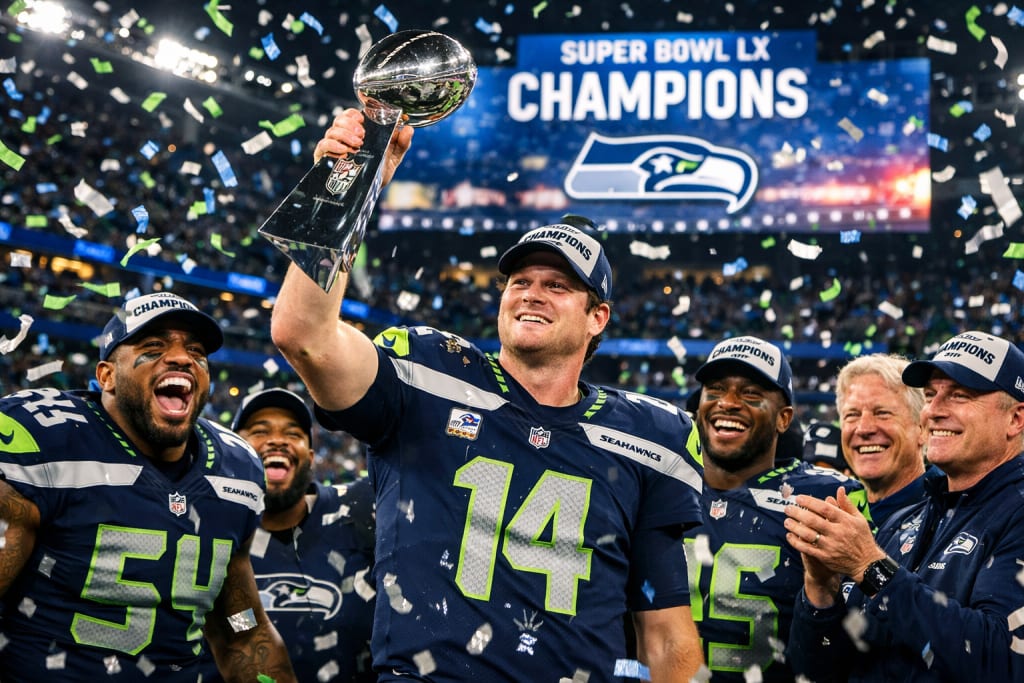
On February 8, 2026, the Seattle Seahawks etched their place in NFL history in a dominant all-around performance, defeating the New England Patriots 29-13 in Super Bowl LX. What made this victory especially compelling wasn’t just that Seattle hoisted the Lombardi Trophy — it was how they did it, and how contrasting paths to the Super Bowl highlighted the impact of personnel moves, especially at the most important position in sports. 
Sam Darnold: A Turnaround Worth a Ring
Seattle’s veteran quarterback Sam Darnold, once written off by many as a career bust, delivered one of the most remarkable seasons in recent memory. In his first year with the Seahawks, Darnold led the offense through adversity and found comfort in a system tailored to his strengths — efficient passing, smart decisions under pressure, and trust in a strong defense.
There’s something poetic about a quarterback who quietly redefines expectations turning into a champion. Teams talk about culture and continuity, but sometimes a new voice — one with experience, calmness, and a chip-on-the-shoulder attitude — is exactly what’s needed to go all the way.
Defense First, But the QB Matters Most
While Seattle’s “Dark Side” defense dominated — sacking New England’s quarterback multiple times and stifling their offense for most of the night — the Seahawks didn’t just win because of defense alone. Darnold’s steady hand kept drives alive and prevented self-inflicted wounds, allowing Seattle to lean on what made them great without turnovers or panic. 
Winning a Super Bowl with a defense-first identity is possible only when the quarterback doesn’t hurt you — and that’s often an underrated piece of the puzzle. Seattle found that equilibrium this season, and it delivered on the biggest stage.
The Patriots’ Path: Soft Schedule, Hard Scrutiny
Meanwhile, as pundits and analysts were dissecting the Seahawks’ performance, another compelling storyline followed New England’s journey to the title game.
The Patriots finished the regular season with a strong 14-3 record, but their collective schedule strength became a topic of debate long before the Super Bowl. According to strength-of-schedule metrics, New England faced the easiest slate of opponents in the entire NFL, with their regular-season opponents combining for a low overall winning percentage — among the least difficult in decades.
That’s not to diminish what the Patriots accomplished — turning around a franchise and returning to the Super Bowl after a disappointing season is impressive — but critics argued that a lighter schedule and softer playoff path can inflate records and create a misleading perception of dominance.
Does Strength of Schedule Predict Success?
History shows it’s not always definitive. Teams with easier slates can make deep playoff runs — and even win championships. The 1999 Rams did exactly that. But in a league where margins are razor-thin, playing tougher opponents throughout the season often better prepares teams for the heightened intensity of postseason football.
In this case, the Patriots had to face that reality against a battle-tested Seahawks squad that had weathered a significantly harder slate of competition and emerged stronger for it.
Takeaway: Sometimes One Piece Is All You Need
A change at quarterback doesn’t guarantee success — but when it’s the right fit in the right environment, it can be transformative. It can bring stability, unlock new levels of performance from the rest of the roster, and inject confidence into every phase of a team.
And while schedule quirks and playoff paths make for fun debate among fans and analysts alike, championships are ultimately won on the field — against whoever stands in your way on that decisive Sunday.
This Super Bowl will be remembered not just for the Seahawks’ triumph, but for how a shift at the most scrutinized position in sports can redefine a franchise’s destiny.
About the Creator
Logan M. Snyder
https://linktr.ee/loganmsnyder
Keep reading
More stories from Logan M. Snyder and writers in Unbalanced and other communities.
Super Bowl LX Recap: A Team Called Hawks
Sixty. The Super Bowl turned 60! Still amazes me that this was the sixtieth Super Bowl played in NFL history. It seems like yesterday that I watched Super Bowl XXVII, the first SB I ever watched. The QB who won Super Bowl XXVII has since called a few SBs, and will call next year's game, but that's another story. Super Bowl LX took place at Levi's Stadium in Santa Clara, California, the home stadium of the San Francisco 49ers. However, it was one of their division foes who represented the NFC, as the Seattle Seahawks faced off against the New England Patriots.
By Clyde E. Dawkinsa day ago in Unbalanced
Compare and Contrast: 2026 MLB Wild Card Predictions
Spring Training is just around the corner, which I'm looking forward to. In this story, I'll be comparing my picks to clinch Wild Card berths in 2026 to what Fangraphs has predicted. Please note that Fangraphs odds for each team to clinch a Wild Card or division title berth changes daily. The percentages of what Fangraphs with, as far as who will punch their tickets to the Postseason is our sole focus for this story. I'll compare and contrast to Fangraphs division title predictions will be highlighted in the next story. Let's get this show on the road. We're only going to highlight our top six teams.
By Mark Wesley Pritchard 7 days ago in Unbalanced



Comments
There are no comments for this story
Be the first to respond and start the conversation.