Latest Stories
Most recently published stories in Unbalanced.
China Asks Companies to Stop Using US and Israeli Cybersecurity Software. AI-Generated.
China has told many of its companies to stop using cybersecurity software made by firms from the United States and Israel, according to people familiar with the matter. This move shows how serious China is about protecting its data and reducing its reliance on foreign technology. It also highlights the growing technology and political tensions between China and Western countries.
By sehzeen fatima25 days ago in Unbalanced
Wild Card Weekend Recap: What Happens Now?. Top Story - January 2026.
I think I figured out why I love Wild Card Weekend so much. It's because it's the first playoff anything of the calendar year. The NFL season starts in the fall, and once upon a time, the champion was crowned either on or slightly before New Year's. The evolution of the NFL schedule has resulted in the playoffs starting just into the New Year, and currently, the final week of the season falls on the first weekend of the New Year, with Wild Card Weekend coming a week after that. So yes, chronologically, the NFL's Wild Card Weekend serves as the first playoff anything of the calendar year.
By Clyde E. Dawkins26 days ago in Unbalanced
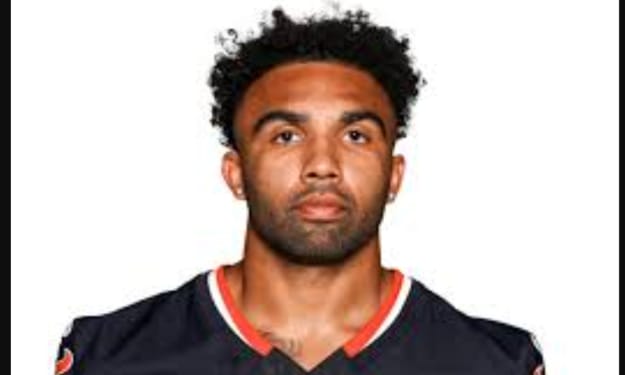
Christian Kirk: From Rising Prospect to Proven NFL Playmaker. AI-Generated.
Christian Kirk has steadily carved out a reputation as one of the NFL’s most reliable wide receivers, blending speed, versatility, and consistency to become a key offensive weapon. While he may not always dominate national headlines, Kirk’s journey reflects the value of development, adaptability, and quiet professionalism in modern American football.
By Asad Ali26 days ago in Unbalanced
Rolland Courbis: A Defining Voice in French Football Management. AI-Generated.
Rolland Courbis is a name that evokes strong reactions in French football. To some, he is a sharp tactician and fearless leader; to others, a controversial figure whose career has been marked by both success and turbulence. Regardless of opinion, Courbis remains one of the most influential and recognizable personalities in France’s football landscape, known for his managerial stints, media presence, and uncompromising honesty.
By Asad Ali26 days ago in Unbalanced
Homestand Part II: Not-So-Usual Suspects
On Thursday, the Colorado Avalanche's long homestand began against the Ottawa Senators, and it was a slaughter. An 8-2 victory that saw the Avs put six pucks in the net during the middle period. Martin Necas and Brock Nelson each reached the 20-goal mark during that game, and the highlight was Josh Manson's Gordie Howe Hat Trick--two goals, two assists, and a fight, with his dad, legendary player Dave Manson, in attendance.
By Clyde E. Dawkins27 days ago in Unbalanced
Vikings slide past Hayes
In a period of seven days, Northland (7-4) has had two games that have been decided by a two-point margin. The Vikings are 2-0 in those contests as seniors Diante James and Daneal Krylov have made big shots that won both games respectively. On Jan. 3, at Columbus Academy, James knocked down a shot with less than two seconds remaining to deliver Northland to its biggest win so far this season. On his way to 19 points, James has proven to be one of the most confident shot makers in central Ohio. His big time basket led Northland to a 58-56 win over Westland which is currently 7-2.
By Winners Only28 days ago in Unbalanced
Indiana stuns Oregon as viral sideline moment draws national attention. AI-Generated.
Introduction Indiana’s decisive victory over Oregon delivered one of the most surprising results of the college football sminated the scoreboard, attention online briefly shifted to a viral broadcast moment involving the family of Oregon quarterback Fernando Mendoza.
By Saad 28 days ago in Unbalanced
Homestand Part I: Like Father, Like Son
The Colorado Avalanche were in a new position this season: we were coming off back-to-back regulation losses. The Avs' three game Southeastern swing didn't go our way. A win in Raleigh followed by back-to-back regulation losses in Florida; Panthers first, then Lightning. So that gave us a grand total of... four. Four regulation losses. Still very low. It lowers our win total pace, but honestly, I could care less about that. Yes, winning during the regular season is important, but what really matters is getting those final 16 wins in the end and being the last team standing. That is a feeling we experienced three times before.
By Clyde E. Dawkins29 days ago in Unbalanced
Alex Eala. AI-Generated.
Tennis has always been a sport where stories of discipline, sacrifice, and quiet resilience shape champions long before trophies do. In recent years, one name has steadily gained international attention for embodying those qualities with grace and ambition: Alex Eala. Still early in her professional journey, Eala represents more than individual success. She symbolizes a shift in global tennis, where talent now rises from regions once considered outside the sport’s traditional power centers. From junior Grand Slam glory to appearances on the professional tour, Eala’s path reflects patience, planning, and belief. Her performances, including moments connected to tournaments like the Auckland Open and the ASB Classic, show a player learning to translate promise into lasting impact. Early Foundations of a Rising Star Alex Eala’s story begins with a strong foundation built on family support and access to elite training. Unlike many players who rise through local circuits alone, Eala’s development was guided by a long-term vision. That vision led her to the Rafa Nadal Academy, an environment known for shaping technically sound and mentally strong athletes. At the academy, Eala refined her baseline game, improved her court movement, and learned how to compete with intention rather than emotion. These lessons were evident in her junior career, where she achieved milestones that placed her among the most promising young players of her generation. What stood out was not only her results but her composure. Eala played with a maturity that suggested she understood tennis as a marathon, not a sprint. Junior Success and Global Recognition Eala’s junior achievements opened doors to the international tennis spotlight. Winning major junior titles placed her name alongside players who would later become tour regulars. For many fans, this was the first time they encountered Alex Eala, and it quickly became clear she was not just another short-term prospect. Her left-handed style added variety to her game, creating angles that disrupted opponents. Combined with strong court awareness, this made her matches engaging to watch and difficult to predict. Junior success, however, is only a stepping stone, and Eala approached the professional transition with measured expectations. Rather than rushing into high-pressure events, she balanced growth with experience, a strategy that often separates sustainable careers from fleeting hype. Stepping Into the Professional Arena The move from juniors to the professional circuit can be unforgiving. Higher intensity, physical demands, and mental pressure test even the most gifted athletes. For Alex Eala, this transition has been deliberate rather than dramatic. She has taken part in ITF and WTA-level events, gaining experience against seasoned players. Each match has contributed to her understanding of pace, consistency, and endurance at the professional level. Losses have been treated as lessons, and victories as confirmation of progress. Events connected to the Auckland Open and the ASB Classic are particularly meaningful in this phase. These tournaments attract a competitive field while still offering young players exposure to high-quality opposition. For Eala, participation in such events represents an opportunity to measure herself against established professionals. Auckland Open and ASB Classic: Learning on a Bigger Stage The ASB Classic, held in Auckland, is more than just a warm-up event for the tennis season. It has a reputation for blending experienced tour players with emerging talent. Competing in or around the Auckland Open environment allows players like Eala to experience elite tournament structures, media attention, and crowd energy. For a young athlete, these elements matter. They teach how to manage nerves, expectations, and recovery over consecutive matches. Even brief appearances in such tournaments contribute significantly to development. Alex Eala’s connection with events like the ASB Classic highlights her gradual integration into the professional ecosystem. Each appearance adds confidence and clarity about what needs improvement, whether it is serve consistency, shot selection, or physical conditioning. Style of Play and Competitive Identity Eala’s game is built around controlled aggression. She prefers constructing points rather than rushing winners, relying on precision and movement. Her left-handed forehand remains one of her most effective weapons, creating angles that pull opponents off the court. Equally important is her defensive awareness. Eala often turns defense into offense, a trait that reflects her disciplined training background. While power tennis dominates many modern matches, her style emphasizes balance and adaptability. As she continues to evolve, adding strength and depth to her serve and net play will likely be key areas of focus. These improvements often come with time, experience, and physical maturity. Representation and Inspiration Beyond the Court Alex Eala’s rise carries significance beyond rankings and results. She represents hope for aspiring players from underrepresented regions, proving that access to global stages is possible with commitment and support. Her journey inspires younger athletes to believe that tennis is not limited by geography. Every appearance she makes, whether in major tournaments or developmental events, reinforces the idea that talent can emerge from anywhere. This broader impact gives Eala a unique position in the sport. She is not only building her own career but also helping expand tennis’s global narrative. The Road Ahead The future for Alex Eala remains open and full of possibility. Tennis careers are shaped over years, not seasons, and her measured approach suggests a focus on longevity rather than quick success. Continued participation in international tournaments, including those linked to the Auckland Open and ASB Classic, will provide valuable benchmarks for growth. As rankings fluctuate and competition intensifies, the true test will be consistency and resilience. Based on her journey so far, Eala appears well-equipped for both. Final Thoughts Alex Eala’s story is still being written, but its early chapters reveal a player grounded in discipline, learning, and quiet confidence. From junior triumphs to professional challenges, she has approached each step with intention. In a sport where pressure can derail even the brightest prospects, Eala’s calm progression stands out. Whether competing in global events like the ASB Classic or continuing her steady rise through the tour, Alex Eala represents a future built on patience, skill, and belief. For tennis fans watching the next generation take shape, her journey is one worth following closely.
By Saboor Brohi 29 days ago in Unbalanced
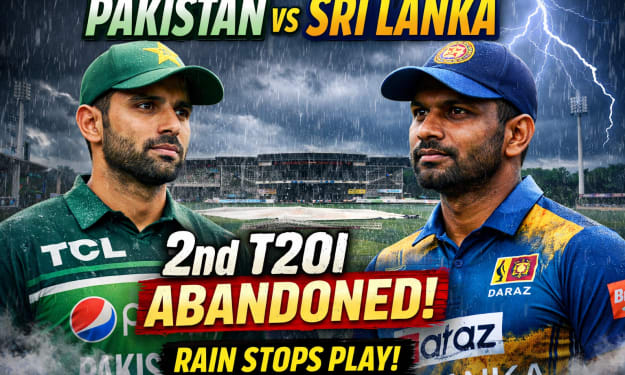
Pakistan vs Sri Lanka 2nd T20I Abandoned: Rain Spoils the Contest as Series Heads to a Decisive Finale
Cricket fans around the world were left disappointed as the Pakistan vs Sri Lanka 2nd T20I was abandoned due to persistent rain, with not a single ball bowled at the Rangiri Dambulla International Stadium. What was expected to be a thrilling encounter between two competitive sides instead turned into a frustrating waiting game, as weather conditions refused to improve throughout the day.
By Waqar Khan30 days ago in Unbalanced
“I Didn’t Set Out to Break Records”: Pakistan’s First Female MMA Fighter. AI-Generated.
When people talk about mixed martial arts (MMA), Pakistan is rarely part of the conversation—especially when it comes to women. Yet one young woman has quietly rewritten that narrative, not by chasing headlines, but by stepping into a cage where few Pakistani women have dared to stand. Pakistan’s first female MMA fighter did not begin her journey to shatter records or challenge tradition. She began it simply because she loved to fight—and believed she had the right to. A Dream Born in Defiance Growing up in Pakistan, combat sports were never presented as a viable path for girls. Boxing gyms, wrestling mats, and fight promotions were overwhelmingly male spaces. For a young girl interested in MMA, the obstacles came early and often—raised eyebrows, discouraging comments, and the constant reminder that “this isn’t for you.” Yet the fighter recalls that her earliest motivation had nothing to do with proving society wrong. She trained because MMA made her feel strong, focused, and free. “I didn’t set out to break records,” she has said in interviews. “I just wanted to see how far I could push myself.” Training Without a Roadmap Unlike athletes in countries where MMA is well established, Pakistan’s first female MMA fighter had no clear roadmap. There were few female coaches, no local women’s leagues, and limited facilities that welcomed women. Training often meant improvisation—borrowing gym hours, practicing with male fighters, and learning techniques from online videos. Her discipline, however, set her apart. MMA demands mastery across multiple fighting styles: striking, grappling, wrestling, and Brazilian jiu-jitsu. Balancing these skills required relentless dedication. She trained through injuries, financial constraints, and social pressure, often without knowing whether there would be an actual fight waiting at the end. Breaking Barriers Without Breaking Herself What makes her story remarkable is not just that she entered the MMA world, but how she did it. Rather than positioning herself as a rebel against culture, she framed her journey as one of personal growth and professionalism. She emphasized fitness, discipline, and sportsmanship—values deeply respected across Pakistani society. This approach helped shift perceptions. Slowly, resistance turned into curiosity, and curiosity into support. Family members who once questioned her choices became her biggest allies. Coaches who were hesitant to train a woman began to see her commitment and skill. The First Step Into the Cage Her debut fight marked a historic moment. Stepping into the cage was not just about winning—it was about visibility. For the first time, young girls across Pakistan could see a woman representing their country in a sport often viewed as aggressive and inaccessible. The fight itself was a test of nerves as much as technique. Under bright lights and intense scrutiny, she fought with composure and confidence. Regardless of the result, the message was clear: Pakistani women belong in MMA. A Symbol, Not a Slogan While media attention labeled her a trailblazer, she resisted being boxed into symbolism alone. She insisted she was an athlete first. “If I’m treated as an exception, the door closes behind me,” she once noted. “If I’m treated as a professional, the door stays open.” That mindset has influenced a new generation. Gyms in major cities are now seeing more women sign up for combat sports. Conversations around women’s self-defense, strength training, and athletic ambition are growing louder. Redefining Strength in Pakistan Her journey challenges a narrow definition of femininity that still exists in many parts of the world. Strength, she demonstrates, does not erase grace or values. Instead, it complements them. By embracing MMA, she has expanded what is socially imaginable for Pakistani women—not just in sports, but in any male-dominated field. The Road Ahead Despite her achievements, the road ahead remains difficult. Sponsorship opportunities are limited, international exposure is costly, and institutional support for women’s MMA is still developing. Yet her presence alone has already shifted the landscape. She now speaks openly about mental resilience, discipline, and self-belief—lessons that extend far beyond the cage. For her, success is not measured by medals or records, but by impact. More Than a Fighter Pakistan’s first female MMA fighter didn’t set out to break records—but she broke a barrier far more significant. She proved that courage doesn’t always roar; sometimes it trains quietly, shows up consistently, and steps forward when the moment arrives. Her story is not just about fighting. It’s about choosing one’s own path—and daring others to imagine new ones.
By Fiaz Ahmed about a month ago in Unbalanced