
Men’s Short Program in Figure Skating
Precision, Power, and Performance

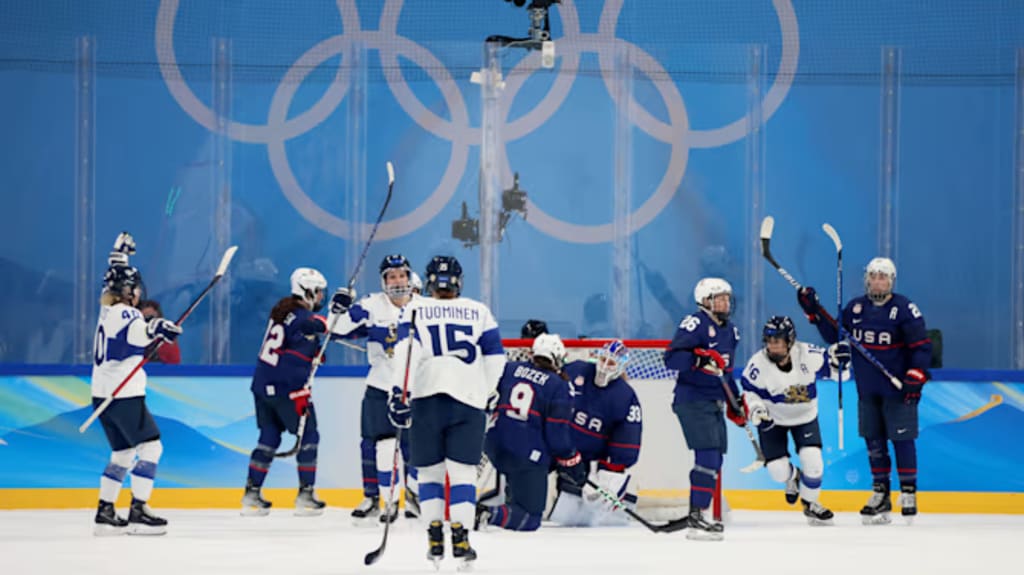
The men’s short program in figure skating is one of the most demanding segments in the sport. Though it lasts only a few minutes, it carries enormous weight in competition. Every movement is judged, every jump must meet strict technical requirements, and even small mistakes can significantly affect standings. In elite events—whether national championships, world competitions, or the Olympic Games—the men’s short program often sets the tone for the entire event.
Structure and Purpose of the Short Program
The men’s short program is designed to test a skater’s technical precision and artistic quality within a tightly controlled format. Unlike the free skate, where athletes have more flexibility in layout and content, the short program requires specific elements that must be executed in a prescribed order.
Typically, the program lasts around 2 minutes and 40 seconds. Within that time, skaters must complete required jumps, spins, and step sequences. The limited duration means there is little room for recovery. A single error—such as under-rotating a jump or stepping out of a landing—can drop a skater several places in the standings.
The purpose of the short program is to establish a ranking before the free skate. Scores from both segments are combined to determine the final results. Because the short program accounts for a substantial portion of the total score, strong execution is essential for medal contention.
Required Elements
The International Skating Union (ISU) outlines specific elements for the men’s short program. While rules may evolve over time, the structure generally includes:
One solo jump, often a triple or quadruple jump.
One jump combination, which frequently features a quadruple jump linked to a triple.
One required triple jump, commonly an Axel.
Three spins, each with distinct characteristics (such as a camel spin, a combination spin, and a spin with change of foot).
One step sequence, designed to showcase footwork, edge control, and interpretation.
These elements are evaluated not only for successful completion but also for quality. Judges assign grades of execution (GOE) based on factors like height, flow, landing control, and musical timing.
Technical Difficulty and Risk
In modern men’s figure skating, the technical bar continues to rise. Quadruple jumps have become increasingly common in the short program. Attempting a quad can offer significant scoring potential, but it also carries risk. A fall or major error can erase the advantage and create a deficit that is difficult to overcome.
The triple Axel remains one of the most challenging required elements. Its forward takeoff and three-and-a-half rotations demand precise timing and explosive power. Successfully landing it with clean flow can energize both judges and audience.
Because the short program has limited space for recovery, skaters must carefully strategize their jump layout. Many place their most difficult element early, when energy levels are highest. Others prefer to build momentum before attempting high-risk jumps.
Performance and Presentation
While technical elements are crucial, the men’s short program also emphasizes artistry. Skaters are judged on performance components that include skating skills, transitions, choreography, composition, and interpretation of the music.
Music selection plays an important role. Some athletes choose classical compositions that highlight elegance and edge quality. Others select contemporary or dramatic pieces that allow for emotional intensity. Regardless of style, synchronization between movement and music is essential.
The short program’s concise structure requires efficiency in choreography. Every second must contribute to either technical execution or expressive storytelling. There is little room for filler steps. The most successful programs blend athletic difficulty with seamless transitions.
Mental Strength and Pressure
The men’s short program is often described as a high-pressure test. Because the field in major competitions is tightly packed, even small point differences can determine placement. Skaters who handle pressure effectively often rise to the top.
Mental preparation is as important as physical readiness. Athletes train repeatedly under simulated competition conditions to build confidence. Visualization techniques and consistent warm-up routines help reduce anxiety.
In high-profile events such as the Olympics or World Championships, the short program can define narratives. A strong performance can position a skater as a favorite heading into the free skate. Conversely, an early mistake may require a near-perfect free skate to recover.
Evolution of the Men’s Short Program
Over the decades, the men’s short program has evolved alongside the sport. Earlier eras placed more emphasis on compulsory figures, while modern judging focuses on dynamic technical content and balanced components.
The introduction of the International Judging System (IJS) brought greater transparency to scoring. Each element now carries a base value, and judges apply grades of execution to reflect quality. This system encourages skaters to maximize both difficulty and precision.
Athletes today are stronger, faster, and more technically advanced than ever before. Training methods have improved, and international competition has intensified. As a result, the men’s short program has become a showcase of both athletic innovation and refined artistry.
Impact on Competition Outcomes
Because the short program is the first competitive segment, it shapes the competitive landscape. Skaters who perform cleanly gain psychological momentum and often skate later in the free program, which can influence perception and scoring dynamics.
In major championships, the top positions after the short program are often separated by only a few points. This narrow margin keeps the competition open while rewarding consistency.
For spectators, the men’s short program offers concentrated excitement. In just a few minutes, audiences witness high-level athleticism, intricate choreography, and emotional storytelling.
Conclusion
The men’s short program in figure skating is a demanding and defining segment of competition. It combines technical rigor with artistic expression, leaving little margin for error. Skaters must deliver precision under pressure, balancing risk and control within a tightly structured format.
As figure skating continues to evolve, the short program remains a cornerstone of the sport. It challenges athletes to present their best skills in a brief yet powerful performance—an intense opening statement that can shape the entire competition.
About the Creator
Saboor Brohi
I am a Web Contant writter, and Guest Posting providing in different sites like techbullion.com, londondaily.news, and Aijourn.com. I have Personal Author Sites did you need any site feel free to contact me on whatsapp:
+923463986212
Keep reading
More stories from Saboor Brohi and writers in Unbalanced and other communities.
Justin Verlander
Few pitchers of his generation have matched the consistency, power, and longevity of Justin Verlander. Over nearly two decades in Major League Baseball, Verlander has built a career defined by elite fastballs, postseason dominance, and a relentless competitive drive. Although he has worn multiple uniforms, his name remains closely tied to the Detroit Tigers. For many fans, the phrase “Verlander Tigers” still evokes memories of packed summer nights at Comerica Park and a franchise restored to national prominence.
By Saboor Brohi about 6 hours ago in Unbalanced
Super Bowl LX Recap: A Team Called Hawks
Sixty. The Super Bowl turned 60! Still amazes me that this was the sixtieth Super Bowl played in NFL history. It seems like yesterday that I watched Super Bowl XXVII, the first SB I ever watched. The QB who won Super Bowl XXVII has since called a few SBs, and will call next year's game, but that's another story. Super Bowl LX took place at Levi's Stadium in Santa Clara, California, the home stadium of the San Francisco 49ers. However, it was one of their division foes who represented the NFC, as the Seattle Seahawks faced off against the New England Patriots.
By Clyde E. Dawkins2 days ago in Unbalanced
Ashley Kuchinsky Explodes in Fourth Quarter to Deliver on Senior Night
Please scroll to the end of the article for crowd photos On Wednesday January 21, Somers welcomed Woodlands to the high school and had the Tuskers hoping they could celebrate senior night with a win. 15-2 and 33-17 leads by the visitors said otherwise. But on both occasions, Caitlyn Mayfield kept her elders from being run out of the gym, and that left the door open for Ashley Kuchinsky.
By Rich Monettiabout 16 hours ago in Unbalanced
📢 Raise Your Voice Thread: 02/05/2026
Our “Raise Your Voice Threads” are hosted most alternating Thursdays at 12PM ET to offer creators more avenues to uncover exceptional stories on Vocal. As we are continuously searching for fresh creators and inspiring stories, this thread provides an opportunity to exchange and discuss the stories that have moved and motivated us on Vocal.
By Raise Your Voice by Vocal6 days ago in Resources




Comments
There are no comments for this story
Be the first to respond and start the conversation.