
Analyse this!
And sharpen up your writing


Wanna know how to improve your writing? There is a simple, quick, tried and tested method.
Tried and tested by who?
By me, as it happens, and I can guarantee that it will work for you. I know what I am talking about. Not always, of course, but certainly in this case.
Here’s how to do it
One: Copy the following text string:
Critique the following with suggestions for improvement:
…into Google Gemini, or your own favourite Large Language Model, or lalamo (thanks Rick). Don’t hit send just yet. If you do, don’t worry, just ignore the response and start again.
Two: Copy the text of the work you want to improve and then paste it at the end of the text string already pasted. Now you can hit send.
Three: Bask in the glory of any enthusiastic praise heaped upon you by Gemini or whatever lalamo, but don’t spend all day doing it.
Four: Read through the areas for improvement and think about which points strike a chord. Make suitable changes accordingly.
Repeat as many times as necessary to get it right.
That's it folks
Oh, sorry, you think that's cheating? You think you are better than using AI to write your stories for your? You hate AI with a vengeance? (All comments I have had when mentioning how to make good use of Lalamos). You are, ultimately, cynical about the abilities of AI?
Good! You will find the above method even more effective, then. Because you will retain your own critical faculty and not surrender it to the machine. As I have said before, AI is not intelligent. AI cannot think or feel. It cannot judge or discriminate. It does not experience emotion. Sure, it can give you a good description of all of these things. But it cannot comprehend any of them. AI has no capacity to understand. It is a computer programme, a series of bits of data with algorithmic connections between them. Sure it can address you in a way that (sometimes) sounds as if it is a human addressing you, which is great. I have always refused to put too much effort into trying to learn how to use every new iteration of a computer language (the language of the computer programming community) so at least now the technical bods have put some effort into making their computer programmes speak a language I know and am comfortable with. Natural(ish) spoken and written English.
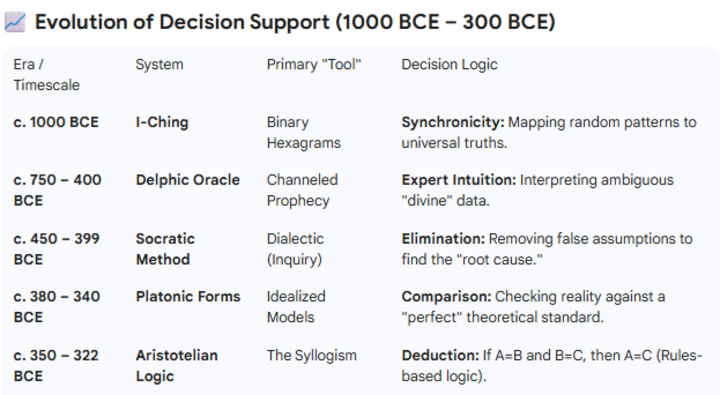
Also, when it comes to making decisions, people have been using artificial decision making tools for thousands of years. Some have made the mistake of thinking the tool makes the decision for you. It does not, it merely assists your decision making capacity, if you know how to use it.
I might add an anecdote from my own experience, c. 1980s CE. I then worked for a data processing company that, having difficulty making recruitment decisions, decided to implement a psychometric testing system for all new recruits. Rather than pay for a psychometric testing system consultancy firm to implement a suitable system, they instead photocopied the questionnaires but couldn't agree on the correct answers. Their decision support methodology was thereby hampered by (a) their dishonesty in the unlawful copying of the questionnaires and (b) was completely useless because the senior directors were too stupid to work out the answers to the questions and how these answers might affect recruitment decisions. Wankers!
So, we cannot expect our lalamo friend to rewrite our work, or come up with enough suggestions to make it perfect. All it can do is point out some of the structural issues, suggest what is passé or clichéd. Point out some of the technical errors and, in short, aid us in our quest to be constructively self critical. To the point we will be able to see what needs improving and improve it.
This is really, really helpful because it nudges the author into reappraising their work in a way that reflects current reader sensibilities.
The story linked above is a collaborative effort between me and my AI friend. What do you think
If you think that the lalamo will do the job for you, think again. It can't, it won't, you are a much better poet and author than it can ever be. You have feeling, experience, emotion, determination, creativity, artistic sensibility. You laugh, you cry, you shit and die. All of which feeds into your work.
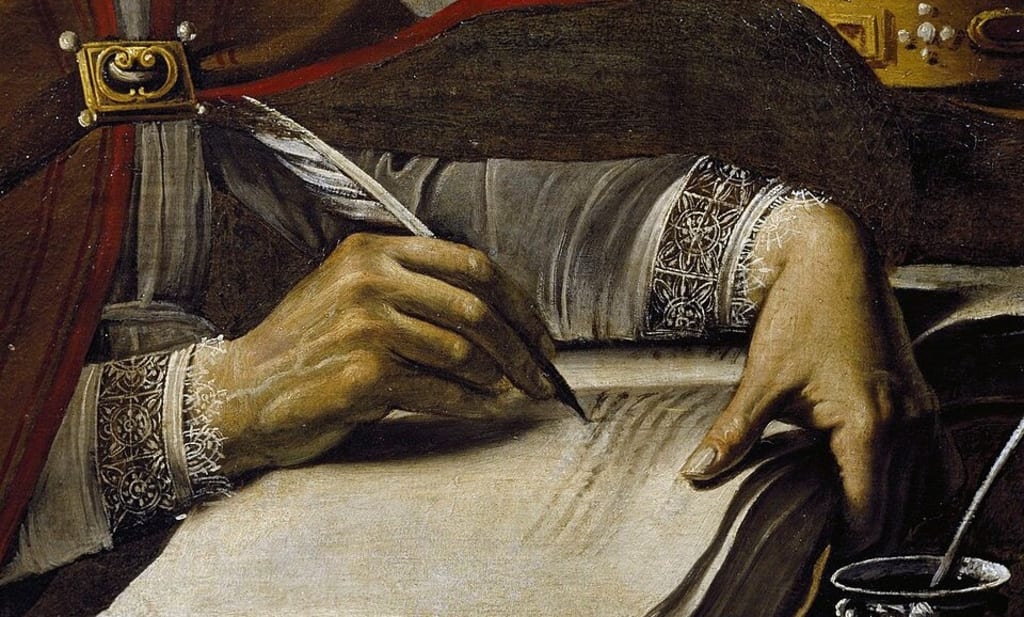
Using a lalamo to aid your writing practice is no more cheating than using a keyboard to write your stuff rather than plucking a feather from a dead goose and dipping it into a solution of cow manure and pigments and then scratching it on the surface of a stretched piece of calf-skin.
The only good reason I have yet to hear for not making good use of AI, is that it requires huge server farm capacity, using up lots of energy and contributing to global warming. But if you are going to take a vegan approach to server farms then you have gotta give up video streaming, social media, and throw your phone into a landfill someplace.
Back to the point of this article, why not try using a lalamo to help you to improve your work? Go on, give it a go, if you haven't sneakily done so already. Please tell me if it worked for you and/or come up with your own suggestions on how to make the most of lalamo apps.
This method also works with school homework but don’t tell your fuddy duddy old teacher. They may want to fail you, put you in detention or worse. Give you a lecture on the good old days before mobile phones and social media.
Further reading
Which AI? Lalam (or lalamo): What is it? Can a large language model help edit a work of creative writing? Other AI and futuristic writings by Ray
Thanks for reading
About the Creator
Raymond G. Taylor
Author living in Kent, England. Writer of short stories and poems in a wide range of genres, forms and styles. A non-fiction writer for 40+ years. Subjects include art, history, science, business, law, and the human condition.
Reader insights
Outstanding
Excellent work. Looking forward to reading more!
Top insights
Compelling and original writing
Creative use of language & vocab
Easy to read and follow
Well-structured & engaging content
Expert insights and opinions
Arguments were carefully researched and presented
Eye opening
Niche topic & fresh perspectives
Heartfelt and relatable
The story invoked strong personal emotions
Masterful proofreading
Zero grammar & spelling mistakes
On-point and relevant
Writing reflected the title & theme
Keep reading
More stories from Raymond G. Taylor and writers in Writers and other communities.
Writing About Writing: The Rainbow Trap
The good thing about living in modern times is that LGBTQ representation in media is increasing. Not just in niche and Independant media, either, but also in mainstream media. Books, movies, TV shows, comics... they're finally catching on that LGBTQ+ people form a significant part of their audience, and deserve to see themselves on screen and in fiction, not just as victims in documentaries and true crime shows.
By Natasja Rose6 days ago in Writers
When USCIS Questions a Degree in an Immigration Case
For many employment based immigration applicants, education is a central part of eligibility. When U.S. Citizenship and Immigration Services issues a Request for Evidence related to a degree, it can feel like the foundation of the case is being challenged. In most situations, however, the issue is not the degree itself, but how it is understood within a U.S. framework.
By Sheila Danzig6 days ago in Writers




Comments (8)
You know how to stir up a discussion, Raymond. I use AI a lot, but mostly for research. Have yet to try it for suggestions. Even for research purposes it cannot be fully trusted. Just recently I published a story about Ali & Nino statue and wanted to know the background story in the novel. It straight up made up the ending where "no one died, everyone lived, and their love did not fizzle out." When in the novel Ali in fact dies. It's fun to play with AI, though. Congrats on the TS for this thought-provoking piece!
Back to say congratulations on your Top Story! 🎉💖🎊🎉💖🎊
I laughed at the image of plucking a feather from a dead goose because it also made your point land — tools change, but the thinking still has to be ours. What stuck with me most was how you frame AI as something that sharpens your own critical eye instead of replacing it, especially the idea that it just “points” and we still have to decide. I’m curious though, have you ever had a moment where a lalamo suggestion surprised you into rethinking something you were stubbornly attached to, or does it mostly confirm what you already suspected needed work?
Love bouncing ideas off AI and that it give unbiased facts.
"Also, when it comes to making decisions, people have been using artificial decision making tools for thousands of years." If you don't mind, could you give me example of artificial decision making tools from thousands of years ago? I don't think I have enough knowledge to think of any 😅😅 That example of using keyboard to write instead of a quill was a good one! And yes, if we really cate about the environment, then we shouldn't even be using our phones.
In the beginning of the article and a sentence you wrote kind of reminded me of what we did in an Advanced Composition class, but we had to copy a famous writer word for word and then take those words and write something of our own some way. AI is only supposed to be a helper in many ways not the writer.
You’ve hit on the perfect balance here by using AI as a polished mirror rather than a ghostwriter. Your point about retaining one's "critical faculty" is spot on. But I still can't bring myself to use AI for anything or than making photos on FreePik.
I have chatgpt do critical reads of my work through a formalist/new critical/structuralist lens. Then I look fir weak areas—ChatGPT is not allowed to make suggestions, only critique; I do all of my own composing, revising, and editing, which I do down to word level in a craft challenge. I was appalled by how the vast majority never revised or edited their craft entry (and that’s only the tip of that iceberg). This was soooo needed.