history
The history of technology and technology throughout history; human innovation from the first stone tool to the iPhone and beyond.
Culture Shaping
In his 1976 book,The Selfish Gene, Richard Dawkins defined and described memeticsas the way cultural information spreads from person to person(Internet Meme). It is from thisdefinition thatMark Godwin appropriated the term memeas representative ofa visual genre of Internet discourse (Godwin), reducing and shaping the term to contemporary status: streamlined and ideological memes,such as acute grumpy cat telling you who to vote for, or perhaps throwing you a condescending look while judging youfor consuming a meal you bought at McDonalds. An Internet meme is thusa seemingly harmless visual combination of words and images constructed from both popular and obscure media. Under the surface though, memes are much more than the jokes shared between individuals over the Internet. Memes have the ability to affect our youth and culture; they have attracted and been used in combination with big business and become a phenomenon unto themselves; they have shaped political landscapes over the past five years;and their use of images, words and phrases from popular culture have made their influence all the more inviting and gratifying. Memes are usually created anonymously and shared throughout various social media. Utilizing different tactics of visual communication, they are representative of a universally understood reality that compels groups of people into thinking and discussing relevant issues.
By Tess Trueheart5 years ago in 01
Introduction and History of C++
The high-level programming language C++ was created by computer scientist Bjarne Stroustrup in the early 1980s. C++ is one of the numerous programming languages still highly used today. This language was initially referred to as “C with Classes” — deriving from the original C language created by Dennis Ritchie. Both C and C++ share several similarities including basic syntax and code structure. These two programming languages essentially share the same language foundation.
By Seattle Web Design5 years ago in 01
Difference between Web 2.0 and Web 1.0
We all use the web; in fact, you are using it right now to read this blog post. I believe it’s important to know how it came into existence because it didn’t pop up from anywhere. The internet was actually made to be a weapon used by the US government. In 1962, the US was in the middle of the cold war with Soviet Russia. It was during this time that the US started focusing on space technology and improving communication over long distances. Scientists were looking for alternate ways of communicating and not rely on telephone lines.
By Seattle Web Design6 years ago in 01
Apple Inc.’s Mission Statement and Vision Statement
As an old proverb so aptly states, “Where there is no vision, the people perish…” Just as individuals require their own sense of vision for their lives; it is also important for businesses to have clear vision so that they are driven to achieve the proper goals. Every business or organization must have a vision, mission statement, and core values that they adhere closely to in order to be successful. Vision is all about the “company’s future strategic course—‘the direction we are headed and the shape of our business in the future.’ It is aspirational” (Thompson 2016). Though it has evolved since its inception, today, Apple’s vision is as stated by CEO Tim Cook:
By Rowan Finley 6 years ago in 01
How Technology Change?
Technology has always been in our lives. As young people spend their time on their tablets, cellphones and computers, most of us still remember our Nokias, Blackberry and our flip-phones. Technology has changed our lives, at a point when it is impossible not to find a job or our way back home from our cell phones. Regardless of times changing technology has become part of our culture, business and influence on young people.
By Veronica E6 years ago in 01
Data Visualization Article Response: How Alternative Facts Rewrite History
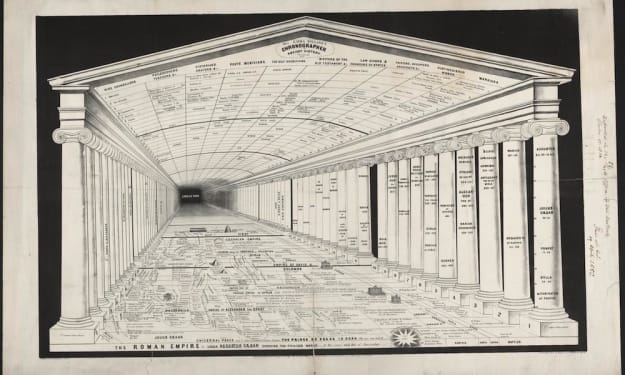
This week's reading for my 'Introduction to Illustration & Data Visualizations' class is an article by Alan Smith titled "How alternative facts rewrite history," specializing in the importance of a graphic's scaling used to encode significant periods for the reader's understanding. According to Smith the definition of scale is 'the mechanism by which numbers of any size are converted into readable proportions on the page or screen,' meaning the barriers that will emphasize how and where numerically/historically the graphic will be measured. One crucial notion Smith highlights in terms of using scale correctly is making sure that all graphics use the same units, concerning what timespan will be measured to keep from misleading information. Alan's article shows an emphasis on a particular style of scale called the log scale, which is used to balance higher and lower values of the same data on an axis.
By Maya Abrams6 years ago in 01
how to watch tv
I am sure there will be many reading this that wont believe a few things I remember from my earlies tv watching days. In the uk it was 3 channels, everything was on and then went till it was repeated. If you missed it there was no recording, no catch up and no plus one channels. It meant that if you needed a comfort break or drink you had to wait between programmes or rush during adverts, a famous cry would come up of "its back on" and you would need to rush back as there was no pause.
By ASHLEY SMITH6 years ago in 01
A Critique of the Social, Ethical, Professional and Legal Issues Relating to the Development and Usage of Computer Systems
Undeniably, the exhilarating and intricate discipline of computer science has produced incredible technological systems over recent decades that have had a transformational effect on society worldwide. Indeed, the profound economic and societal implications of computer science have been astonishing and unparalleled. Over forty years ago, Gotlieb and Borodin published a seminal work Social Issues in Computing which anticipated the far-reaching and revolutionary implications of computer technology on the modern era.
By Darren OConnell6 years ago in 01