Annie Kapur
Bio
I am:
🙋🏽♀️ Annie
📚 Avid Reader
📝 Reviewer and Commentator
🎓 Post-Grad Millennial (M.A)
***
I have:
📖 300K+ reads on Vocal
🫶🏼 Love for reading & research
🦋/X @AnnieWithBooks
***
🏡 UK


Stories (2935)
Filter by community
A Filmmaker's Guide to: 20 Films of the 1940s
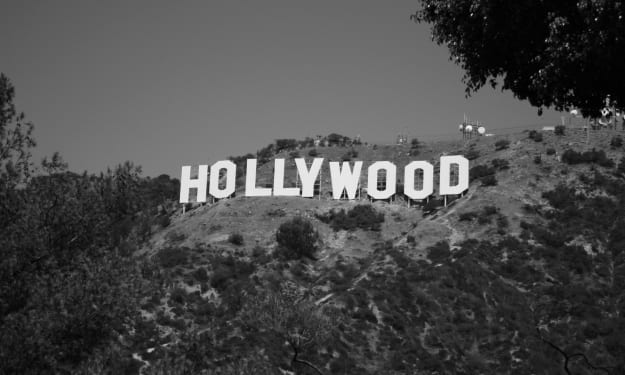
By the 1940s, The Golden Age of Cinema was certainly well underway with the previous decade having done so well. During the Second World War, Hollywood would concentrate its efforts on making films to suit the darkness of the situation. Even Charlie Chaplin would go for dark humour this time.
By Annie Kapur6 years ago in Geeks
"Collected Maxims and Other Writings" by La Rochefoucauld
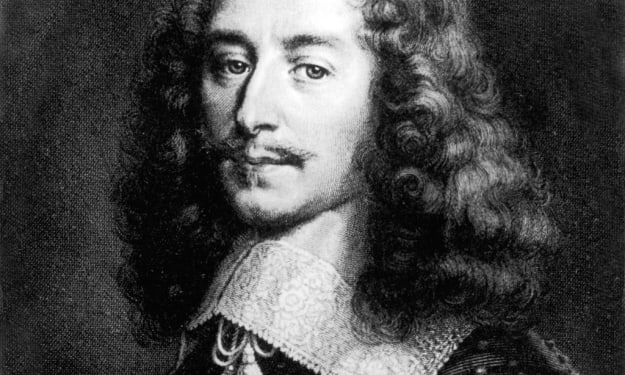
La Rochefoucauld was a French author and nobleman most famous for his memoirs and his maxims. Part of the literary movement of classicism, his maxims often dealt with very human struggles that can be related back to philosophies found in aspects of Plato, Socrates and even Xenophon and Zeno. There are three parts to his writings that are split accordingly and all include some sort of philosophical enquiry into his own times: there are the memoirs in which he details his own life alongside its importance or lack thereof, there are his maxims which are the most famous and famed for being existentialist questions interpreted as double edged swords of the human experience - relating both good and bad actions to the passion and the reason of human nature. Finally, there are the letters in which he corresponds often using aspects of his own philosophy to either rationalise or complicate his own feelings in a way that often only he can comprehend, leaving the correspondent imaginably quite baffled and introspective. Within the writing of the “Maxims” there has been frequent alterations made by the author during his life, a few made after his death and in translation and editing, the text has been again corrupted from its original source.
By Annie Kapur6 years ago in Geeks
A Filmmaker's Guide to: 20 Films of the 1930s
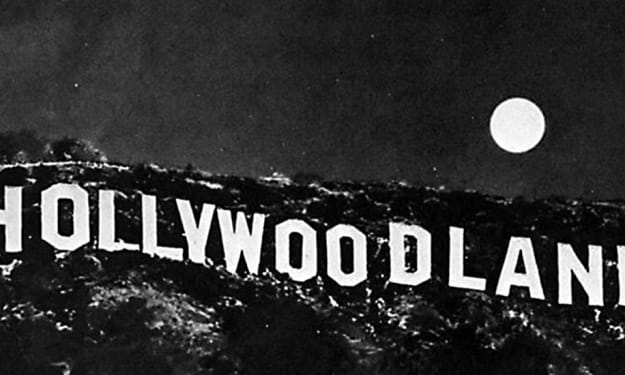
The Golden Age of cinema is synonymous with names such as Charlie Chaplin, Katharine Hepburn, Clark Gable and many more. The rise of Universal Studios through its Dark Universe of Horror films during the 30s resurgence was one of the greatest moments in horror film history. But, apart from horror, we had bigger budget films, bigger names being formed and some of the most memorable and loveable storylines in all of cinema history.
By Annie Kapur6 years ago in Geeks
The Filmmaker's Guide: The Classic and the Epic
Various films fall into the title 'classic' and yet when we look at the epic, there are only certain films that fall into it. When we talk about classic movies, normally we talk about the films of the Golden Age of Cinema. However, if we were to narrow it down to talking about epics of the time, we would be looking for some very rigid criteria. Be that as it may, the films we find within these two tick-boxes could not actually be more different. So how do we put a definition on it and what are we really looking for in this strange and vague set of categories?
By Annie Kapur6 years ago in Geeks
A Filmmaker's Guide to: 20 Films of 1920s
The Jazz Age - as it is dubbed - was a decade of change in history. From the reparations in Europe for the end of the First World War to the decline and fall of the stock market in 1929 with the Wall Street Market Crash. Throughout the decade, we had entertainers such as Bing Crosby, Al Jolson, the orchestras of Artie Shaw and films of the strange and wild that were brewing in a new expressionist movement in Germany as a reaction towards the aching political regime in their country. Things were making it big. Cinema gained sound, the talkies were born and with one film - the whole scene would change forever.
By Annie Kapur6 years ago in Geeks
"The Complete Stories" by Ernest Hemingway
Ernest Hemingway was an author that, when I was growing up, I wasn’t overly interested in. By the time I had first read his short stories, I had already read the books “For Whom the Bell Tolls” and “A Farewell to Arms” and I didn’t particular enjoy either of them. At the age of about thirteen, Hemingway’s writing can seem bland, dry and almost dull but, as I grew up and re-read the short stories, I noticed that I was very wrong indeed. In fact, it is the dry nature of the stories that make them so interesting and fulfilling to read. I first read the short stories at the age of thirteen and yet, I couldn’t make head or tail of them.
By Annie Kapur6 years ago in Geeks
A Filmmaker’s Review: “Unabomber: In His Own Words” (Netflix, 2020)
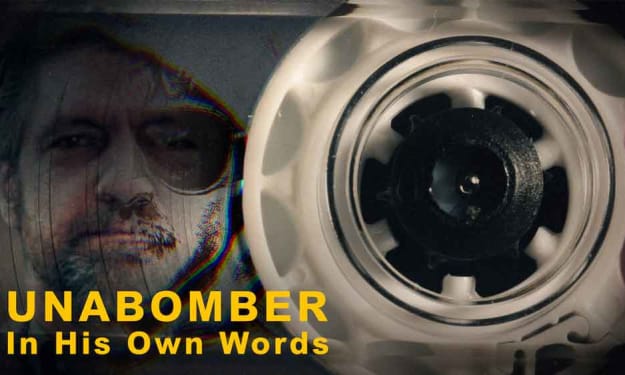
I am pretty sure that anyone who hears the term ‘Unabomber’ has this weird chill that goes down them. You don’t really know why you have a certain chill but it’s there. It’s not really because of the man himself but more about the strangeness surrounding his situation - especially the odd three years he spent under the influence of a psychologist at Harvard University, apparently subjected to CIA style mind-altering torture techniques. Though the man himself maintains it did not change him, is it really that or is that just what he believes? This documentary investigates the years between 1978 and 1995 in which a Mathematics PhD killed three people and injured more than twenty by sending homemade bombs in the post to key locations, concentrating on the urgency for his capture and how ultimately - he was found. It is an incredible look into the life of a man who, since his capture, was shrouded in so much mystery that you practically could not learn anything about him apart from his stubbornly academic manifesto. In this documentary we also get to see his brother, his sister-in-law, a woman who interviewed him after he sent for her by name. We get to see that from the very start of his life there is a sense of withdrawal because of his vast intellect. This intellect that becomes used and abused by the wrong people for the wrong reasons.
By Annie Kapur6 years ago in Criminal
"The Poems" by Propertius
The poet Propertius was an Latin Elegiac of the Augustan Period and his only surviving works are those of his four books of “Elegies”. This totals around 92 surviving poems and his more romantic side of poetry is dominated by a character named “Cynthia”. The romantic affair between Propertius and Cynthia takes wild turns and often turns either violent and turbulent or graphic and passionate. Common themes in the poems include: passion, romance, jealousy, violence, standards of love and courtship, lament, death and the afterlife, mythology, religion and ghosts. Propertius’s unconventional use of the Latin language have often made his texts and allusions within texts difficult to translate and edit. The surviving manuscripts of his poetry have led translators to often alter the texts and therefore corrupting them before the editing stage. Propertius’s boldness has often been said to exacerbate the problem of translation due to the way in which the syntax of the poetry is often incorrect. Be that as it may, themes, symbols and motifs are still clearly visible throughout the anthology. Propertius, being popular within his own lifetime but also a poet considered to be a scandal was also not really enjoyed by the other poets of his time and period. Horace had once stated a veiled attack on him and Callimachus as did Quintilian who states that the poet was not as popular as he made himself out to be.
By Annie Kapur6 years ago in Poets
"A Connecticut Yankee in King Arthur’s Court" by Mark Twain
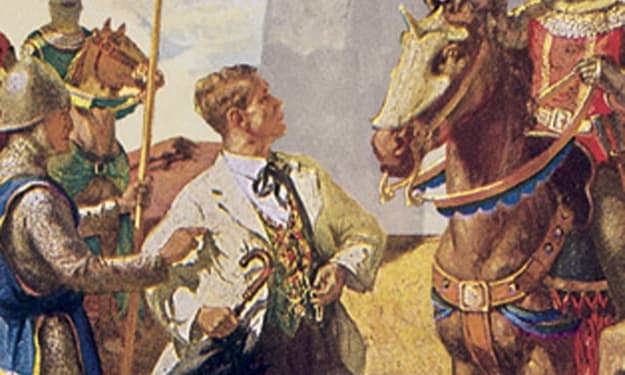
I first read this book on a road trip when I was in school. I must have been around fourteen or fifteen and I had a really old and battered copy of the book. In fact, it was so battered that the pages were falling out and eventually - it fell apart not so much as a year later. The book was an old, coverless copy and I would sit in the car reading it and laughing to myself at the very suggestion that a man could travel back in time and visit the courts of King Arthur and his knights of the round table. The book itself was a short and rather funny take on a classic tale and I definitely read it more than once. I have always enjoyed the poetic tragedy of Sir Lancelot and so, reading Twain’s comedic text was like reading someone from the Southern States of America mixing up Lancelot with Huckleberry Finn with a side of William Faulkner like satire of the changing world. It’s like the perfect book to cheer you up and the most exciting novel that Twain wrote apart from Huckleberry Finn.
By Annie Kapur6 years ago in Geeks
Book Review: “Hamnet” by Maggie O’Farrell
Maggie O’Farrell’s latest effort in literature is devised of two things: firstly there is a historical drama afoot and it is set upon the dainty Stratford-Upon-Avon in 1596, then there is an influence from the Bard of Avon’s most famous tragedy, “Hamlet”. I’m not sure I entirely got the gist of how the play really drove influence into the text apart from at the end, but it was well thought out and often had some strange features that I would like to partake in with you here. The text’s first chapter is a tell-tale sign of what is to come. First off, we have the relationship between Hamnet and his sister Judith, who is incredibly sick and the parents are not around to help out. Hamnet does everything he can to look for some help for his sick sister but finds nothing but hurt and pain. One thing I did enjoy about the book is the way silence is depicted. The way in which when nobody is speaking or doing anything, there is a certain amount of space there that is just hanging in the air. It is a brilliant feature of the text and gains it a mark for creativity.
By Annie Kapur6 years ago in Geeks
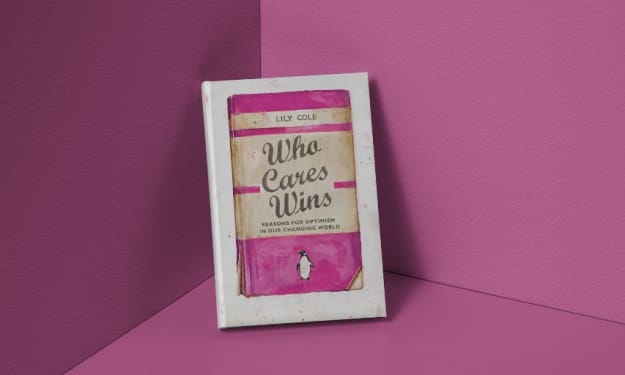
Book Review: “Who Cares Wins” by Lily Cole
Lily Cole is perhaps known more for her work on screen than in literature. A model, an actress and a filmmaker, Lily Cole has explored a wide range of her talents throughout the media industry and continues to expand to this day. Her book “Who Cares Wins” is all about our own problems today but, different to other books of its kind it does not depict it as an apocalyptic nightmare to bring down the reader into a deep hole of eco-depression. Instead, Lily Cole’s book seeks to show us that there are interesting and vast ways to solve these problems if we care enough and if we concentrate on what really matters. Her skills at showing us massive problems with our own world and then telling us that we have the solution to them at our fingertips if we work together is something that I find incredibly interesting about this text. The optimism and the clarity in writing style really make you want to stick through the book and read what she has to say. Why? Well, it is the only real book you’ll find about the environment that does not lead to the end of the world.
By Annie Kapur6 years ago in Motivation