Badhan Sen
Bio
Myself Badhan, I am a professional writer.I like to share some stories with my friends.
Stories (2116)
Filter by community
Fossil fuels and carbon footprint
However, their environmental impact, particularly their contribution to climate change through carbon emissions, has become a major global concern. The term “carbon footprint” refers to the total amount of greenhouse gases, primarily carbon dioxide (CO₂), released into the atmosphere as a result of human activities. This includes everything from the burning of fossil fuels for electricity, heating, and transportation, to deforestation and other industrial processes. Let’s explore how fossil fuels contribute to the carbon footprint and the broader environmental implications of this.
By Badhan Senabout a year ago in Earth
Renewable energy (solar, wind, hydro)
Fossil fuels, which take millions of years to form and emit harmful greenhouse gases when burned, renewable sources of energy offer sustainable alternatives that can be used without depleting the earth’s resources. Solar, wind, and hydroelectric power are among the most common and widely deployed forms of renewable energy. These sources not only help reduce carbon emissions but also foster energy security and promote sustainable economic development. In this article, we will delve into these three major types of renewable energy.
By Badhan Senabout a year ago in Earth
Plastic pollution in oceans
The oceans cover over 70% of the Earth's surface, and they play an essential role in sustaining life on Earth. However, plastic waste has infiltrated this vast ecosystem, causing irreversible damage to marine life, ecosystems, and human health.
By Badhan Senabout a year ago in Earth
Urbanization and megacities
Urbanization refers to the increasing population concentration in urban areas, leading to the expansion of cities. Over the past few centuries, this process has accelerated due to various factors, including technological advancements, improved living standards, and the movement of people from rural areas seeking better job opportunities and improved infrastructure. A significant result of urbanization is the emergence of megacities – cities with populations exceeding 10 million. These megacities represent a new global phenomenon and raise both opportunities and challenges for societies around the world.
By Badhan Senabout a year ago in Earth
Deforestation and reforestation
Deforestation refers to the large-scale clearing or removal of forests, often for agricultural activities, urban expansion, logging, or mining. This practice has been ongoing for centuries, but its pace has dramatically accelerated in recent decades, leading to significant environmental consequences. The causes of deforestation are complex, but they are primarily driven by human needs such as the demand for land to grow crops and raise livestock, as well as the need for timber and other resources.
By Badhan Senabout a year ago in Earth
Human Impact & Sustainability
The pursuit of economic growth and technological advancement has brought prosperity, but it has also led to deforestation, pollution, and climate change. Sustainability, the practice of meeting present needs without compromising future generations' ability to meet theirs, has become a crucial global goal. This article explores human impact on the environment and strategies for achieving sustainability.
By Badhan Senabout a year ago in Earth
Invasive species and ecological disruption
Invasive species often thrive in new environments due to a lack of natural predators, competitors, or diseases that would normally regulate their populations. While some introduced species do not cause harm, others can become invasive, leading to significant ecological, economic, and social consequences. The disruption caused by invasive species can threaten biodiversity, alter ecosystems, and negatively impact human activities such as agriculture and fisheries.
By Badhan Senabout a year ago in Earth
Ocean currents (Gulf Stream, El Niño, La Niña)
These currents play a crucial role in regulating global climate, weather patterns, and marine ecosystems. Among the most significant ocean currents are the Gulf Stream, El Niño, and La Niña. These phenomena influence temperature patterns, precipitation levels, and storm activities worldwide.
By Badhan Senabout a year ago in Earth
Climate zones (tropical, Temperate, polar)
The Earth’s climate is divided into different zones based on latitude, Temperature, and precipitation. These zones influence weather patterns, ecosystems, and human activities. The three primary climate zones are tropical, temperate, and polar. Each of these zones has unique characteristics that define the natural environment and the life forms that inhabit them. Understanding these climate zones is crucial for comprehending the diversity of Earth's ecosystems and how climate change might impact them.
By Badhan Senabout a year ago in Earth
Polar ice caps and Glacial Melt
The melting of polar ice caps and glaciers is one of the most pressing environmental concerns of our time. The ice caps in the Arctic and Antarctic, along with the world’s glaciers, play a critical role in regulating global climate, sea levels, and weather patterns. However, due to rising global temperatures driven by human-induced climate change, these ice masses are melting at an alarming rate. This article explores the causes, consequences, and potential solutions to mitigate the impacts of polar ice cap and glacial melt.
By Badhan Senabout a year ago in Earth
Desertification and drought
Desertification and drought are critical environmental issues that pose significant challenges to ecosystems, agriculture, and human livelihoods worldwide. Desertification refers to the degradation of land in arid, semi-arid, and dry sub-humid areas, primarily due to human activities and climatic variations. Drought, on the other hand, is a prolonged period of insufficient rainfall that leads to water shortages and adversely affects agriculture, water supply, and biodiversity. This article explores the causes, consequences, and potential solutions to these pressing environmental concerns.
By Badhan Senabout a year ago in Earth
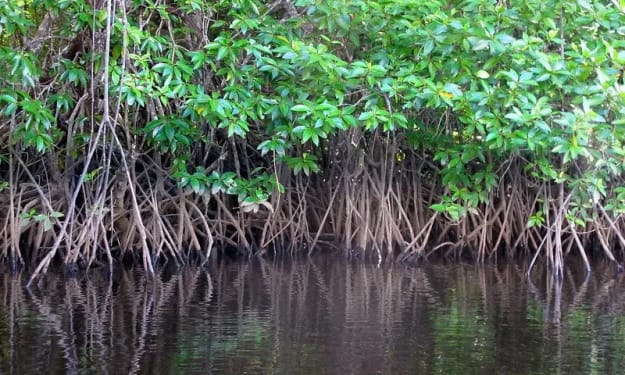
Wetlands and mangroves
Wetlands and mangroves are two of the most important ecosystems on Earth, providing immense ecological, economic, and social benefits. These environments support biodiversity, protect coastlines, regulate climate, and offer resources essential for human livelihoods. Despite their significance, wetlands and mangroves face threats from human activities, climate change, and pollution. This article explores the characteristics, importance, threats, and conservation efforts related to these vital ecosystems.
By Badhan Senabout a year ago in Earth