Badhan Sen
Bio
Myself Badhan, I am a professional writer.I like to share some stories with my friends.
Stories (2116)
Filter by community
A city built entirely in the clouds.
The city, known as Cumulopolis, is a marvel of human achievement, a testament to the endless pursuit of dreams that know no limit. Perched on the highest layers of the atmosphere, suspended amidst the soft, billowy clouds, Cumulopolis exists as an ethereal sanctuary, far removed from the hustle and bustle of life on the ground.
By Badhan Senabout a year ago in Earth
A device that lets people read thoughts.
The concept of a "thought-reading" device has been popularized in science fiction for years, but with recent advancements in brain-computer interface (BCI) technology, the dream of reading thoughts may not be as far-fetched as it once seemed.
By Badhan Senabout a year ago in Humans
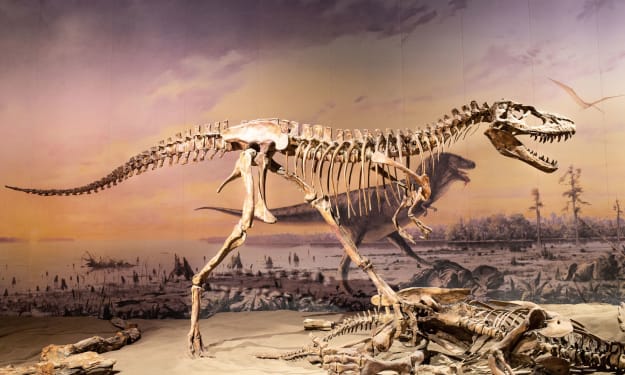
An alternate history where dinosaurs never went extinct.
The Earth would be a vastly different place, shaped by millions of years of continued dinosaurian dominance. In this alternate timeline, without the asteroid’s devastating impact, dinosaurs would have continued to thrive in their established ecosystems. Mammals, which in our reality took advantage of the post-extinction void, would have remained small, burrowing creatures, struggling to find a foothold in a world still ruled by giant reptiles. As dinosaurs diversified, some may have developed greater intelligence, social structures, and even tool use. Over millions of years, dinosaurs would have continued to evolve, adapting to changing climates. Some species, like the raptors, already displayed problem-solving skills and pack behavior. Given enough time, they could have developed complex communication systems, similar to those seen in modern birds, their closest living relatives. Other dinosaurs, like hadrosaurs, already exhibited sophisticated social behaviors and vocalizations, potentially leading to advanced cooperative societies. If dinosaurs had developed higher intelligence, a sentient species could have emerged. Imagine an intelligent, tool-using dinosaur—a species of evolved troodontid, for example—forming complex societies, building cities, and even developing technology. Their civilization might have looked quite different from ours, shaped by a reptilian perspective rather than a mammalian one. Warm-blooded and highly active, they could have become dominant builders and innovators, creating cities in warm climates where they thrived. The presence of dominant dinosaurian megafauna would have influenced the planet’s biodiversity. Mammals might have remained small, thriving in the ecological niches dinosaurs overlooked. Without humans hunting large animals to extinction, the world could be home to a wider array of massive creatures, from towering sauropods grazing in vast plains to armored ankylosaurs defending their territory. Human evolution, if it occurred at all, would have been drastically altered. Early primates evolved in a world where mammals had room to grow, filling ecological gaps left by the dinosaurs. In this alternate timeline, primates might have remained limited in number, constantly outcompeted by more dominant dinosaurian species. If hominins had evolved despite these challenges, they would have had to coexist with intelligent reptilian counterparts, perhaps leading to competition—or even cooperation—between species. The technological trajectory of an intelligent dinosaur species would likely differ from that of humans. Lacking opposable thumbs but equipped with dexterous claws, they may have developed different forms of craftsmanship and engineering. Fire and metallurgy, crucial to human development, might have been harder for them to harness, delaying their technological progress. However, their ability to utilize tools and shape their environment in new ways could have compensated for these challenges. In terms of planetary impact, dinosaurs would have faced their own industrial revolution and environmental dilemmas. Would they have discovered fossil fuels, and if so, would their world have faced the same climate crises as ours? Or would a reptilian intelligence, more attuned to natural cycles, have found alternative energy sources before causing irreversible environmental damage? Ultimately, if dinosaurs had never gone extinct, the world would be nearly unrecognizable. The landscape would be shaped by colossal creatures, the food chain would favor reptiles over mammals, and human existence—if it occurred at all—would be forever changed. Would an intelligent dinosaur species coexist with humans, or would they have outcompeted us long before we had the chance to build civilization? This alternate history is both thrilling and unsettling, reminding us of the delicate contingencies that shape evolution. If fate had been slightly different, Earth could have remained a planet of dinosaurs, where humans were never meant to rise.
By Badhan Senabout a year ago in Fiction
A world where humans can control the weather.
Then, in the year 2087, humanity finally did it. The breakthrough came with the invention of the AtmosNet—a global network of weather control satellites capable of manipulating atmospheric conditions with pinpoint precision. The world changed overnight.
By Badhan Senabout a year ago in Earth
The process of photosynthesis.
The process of Photosynthesis is not only sustains plant life but also forms the basis of the food chain, supplying energy to nearly all living organisms on Earth. Furthermore, it plays a critical role in maintaining atmospheric oxygen levels. The process occurs mainly in the chloroplasts of plant cells and involves a complex series of biochemical reactions.
By Badhan Senabout a year ago in Earth
The anatomy of the human brain.
The human brain is a highly sophisticated structure made up of billions of Neurons that communicate with one another through intricate networks. Understanding the anatomy of the brain is essential for comprehending its functions and the role it plays in overall human physiology.
By Badhan Senabout a year ago in Lifehack
The science of renewable energy.
Fossil fuels, which are finite and contribute to environmental degradation, renewable energy sources harness naturally occurring processes to generate power sustainably. This article delves into the science behind various renewable energy technologies, including solar, wind, hydro, geothermal, and biomass energy.
By Badhan Senabout a year ago in Earth
The process of cloud formation.
Cloud formation is a fundamental meteorological process that plays a crucial role in Earth's weather and climate. This process occurs due to changes in temperature, pressure, and humidity, ultimately leading to precipitation and various weather phenomena. Understanding cloud formation requires an exploration of the water cycle, atmospheric conditions, and the mechanisms that drive condensation.
By Badhan Senabout a year ago in Earth