Fiaz Ahmed
Bio
I am Fiaz Ahmed. I am a passionate writer. I love covering trending topics and breaking news. With a sharp eye for what’s happening around the world, and crafts timely and engaging stories that keep readers informed and updated.
Stories (940)
Filter by community
UK Threatens to Seize Russia-Linked Shadow Fleet Tanker in Escalatory Move. AI-Generated.
The United Kingdom has signaled a tougher stance against Russia’s so-called “shadow fleet” by warning it may seize a tanker suspected of helping Moscow evade international sanctions. The move marks a significant escalation in enforcement efforts aimed at curbing Russia’s ability to export oil and generate revenue for its war economy. British authorities said the vessel, which has been operating under opaque ownership and insurance arrangements, is believed to be part of a network of aging tankers used to transport Russian crude outside established regulatory systems. These ships often sail under flags of convenience, disable tracking systems, and rely on complex financial structures to avoid scrutiny. Officials described the potential seizure as a legal and strategic response to what they see as growing risks to maritime safety and sanctions compliance. “The UK will not tolerate vessels operating in ways that undermine international law or threaten our security and environment,” a government spokesperson said. What Is the Shadow Fleet? The “shadow fleet” refers to hundreds of tankers that emerged after Western nations imposed price caps and shipping restrictions on Russian oil exports following the invasion of Ukraine. These vessels operate largely outside the mainstream shipping and insurance markets, often using obscure insurers and shell companies based in jurisdictions with weak oversight. Many of the ships are decades old and poorly maintained, raising alarms about the possibility of accidents or oil spills in heavily trafficked waters such as the English Channel and the North Sea. Maritime experts say the fleet has become a parallel transport system designed specifically to keep Russian oil flowing to buyers in Asia, the Middle East, and parts of Africa. “The concern is not just sanctions evasion,” said a European maritime analyst. “It’s also the safety risk posed by ships that are not subject to normal inspections and insurance standards.” Legal and Diplomatic Implications The UK’s threat to seize a tanker would represent one of the strongest enforcement actions taken so far against Russia-linked maritime trade. Under British law, authorities can detain or confiscate vessels suspected of violating sanctions, endangering navigation, or breaching environmental regulations. However, such action could provoke diplomatic backlash. Russia has repeatedly accused Western countries of weaponizing maritime law and interfering with global trade. A seizure could further strain already tense relations between London and Moscow. International law specialists note that the legality of such a move depends on the evidence collected and the jurisdiction in which the ship is operating. If the vessel enters British territorial waters or ports, enforcement becomes easier. Intercepting ships on the high seas is far more complex and politically sensitive. “This is a test of how far the UK and its allies are willing to go,” said one legal expert. “It moves enforcement from financial penalties to physical intervention.” Environmental and Security Concerns British officials emphasized that the shadow fleet is not only a sanctions issue but also a public safety matter. Several recent incidents involving poorly insured tankers have raised fears of major spills that could devastate coastlines and fisheries. In one recent case, a tanker suspected of transporting sanctioned oil suffered mechanical problems while passing through busy shipping lanes, prompting emergency monitoring by European coast guards. Environmental groups welcomed the UK’s tougher stance, saying the risk of catastrophe is rising as the shadow fleet expands. “These ships are floating hazards,” said a campaigner from a marine protection organization. “Stopping them is about protecting both the rule of law and the environment.” Security agencies are also worried that shadow fleet vessels could be used for intelligence gathering or sabotage. With undersea cables and energy pipelines increasingly seen as vulnerable infrastructure, authorities view unregulated shipping as a potential threat. Impact on Global Oil Markets Despite Western sanctions, Russia remains one of the world’s largest oil exporters. The shadow fleet has played a crucial role in keeping its exports moving, often selling crude at discounted prices to willing buyers. Any serious disruption to this system could affect global energy markets, particularly if multiple countries follow the UK’s lead. Analysts say targeted seizures may not immediately reduce supply but could raise transportation costs and insurance premiums, pushing prices higher. “If enforcement becomes aggressive, the economics of shadow shipping change,” said an energy market strategist. “That could squeeze Russia’s margins and create uncertainty for buyers.” A Signal to Allies The UK’s warning is also seen as a message to allies that it intends to take a leadership role in sanctions enforcement. European governments have debated whether current measures go far enough, especially as Russia continues to adapt. There are indications that discussions are underway among NATO and EU partners about coordinated monitoring of suspicious vessels and shared intelligence on ownership networks. “This is not just about one ship,” a Western official said. “It’s about dismantling an entire system designed to bypass international rules.” Risks of Escalation Critics caution that seizing a tanker linked to Russia could escalate tensions at sea. Moscow might respond with retaliatory actions or legal challenges, and shipping companies could become more cautious about operating near British waters. Some industry voices argue that enforcement should remain focused on financial penalties rather than physical detention of ships. “The risk of miscalculation is real,” said a shipping executive. “One incident could spiral into a broader confrontation.” A Turning Point Whether or not the tanker is ultimately seized, the threat itself represents a turning point in how Western governments confront Russia’s shadow fleet. It signals a shift from passive monitoring to direct intervention. As the war in Ukraine drags on and sanctions fatigue grows, London appears determined to show that enforcement still carries consequences. The coming weeks will reveal whether the UK’s warning becomes a precedent—or a flashpoint in an already fragile maritime order.
By Fiaz Ahmed a day ago in The Swamp
Venezuela’s Return Won’t Dethrone Latin America’s Oil Leaders. AI-Generated.
Despite renewed hopes that Venezuela’s oil sector might regain its footing following political upheavals and shifting U.S. policies, analysts say Caracas’s comeback will fall short of upending the region’s current oil hierarchy. Argentina, Brazil and Guyana are poised to outpace Venezuela as Latin America’s key oil producers and investment magnets, underscoring deep structural and geopolitical barriers that still limit Venezuela’s prominence in the global energy market. OilPrice.com A Legacy of Lost Capacity Venezuela once stood as Latin America’s dominant oil force. At its peak in the early 2000s, the nation produced more than 3 million barrels per day (bpd), and its state oil company Petróleos de Venezuela, S.A. (PDVSA) was among the region’s most influential energy players. However, decades of underinvestment, political mismanagement and international sanctions have dramatically eroded that stature. Today, Venezuela’s output is less than one-third of its former capacity, frequently reported around 0.9–1.1 million bpd — a fraction of its historic highs and far below its regional rivals. Medium Analysts note that rebuilding Venezuela’s oil industry is not a matter of simply flipping a switch. Infrastructure that has degraded over years will need massive capital injections to be rehabilitated, even if sanctions ease. Estimates suggest that reviving the sector to meaningful levels could take years and require tens of billions of dollars. Medium Regional Leaders Set to Surge In contrast, other Latin American producers are enjoying momentum supported by investment, technology and strategic resource development. Argentina’s Vaca Muerta shale formation continues to attract billions in investment, bolstering that country’s export potential. Meanwhile, Brazil’s offshore pre-salt fields remain a major growth engine, with output projected to exceed 4.2 million bpd in 2026 — making it the dominant supplier in the region. Guyana’s deepwater discoveries also promise substantial production increases as new projects come online. OilPrice.com These dynamics mean that, even if Venezuela regains some output, it is unlikely to dethrone its neighbors anytime soon. Latin America’s oil production in 2026 is forecast to exceed 8.8 million bpd, led by countries that are both investing heavily and attracting foreign partners with clearer legal and economic frameworks. OilPrice.com Investment Hurdles and Political Risks International oil companies have historically been wary of Venezuela due to legal uncertainty and the politicized nature of its oil sector. Under leaders such as Hugo Chávez and Nicolás Maduro, Caracas imposed strict national control over PDVSA and required majority state ownership of projects, driving away major operators and curtailing foreign investment. Although recent political changes and U.S. policy shifts have opened new channels for cooperation, many firms remain cautious. Some traders and smaller firms are exploring structured opportunities in Venezuela that lower upfront capital requirements, yet supermajors still express concern about underwriting long-term projects in an environment with lingering institutional risk. OilPrice.com The types of crude that Venezuela produces — particularly heavy oil from the Orinoco Belt — also pose market challenges. Heavy crude is more expensive to refine and requires specific blending and processing infrastructure. As a result, it often sells at a discount compared with lighter grades preferred by many refineries in the United States and elsewhere. Anadolu Ajansı Geopolitical Complexity Venezuela’s oil prospects have long been intertwined with geopolitics. U.S. sanctions imposed in recent years targeted both PDVSA and the country’s ability to export oil, significantly constraining output and trade. Although recent developments — including temporary sanction waivers and new export licenses — have allowed some increase in shipments, these are still subject to geopolitical volatility. U.S. sanctions policy remains a critical wild card, capable of re-tightening and affecting operations again if political benchmarks are not met. AInvest China, historically a major buyer and investor, continues to play a role, absorbing a significant share of Venezuelan exports even as global market conditions fluctuate. This external reliance can offer short-term revenue but does little to reposition Venezuela at the forefront of Latin American energy leadership. Structural Constraints and Long Road Ahead The underlying structural weaknesses in Venezuela’s oil system also complicate any rapid recovery. Years of underinvestment have left pipelines, refineries and extraction equipment in poor condition. Skilled labor has left the sector, and decades of fiscal reliance on oil revenues have contributed to economic fragility. Experts say that, without sustained reforms and stable governance, the industry will continue to lag behind regional peers that enjoy more predictable operating climates. Medium While Venezuela’s vast proven crude reserves — among the world’s largest — provide a theoretical advantage, realizing that potential in a meaningful way remains a formidable challenge. The island nation’s oil wealth is undeniable, but translating it into sustained production growth and regional leadership will require overcoming hurdles that go far beyond the lifting of sanctions. Anadolu Ajansı Conclusion: A Return, but Not a Reversal Venezuela’s partial return to the oil market symbolizes a noteworthy shift from years of stagnation. However, it is unlikely to fundamentally alter the regional energy landscape dominated by Brazil, Argentina and Guyana. The combination of structural decay, political risk, commodity economics and strong performance by other producers suggests that Venezuela’s resurgence will be modest at best and gradual at worst. Rather than dethroning Latin America’s oil leaders, Venezuela’s evolving oil role underscores the fragmented nature of the region’s energy future. Multiple actors with diverse resources and strategies are shaping a complex landscape in which Caracas may feature again — but not at the forefront. OilPrice.com
By Fiaz Ahmed a day ago in The Swamp
Taiwan to Construct 10 Light Frigates for Air Defense, Anti-submarine Missions. AI-Generated.
Taiwan has announced plans to construct 10 new light frigates designed to strengthen its air defense and anti-submarine warfare capabilities, marking one of the island’s most significant naval modernization efforts in recent years. The move reflects Taipei’s growing concern over regional security threats and its determination to enhance its ability to protect key sea lanes and deter potential aggression. The frigates will be developed under Taiwan’s domestic shipbuilding program, with local defense contractors taking the lead in design and construction. According to officials from Taiwan’s Ministry of National Defense, the vessels are expected to enter service gradually over the next decade and will complement existing surface combatants in the navy’s fleet. Strengthening Defensive Capabilities The new light frigates are intended to fill a critical gap between larger destroyers and smaller patrol vessels. Each ship will be equipped with advanced radar systems, surface-to-air missiles for air defense, and sonar arrays capable of detecting submarines operating in nearby waters. Military analysts say the focus on anti-submarine warfare is particularly significant. The waters surrounding Taiwan are increasingly crowded with naval traffic, including submarines from regional powers. These vessels pose a major challenge because they can operate stealthily and threaten shipping routes and naval bases. “The ability to detect and track submarines is essential for Taiwan’s security,” said a regional defense expert. “These frigates are designed to give the navy more flexibility and endurance in contested waters.” In addition to missile and sonar systems, the ships will likely feature modern electronic warfare tools and unmanned aerial vehicle support, allowing them to gather intelligence and coordinate with other military units more effectively. Domestic Shipbuilding Push Taiwan’s government has placed strong emphasis on building warships domestically as part of a broader effort to reduce reliance on foreign suppliers. The new frigate program builds on earlier successes, including the construction of indigenous submarines and fast attack craft. Officials argue that local production not only strengthens military readiness but also boosts the island’s industrial base and technological expertise. Shipyards involved in the project are expected to benefit from long-term contracts, while universities and research centers will contribute to the development of advanced systems. “This program shows that Taiwan is capable of producing complex naval platforms on its own,” said a defense industry representative. “It sends a signal that we are committed to sustaining our defense industry and protecting our maritime interests.” Regional Tensions The announcement comes amid heightened tensions in the Taiwan Strait and surrounding waters. China has expanded its naval and air operations near the island, conducting frequent exercises and patrols that Taiwan views as intimidation. Beijing claims Taiwan as part of its territory and has not ruled out the use of force to achieve unification. In response, Taiwan has accelerated military reforms and procurement programs aimed at strengthening its deterrence posture. The new light frigates are expected to operate alongside existing destroyers and corvettes to create layered defenses against both air and underwater threats. U.S. and Japanese officials have repeatedly stressed the importance of maintaining stability in the region, given that much of the world’s trade passes through nearby sea lanes. Any disruption could have severe global economic consequences. Cost and Timeline Although precise budget figures have not been disclosed, defense sources estimate that the frigate program will cost several billion dollars over its full duration. Construction is expected to begin within the next two years, with the first ship entering service in the early 2030s. The navy plans to deploy the frigates primarily in waters east and south of Taiwan, areas considered vulnerable to submarine activity and air incursions. Their missions will include escorting commercial vessels, protecting offshore infrastructure, and supporting larger task forces during joint exercises. Debate at Home While the program has received broad political support, it has also sparked debate within Taiwan over defense spending priorities. Some lawmakers argue that resources should focus more heavily on asymmetric capabilities such as drones, missile systems, and cyber defense rather than traditional surface ships. Defense officials counter that frigates play an essential role in maritime security and cannot be replaced entirely by smaller or unmanned platforms. “We need a balanced force,” a senior officer said. “These ships provide endurance, command capabilities, and protection that other systems cannot.” Public opinion appears divided. Many citizens view the program as a necessary step to safeguard Taiwan’s future, while others worry about escalating an arms race in the region. Strategic Message Beyond their technical role, the frigates carry symbolic importance. They demonstrate Taiwan’s intention to stand firm in the face of external pressure and to contribute actively to regional security. Analysts say the program also sends a message to international partners that Taiwan is taking responsibility for its own defense. “This is about credibility,” one observer noted. “By investing in modern naval forces, Taiwan shows it is serious about deterrence and cooperation.” Looking Ahead As construction moves forward, attention will focus on whether Taiwan can deliver the ships on schedule and within budget. The success of the project will likely influence future decisions on naval modernization and defense strategy. In a region marked by rivalry and uncertainty, Taiwan’s decision to build 10 light frigates underscores the growing importance of maritime power in shaping security dynamics. Whether as guardians of shipping lanes or as part of a wider deterrence strategy, the new vessels are set to become a central element of Taiwan’s naval posture in the years ahead.
By Fiaz Ahmed a day ago in The Swamp
Milan-Cortina Games begin with vibrant opening ceremony. AI-Generated.
MILAN, Italy — The Milan-Cortina Winter Games officially opened on Friday night with a dazzling ceremony that blended Italy’s artistic heritage, alpine tradition and modern innovation, setting an energetic tone for the first Olympics to be staged across two main host regions. Held at Milan’s historic San Siro Stadium, the ceremony unfolded before a crowd of more than 70,000 spectators and a global television audience of millions. Organizers designed the event around the theme “From the Alps to the World,” celebrating both the mountain landscapes of Cortina d’Ampezzo and the cosmopolitan spirit of Milan. The evening began with a dramatic countdown projected onto the stadium roof, followed by a procession of performers dressed in flowing white costumes meant to evoke falling snow. A massive LED floor transformed the field into a moving canvas of glaciers, forests and city skylines, symbolizing the journey of winter sports from nature to modern arenas. Italian President Sergio Mattarella formally declared the Games open after welcoming athletes and guests, calling the Olympics “a bridge between nations and a reminder that competition can unite rather than divide.” International Olympic Committee President Thomas Bach praised Italy for organizing what he described as “the most geographically connected Winter Games in history,” with events spread across Lombardy, Veneto and Trentino-Alto Adige. The Parade of Nations brought a festive atmosphere as more than 90 delegations marched into the stadium, waving flags and cheering loudly. Italy’s team received one of the biggest ovations of the night, led by flag bearers Sofia Goggia, the Olympic downhill champion, and speed skater Davide Ghiotto. Several teams wore outfits inspired by sustainable materials, reflecting the Games’ emphasis on environmental responsibility. Music and dance were central to the ceremony’s storytelling. A symphony orchestra performed arrangements inspired by classical Italian composers, while contemporary pop and electronic artists joined later in the program. One highlight was a segment dedicated to cinema, with projections honoring Italy’s long history of filmmaking, from neorealism to modern blockbusters. The lighting of the Olympic cauldron provided the emotional climax. The flame, which had traveled through dozens of Italian towns during its relay, entered the stadium carried by a group of young athletes from different winter disciplines. It was then passed to former Olympic champions from previous Italian Games before being ignited in a towering structure designed to resemble an alpine peak. As the cauldron flared to life, fireworks erupted above the stadium, illuminating the Milan skyline. Organizers placed strong emphasis on sustainability throughout the show. Costumes were made from recycled fabrics, and much of the stage technology was designed for reuse after the Games. Instead of building a new permanent stadium, Milan relied on existing venues, aligning with the promise of a “low-impact Olympics.” Security was tight, with thousands of police and military personnel deployed across Milan and Cortina. Officials reported no major incidents, and transportation systems operated smoothly despite the influx of visitors. Hotels across the region reported near-full occupancy, boosting local tourism and business. Athletes expressed excitement as competition begins in earnest on Saturday, with early events in alpine skiing, curling and speed skating. Many competitors said the ceremony helped calm pre-race nerves and reminded them of the broader meaning of the Games. “Walking into that stadium and hearing the crowd was unforgettable,” said one Canadian skier. “It makes you realize how special this moment is.” The Milan-Cortina Games come at a time when international sport faces challenges ranging from geopolitical tensions to climate concerns affecting winter venues. Organizers hope the two-week event will showcase unity and resilience, while also demonstrating how future Olympics can adapt to environmental and economic pressures. With the flame now lit and the athletes settled into the Olympic Village, attention turns to the slopes and rinks of northern Italy. Over the coming days, thousands of competitors will chase medals against the backdrop of the Dolomites and the vibrant streets of Milan, as the world watches the drama of winter sport unfold once again.
By Fiaz Ahmed a day ago in The Swamp
Preparing for War’: At French Naval Conference, a Grim Realism. AI-Generated.
A stark and sober tone dominated discussions at this year’s French naval defense conference, where senior military officials, policymakers, and defense industry leaders gathered to confront what many described as a new era of global instability. Unlike previous years, when innovation and cooperation were emphasized, the prevailing message this time was unmistakable: Europe must prepare for the possibility of large-scale conflict. Held at a major naval base on France’s Atlantic coast, the conference brought together representatives from NATO allies, shipbuilders, and strategic analysts. The atmosphere reflected mounting concern over rising tensions in Eastern Europe, instability in the Middle East, and growing competition in the Indo-Pacific. Speakers warned that the security environment had shifted dramatically, requiring a reassessment of readiness, doctrine, and resources. A Changed Strategic Landscape French naval commanders stressed that the assumptions of long-term peace in Europe can no longer be taken for granted. The war in Ukraine, attacks on commercial shipping routes, and the militarization of critical sea lanes have forced European navies to rethink their role. “We are entering a period where conflict is no longer hypothetical,” said one senior French admiral. “Deterrence depends not only on our words, but on our visible ability to respond quickly and decisively.” The Mediterranean, the Black Sea, and the Atlantic were identified as zones of growing strategic importance. Participants noted that naval forces are now expected to perform multiple roles simultaneously: protecting undersea cables, securing trade routes, and standing ready for high-intensity combat operations. From Technology to Readiness While advanced technology remains a focus, speakers emphasized that modern equipment alone is not enough. Rebuilding stockpiles of ammunition, training crews for prolonged operations, and improving coordination among allies were repeatedly highlighted as urgent priorities. France’s new naval strategy includes expanding patrol missions, modernizing submarines, and increasing the number of joint exercises with partner nations. Officials acknowledged that years of reduced defense spending left Europe ill-prepared for sustained conflict. A defense industry executive noted that production timelines must adapt to wartime realities. “We are structured for peacetime efficiency, not for emergency demand,” he said. “If conflict escalates, we need to be able to produce ships, missiles, and spare parts much faster than before.” Psychological Shift in Military Thinking Perhaps the most striking aspect of the conference was the psychological shift in language. Terms like “resilience,” “mobilization,” and “wartime economy” were used openly, reflecting a departure from the cautious phrasing of previous years. Several speakers warned that societies must also prepare mentally for the challenges of conflict. This includes protecting civilian infrastructure, ensuring energy security, and countering misinformation campaigns that could undermine public trust. One panelist stressed that modern warfare extends far beyond the battlefield. “Cyber attacks, space assets, and information operations are now part of naval strategy,” he said. “Ships may never fire a shot, yet still be under constant threat.” NATO and European Cooperation The conference underscored the importance of NATO and European defense cooperation. French officials emphasized that no single nation can manage the current security challenges alone. Joint patrols, shared intelligence, and integrated command structures were presented as essential tools for maintaining stability. Representatives from allied navies echoed this sentiment, pointing to recent multinational exercises as proof that collective defense remains credible. However, they also admitted that political unity cannot be assumed. “There is a risk that domestic politics in different countries will weaken our shared resolve,” warned one European defense adviser. “Preparation requires long-term commitment, not short-term headlines.” Civilian Impact and Budget Pressure The renewed focus on defense readiness comes with financial and social consequences. Increased military spending competes with public demands for healthcare, education, and climate action. French officials acknowledged the difficulty of justifying higher defense budgets to citizens already facing economic pressures. Yet many speakers argued that security is the foundation upon which all other policies depend. Without stable trade routes and protected infrastructure, they said, economic growth and social programs cannot survive. “There is no prosperity without security,” one government official stated. “Our challenge is to explain that preparedness is not warmongering, but insurance.” A Warning, Not a Prediction Despite the grim tone, conference leaders were careful to say that preparation does not mean war is inevitable. Instead, they framed readiness as a deterrent designed to prevent conflict by making aggression too costly. Still, the sense of urgency was undeniable. The combination of geopolitical rivalry, technological change, and fragile alliances has created what many described as the most dangerous moment for European security in decades. As the conference concluded, one senior officer summarized the mood: “We hope for peace, but we must plan for crisis. History has taught us that unprepared nations pay the highest price.” The message from the gathering was clear: the age of strategic complacency is over. For France and its allies, preparing for war is no longer an abstract concept—it is a central task of national policy in an uncertain world.
By Fiaz Ahmed 2 days ago in The Swamp
UK and France Asylum Deal Could Violate Human Rights Laws, Warns UN. AI-Generated.
A proposed asylum cooperation agreement between the United Kingdom and France has drawn sharp criticism from the United Nations, with human rights officials warning that key provisions of the deal may breach international legal obligations. The arrangement, intended to curb dangerous migrant crossings in the English Channel, has raised concerns about the treatment of asylum seekers and the potential erosion of protections guaranteed under international refugee law. Under the proposed framework, the UK and France would expand joint patrols, strengthen border enforcement, and introduce faster procedures for returning migrants who attempt to cross the Channel irregularly. British officials argue that the deal is necessary to disrupt human smuggling networks and reduce the number of perilous journeys made in small boats. French authorities have also emphasized the importance of cooperation to manage migration pressures affecting both countries. However, the UN High Commissioner for Refugees (UNHCR) and the UN Office of the High Commissioner for Human Rights have expressed alarm at several elements of the agreement. They warn that the plan risks prioritizing deterrence over protection, potentially placing vulnerable individuals in situations that violate their fundamental rights. Legal and Ethical Concerns UN officials say the agreement may conflict with the 1951 Refugee Convention, which guarantees the right to seek asylum and prohibits the forced return of individuals to countries where they face persecution or serious harm. Critics argue that accelerated returns and offshore processing mechanisms could prevent migrants from having their asylum claims properly assessed. “The right to seek asylum is not optional,” a UN spokesperson said. “Any bilateral agreement must fully respect international law and ensure that people fleeing violence and persecution are treated with dignity and fairness.” Human rights groups fear the deal could create a system in which asylum seekers are transferred between countries without adequate legal safeguards. There are also concerns that some migrants could be sent back to unsafe conditions or detained in overcrowded facilities while their cases are processed. Channel Crossings and Political Pressure The issue of Channel crossings has become one of the most politically sensitive topics in the UK. Thousands of migrants have attempted the journey in recent years, often using fragile boats operated by smuggling gangs. Several fatal accidents have intensified public debate and increased pressure on governments to act decisively. British ministers have defended the proposed agreement as a life-saving measure. They argue that discouraging illegal crossings will reduce the power of criminal networks and prevent deaths at sea. “We must stop people risking their lives on dangerous routes and instead promote safe and legal pathways,” a UK government official said. France has echoed this view, stating that stronger border coordination is necessary to manage migration flows responsibly. French authorities also stress that they are already hosting large numbers of asylum seekers and need shared solutions. Reaction from Civil Society Non-governmental organizations and refugee advocacy groups have strongly criticized the deal. Amnesty International and other watchdogs warn that policies focused on deterrence often push migrants into more dangerous routes rather than stopping migration altogether. “These agreements are designed to look tough but fail to address the root causes of displacement,” said one campaigner. “War, poverty, and climate change cannot be solved with fences and patrol boats.” Legal experts caution that if the agreement is implemented without clear safeguards, it could face court challenges both domestically and internationally. Previous attempts by the UK to introduce strict asylum policies have been delayed or blocked by legal rulings citing human rights violations. Broader European Context The UK-France deal is part of a wider European trend toward tighter border controls and bilateral arrangements. Several European states have explored similar agreements with neighboring countries to limit irregular migration. The UN has repeatedly warned that such policies risk undermining the international asylum system by shifting responsibility rather than sharing it. Analysts note that migration pressures are likely to increase due to ongoing conflicts in the Middle East and Africa, as well as climate-related displacement. This makes the need for coordinated and humane solutions more urgent than ever. “There is a danger that countries will compete to be the toughest rather than the fairest,” said a migration policy researcher. “That could weaken the entire framework of refugee protection built after World War II.” Government Responses UK officials insist that the agreement will remain compliant with international law. They say legal experts are reviewing its provisions and that humanitarian exemptions will be built into the process. French authorities have similarly emphasized that any measures taken will respect European and global standards. Despite these assurances, UN representatives have urged both governments to reconsider aspects of the plan and to consult more closely with international bodies. They recommend expanding safe and legal migration routes, improving asylum processing capacity, and investing in integration programs. Looking Ahead The debate over the UK-France asylum deal highlights the tension between border control and human rights in modern migration policy. As political pressure grows to reduce irregular arrivals, governments face difficult choices about how to balance security concerns with moral and legal responsibilities. If the agreement proceeds in its current form, it may become a test case for how far European states can go in limiting asylum access without breaching international law. For the UN and human rights advocates, the message is clear: cooperation must not come at the cost of compassion or legality. Whether the deal will survive legal scrutiny remains uncertain. What is clear, however, is that the future of asylum policy in Europe will continue to be shaped by this struggle between deterrence and protection.
By Fiaz Ahmed 2 days ago in The Swamp
At Least 31 Killed, 169 Injured in Suicide Bombing at Islamabad Imambargah. AI-Generated.
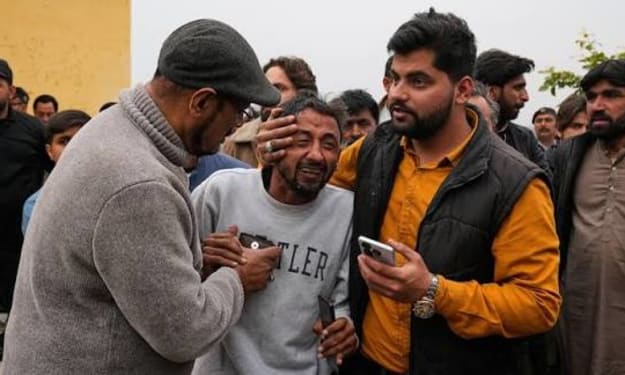
At least 31 people were killed and 169 others injured after a suicide bomber struck an imambargah in Islamabad on Sunday evening, in one of the deadliest attacks in the capital in recent years. The explosion occurred as worshippers gathered for evening prayers, sending shockwaves through nearby residential areas and triggering an immediate emergency response from police, medical teams, and security forces. Authorities said the attacker detonated explosives at the entrance of the religious complex just as crowds were entering the building. The blast caused significant structural damage to the front section of the imambargah and shattered windows of surrounding homes and shops. Rescue workers rushed to the scene within minutes, pulling survivors from debris and transporting the wounded to nearby hospitals. Hospitals across Islamabad declared an emergency, with doctors and nurses working through the night to treat the injured. Medical officials confirmed that many victims were in critical condition, raising fears that the death toll could still rise. Blood donation appeals were issued across the city as supplies ran low. Scene of Chaos and Fear Eyewitnesses described scenes of panic as people ran for safety following the explosion. “There was a loud blast and then smoke everywhere,” said one worshipper who had arrived moments before the attack. “We could hear people crying and calling for help. It felt like the ground shook beneath our feet.” Security forces cordoned off the area and launched a search operation to ensure there were no additional threats. Bomb disposal units conducted a sweep of the surroundings, while forensic teams began collecting evidence from the blast site. Authorities also shut down nearby roads and imposed temporary security restrictions across the capital. Interior Ministry officials said initial investigations confirmed it was a suicide bombing, though no group immediately claimed responsibility. Intelligence agencies are examining CCTV footage from the area and questioning witnesses to identify possible accomplices. Condemnation from Leadership The Prime Minister strongly condemned the attack, calling it a “cowardly act of terrorism” and expressing condolences to the families of those killed. In a statement, he said the government would not allow extremist violence to destabilize the country or target places of worship. “The attack on innocent worshippers is an attack on our shared humanity,” the statement read. “Those responsible will be brought to justice.” The President and other senior political leaders echoed the condemnation, urging unity and resilience in the face of violence. Religious scholars and community leaders also appealed for calm, emphasizing that such acts seek to divide society and provoke fear. Security Concerns Resurface The bombing has raised renewed concerns about security in the capital, which has generally been considered more stable than other parts of the country in recent years. Analysts say the attack highlights ongoing challenges in preventing extremist violence, particularly during religious gatherings that draw large crowds. Security experts note that religious sites remain symbolic and vulnerable targets. “Attacks on places of worship are designed to create maximum emotional impact and spark sectarian tension,” said one analyst. “The goal is not only physical destruction but psychological fear.” Authorities had increased security in Islamabad ahead of several religious events, but the attacker managed to breach safeguards. Investigators are now reviewing how the bomber reached the site and whether there were intelligence failures. Impact on the Community Local residents said the imambargah has long been a center for worship and community activities. Many families in the neighborhood attend services there regularly, making the attack deeply personal for those living nearby. “This was a peaceful place,” said a shopkeeper whose business was damaged by the blast. “People came here to pray, not to fight. We never imagined something like this would happen here.” Community volunteers joined rescue workers in helping the injured and clearing debris. Several mosques and community centers opened their doors to provide food, water, and temporary shelter to those affected. International Reaction Foreign governments and international organizations expressed condolences and solidarity with Pakistan. The United Nations issued a statement condemning the attack and reaffirming its support for efforts to combat terrorism. Several neighboring countries also offered assistance and medical support if needed. Diplomatic missions in Islamabad tightened security around their compounds and advised their citizens to avoid large public gatherings until further notice. Investigation Underway Police officials said a joint investigation team has been formed, including members from intelligence agencies and counterterrorism departments. Early findings suggest the bomber acted alone, but authorities are exploring possible links to militant networks operating in the region. Security has been heightened at other religious sites and sensitive locations across Islamabad and Rawalpindi. Additional patrols have been deployed, and checkpoints established at major entry and exit points of the city. The Interior Ministry urged citizens to remain vigilant and report any suspicious activity. “Public cooperation is critical in preventing further incidents,” a spokesperson said. A Nation in Mourning As night fell, prayers were offered for the victims, and candlelight vigils were held in several parts of the city. Social media filled with messages of grief and solidarity, with many calling for peace and unity. For families who lost loved ones, the tragedy has left deep scars. Funerals are expected to take place under heavy security in the coming days. The attack serves as a grim reminder that despite progress in counterterrorism efforts, the threat of violence has not been fully eliminated. Authorities now face pressure to reassure the public and prevent further attacks, while communities struggle to come to terms with another painful chapter of loss. As investigations continue, the nation watches closely, hoping that those responsible will be identified and that stronger measures will be taken to protect places of worship from future violence.
By Fiaz Ahmed 2 days ago in The Swamp
Leaky Dams Being Installed to Manage Flooding. AI-Generated.
Leaky dams are increasingly being installed across flood-prone regions as part of a growing effort to manage rising flood risks through natural and sustainable solutions. These small-scale structures, made primarily from wood, stones, and natural materials, are designed to slow the flow of water in rivers and streams rather than block it completely. Authorities and environmental experts say leaky dams could play a vital role in protecting communities as climate change brings more intense rainfall and unpredictable weather patterns. Unlike traditional concrete flood defenses, leaky dams allow water to pass through gradually. This reduces the speed and volume of water rushing downstream during heavy rain, helping to prevent rivers from overflowing their banks. By holding back water temporarily, the dams give drainage systems more time to cope and lower the risk of flash flooding in towns and villages. A Natural Approach to Flood Control Leaky dams are part of a broader strategy known as Natural Flood Management (NFM). This approach works with the landscape rather than against it, using natural features to store and slow down rainwater. In addition to leaky dams, NFM projects include tree planting, restoring wetlands, and reconnecting rivers with their floodplains. Engineers and ecologists involved in the projects say the benefits go beyond flood prevention. The dams also help reduce soil erosion, improve water quality, and create new habitats for wildlife such as fish, insects, and birds. Over time, vegetation grows around the structures, strengthening them and blending them into the environment. “These are low-cost, low-impact solutions that can make a real difference,” said one flood management specialist. “Instead of forcing water into narrow channels, we allow it to spread and slow down naturally.” Why Flooding Risks Are Rising Flooding has become a major concern for many regions as climate change drives heavier rainfall and more frequent storms. Urban development has also contributed to the problem. Roads, buildings, and pavements prevent rainwater from soaking into the ground, sending it rapidly into rivers and drains. In recent years, several communities have experienced repeated floods, causing damage to homes, businesses, and infrastructure. Insurance costs have risen sharply, and some residents have struggled to rebuild after multiple disasters. Governments and local councils are now under pressure to find long-term solutions that are affordable and environmentally responsible. Leaky dams are seen as one answer to this challenge. They are relatively quick to build and cost far less than large flood barriers or concrete walls. In many cases, they can be installed by local teams using materials from nearby woodland, reducing both financial and environmental costs. How Leaky Dams Work A typical leaky dam consists of logs or branches placed across a stream and anchored to the banks. Gaps are deliberately left between the materials so that water can continue flowing. During heavy rainfall, the dam slows the surge of water, allowing it to pool upstream. Once water levels drop, the flow returns to normal. Importantly, the dams are designed not to trap large amounts of debris or cause dangerous blockages. Engineers carefully select sites where water can safely collect without flooding farmland or property. Regular inspections are carried out to ensure the structures remain stable and effective. In some areas, multiple leaky dams are installed along a single stream, creating a chain of barriers that gradually reduces water speed over several kilometers. Community Involvement Many leaky dam projects involve local communities, farmers, and landowners. Their cooperation is essential, as the dams are often built on private land or in rural areas upstream of towns. Farmers have shown growing interest in the schemes, especially where repeated flooding has damaged crops and soil. By slowing water flow, leaky dams can help keep valuable topsoil in place and reduce the impact of sudden downpours. Volunteers and conservation groups have also played a role, helping with construction and monitoring wildlife impacts. For some communities, the projects have created a sense of shared responsibility and environmental awareness. Challenges and Limitations While leaky dams offer many benefits, experts caution that they are not a complete solution. They work best as part of a wider flood management system that includes drainage upgrades, warning systems, and traditional defenses where necessary. Critics argue that leaky dams may struggle to cope with extreme weather events or prolonged rainfall. In severe storms, rivers can still overflow despite the presence of natural barriers. There are also concerns about maintenance, as damaged or poorly placed dams could increase flood risk rather than reduce it. Authorities emphasize that careful planning and scientific assessment are essential. Each project is tailored to the local landscape, taking into account soil type, slope, river size, and existing land use. Looking Ahead As governments seek to adapt to climate change, natural flood management is gaining political and public support. Funding has been allocated to expand leaky dam projects and evaluate their long-term effectiveness. Early results from pilot schemes suggest reduced peak water levels and slower flood waves reaching downstream communities. Environmental groups welcome the shift away from purely concrete-based defenses. They argue that combining engineering with nature-based solutions is the most sustainable path forward. For residents living in flood-prone areas, leaky dams represent hope that future storms may be less destructive. While they cannot eliminate flooding entirely, they offer a practical and environmentally friendly tool to reduce its impact. As more regions adopt this approach, leaky dams may become a familiar feature of river landscapes — quiet structures performing an important role in protecting both people and nature from the growing threat of floods.
By Fiaz Ahmed 2 days ago in Longevity
To Win Back the House, Democrats Take the Fight to Deep-Red Areas. AI-Generated.
As Democrats look ahead to the next congressional elections, party leaders are adopting a strategy that would have seemed unlikely just a few years ago: contesting districts long considered safely Republican. Rather than concentrating only on competitive suburban seats, Democrats are sending candidates, organizers, and resources into deep-red regions in an effort to expand their map and rebuild connections with rural and working-class voters. The move reflects a growing belief within the party that winning back control of the U.S. House of Representatives will require a broader approach. With margins in Congress often razor-thin, even a small number of unexpected victories could shift the balance of power. Democratic strategists say the effort is not only about flipping seats but also about rebuilding a national presence in areas where the party has struggled for years. A Strategy Shift For decades, Democrats largely abandoned districts where Republican candidates routinely won by double-digit margins. Limited campaign funds were instead focused on swing districts. However, recent internal reviews suggest that this approach may have narrowed the party’s appeal and allowed Republicans to dominate the political conversation in large parts of the country. Party officials now argue that showing up matters, even in hostile territory. “If voters only hear one side, it becomes much harder to challenge entrenched narratives,” said one senior campaign adviser. “We need to talk to people where they live, not just where it’s comfortable.” This strategy includes town halls, door-to-door canvassing, and messaging focused on economic issues such as healthcare access, job security, and infrastructure investment—topics that resonate across party lines. Targeting Economic Concerns In deep-red districts, Democrats are emphasizing bread-and-butter issues rather than ideological debates. Candidates are framing their campaigns around rising costs of living, hospital closures, and the need for reliable broadband and transportation networks. Many rural communities face economic decline, population loss, and limited healthcare services. Democratic candidates are using these realities to argue that federal investment and bipartisan problem-solving can improve daily life. Some are also highlighting Republican opposition to social programs and labor protections as evidence that conservative leadership has failed to deliver for ordinary residents. One Democratic candidate running in a heavily Republican district said, “People here care about jobs and whether their kids can afford college. They don’t wake up thinking about national culture wars. If you talk about their real problems, they listen.” Recruiting Local Candidates A key part of the plan involves recruiting candidates with strong local roots—teachers, veterans, farmers, and small business owners—rather than national political figures. Party leaders believe local credibility can help overcome skepticism toward the Democratic brand. These candidates are encouraged to tailor their message to their district’s priorities rather than rely on national talking points. While maintaining loyalty to party principles, they often stress independence and a willingness to work with Republicans. This approach aims to counter the perception that Democrats are disconnected from rural America. “We need people who look and sound like their communities,” said a state party organizer. “Authenticity matters more than slogans.” Risks and Resistance The strategy is not without controversy inside the party. Some progressives argue that investing in long-shot races wastes money that could be better spent defending vulnerable incumbents. Others worry that candidates in conservative districts may dilute Democratic policies to appeal to Republican voters. There is also the risk of backlash. In strongly conservative areas, Democratic organizers have reported hostility and mistrust, shaped by years of partisan rhetoric. Campaign workers face challenges building networks from scratch in regions where Democratic offices closed long ago. Despite these obstacles, party leaders insist that retreat is not an option. They view the effort as a long-term investment rather than a single-election gamble. Learning from Past Campaigns Democrats point to recent elections in which unexpected victories came from places once thought unwinnable. Narrow losses have also provided valuable data about which messages resonate and which do not. Analysts say even if Democrats fail to flip many deep-red seats, increasing their vote share could influence statewide races and future redistricting battles. It could also force Republicans to spend money defending seats they previously ignored. “This isn’t just about winning tomorrow,” said a political analyst. “It’s about rebuilding a national coalition that includes rural and conservative regions.” A Broader Political Message The push into deep-red areas also reflects a philosophical shift. Democrats want to project themselves as a national party that represents all Americans, not just urban and suburban voters. By engaging in conservative districts, they hope to reduce polarization and demonstrate commitment to democratic competition. Party leaders believe the effort could soften political divisions by encouraging direct conversations between voters and candidates rather than relying solely on social media and national television. Looking Ahead As the campaign season intensifies, Democrats will test whether their strategy can break through entrenched loyalties. Success will depend on turnout, candidate quality, and whether economic concerns outweigh cultural and partisan identities. Even modest gains could help Democrats reclaim the House, where a handful of seats often determine control. More importantly, the party hopes the effort will lay the groundwork for future elections by restoring trust in communities that have felt ignored. Whether the strategy delivers victories or simply narrows margins, it signals a new willingness by Democrats to compete everywhere. In a deeply divided political landscape, that may be one of the most significant changes of all.
By Fiaz Ahmed 2 days ago in The Swamp
Mandelson Messages to Be Handed Over by Ministers as Labour MPs Call for ‘Clear Out’ of PM’s Advisers. AI-Generated.
Senior ministers are expected to hand over communications involving Lord Peter Mandelson following growing pressure from Labour MPs who are demanding a “clear out” of advisers surrounding the Prime Minister. The controversy has intensified scrutiny of the government’s internal decision-making and raised fresh questions about transparency, influence, and political accountability at the highest levels of power. The row centers on a series of messages reportedly exchanged between Lord Mandelson, a veteran political strategist and former cabinet minister, and senior figures within government. Although Mandelson does not hold an official advisory role, his longstanding ties to the Labour leadership and reputation as a key architect of past election victories have fueled concerns about informal channels of influence operating outside formal structures. Opposition figures and backbench Labour MPs alike have called for full disclosure of communications to determine whether policy decisions were shaped by individuals who are not subject to the same rules of accountability as government officials. Calls for Transparency Ministers have confirmed that they will cooperate with requests to release relevant messages, including emails and text exchanges, in line with record-keeping obligations. A government spokesperson said the Prime Minister supports “full transparency” and is committed to ensuring that all advice received by ministers is properly documented and scrutinized. However, critics argue that the situation exposes deeper problems in the Prime Minister’s advisory network. “This is not just about one set of messages,” said one Labour MP. “It’s about a culture of informal influence and a failure to respect the boundaries between official government business and political maneuvering.” Several MPs have gone further, calling for a wholesale review of the Prime Minister’s advisory team. They claim that a small group of unelected advisers wields disproportionate power over policy direction and communications strategy, sidelining cabinet ministers and parliament. Mandelson’s Role Under the Spotlight Lord Mandelson, a former EU commissioner and key figure in the New Labour era, has long been seen as a behind-the-scenes power broker. While he holds no formal government position, his close relationship with senior Labour figures has kept him influential in political circles. Sources familiar with the communications say the messages touched on political strategy, media handling, and long-term policy positioning. Although there is no suggestion of wrongdoing, the revelation has reignited debate over the role of unofficial advisers and their impact on democratic processes. Supporters of Mandelson argue that seeking advice from experienced figures is normal practice in politics. “Leaders consult trusted voices all the time,” said one senior party official. “That does not mean policy is being dictated from outside government.” Yet critics counter that such arrangements blur the line between guidance and control. They warn that informal advisers are not bound by the same codes of conduct, conflict-of-interest rules, or public scrutiny as civil servants and ministers. Pressure from Within Labour The strongest calls for reform have come from within Labour itself. A group of backbench MPs has demanded that the Prime Minister overhaul his advisory structure and limit the role of outside political figures. One MP described the current setup as “too centralized and too opaque,” adding that it risks undermining trust both inside the party and among voters. “There has to be a reset,” the MP said. “We need professional, accountable advisers who operate within the system, not personalities from past eras pulling strings behind closed doors.” Some Labour members fear that association with Mandelson could revive old controversies from the New Labour period, when accusations of spin, favoritism, and elite influence damaged public confidence in politics. Political Fallout The controversy comes at a sensitive time for the government, as it seeks to present itself as stable, ethical, and focused on policy delivery. The Prime Minister has pledged to restore integrity to public life, making the issue of private communications and unofficial advice particularly damaging. Opposition parties have seized on the affair, accusing the government of hypocrisy. A senior opposition spokesperson said the Prime Minister had promised a break from old political habits but appeared to be relying on figures from the past to shape decisions. “This looks like government by text message,” the spokesperson said. “If ministers are taking advice from people who hold no office, the public deserves to know.” What Happens Next Officials say the process of gathering and releasing the messages is underway and will comply with existing transparency rules. It is unclear whether the communications will be published in full or summarized for parliamentary review. There are also growing calls for an independent inquiry into how advisers are appointed and how external figures interact with government departments. Some MPs want clearer rules to prevent informal lobbying and ensure that all advice influencing policy is traceable. Political analysts say the episode reflects a broader tension within Labour between its modern leadership and its historic power brokers. How the Prime Minister handles the situation could shape perceptions of his authority and willingness to reform internal structures. For now, the focus remains on the messages themselves — what they reveal, and whether they confirm fears of excessive outside influence. As one senior MP put it, “This is about drawing a line between experience and interference.” Whether the controversy leads to a reshuffle of advisers or fades into another Westminster scandal will depend on what the communications show and how firmly the Prime Minister responds to calls for change. What is clear is that the issue has reopened a long-running debate about who really holds power in government — those elected by the public, or those advising them behind the scenes.
By Fiaz Ahmed 2 days ago in The Swamp
Blizzards, Thaw, Then Relentless Rain: Why Is the North East Getting Such a Soaking?. AI-Generated.
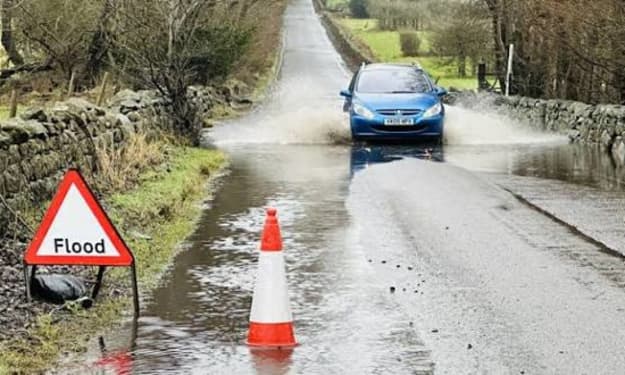
Communities across the North East have endured a dramatic sequence of extreme weather in recent weeks — blizzards followed by sudden thawing and then days of relentless rain. Roads have flooded, rivers have burst their banks, and emergency services have been stretched as residents struggle to adapt to rapidly changing conditions. Meteorologists say the unusual pattern is the result of a powerful mix of atmospheric forces linked to climate change and shifting global weather systems. The region first experienced heavy snowfall as Arctic air swept south, bringing freezing temperatures and blizzard conditions to areas unaccustomed to prolonged snow events. Schools closed, transport networks stalled, and rural communities were briefly cut off. But the cold spell did not last. Within days, temperatures rose sharply, melting accumulated snow and saturating already frozen ground. When intense rain followed, the landscape had little capacity to absorb the water. This sequence — snow, thaw, and heavy rain — created the perfect conditions for flooding. A Clash of Air Masses Weather experts explain that the North East has become a battleground between cold polar air and warm, moisture-rich systems arriving from the Atlantic. Jet stream instability has allowed these contrasting air masses to collide more frequently and with greater intensity. “The jet stream is behaving more erratically than in the past,” said one senior meteorologist. “It’s pulling down Arctic air one week and then swinging back north to allow warm, wet systems to dominate the next. That back-and-forth pattern is exactly what we’ve been seeing.” As warm air moves over cold ground and snow cover, it accelerates melting while carrying large volumes of moisture. The result is prolonged rainfall rather than brief showers, overwhelming drainage systems and swelling rivers. Climate Change as a Multiplier Scientists are cautious about attributing any single storm to climate change, but they agree that warming temperatures are amplifying weather extremes. Warmer air holds more moisture, increasing the potential for heavy rainfall. At the same time, weakened polar circulation allows cold air to travel farther south, creating sharper contrasts in temperature. In the North East, this has meant more frequent swings between winter and spring conditions in a matter of days. These rapid shifts prevent the land from stabilizing and make flooding more likely. Urban areas have been particularly vulnerable. Older drainage systems were designed for gentler rainfall patterns and cannot cope with sustained downpours. In some towns, floodwater poured into basements and shops, forcing businesses to close temporarily and residents to evacuate. Rivers Under Pressure Hydrologists report that river levels rose at unprecedented speed due to the combined impact of melting snow and rainfall. Unlike summer storms, where dry soil can absorb much of the water, frozen or waterlogged ground allows runoff to flow directly into rivers and streams. Several flood warnings were issued across the region as reservoirs approached capacity. Authorities opened spillways to prevent dam failures, while sandbags were distributed to vulnerable neighborhoods. Farmers have also suffered heavy losses. Fields were submerged, livestock had to be moved to higher ground, and crops already planted were damaged by standing water. The agricultural sector fears that unpredictable weather will increasingly disrupt food production cycles. Infrastructure Strains Transport networks have faced repeated disruption. Rail services were suspended in some areas due to landslides and track flooding. Major roads became impassable after drainage channels overflowed. Utility companies reported power outages linked to fallen trees and water-damaged substations. Local governments say the cost of repairs is mounting. Bridges, culverts, and flood defenses that were once considered sufficient are now being tested beyond their design limits. Emergency planners warn that these conditions may become more common unless infrastructure is modernized. Investment in flood barriers, river management, and urban drainage is now seen as urgent rather than optional. A Pattern, Not an Exception Long-term data shows that the North East is experiencing more intense rainfall events than in previous decades. Seasonal averages may not look dramatic, but the way precipitation falls has changed — concentrated into fewer, heavier storms instead of steady light rain. Weather forecasters say this pattern increases the risk of flash flooding and makes prediction more difficult. Sudden downpours can overwhelm communities with little warning, while melting snow adds an unpredictable extra layer of risk. Residents have begun to notice the shift. Longtime locals describe winters that once brought steady cold now replaced by wild fluctuations between freezing nights and mild, rainy days. This volatility is reshaping how people prepare for seasonal weather. Looking Ahead Forecasts suggest that more rain is likely in the coming weeks, raising concerns that rivers may not have time to return to normal levels before the next storm arrives. Authorities are urging residents in flood-prone areas to stay alert and prepare emergency plans. Experts emphasize that adaptation is key. Improved forecasting, upgraded drainage systems, and better land-use planning can reduce the impact of extreme weather. Natural solutions, such as restoring wetlands and floodplains, can also help absorb excess water before it reaches towns and cities. The recent soaking of the North East is not just a story of bad luck or seasonal variation. It reflects a changing climate where extremes are becoming the new normal. Blizzards followed by sudden thaw and relentless rain may once have been rare. Now, they are a warning of what future winters could increasingly look like. For residents still drying out from flooded homes and roads, the question is no longer why this happened once — but how often it will happen again.
By Fiaz Ahmed 2 days ago in The Swamp
Japan to Restart World’s Biggest Nuclear Plant. AI-Generated.
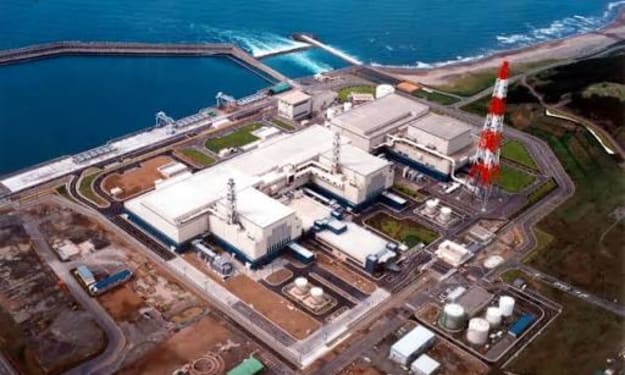
Japan is preparing to restart the world’s largest nuclear power plant, a landmark decision that signals a major shift in the country’s energy policy more than a decade after the Fukushima disaster reshaped public attitudes toward nuclear power. The Kashiwazaki-Kariwa nuclear plant, located in Niigata Prefecture on Japan’s northwest coast, is set to resume operations following regulatory approval and renewed political backing from the central government. The plant, operated by Tokyo Electric Power Company (TEPCO), has a total capacity of more than 8,000 megawatts, making it the largest nuclear facility in the world by output. It has remained offline since 2011, when Japan shut down nearly all of its nuclear reactors in the aftermath of the Fukushima Daiichi nuclear accident triggered by a massive earthquake and tsunami. Energy Security and Climate Goals Japan’s decision to restart the Kashiwazaki-Kariwa plant comes amid growing concerns over energy security and rising fuel costs. Since the nuclear shutdowns, the country has relied heavily on imported fossil fuels such as liquefied natural gas (LNG), coal, and oil to meet its electricity needs. This dependence has made Japan vulnerable to global energy price fluctuations and geopolitical tensions. Government officials argue that restarting nuclear plants is essential to ensuring a stable and affordable energy supply. “Nuclear power plays a critical role in achieving both energy security and carbon reduction targets,” said a senior official from Japan’s Ministry of Economy, Trade and Industry (METI). “Restarting Kashiwazaki-Kariwa will significantly strengthen our electricity system and reduce reliance on fossil fuels.” Japan has pledged to achieve carbon neutrality by 2050, and nuclear power is seen as a key component of that strategy. The government aims to raise the share of nuclear energy in its power mix to between 20 and 22 percent by 2030, compared with much lower levels in recent years. Safety and Regulatory Hurdles The restart of Kashiwazaki-Kariwa has not been without controversy. The plant faced serious setbacks in recent years after security breaches were discovered in 2021, including failures in access control systems and monitoring equipment. These lapses led Japan’s Nuclear Regulation Authority (NRA) to suspend operations until TEPCO could demonstrate that it had addressed the problems. Following extensive inspections and corrective measures, the NRA lifted the operational ban in late 2023, clearing the way for preparations to restart one of the plant’s seven reactors. TEPCO has since upgraded security systems, improved employee training, and implemented stricter oversight procedures. Despite regulatory approval, local consent remains a major hurdle. Under Japan’s informal rules, nuclear plants cannot resume operations without the agreement of local governments. Niigata’s governor has taken a cautious stance, insisting that public trust must be restored before giving final approval. “We must ensure that safety is fully guaranteed and that lessons from Fukushima are never forgotten,” the governor said in a recent statement. Public hearings and expert panels are expected to play a role in the final decision.Technological and Safety Upgrades TEPCO has invested billions of dollars in safety upgrades at Kashiwazaki-Kariwa. These include reinforced seawalls, improved backup power systems, upgraded control rooms, and stricter security protocols to prevent unauthorized access. The plant has also installed new equipment designed to prevent hydrogen explosions like those seen at Fukushima. Emergency drills involving local governments and first responders have been conducted to test evacuation and disaster-response plans. Regulators emphasize that Japan’s post-Fukushima safety standards are among the strictest in the world. Reactors must pass comprehensive inspections and stress tests before restarting, and utilities face heavy penalties for violations. Still, critics argue that no technological fix can fully eliminate the risks associated with nuclear power, particularly in a country prone to earthquakes and typhoons. Global Implications Japan’s move to restart the world’s largest nuclear plant will be closely watched by other nations reconsidering nuclear energy as part of their climate strategies. Countries such as Germany have moved away from nuclear power entirely, while others, including France and Britain, are investing in new reactors. If Kashiwazaki-Kariwa resumes operations successfully, it could strengthen the case for nuclear power as a low-carbon alternative to fossil fuels. A failure or new scandal, however, could reinforce fears and reignite opposition. The decision also carries symbolic weight. Kashiwazaki-Kariwa represents both the promise and peril of nuclear technology: immense power generation on one hand, and potentially catastrophic risk on the other. A High-Stakes Restart The restart is expected to occur in phases, with one reactor coming online first before others follow. TEPCO and government officials insist that caution will guide the process and that public safety remains the top priority. For Japan, the reopening of the world’s biggest nuclear plant is more than an energy policy choice. It is a test of whether the nation has learned from its past and can balance technological ambition with accountability and transparency. As the reactors prepare to hum back to life, Japan stands at a crossroads between its nuclear legacy and its future energy needs. Whether this decision proves wise will depend not only on engineering and regulation, but on rebuilding public trust in a technology that once promised prosperity and delivered disaster.
By Fiaz Ahmed 2 days ago in The Swamp