James Marinero
Bio
I live on a boat and write as I sail slowly around the world. Follow me for a varied story diet: true stories, humor, tech, AI, travel, geopolitics and more. I also write techno thrillers, with six to my name. More of my stories on Medium
Stories (122)
Filter by community
How Spanish Infants Dominate the World's Weather
Yes, it's an Alpine Weather House which functions as a hygrometer embellished by folk art. The male and female figures ride on a balance bar, which is suspended by a piece of catgut or hair. The gut relaxes or shrinks based on the humidity in the surrounding air, relaxing when the air is wet and tensing when the air is dry. This action swings one figure or the other out of the house depending on the humidity. Some variants function as a barometer: low pressure indicates bad (rainy) weather, high pressure good (sunny) weather.
By James Marinero3 years ago in Earth
Could Prigozhin Oust Putin?
Reading a recent story in the Washington Post, I was struck by the opinions it reported about Putin’s shrinking circle of trusted advisers and his apparent lack of a strategy for the Ukraine war after 300 days of failure. This is an extract of what the Post reported:
By James Marinero3 years ago in The Swamp
Discovering Brothels, Bordellos and Burdels
Some years ago I spent a couple of winters in Sicily, living on my boat in the dock at Marina de Ragusa. It’s a wonderful Island with great wine and pizzas to die for. Just up the road is the old city of Ragusa which is a World Heritage Site. There’s plenty of other history too with amazing Roman ruins, at Agrigento for example. Then there’s an active volcano, Mt. Etna if you fancy visiting a boiling crater.
By James Marinero3 years ago in Wander
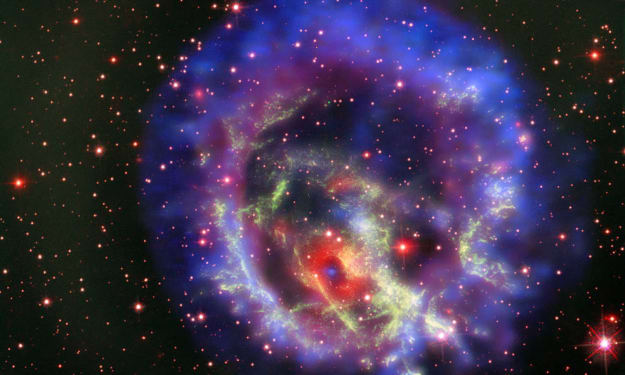
A New Class of Dead Star?
Some neutron star basics Neutron stars have a radius on the order of 10 kilometres with a mass of about 1.4 solar masses. They result from the supernova explosion of a massive star, combined with gravitational collapse. The huge gravitational collapse the core past white dwarf star density (~10⁶ g/cm³, or 1 tonne per cubic centimetre) to that of atomic nuclei (~3×10⁸g/cm³), resulting in a diameter of about 20 km.
By James Marinero3 years ago in Futurism