Marcus Hedare
Bio
Hello, I am Marcus Hedare, host of The Metaphysical Emporium, a YouTube channel that talks about metaphysical, occult and esoteric topics.
https://linktr.ee/metaphysicalemporium
Stories (52)
Filter by community
Root & Ritual: A Guide to Green Witchcraft. Content Warning.
The Whispering Path of Green Witchcraft Green witchcraft, sometimes known as garden witchery, herbal magic, or simply nature witchcraft, feels less like a system to master and more like a path learned through touch, observation, and quiet devotion. It begins with a willingness to listen. The soil presses its coolness into bare feet, wind moves through leaves like a soft breath, and water carries its own quiet wisdom. Green witches shape their practice from these experiences. Their magic grows from relationship and consistency rather than from dramatic ritual.
By Marcus Hedareabout a month ago in BookClub
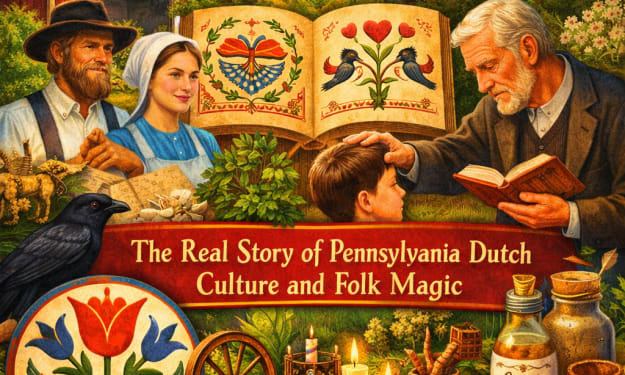
Beyond Hex Signs: . Content Warning.
The Pennsylvania Dutch Legacy Pennsylvania Dutch culture represents one of the most enduring and distinctive cultural landscapes in North America. Originating in the late seventeenth and early eighteenth centuries, German‑speaking immigrants from regions such as the Palatinate, Hesse, Württemberg, and Alsace brought with them not only language and religious beliefs, but also a wide array of artistic, culinary, and ritual traditions. Settling primarily in southeastern and south-central Pennsylvania, these communities transformed the landscape with their architecture, farms, and distinctive cultural markers, while simultaneously adapting to the new environment of the American colonies.
By Marcus Hedareabout a month ago in BookClub
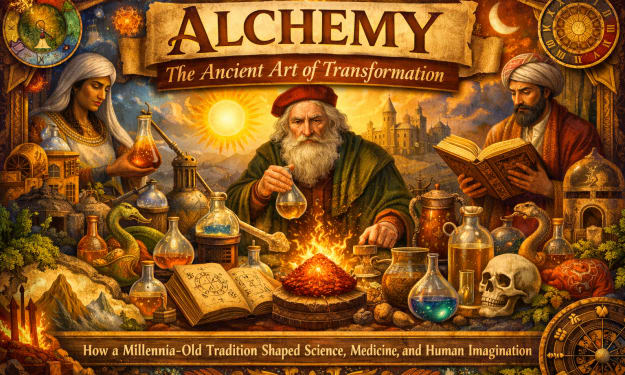
Alchemy: The Ancient Art of Transformation. Content Warning.
The Ancient Art of Transformation and Discovery Alchemy is often remembered through the lens of myth: mysterious figures in shadowed laboratories, stirring powders and potions in search of gold or eternal life. These images, however, obscure the true nature of a discipline that was both rigorous and far-reaching. Alchemy was an intellectual and spiritual pursuit that spanned continents, centuries, and cultures, encompassing the study of nature, the human body, and the cosmos. Its aim was not simply the transmutation of metals, but the pursuit of knowledge, understanding, and transformation—both material and personal.
By Marcus Hedareabout a month ago in BookClub
Imbolc: Celebrating the Return of Light and Life. Content Warning.
Why Imbolc Matters Imbolc stands as one of the oldest and most enduring seasonal observances rooted in the Celtic tradition. Celebrated on February 1, it marks the halfway point between the winter solstice and the spring equinox, signaling the first turning of the wheel from deep winter toward the promise of rebirth and growth. Historically, this festival served as a marker for agrarian societies to acknowledge the beginning of key seasonal changes, including the onset of lambing, the appearance of fresh milk, and the gradual increase of daylight. The term Imbolc itself is believed to translate to “in the belly,” a reference to the pregnancy of ewes and, symbolically, the potential of new life waiting to break forth from winter’s hold.
By Marcus Hedareabout a month ago in BookClub
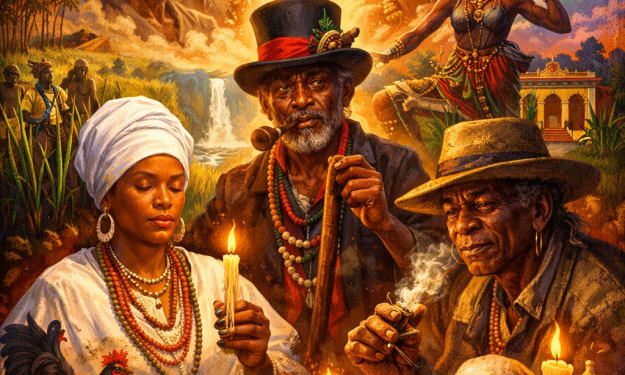
Voodoo, Vodoun, and Hoodoo. Content Warning.
Sacred Systems Born of Survival, Memory, and Power Voodoo, Vodoun, and Hoodoo exist as living spiritual systems shaped by forced migration, cultural fragmentation, and extraordinary resilience. These traditions did not arise in abstraction or isolation. Each developed through the preservation of African cosmologies under conditions of enslavement, colonial domination, and social exclusion. Spiritual knowledge functioned as memory, medicine, resistance, and identity when formal power structures were denied. Ritual, story, song, and practice carried ancestral worlds across oceans and generations.
By Marcus Hedareabout a month ago in BookClub
The Lemurian Path. Content Warning.
Opening the Path Lemurian Mysticism sits at an unusual crossroads where scientific history, speculative philosophy, and spiritual imagination meet. People encounter it in many ways. Some hear about Lemurian crystals. Others come across stories of an ancient civilization that valued cooperation over conflict. Still others meet the idea through meditation circles that speak of memory, intuition, and the possibility of forgotten wisdom. However someone arrives at it, Lemurian Mysticism has a way of inviting curiosity. It encourages people to ask where stories begin, how beliefs take shape, and why certain ideas endure long after the facts that created them have faded.
By Marcus Hedare2 months ago in BookClub
The Enchanted Court. Content Warning.
The Enchanted Sovereigns of the Hidden Court Oberon and Titania stand among the most enduring figures connected to the fairy realm, shaped by centuries of shifting belief, folklore, and literary imagination. Each name carries a long and intricate lineage that reaches into medieval legend, classical mythology, and the developing ritual practices of later occult movements.
By Marcus Hedare2 months ago in BookClub
The Chthonic Deities. Content Warning.
Into the Deep Places of Power Across ancient cultures, the figures who dwell beneath the earth have always commanded a particular kind of reverence. They are the deities of soil, shadow, root, and stone. In Greek thought, the word khthon referred not to a distant underworld but to the living earth itself, the dark ground that nourishes crops, holds the bones of ancestors, and hides caverns filled with sacred potency. From this soil-centered worldview emerged the idea of the chthonic gods, beings who preside over the mysteries that happen out of sight.
By Marcus Hedare2 months ago in BookClub
The Green Language: . Content Warning.
There are phrases within the long history of esoteric study that seem to shimmer with the atmosphere of myth. “The Music of the Spheres,” a concept rooted in Pythagorean cosmology, describes celestial harmony expressed through mathematical proportion. “The Philosopher’s Stone,” a goal pursued by countless alchemists from the late Hellenistic period through the Renaissance, symbolizes both material transformation and inner refinement. “The Language of the Birds,” preserved in folklore, sacred literature, and arcane manuscripts, belongs to this same family of evocative expressions. Each phrase gestures toward a world where nature, symbol, and spirit appear fused in a single vision.
By Marcus Hedare2 months ago in BookClub
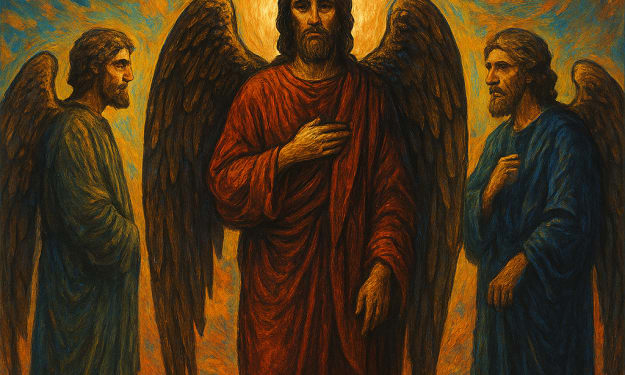
The Grigori. Content Warning.
A Forgotten Chapter of Early Sacred Lore Ancient traditions often survive in scattered remnants, carried forward through fragile manuscripts and the persistence of collective memory. The account of the Grigori, known as The Watchers in early Jewish writings, belongs to this older layer of mythic material. The most extensive narrative appears in the Book of Enoch, a work produced during the Second Temple period, likely between the third and first centuries BCE. Portions of this same text were later recovered among the Dead Sea Scrolls at Qumran, confirming that communities of the era, including the Essenes, regarded the Watcher tradition as meaningful enough to copy and preserve by hand.
By Marcus Hedare2 months ago in BookClub
Tulpas:. Content Warning.
Opening the Door to a Very Strange Idea The idea that a person can intentionally create a companion within their own mind can feel unsettling at first glance. It sounds like something that should belong in a fantasy novel or a psychological thriller. Yet human beings have been exploring the boundaries of imagination and inner consciousness for centuries. What we now call a Tulpa began within the rich and complex world of Tibetan spirituality, where advanced meditators were said to produce appearances or forms through disciplined states of awareness. These early ideas did not describe imaginary friends or psychological partners. They were spiritual emanations tied to profound levels of meditative practice and religious purpose.
By Marcus Hedare2 months ago in BookClub
Theurgy & Thaumaturgy. Content Warning.
Unlocking the Ancient Arts: Magic as a Bridge Between Worlds Magic represents one of the oldest forms of human inquiry and practice, an enduring attempt to interact with forces beyond ordinary perception. In the ancient world, magic was not mere superstition. Temples, sanctuaries, and sacred rites across Egypt, Mesopotamia, Greece, and Rome were designed to align human action with the rhythms of the cosmos. Objects, symbols, and words carried meaning beyond the material, serving as conduits to influence both spiritual and earthly realities. Practitioners observed patterns in nature, celestial movements, and human experience, creating structured systems of operation capable of producing both inner and outer transformation.
By Marcus Hedare2 months ago in BookClub