Say the truth
Bio
"Say the Truth: Explain Everything in the World" is your trusted source for uncovering facts and exploring the wonders of history, science, technology, and beyond. We simplify complex ideas and reveal truths to inspire curiosity .
Stories (691)
Filter by community
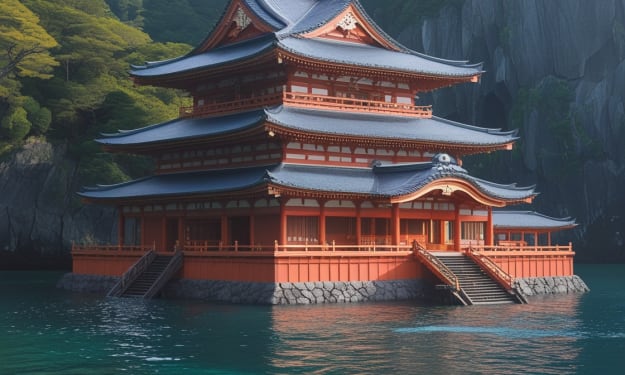
The Dragon King's Palace: Revealing the Subaquatic Treasure City of Japanese Mythology. AI-Generated.
The Mythical Origins of Ryūgū-jō Within the expansive realm of Japanese mythology, few narratives resonate with such awe as the chronicle of Ryūgū-jō (竜宮城), the Dragon Palace located beneath the ocean. Alleged to be the sphere of Ryūjin (龍神), the Dragon Deity of the sea, Ryūgū-jō is a splendid underwater palace crafted from coral, crystal, and precious metals. Its mythological foundations originate from early Shinto convictions and were further developed by Buddhist influences, folklore, and oral traditions transmitted through generations.
By Say the truth 9 months ago in History
"The Dragon Through Time: Tracing the History and Origin of the Mythical Beast"
The Genesis of the Dragon Myth The notion of dragons predates documented history. Long before societies inscribed records on tablets or scrolls, tales of serpentine monsters and sky-beasts were transmitted orally through generations. Anthropologists speculate that the dragon myth may have originated from ancient humans discovering colossal fossilized bonespossibly of dinosaurs or large prehistoric mammalsand envisioning them as remains of formidable, mythical creatures.
By Say the truth 9 months ago in History
Kappa: The River Demon of Japanese Mythology. AI-Generated.
Kappa: The River Demon of Japanese Mythology Japan's mythological realm is abundant with intriguing and peculiar beings, collectively referred to as yokai. Among these, the kappaa water-dwelling sprite or demonstands out as one of the most mysterious and enduring figures in Japanese legend. Typically portrayed as a small, humanoid entity with amphibious traits, a shell on its back, and a bowl-like indentation on its head that retains water, the kappa serves both as a menace and a moral educator. It represents Japan’s profound reverence for nature, particularly its waterways, and its longstanding tradition of storytelling.
By Say the truth 9 months ago in History
The Mythical Nine-Tailed Fox: Heritage, Lore, and Cultural Impact
Ancient Roots in China: The Huli Jing The notion of the nine-tailed fox traces back over 2,000 years to ancient China. The earliest documented mention can be found in the “Shanhaijing” (Classic of Mountains and Seas), a Chinese manuscript assembled between the 4th and 1st centuries BCE. The Huli Jing was characterized as a captivating, astute fox spirit that could exist for more than a millennium. According to Daoist beliefs, these foxes amassed spiritual energy through age and meditation, acquiring magical abilities and frequently transforming into human females to engage with humans.
By Say the truth 9 months ago in History
The Golden Hoard of Bactria: Afghanistan’s Lost Treasure of the Nomads :. AI-Generated.
The Discovery of the Bactrian Gold In 1978, Soviet archaeologist Viktor Sarianidi spearheaded a team of scholars into the Sheberghan region of northern Afghanistan. Located merely 80 miles south of the Amu Darya River and adjacent to the borders of Turkmenistan and Uzbekistan, they unearthed a series of burial mounds locally referred to as Tillya Tepe, or “Hill of Gold. ”
By Say the truth 9 months ago in History
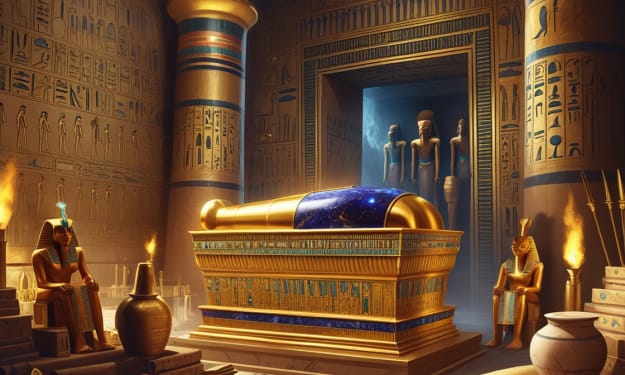
Supreme Egyptian Wealth Yet to Be Discovered: The Buried Tomb of Pharaoh Amenhotep I. AI-Generated.
Introduction Egypt is emblematic of ancient wealthshimmering gold, revered tombs, and forgotten temples. Throughout the ages, archaeologists have uncovered monumental discoveries, from the Valley of the Kings to the Great Pyramids. Nonetheless, despite these achievements, many contend that the most significant Egyptian treasure remains concealed beneath layers of time: the lost tomb and pristine treasures of Pharaoh Amenhotep I.
By Say the truth 9 months ago in History
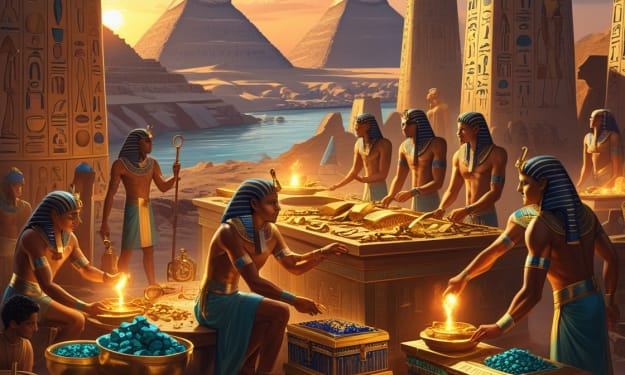
The Origin and Value of Tutankhamun’s Treasure: A Heritage in Gold
But from where did this vast treasure arise? Why was such wealth interred with a boy-king who perished around the age of 18 or 19? And what might be the current estimated worth of these treasures? This article investigates the origins, symbolism, and contemporary valuation of one of history’s most renowned caches.
By Say the truth 9 months ago in History
The Legacy of the Boy King: Unveiling the Treasure of Tutankhamun's Tomb
The Discovery that Resounded Globally In 1922, British archaeologist Howard Carter, supported by Lord Carnarvon, made an astounding discovery in Egypt's Valley of the Kings. After years of digging in challenging conditions with little fortune, Carter's tenacity ultimately bore fruit when he uncovered a staircase leading into the sands.
By Say the truth 9 months ago in History
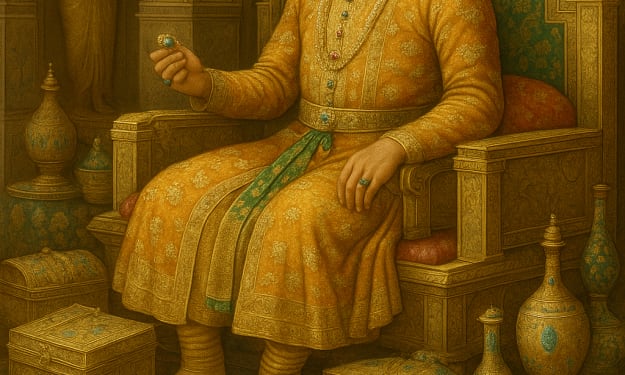
The Disappeared Gems of Emperor Jahangir: An Elusive Mughal Wealth Beyond Belief. AI-Generated.
The Golden Era of the Mughal Empire The Mughal Empire during the early 17th century was at the zenith of its splendor. Encompassing a vast expanse of the Indian subcontinent, it exhibited a thriving economy, a strong administrative framework, and luxurious courtly life. Jahangir, whose name translates to "Conqueror of the World," assumed the throne in 1605 after Akbar’s passing and governed for over twenty years.
By Say the truth 9 months ago in History
The Sunken Wealth of the Flor de la Mar: The Forsaken Treasure Vessel of the Portuguese Empire. AI-Generated.
. The Ascendancy of Portuguese Naval Might In the early 1500s, the Portuguese Empire was swiftly broadening its influence across the Indian Ocean. Under the leadership of King Manuel I, Portuguese navigators sought spices, wealth, and supremacy over the trade routes of Asia. Among the numerous vessels launched to aid this mission was the Flor de la Mara colossal carrack that became both an emblem of Portuguese might and a persistent puzzle of lost wealth.
By Say the truth 9 months ago in History
The Golden Vault of the Maharaja: India’s Overlooked Regal Fortune
The Narrative of the Golden Vault India, with its rich mosaic of kingdoms, empires, and dynasties, has long been a land of myths and opulence. Among its most timeless narratives is that of the Golden Vault of the Maharaja, a treasure hoard believed to be concealed beneath a now-decrepit palace in southern India. The narrative alleges a secret vault that was sealed during the early 18th century, brimming with gilded thrones, ivory-carved figures, invaluable jewels, and sacred manuscripts.
By Say the truth 9 months ago in History
The Malediction of the Pharaoh’s Gold: Vanished Wealth of the Egyptian Desert
The Myth Commences In the core of ancient Egypt, during the reign of a formidable yet lesser-known pharaohNeferkare Djedkarea substantial quantity of gold was amassed. This was not merely opulence for royal extravagance; it was designated for a divine purpose: to assist the pharaoh in his voyage to the afterlife and to maintain the splendor of Egypt beyond existence.
By Say the truth 9 months ago in History