Zahid Hussain
Stories (114)
Filter by community
Humanity May Reach Singularity Within Just 4 Years, Trend Shows. AI-Generated.
The idea of technological singularity—a point when artificial intelligence (AI) surpasses human intelligence and transforms civilization—has long been the realm of science fiction, futurists, and speculative thinkers. But recent trends in AI development suggest that this once-distant milestone could occur much sooner than expected, possibly within the next four years. The notion may sound dramatic, but when examined through the lens of computational progress, investment acceleration, and real-world breakthroughs, the possibility begins to appear less far-fetched and more actionable. What Is Technological Singularity? Technological singularity refers to a hypothetical future in which machine intelligence surpasses human mental capabilities across all domains—scientific reasoning, creativity, emotional intelligence, and strategic decision-making. Beyond that point, AI might be capable of autonomously improving its own architecture and capabilities at an exponential rate. At singularity: AI could solve problems beyond human comprehension Economic, social, and political systems may undergo radical transformation The pace of innovation may become uncontrollable and unpredictable This is not simply smarter computers—it’s a fundamental shift in how intelligence exists and operates. The Trend That Started the Conversation Several researchers, startups, and global institutions track AI development across multiple indicators: computing power, dataset accessibility, training methods, hardware optimization, and investment growth. When these trends are extrapolated, the trajectory points toward an unprecedented acceleration in AI capabilities. The key trend indicators include: 1. Exponential Growth in Compute Power Modern AI training relies on massive computational resources. According to some estimates, the total compute used in the largest AI training runs has been doubling every 6 months, far outpacing traditional Moore’s Law predictions. Higher compute capacity enables: More complex models Faster training cycles Larger datasets This creates a virtuous cycle where more computing power drives better AI, which in turn optimizes future AI development. 2. Investment in AI Has Skyrocketed Governments, tech giants, and venture capital firms are pouring billions into AI research. From OpenAI, Google DeepMind, Microsoft, Meta, and Chinese AI labs to university research programs, the scale of financial commitment has increased dramatically. This investment boom accelerates progress because: More talent is attracted to AI research Projects that were once speculative get serious funding Competition pushes breakthroughs The infusion of capital creates both rapid growth and intense competition—fueling faster innovation cycles. 3. Data Availability Is Exploding AI thrives on data. The universe of digital information—text, audio, visual content—is growing exponentially. More data means better training, which leads to more capable and nuanced AI models. Open datasets, global connectivity, and digital transformation across sectors dramatically increase the raw material AI systems use to learn. What a 4-Year Singularity Would Mean If singularity arrives around 2029–2030, the world may change in ways many cannot yet fully imagine. Some possible outcomes include: 1. AI in Everyday Decision-Making AI could begin making complex decisions in finance, medicine, and governance—areas traditionally guided by human judgment. For example, AI might: Manage global supply chains autonomously Diagnose diseases more accurately than doctors Optimize economic policy using predictive models 2. Automation Beyond Routine Jobs We already see automation replacing repetitive tasks. But singularity-level AI could automate creative, strategic, and cognitive roles—those thought to require uniquely human insight. This could shift employment models and redefine what work means in the 21st century. 3. New Ethical Paradigms When machines outthink humans, ethical frameworks may be reshaped. Questions will arise around: Rights for highly intelligent systems Accountability when AI makes consequential decisions Fair distribution of technological benefits Ethics will need to evolve alongside technical progress. Skepticism and Caution Are Still Important Not everyone agrees that singularity is imminent—or that it is even possible in the way theorists imagine it. Critics point out: 1. AI Still Lacks Common Sense Despite deep learning advances, AI struggles with: Contextual reasoning Generalization across domains Understanding causality beyond patterns Artificial general intelligence (AGI)—a necessary precursor to singularity—remains elusive. 2. Hardware and Energy Limits Scalable compute must also be sustainable. The energy consumption of large AI models is immense, raising questions about environmental cost and hardware feasibility. 3. Technical and Social Constraints Even if AI reaches superintelligence in technical labs, integrating it safely and equitably into society presents major social challenges. Singularity is not only a technical milestone—it's a socioeconomic and ethical transformation. Preparing for a Near-Term Singularity Whether or not singularity occurs in four years, the trend toward more powerful AI is undeniable. Here are key areas that require thoughtful preparation: 1. AI Policy & Regulation Governments must create frameworks that: Ensure transparency Protect individuals’ rights Promote safety in AI development Unregulated innovation can lead to misuse and social harm. 2. Workforce Transition and Education As AI capabilities expand, education systems should: Align with future skills Promote creativity and cognitive flexibility Retrain workers displaced by automation This protects economic resilience. 3. Ethical AI Standards Global collaboration is needed to define: Acceptable AI behaviors Safety protocols Accountability mechanisms Ethics must keep pace with technology. Is Singularity a Threat—or an Opportunity? Public perception of singularity often swings between excitement and fear: Optimistic view: Superintelligent AI may solve humanity’s greatest challenges—disease, climate change, poverty, and inefficiency. Pessimistic view: AI may become uncontrollable, misuse intelligence, or disrupt social order in dangerous ways. The real outcome likely lies somewhere in between, shaped by human choices today. We may not be powerless in the face of singularity—but we must be proactive. Final Thought The idea that humanity may reach singularity within just four years is not a guarantee; it is a trend projection based on current patterns in AI research, computational power, and investment. Whether singularity arrives sooner or later, the conversation it sparks is already transforming how we think about intelligence, work, ethics, and the future of civilization. The world is not waiting for singularity— it is co-creating it. And that may be the most profound realization of all.
By Zahid Hussain2 months ago in The Swamp
Some Questions Are Never Asked. AI-Generated.
There are questions that stay on the lips. And then there are questions that sink into the heart—never spoken, never demanded, never answered. Love is not always loud. Sometimes, love is quiet to the point of invisibility. The image and words that inspired this piece carry a painful truth: Some people love so deeply that they stop asking “why.” Not because they don’t care—but because caring too much teaches them silence. The Difference Between Curiosity and Love Curiosity asks questions to satisfy itself. Love asks questions to protect what it fears losing. But there comes a moment in some relationships when questions stop being asked—not because answers don’t exist, but because answers may destroy what little peace remains. “Why did you change?” “Why are you distant now?” “Why does it hurt when it shouldn’t?” These questions are easy to ask. Living with them unspoken is much harder. Silent Love Is the Heaviest Kind People assume unspoken love is easier. That if you don’t say it, it won’t hurt as much. The truth is the opposite. Silent love is heavy because it has no release. No argument. No closure. No final sentence. It lives in pauses, glances, and unfinished thoughts. It grows in restraint and survives on endurance. And endurance, over time, becomes exhaustion. When Love Chooses Restraint There are people who could ask questions—but choose not to. Not because they lack courage. But because they understand the cost. They know that once certain words are spoken, relationships change forever. They know that some answers cannot be unheard. So they stay quiet—not out of weakness, but out of emotional intelligence. Restraint, in love, is one of the most misunderstood sacrifices. The Strength of Not Demanding Modern love often confuses entitlement with affection. We are taught that love must come with constant reassurance, explanations, and access. But real love sometimes says: “I care enough not to corner you.” “I value you enough not to force answers.” “I love you enough to carry this pain quietly.” Not demanding explanations does not mean accepting neglect. It means understanding limits—both yours and theirs. The Inner Dialogue No One Hears People who stop asking questions don’t stop thinking. In fact, their minds are louder than anyone else’s. They replay conversations. They analyze silence. They read between lines that were never written. They live with a constant internal dialogue: “Maybe I expected too much.” “Maybe I misunderstood.” “Maybe it’s better this way.” This quiet self-negotiation is emotionally draining—but invisible to the world. Silence Is Not Always Distance Silence is often mistaken for emotional withdrawal. But sometimes, silence is a form of protection. Protection from conflict. Protection from disappointment. Protection from seeing someone you love turn into someone you no longer recognize. Silence can be an act of mercy—toward others and toward oneself. Loving Without Control One of the hardest lessons love teaches is this: You cannot control another person’s capacity to stay. You can give affection, loyalty, patience, and time. But you cannot force consistency. You cannot demand emotional availability. True love understands this—even when it hurts. That understanding is what keeps some people from asking questions they already know the answers to. The Loneliness of Emotional Maturity Emotionally mature people are often the loneliest. Not because they are unlovable—but because they tolerate more than they should, understand more than they are appreciated for, and speak less than they feel. They don’t chase clarity at the cost of dignity. They don’t beg for reassurance at the expense of self-respect. They endure quietly—and that endurance is rarely noticed. When Acceptance Replaces Hope There is a moment when hope softens into acceptance. Not a dramatic moment. Not a heartbreaking one. Just a quiet realization: “This is how much they can give.” Acceptance doesn’t erase pain. It simply removes expectation. And expectations, more than love itself, are what break people. Love Without Conditions, But With Boundaries Choosing not to ask questions does not mean loving blindly. It means loving with boundaries. It means saying: “I will care—but I will not lose myself.” “I will feel—but I will not collapse.” “I will stay kind—even if I must step back.” Boundaries are not walls. They are quiet agreements with oneself. The Pain of Unanswered Questions Unanswered questions don’t fade. They settle. They appear in moments of stillness—late at night, early in the morning, during ordinary routines. They don’t scream. They whisper. And whispers are harder to escape than noise. Why Some People Don’t Ask Some people don’t ask because: They already know They fear the truth They value peace over clarity They are tired of explaining themselves They don’t want to be a burden And sometimes— They don’t ask because they love too deeply to risk turning love into conflict. The Quiet Art of Letting Be Letting be is not giving up. It is letting go of control. It is allowing someone to be exactly who they are—without forcing them to be who you need. This is not passive love. It is conscious love. And conscious love often walks alone. What Remains Unsaid Still Matters Just because something is not spoken does not mean it isn’t real. Unsaid words shape people. Unasked questions define relationships. Unexpressed emotions leave lasting marks. The absence of words does not equal the absence of feeling. Sometimes, it means the feeling was too strong to be handled carelessly. Final Reflection Not every love story is written in conversations. Some are written in restraint. Not every question needs an answer. Some only need understanding. And not every silence is emptiness. Some silences are full of love that chose dignity over demand.
By Zahid Hussain2 months ago in Filthy
A Heart That Never Sleeps. AI-Generated.
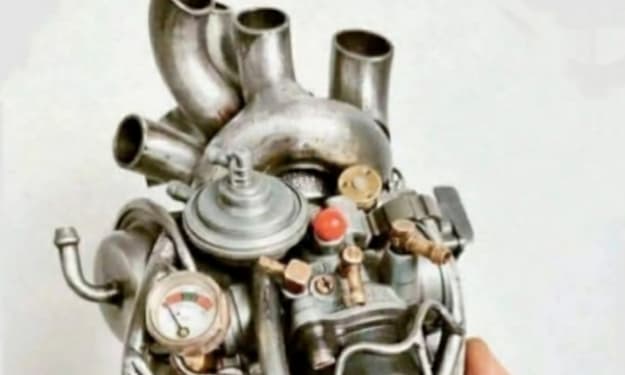
There is a common misunderstanding about silence. People assume silence means rest, peace, or emptiness. But some silences are not calm at all. Some silences are crowded—with thoughts, memories, regrets, and questions that never find answers. The heart shown in this image does not look human. It looks mechanical—made of pipes, gauges, metal curves, and pressure valves. Yet somehow, it feels more human than a real one. Because this is what many hearts become over time: machines that keep working long after they should have rested. The quote says it simply and painfully clearly: The heart is not imprisoned by longing alone; it is also trapped by fear—fear that wakes it in the middle of the night. The Myth of Rest We often tell ourselves that sleep will fix everything. That closing our eyes will shut the noise inside our heads. But anyone who has loved deeply, lost quietly, or feared silently knows the truth. The body sleeps. The heart does not. At night, when the world slows down and distractions fade, the heart finally speaks. And it does not whisper. It reminds us of things we try hard to forget during the day—unfinished conversations, unspoken truths, decisions we avoided, and people we could not keep. The night does not create these thoughts. It only removes the noise that was hiding them. Fear: The Quiet Prison Longing is honest. It says, I want. Fear is more complicated. It says, What if? Fear of loss. Fear of rejection. Fear of change. Fear of staying the same. This fear does not scream. It waits. It settles into the heart like a slow pressure, tightening with time. And once fear takes hold, the heart becomes alert—too alert to rest. That is when the heart turns mechanical. Not because it feels nothing, but because it feels too much. A Heart Under Pressure Look closely at the image. The gauges suggest monitoring. The pipes suggest constant flow. The metal suggests durability, but also coldness. This is the modern heart. We monitor our emotions. We control our reactions. We manage our pain. We keep functioning, even when something inside is fractured. People praise strength, not realizing how often strength is just exhaustion in disguise. The heart keeps working because it must—not because it wants to. Night Is Honest Daytime is performance. Night is truth. During the day, we smile. We answer messages. We complete tasks. We convince ourselves we are fine. But at night, when there is no one to impress and nowhere to run, the heart removes its armor. That is when fear visits. Fear does not come with solutions. It comes with questions. And questions are harder to escape than answers. The Cost of Awareness Some hearts are restless not because they are weak, but because they are aware. They understand consequences. They see patterns. They recognize what is about to be lost—even before it happens. Awareness is heavy. It keeps the heart awake. Ignorance sleeps easily. Depth does not. This is why thoughtful people often struggle with peace. Their hearts do not shut down easily. They replay, analyze, and imagine. Not because they want to suffer— but because they want to understand. When Fear Masquerades as Control We tell ourselves we are in control. That we have planned everything. That we are prepared. But fear often disguises itself as preparation. Overthinking is not planning. Constant alertness is not strength. It is the heart trying to protect itself from pain it has already tasted once. And once a heart has been hurt deeply, it does not forget. It remembers in silence. It remembers at night. The Loneliest Hours There is a specific kind of loneliness that arrives after midnight. It is not about being alone—it is about being unheard. The world sleeps. The phone stays quiet. And the heart, full of things it never said, finally has time to speak. These are the hours when people stare at ceilings, listen to their own breathing, and wonder when life became so heavy. Not dramatic. Just honest. Mechanical, But Still Alive A mechanical heart sounds lifeless, but it isn’t. It is simply tired of breaking. So it builds armor. It replaces softness with structure. It learns how to survive instead of feel. But even metal hearts feel pressure. Even machines need maintenance. Ignoring emotional fatigue does not make it disappear. It only makes it louder at night. What the Heart Really Needs The heart does not need advice at 2 a.m. It does not need motivation quotes or distractions. It needs acknowledgment. To be allowed to feel without judgment. To be allowed to rest without guilt. To be allowed to heal without timelines. Sometimes peace does not come from answers—but from acceptance. Final Thought Not all imprisoned hearts are bound by longing. Some are held captive by fear—fear of losing what they love, fear of becoming what they once were, fear of waking up one day and realizing they lived on autopilot. If your heart feels restless at night, it does not mean something is wrong with you. It may simply mean your heart is still alive. Still aware. Still human. And perhaps, that is not a weakness—but a quiet kind of strength.
By Zahid Hussain2 months ago in Lifehack
The Three Reins That Control a Human Being. AI-Generated.
Human beings like to believe they are free. Free to choose, free to decide, free to walk away. Yet, if we look closely, every person is quietly guided by invisible reins—forces that pull, steer, and sometimes break us. They say a human being is controlled by two reins: hunger and stubbornness. Without hunger, we cannot survive. Without stubbornness, we cannot endure. But there is a third rein—one that is rarely spoken of, yet far more powerful than the other two. Love. Hunger: The Silent Commander Hunger is the most honest force in human life. It does not negotiate. It does not care about pride, principles, or promises. When hunger speaks, everything else becomes quiet. For hunger, a person wakes before dawn. For hunger, a person bends, struggles, and compromises. For hunger, dreams are postponed and dignity is sometimes traded. People say, “I would never do that.” But hunger has a way of changing “never” into “necessary.” Ironically, while humans spend their lives chasing bread, there comes a point where bread begins to consume the human. The routine, the exhaustion, the endless chase for survival slowly eats away at joy, creativity, and peace. We eat to live—but often end up living only to eat. Stubbornness: The Fire That Refuses to Die If hunger keeps us alive, stubbornness keeps us moving. Stubbornness is the voice that says, “I will not give up.” Sometimes it saves us. Sometimes it destroys us. History is full of people who reached greatness because they refused to bow. And it is equally full of people who lost everything because they refused to bend. They say stubbornness can carry a man to the gallows—and still not let him surrender. It is a strange force. It looks like strength, feels like courage, but often hides fear beneath it. Fear of being wrong. Fear of losing. Fear of admitting pain. Stubbornness does not always ask whether the path is right. It only asks whether you are willing to suffer for it. And Then Comes Love Just when a human believes he understands himself—love enters. Quietly. Softly. Without permission. Love does not announce itself like hunger. It does not burn like stubbornness. It simply settles inside, changing everything without asking. Suddenly, hunger loses its command. Food is on the table, but the appetite is gone. Suddenly, stubbornness loses its pride. The strongest person becomes unsure, hesitant, vulnerable. Love rewrites priorities without warning. The Third Rein Some people realize, too late, that they are not controlled by two reins—but by three. Hunger. Stubbornness. And you. And “you” are the hardest rein of all. Because hunger hurts the body. Stubbornness exhausts the mind. But love—love unsettles the soul. Sleepless Nights and Silent Days Love steals sleep first. A person lies in bed, eyes closed, mind wide awake. Conversations replay. Words unsaid echo louder than those spoken. The ceiling becomes a witness to thoughts that cannot be shared. Then love steals hunger. Meals become rituals without meaning. Food tastes the same whether sweet or bitter. The body eats, but the heart refuses nourishment. Love does not announce what it is taking. It simply takes—slowly, gently, completely. The War No One Sees People assume humans are fighting the world. In reality, most people are fighting themselves. Smiles are worn like armor. Conversations stay polite. Daily life continues. But inside, there is noise—memories clashing with logic, hope arguing with reality. The strongest battles are silent ones. No audience. No applause. No victory parade. Just survival. Love Is Not Weakness Love is often mistaken for weakness. It is not. Love is a test. It tests patience. It tests restraint. It tests whether someone can feel deeply and still function. Love does not break people because it is fragile. It breaks them because it is honest. It exposes what hunger and stubbornness can hide. When Control Is an Illusion Hustle culture teaches us control. Discipline. Mastery. Love laughs at control. It does not respond to schedules, logic, or self-help advice. You cannot reason your way out of it. You cannot starve it away. You cannot overpower it with stubbornness. Love stays—whether welcomed or not. The Quiet Truth A human can survive hunger. A human can endure stubbornness. But love demands something deeper. It asks for surrender without guarantees. And perhaps that is why it is the most powerful rein of all. Because in love, humans do not lose control. They give it away. Final Thought Hunger keeps us alive. Stubbornness keeps us standing. But love reminds us that we are human. And sometimes, being human is not about winning or surviving—it is about feeling, even when it hurts. Because in the end, the things that break us are often the same things that make life worth living.
By Zahid Hussain2 months ago in Confessions
President pakistan Asif Ali Zardari Inaugurates Tajikistan Cultural Week at PNCA. AI-Generated.
Islamabad became a center of cultural celebration and regional friendship as President Asif Ali Zardari attended the inauguration ceremony of Tajikistan Cultural Week at the Pakistan National Council of the Arts (PNCA). The event marked a significant milestone in strengthening cultural, historical, and people-to-people ties between Pakistan and Tajikistan. The inauguration ceremony was held in a vibrant and welcoming atmosphere, reflecting the spirit of cultural exchange and mutual respect shared by the two nations. A key moment of the event was when Tajik Minister for Culture, Ms. Sattoriyon Matlubakhon Amonzoda, presented a traditional souvenir to President Zardari. This symbolic gesture highlighted the deep-rooted friendship and goodwill between Pakistan and Tajikistan, reinforcing the importance of cultural diplomacy in international relations. A Symbol of Cultural Diplomacy President Asif Ali Zardari, while addressing the gathering, emphasized that cultural exchanges play a vital role in bringing nations closer beyond political and economic cooperation. He noted that Pakistan and Tajikistan share centuries-old historical connections, linguistic similarities, and cultural traditions that have evolved through shared regional heritage. “Culture has the power to connect hearts and minds,” the President remarked, adding that initiatives like the Tajikistan Cultural Week help foster understanding, tolerance, and long-lasting friendships among nations. He expressed Pakistan’s commitment to promoting cultural collaboration with Central Asian states and strengthening ties through art, literature, music, and education. Rich Showcase of Tajik Heritage The Tajikistan Cultural Week features a wide range of artistic and cultural activities designed to introduce Pakistani audiences to the rich heritage of Tajikistan. Visitors to PNCA were treated to traditional Tajik music performances, folk dances, art exhibitions, and displays of handcrafted items that reflect the country’s unique cultural identity. The event also includes screenings of Tajik films, exhibitions of traditional costumes, and presentations highlighting Tajikistan’s history and cultural evolution. These activities aim to create a deeper appreciation of Tajik culture among Pakistani audiences and encourage cultural curiosity and dialogue. Artists and performers from Tajikistan received warm applause as they showcased their talents, demonstrating how art serves as a universal language that transcends borders. The colorful performances and artistic displays captured the attention of attendees and added to the celebratory spirit of the occasion. Strengthening Pakistan–Tajikistan Relations Ms. Sattoriyon Matlubakhon Amonzoda, addressing the ceremony, expressed her gratitude to the Government of Pakistan and PNCA for hosting the cultural week with such warmth and hospitality. She highlighted that Pakistan and Tajikistan share not only geographic proximity but also historical and cultural bonds rooted in shared traditions, poetry, and values. She emphasized that cultural exchanges are essential for strengthening bilateral relations and building long-term partnerships. Ms. Amonzoda also expressed hope that similar initiatives would continue in the future, including organizing Pakistani cultural events in Tajikistan to further promote mutual understanding and friendship. Attendance by Dignitaries and Cultural Figures The inauguration ceremony was attended by diplomats, senior government officials, cultural ambassadors, artists, scholars, and members of civil society. Representatives from the diplomatic community praised the initiative as a positive step toward regional cooperation and cultural harmony. Officials from PNCA highlighted the institution’s role in promoting international cultural engagement and supporting platforms that encourage artistic collaboration between Pakistan and friendly countries. They noted that hosting Tajikistan Cultural Week aligns with Pakistan’s broader vision of using culture as a bridge for peace and dialogue. Cultural Exchange as a Tool for Peace The event underscored the growing importance of cultural diplomacy in today’s interconnected world. At a time when global challenges require cooperation and mutual understanding, cultural initiatives such as this play a crucial role in strengthening trust between nations. By showcasing Tajik traditions, music, and art in Pakistan, the cultural week not only celebrates diversity but also reinforces shared values of respect, creativity, and coexistence. It provides an opportunity for artists and audiences from both countries to engage directly, exchange ideas, and build lasting connections. Looking Ahead The inauguration of the Tajikistan Cultural Week at PNCA reflects a shared commitment by Pakistan and Tajikistan to deepen their cultural partnership. It serves as a reminder that strong diplomatic relations are built not only through formal agreements but also through meaningful cultural interactions. As the week-long celebrations continue, visitors are expected to gain a deeper understanding of Tajikistan’s cultural richness while strengthening the bonds of friendship between the two nations. The event stands as a testament to the power of culture in promoting peace, unity, and regional harmony.
By Zahid Hussain2 months ago in Art
Rahat Fateh Ali Khan’s Daughter Ties the Knot in a Graceful Wedding Ceremony in Lahore. AI-Generated.
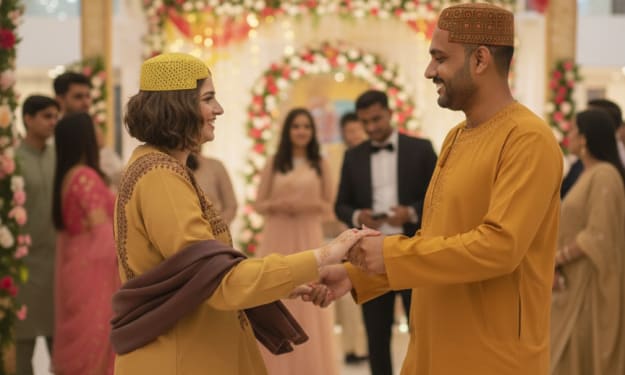
Renowned Pakistani singer Rahat Fateh Ali Khan, celebrated globally for his soulful voice and timeless contributions to classical, Qawwali, and playback singing, recently marked a deeply personal milestone as his daughter tied the knot in an elegant wedding ceremony held in Lahore. The event was a beautiful reflection of cultural traditions, family warmth, and understated luxury—perfectly befitting one of South Asia’s most respected musical families.
By Zahid Hussain2 months ago in History
Endobronchial Ultrasound Biopsy Market Size and Forecast 2025–2033. AI-Generated.
Introduction The Endobronchial Ultrasound (EBUS) Biopsy market is gaining strong traction worldwide due to rising incidence of respiratory diseases, growth in lung cancer diagnosis, and increasing adoption of minimally invasive diagnostic procedures. EBUS biopsy technology provides a safer, faster, and more accurate alternative to traditional surgical biopsies, enabling clinicians to diagnose conditions such as lung cancer, tuberculosis, and other thoracic disorders with improved patient outcomes. Multiple market intelligence reports forecast significant expansion of this sector through 2033.
By Zahid Hussain2 months ago in Humans
Cricket Powder Cinnamon. AI-Generated.
Banana bread is one of the most loved comfort foods in the world. Warm, soft, naturally sweet, and filled with nostalgia, it’s the kind of recipe that brings people together. But what if this classic treat could also be high-protein, nutrient-dense, and environmentally friendly?
By Zahid Hussain2 months ago in Feast
The Silent Resonance. AI-Generated.
The story follows Elias, a world-renowned violinist who has lost his "spark." Despite his technical perfection, his music feels hollow. He meets Zoya, a woman who lives life with a quiet, fierce devotion to everything she does—not out of duty, but out of love. Through her, he learns that technique without soul is just noise.
By Zahid Hussain2 months ago in Confessions
Best-Known Artworks by Peter Paul Rubens. AI-Generated.
Peter Paul Rubens stands as one of the most influential and celebrated artists in the history of Western art. A master of the Baroque period, Rubens transformed painting into a powerful visual language filled with movement, emotion, drama, and grandeur. His works continue to inspire artists, historians, and art lovers centuries after his death, proving that true artistic genius transcends time.
By Zahid Hussain2 months ago in Art