Latest Stories
Most recently published stories in BookClub.
7 Books That Make You Feel Like A Better Human. AI-Generated.
In the fast-paced swirl of modern life, it’s easy to feel disconnected—from ourselves, from others, and from what truly matters. Yet, every so often, a book comes along that does more than entertain. It shifts perspectives, nurtures empathy, and inspires personal growth. These are the kinds of books that make us feel like better humans—not through preachiness, but by offering wisdom, reflection, and actionable insight.
By Diana Meresc2 days ago in BookClub
8 Books That Are Pure Genius. AI-Generated.
Every once in a while, we encounter a book that feels less like ink on paper and more like a conversation with a brilliant mind across time. These are the works that reshape how we think, challenge our assumptions, and quietly influence our decisions long after the last page is turned. We don’t just read them—we carry them.
By Diana Meresc2 days ago in BookClub
8 Great Books That Make You Forget Your Phone Exists. AI-Generated.
In a world where our phones buzz, ping, and glow every few minutes, sustained attention has become a rare luxury. Many of us reach for our devices reflexively—during a pause in conversation, while waiting in line, even in the middle of reading. Yet, every so often, we encounter a book so absorbing, so deeply human, that the phone might as well not exist. These are the books that pull us back into ourselves, into stories and ideas rich enough to command our full presence.
By Diana Meresc2 days ago in BookClub
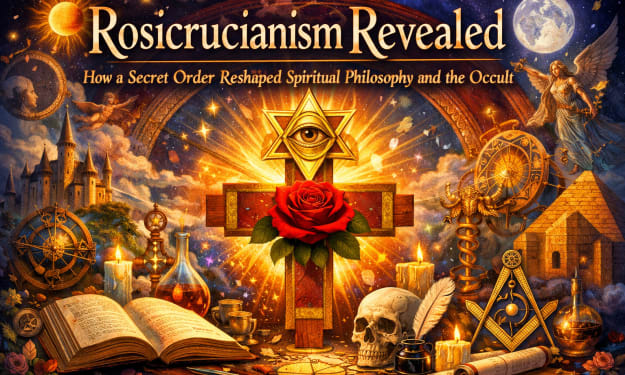
Rosicrucianism Revealed. Content Warning.
The Enigmatic Rise of Rosicrucian Thought Rosicrucianism stands among the most compelling currents in Western esoteric history. The tradition occupies a distinctive position at the intersection of mysticism, philosophical speculation, symbolic language, and spiritual inquiry. Interest in Rosicrucianism has persisted for more than four centuries, fueled by cryptic manifestos, elaborate allegories, and a reputation for concealed wisdom transmitted through select circles of initiates. References to hidden brotherhoods, alchemical transformation, and spiritual illumination continue to attract scholars, historians of religion, and students of Western occult traditions.
By Marcus Hedare3 days ago in BookClub
Jujutsu Kaisen's sequel & Aujua Denney's prequel manga are headed toward their finales
Jujutsu Kaisen Modulo (2025) and Enchanter Enchanter (2025) are manga stories written to shine light on the social issues the world is facing. The themes of these two stories can resonate with a lot of people who grew up in regions of the world always ridden with conflict. It's seen in our media, politics, and history. Giving a medium to the difficulties of the world with achieving true tolerance by using fictional characters to show the uncomfortable truths is what storytelling is all about.
By Evan Valentine3 days ago in BookClub
Elena had always loved libraries. The quiet aislesthe scent of old
Elena had always loved libraries. The quiet aisles, the scent of old paper, the way stories seemed to hum beneath the silence — it was her sanctuary. But the library she stumbled upon that autumn evening was unlike any she had ever seen.
By Alhouci boumizzi3 days ago in BookClub
Narrative Affect and the End of Public Opinion
In Narrative Affect: The End of Public Opinion, Peter Ayolov advances a forceful and timely argument: that contemporary mass media no longer operates primarily through persuasion, belief formation, or the shaping of public opinion, but through the orchestration of affective environments that precede and structure thought itself. The book proposes not merely a revision of existing media theory, but a conceptual displacement of one of its foundational assumptions—that influence flows through opinion. What governs contemporary public life, Ayolov argues, is not what people think, but what they are made to feel before thinking begins.
By Peter Ayolov3 days ago in BookClub
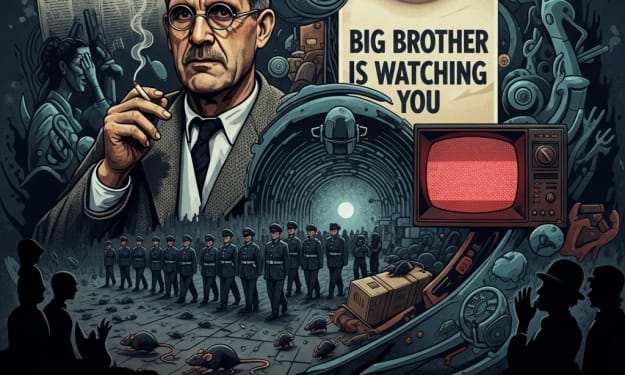
George Orwell: The Writer Who Warned us about the Future
George Orwell did not invent new political systems or build empires. Instead, he did something arguably more dangerous—he revealed how power manipulates truth. Through clear, relentless writing, Orwell exposed the mechanics of propaganda, authoritarian control, and the slow erosion of freedom. His work was not meant as distant fiction. It was a warning.
By Fred Bradford3 days ago in BookClub