
Earthquake-resistant architecture
Earthquake-resistant architecture is a crucial field of study that focuses on designing and constructing buildings capable of withstanding seismic forces.

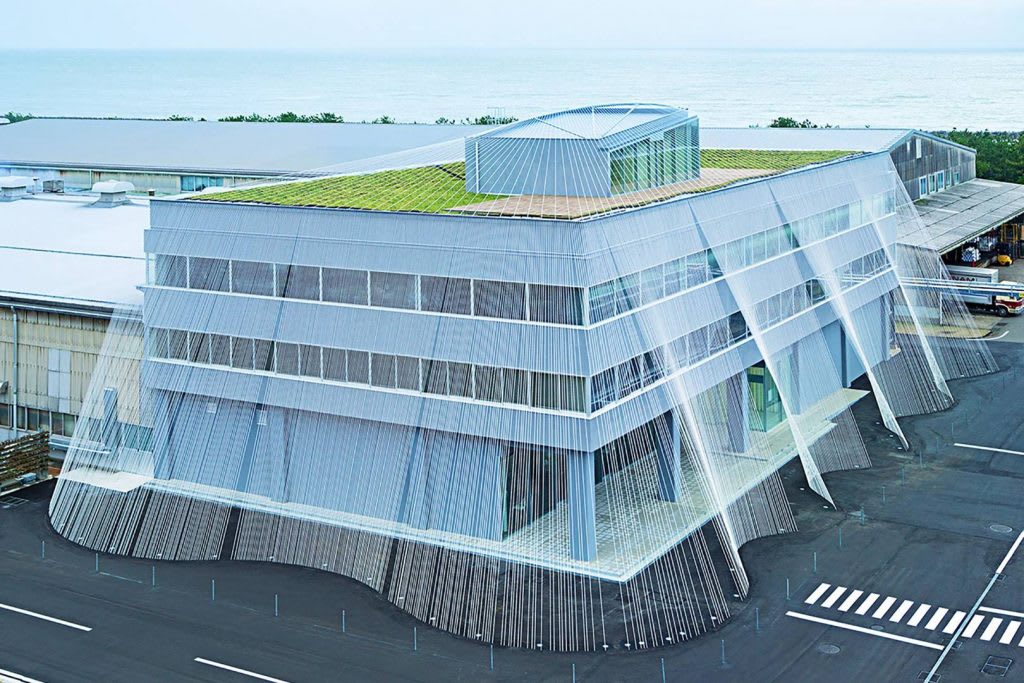
As earthquakes pose a significant threat to human life and infrastructure, engineers and architects have developed innovative strategies and technologies to enhance structural resilience. The history of earthquake-resistant architecture dates back thousands of years, but modern advancements in materials, engineering, and computer simulations have revolutionized the field.
(I)Understanding Earthquake Forces
An earthquake occurs due to the sudden release of energy in the Earth's crust, generating seismic waves that travel through the ground. These waves create forces that shake buildings horizontally and vertically, causing severe structural damage. The severity of an earthquake's impact on buildings depends on factors such as magnitude, depth, distance from the epicenter, and soil composition.
Structures that are not designed to resist seismic activity can suffer catastrophic failures, including collapse, foundation failure, or structural cracking. To mitigate these risks, architects and engineers incorporate specialized design principles that allow buildings to absorb and dissipate seismic energy effectively.
(II)Key Principles of Earthquake-Resistant Architecture
1. Flexible Foundation Design
One of the most effective ways to enhance earthquake resistance is to incorporate a flexible foundation. Base isolation systems, which use rubber, lead, or sliding bearings, allow buildings to move independently of ground motion. This reduces the impact of seismic waves and prevents structural damage. Base isolation is commonly used in critical infrastructure such as hospitals, emergency centers, and government buildings.
2. Reinforced Structural Framework
Buildings designed to withstand earthquakes must have strong and flexible frameworks. Reinforced concrete and steel structures are preferred due to their ability to absorb seismic forces without failing. Modern skyscrapers use a combination of steel moment frames, shear walls, and braced frames to distribute loads evenly and prevent localized failures.
3. Ductile Materials and Connections
Ductility refers to a material’s ability to deform under stress without breaking. In earthquake-resistant architecture, steel and reinforced concrete are widely used due to their ductile properties. Connections between beams, columns, and walls must be designed to flex and absorb seismic energy rather than snap under pressure.
4. Energy Dissipation Systems
Energy dissipation systems, such as dampers and shock absorbers, are designed to reduce the intensity of seismic forces acting on a building. Types of dampers include:
Viscous dampers, which use fluid movement to absorb energy.
Friction dampers, which dissipate energy through controlled sliding friction.
Tuned mass dampers, often installed in tall buildings to counteract swaying movements.
These systems significantly improve a building’s ability to remain intact during a strong earthquake.
5. Lightweight Materials and Structural Symmetry
Using lightweight materials reduces the overall mass of a structure, lowering the forces exerted during an earthquake. Buildings with symmetrical designs are also more resistant to seismic activity, as asymmetrical structures experience uneven force distribution, increasing the risk of torsion and collapse.
(III)Traditional Earthquake-Resistant Techniques
Many ancient civilizations developed earthquake-resistant techniques that remain relevant today. Examples include:
Japanese Pagodas: Traditional Japanese pagodas feature a central wooden column (shinbashira) that acts as a dynamic stabilizer, reducing the impact of seismic forces.
Inca Stone Construction: The Inca civilization used precisely cut interlocking stones in their structures, allowing walls to flex without collapsing.
Vernacular Architecture in Nepal: Traditional Nepalese homes use lightweight materials and timber reinforcements, reducing earthquake damage.
(IV)Modern Innovations in Earthquake-Resistant Architecture
1. Smart Materials and Self-Healing Concrete
Recent advancements in materials science have led to the development of self-healing concrete, which contains bacteria that produce limestone to fill cracks. This innovation enhances the durability of earthquake-resistant buildings.
2. Seismic-Resistant Skyscrapers
Many modern skyscrapers incorporate advanced seismic-resistant features. The Taipei 101 in Taiwan has a massive tuned mass damper, weighing 660 metric tons, that counteracts building movement during earthquakes. Similarly, The Burj Khalifa in Dubai uses reinforced concrete and a Y-shaped design to improve stability.
3. AI and Computer Simulations
Artificial intelligence (AI) and computer simulations play a crucial role in earthquake-resistant architecture. Engineers use earthquake simulation models to predict building responses to seismic forces and optimize designs for maximum resilience.
(V)Challenges and Future Prospects
Despite advancements in earthquake-resistant architecture, challenges remain. The high cost of implementing advanced technologies limits their accessibility in developing regions. Additionally, retrofitting existing buildings to meet modern seismic standards is a complex and expensive process.
Future innovations may focus on nanotechnology-enhanced materials, autonomous construction robots, and early warning systems that provide real-time alerts to minimize earthquake damage. Sustainable and cost-effective earthquake-resistant solutions will also play a crucial role in protecting vulnerable communities worldwide.
IN THE END
Earthquake-resistant architecture is a vital field that combines engineering, technology, and innovative design to protect human life and infrastructure from seismic disasters. By incorporating flexible foundations, reinforced structures, energy dissipation systems, and cutting-edge materials, architects and engineers continue to develop safer and more resilient buildings. As technology advances, earthquake-resistant architecture will become even more efficient and widespread, ensuring a safer future for populations in earthquake-prone regions.
About the Creator
Badhan Sen
Myself Badhan, I am a professional writer.I like to share some stories with my friends.
Keep reading
More stories from Badhan Sen and writers in Earth and other communities.
Tornadoes and storm chasing
Violent storms can cause widespread destruction within minutes, making them a subject of both fear and fascination. The field of storm chasing—the pursuit of severe weather events, especially tornadoes—has grown in popularity among scientists, meteorologists, and thrill-seekers. While storm chasing provides valuable data to improve forecasting, it also comes with significant risks.
By Badhan Senabout a year ago in Earth
The Geology of Your Inner World
Just like the Earth’s surface is riddled with invisible cracks where tectonic plates meet, our minds have their own deep-seated fault lines. These aren't always obvious; they're the recurring triggers, the sensitive spots, the areas where stress can quickly build up, leading to a mental "tremor" or even a full-blown anxiety "earthquake." As an overthinking girl, my fault lines are often hidden under layers of forced calm and academic ambition. But as a Nutrition student, I'm learning to map them out, not just to avoid collapse, but to understand how to build stronger, more resilient structures.
By Being Inquisitive2 days ago in Earth




Comments (1)
What a great article on Architectual engineering. Good job.