Latest Stories
Most recently published stories in Earth.
Listen to the Elders.
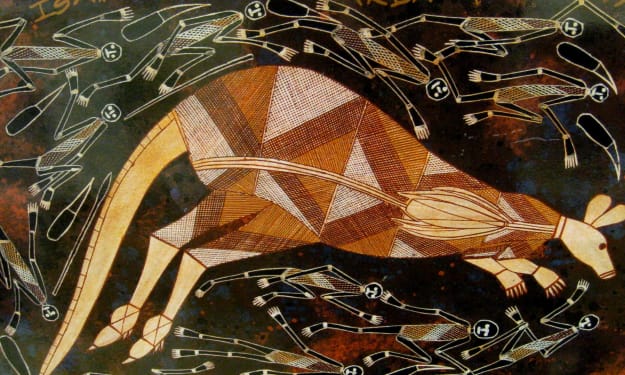
There are many facts about our environment's decline since the industrial revolution that are confronting. Some find it easier to avoid, I have been there many a time. Overwhelmed by the little it feels we can do, or that we simply do not know what to do. This feeling is not dishonest. Many people think they have the answer as well. I'm not denying that either as many a great mind is at work to solve the issues we have created. Yet, the two forces of corporate greed and environmental awareness are at play. This makes things even more frustrating when passion begins to evolve within the individual to protect the Earth. This can leave us feeling hopeless against the big guys. Fair enough. The truth is that many of us have lost our connection to the Earth. We stopped thinking to care about her through just trying to survive in the rat race of life. We get caught in the system, and I'm sorry to say but the system is based off of greed. As a result we only have 0.5 % of our oceans protected which hold 80% of our life on Earth, and we are losing 80'000 hectares of rainforests globally a day. With this comes the loss of the 1000's of species that are in their own system; the system of maintaining what we live on, our home. There is more to it though, we lost our connection to these species and appreciation for them. We know best because we are the top of the food chain. We also know how to fix it because we had the power to create the mess. Maybe we do. I know very little about how this world works and how to fix it. I do know that it is time to put my own ego aside and listen to the people that truly understand the land with their hearts, spirit and mind.
By India Grant5 years ago in Earth
Our Oceans and Landfills Are Under Attack
Earth's oceans protect our sacred atmosphere. The five major and secondary layers of the atmosphere start from the closest to Earth to the highest of our climate, where space rockets cannot reach. The Troposphere is nearest to Earth that outspreads 7.5 miles, which support photosynthesis for plants and animals' respiratory system. The next layer is Stratosphere, which is the ozone layer that guards species from the Sun's ultraviolet radiation and extends 7.5-31 miles. The atmospheric layer that expands 31-50 miles beyond Earth is Mesosphere. Noctilucent clouds within the Mesosphere are created by water vapor and are the last layer of clouds that the human eye can see; moreover, meteors collapse in this layer. Sedentary from 50-440 miles above Earth's surface is the Thermosphere layer. Within the Thermosphere, temperatures rise in elevation because of the minimal molecular habitat. The furthest layer from Earth, Exosphere, ranging from 440-6,200 miles is comprised with low density molecules, and as a result, particles outpour into space.
By Danny Recht5 years ago in Earth
Style Doesn't Have to Hurt
All of a sudden "sustainable fashion" has just become a thing - activewear made of recycled plastic, ethically sourced cashmere, dye-free cotton, and eco-friendly denim...The idea is great, but the price tags are shocking. Looking at a $85 basic white tee the other day, I just felt like the only way I could rationalize buying it was to think of it as some kind of donation. But then I'd probably just make a donation to a trusted charity.
By Shuuka Lee5 years ago in Earth
Paving the Way
Paving the Way In 2018 alone there was almost 36,000 tons of plastic produced in the United States alone, of that 3000 tons were recycled and 27000 tons went to the landfill. Almost inevitably that plastic that goes to the landfill ends up in our rivers, our lakes, and our oceans. It is in the air we breathe and the water we drink it is poison and even though almost every expert will tell you that using plastic is bad for you and the wrong kind of exposure can cause cancer and get you seriously ill, we will not do anything about it. We choose to ignore it and hope it will one day just magically fix itself, the rivers and oceans will become magickly free of this toxin, and the world will be a better place. Unfortunately, the truth is, plastic is not going anywhere, people refuse to see it or see its harms not only to us but to every living being on this planet. I honestly do not know how to fix that. I wish I did. We do our part and do our best not to buy single-use plastics, not use plastic garbage bags or the little produce plastic bags in the grocery store but frankly, that’s hardly going to male any kind of significant change or affect the overall pollution factor in our country and the world. So what can we do?
By Tony Blankenship5 years ago in Earth
Rain Barrel
Water is a precious resource on this planet, particularly freshwater. Many people need to walk miles to a pump to get it, while others are only allowed certain amounts daily or monthly. The World Economic Forum listed water scarcity as one of the largest global risks in 2019. This makes have vegetation, especially vegetation that needs water, seem a bit superfluous.
By Noah Glenn5 years ago in Earth
What Can We Do to Save our Environment?
More than you think! With each passing day, our natural resources are being depleted at an alarming rate. Who is doing it? The short answer is that we are all doing it and it will require a herculean effort to minimize and reverse this process.
By Anthony Chan5 years ago in Earth
My Delicate Footprints
No moment is promised in life. Not one sunrise. Not one sunset. Not one hour. Not one minute. Not your next breath. All of these things are contingent upon this assumption that the Earth will continue supporting life in the presence of overwhelming abuse. I realized last year just how grave the state of our planet is.
By Tara Washington5 years ago in Earth
A Better World
I am not always in love with the state of our current world, but I do see the potential of it all. I see that it is very possible to change things for the better on a small scale, and when enough people are on board with the idea, it can inspire monumentally big change in the world.
By Ari Asha Love5 years ago in Earth
Average Jane and the Environment
Saving money while saving the environment? Is that even possible? Just like you I’m not some billionaire. I don’t own a huge company. I have very little influence in the world. So the real question is, how do I, a small business owning, average, working class woman living off a limit budget help to save the environment? The answer: in so many small ways. On their own they don’t seem like much. Together they add up to a better world.
By Rita DeStefano5 years ago in Earth
Water in my Nostrils
Rebellion is one of my love languages. God, I love the ocean. I remember lying on my stomach waiting for the waves to hit me as I let my body go limp as a child and rode the waves, in and out. Feeling the sand run over my body and caress my skin. Water would jet up into my nostrils and I’d break over the wave spitting salt and sand out of my mouth. Some people don’t like it, but I loved it. The innocent way my child like brain believed, the ocean will always be here.
By Rachel Wright5 years ago in Earth