Latest Stories
Most recently published stories in Earth.
President Biden’s Global Summit with World’s Leaders on Climate Change.
To commemorate the first Earth Day on 22nd April 1970, US President Richard Nixon had planted a tree in the White House Lawn. The task of the current President Joe Biden is much bigger, and he is quick up to the challenge of climate change.
By DEEPAK SETHI5 years ago in Earth
Ecological Footprint
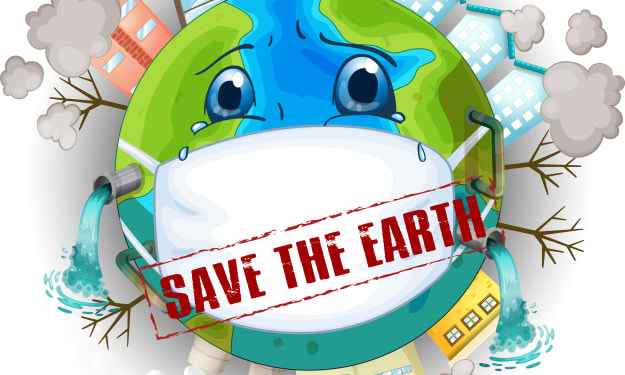
Ecological Footprint or better known as Carbon Footprint is the quantity of carbon dioxide or other things with carbon in them that someone produces. We all produce Carbon Footprints. When you have a Carbon Footprint, you’d usually think that you alone couldn’t change the world and you would die without a trace or hurting the atmosphere. But if everyone has a carbon footprint and there are around 7.8 billion people in this world, then that would hurt the atmosphere a lot. Especially when a lot of people in one area. Take China for example. That is perhaps the most populated nation on the planet. Envisioned how everybody gets around the place. Individuals use vehicles, bikes, thus significantly more ways of transportation. All of those things are producing some sort of Carbon. And that’s not good. Everyday things can hurt the environment. Petroleum derivatives are the primary driver of ozone-harming substances. Electricity in your home and at school or work creates a carbon footprint.
By Burnt Baguettes5 years ago in Earth
Boycott Green Washing. Third Place in Wave Makers Challenge.
“Oh, look at the cute little ducklings they are rescuing from oil spills. They really do care about the planet.” Have you ever had this thought while considering what dish soap to purchase? I hate to say it, but if you have, you are a victim of greenwashing. Greenwashing is how corporate entities make themselves look good at a glance, creating a positive public persona in order to sell more products. In this article, I am going to share a few companies to consider boycotting for the health of our oceans and our planet—and you, the consumer of those products.
By Kelsey Reich5 years ago in Earth
Capturing Innocence
I took this photo when I was ten, next to the pond in the back garden. There’s really not much of a story to it, at least not that I can remember. It’s been a while since I was ten. My family had just moved to a new home in the countryside of the Ards peninsula, Northern Ireland. It was a new build, so the house and garden were still barren, but the wild surrounding us was as rich as it had been for millennia. And that suited me. Minibeests twitched and twisted in the undergrowth, hares gambolled in the fields, songbirds chirped in the trees and the occasional heron flapped overhead. And at night, we saw bats and badgers. There’s no feeling like glimpsing a badger trundling through your neighbourhood.
By Blair Bailie5 years ago in Earth
How "green" is your diet?
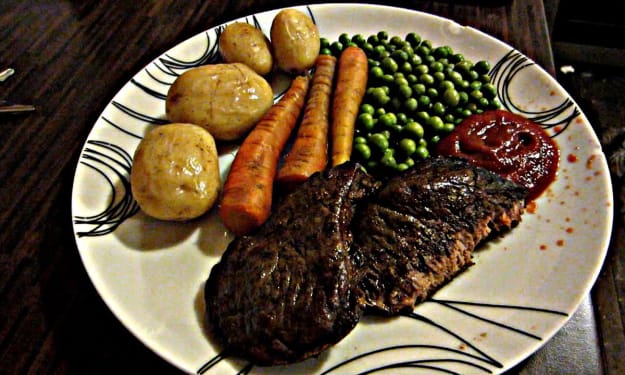
An article in the “Times Magazine” (the London newspaper’s weekend colour supplement), posed some very interesting questions on the subject of whether we could all do a lot more to get our carbon footprints under control by adjusting our personal diets. The article was based on research in a book by Professor Sarah Bridle, an astrophysicist turned environmentalist, who has come up with amazing (and highly disturbing) facts and figures relating to the impact that our food choices make on global emissions of greenhouse gases, which in turn lead to global warming and ocean acidification.
By John Welford5 years ago in Earth
How does the Weather and Climate Affect Mental Health?
Although winter doesn’t officially end until 20th March, as the days pass, we edge closer and closer to the end of the coldest months. Soon, warmer days will be upon us, where we will likely feel happier and have more energy.
By Fay McFarlane5 years ago in Earth
How to Reduce Carbon Footprint and Save Earth, Air & Ocean.
Things to do to Reduce Your Carbon Footprint. In 1st grade, above the cubbies where we kept our snow boots and mittens, big comic-sans letters spelled out ‘remember to recycle’ and ‘last one out turns off the light.” These are the kinds of things recommended by science textbooks, blogs, and even the US Environmental Protection Agency as ways to reduce your impact on the climate. And they’re pretty easy to do.
By Sudheer Patel5 years ago in Earth
Why floods occur
Flooding of land and buildings causes enormous damage in many countries across the world, incurring vast expense as well as causing loss of life. Floods that occurred in England in 2007 led to 180,000 insurance claims, against which 3 billion pounds sterling was paid out (according to the review by Sir Michael Pitt). The 2010 floods in Pakistan affected 20 million people and there were at least 2,000 deaths. In Australia in 2010-11, according to the BBC, the area affected was as large as that of France and Germany combined.
By John Welford5 years ago in Earth
Is solar power the answer?
There is a sense in which all energy is solar energy. Every energy source we have on planet Earth derives originally from the Sun, although there could be arguments over those that depend on the heat trapped deep down in the Earth’s mantle and core. Every gallon of fuel you use started out as zillions of life-forms that derived their energy from the rays of the Sun.
By John Welford5 years ago in Earth
Direct Action: Tree Huggers and DAPL
When I say tree-hugger, what do you think? Is it some hipster with long, unwashed hair who loves the environment? It's probably used derisively, someone to be scoffed at as their heads are in the clouds. But this is an inaccurate idea of environmentalism.
By Melissa in the Blue5 years ago in Earth