
Ozone layer depletion
Ozone Layer Depletion: Causes, Effects, and Solutions

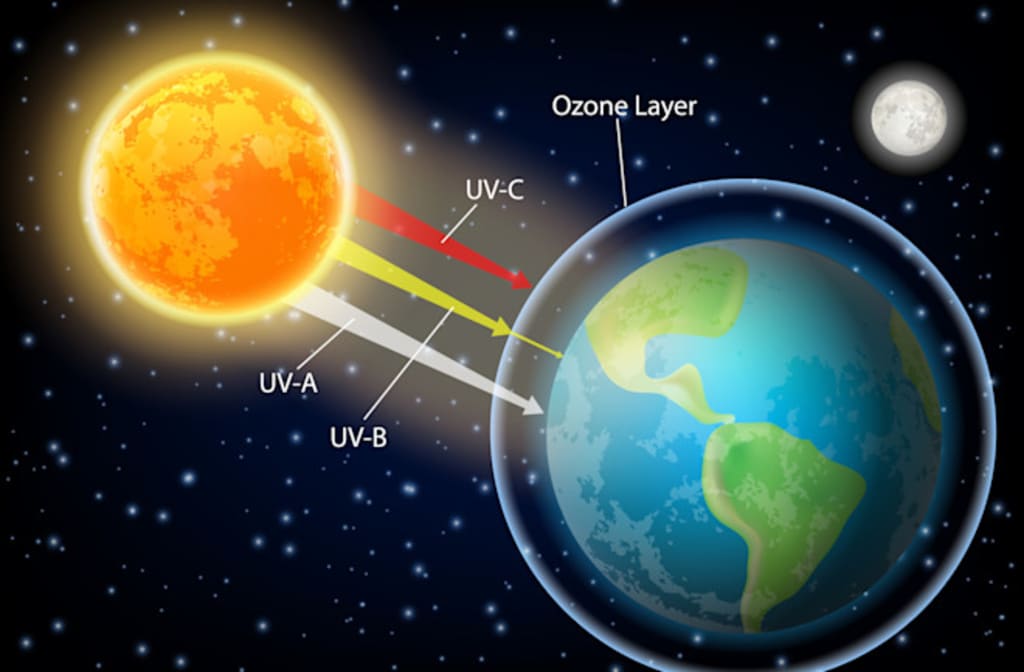
The ozone layer is a crucial part of Earth's atmosphere, shielding life from harmful ultraviolet (UV) radiation. However, human activities have led to the depletion of this protective layer, posing significant environmental and health risks. Understanding the causes, effects, and solutions to ozone layer depletion is essential for mitigating its impact and preserving life on Earth.
(I)What is the Ozone Layer?
The ozone layer is a region within the Earth's stratosphere, approximately 10 to 50 kilometers above the surface, containing high concentrations of ozone (O3). This layer absorbs the majority of the sun’s harmful UV radiation, preventing it from reaching the Earth's surface. Without the ozone layer, increased UV exposure could lead to severe consequences for both humans and ecosystems.
(II)Causes of Ozone Layer Depletion
Several human-induced factors contribute to the depletion of the ozone layer. The primary culprits include:
Chlorofluorocarbons (CFCs): These synthetic compounds, once commonly used in refrigerants, aerosols, and air conditioners, release chlorine atoms when broken down by UV radiation. These chlorine atoms catalytically destroy ozone molecules, leading to significant thinning of the ozone layer.
Halons and Other Ozone-Depleting Substances (ODS): Similar to CFCs, halons (used in fire extinguishers), carbon tetrachloride, and methyl chloroform release bromine and chlorine, accelerating ozone depletion.
Nitrous Oxide (N2O): A potent greenhouse gas, nitrous oxide contributes to ozone destruction when released from agricultural activities, fossil fuel combustion, and industrial processes.
Industrial and Vehicle Emissions: High levels of nitrogen oxides (NOx) and other pollutants contribute to the degradation of the ozone layer.
Deforestation and Biomass Burning: These activities release ozone-depleting substances, further exacerbating the issue.
(III)Effects of Ozone Layer Depletion
The depletion of the ozone layer has widespread and severe consequences, affecting human health, ecosystems, and Global climate patterns.
Increased UV Radiation Exposure: With a thinner ozone layer, more UV rays penetrate the Earth's surface, leading to:
Higher rates of skin cancer and cataracts.
Weakened immune systems in humans and animals.
Environmental Impact:
UV radiation negatively affects phytoplankton in the ocean, disrupting marine food chains.
It damages plant life, reducing agricultural productivity and affecting crop yields.
Climate Change:
Ozone depletion is linked to changes in atmospheric circulation patterns, contributing to global warming.
The release of greenhouse gases from ozone-depleting substances exacerbates climate change.
Global Efforts to Address Ozone Depletion
Several international efforts have been made to curb ozone depletion. The most notable is the Montreal Protocol (1987), a global agreement aimed at phasing out the production and consumption of ODS. The treaty has been highly successful, leading to significant reductions in CFCs and other harmful chemicals. Scientists predict that if current efforts continue, the ozone layer could recover to pre-1980 levels by the middle of the 21st century.
Solutions to Ozone Layer Depletion
To protect and restore the ozone layer, various measures need to be implemented at individual, national, and global levels:
Eliminating the Use of ODS:
Replacing CFCs and halons with environmentally friendly alternatives such as hydrofluorocarbons (HFCs) and natural refrigerants.
Encouraging industries to adopt sustainable production practices.
Strengthening Regulations and Policies:
Governments must enforce stricter regulations on ODS emissions and support ozone-friendly technologies.
Enhancing international cooperation to monitor and prevent illegal ODS production.
Raising Public Awareness:
Educating people about the importance of the ozone layer and ways to reduce personal contributions to ozone depletion.
Promoting eco-friendly consumer choices, such as ozone-safe products and energy-efficient appliances.
Promoting Afforestation and Sustainable Agriculture:
Increasing green cover helps absorb excess greenhouse gases that contribute indirectly to ozone depletion.
Reducing the use of nitrogen-based fertilizers to minimize nitrous oxide emissions.
Advancing Scientific Research:
Continued monitoring of ozone depletion trends through satellite observations.
Investing in innovative technologies to develop sustainable alternatives to ODS.
IN THE END
Ozone layer depletion remains a critical global concern, but collective action can mitigate its effects. Through policy enforcement, scientific advancements, and public awareness, humanity can work toward restoring this vital atmospheric shield. By reducing the use of harmful chemicals and adopting eco-friendly practices, we can ensure a safer, healthier planet for future generations. The success of the Montreal Protocol demonstrates that global cooperation can make a significant impact, giving hope for the recovery of the ozone layer in the coming decades.
About the Creator
Badhan Sen
Myself Badhan, I am a professional writer.I like to share some stories with my friends.
Keep reading
More stories from Badhan Sen and writers in Earth and other communities.
Savannas and grasslands
Savannas and grasslands are two of the world’s most fascinating biomes, covering vast areas across continents and supporting an incredible diversity of life. These ecosystems are often characterized by their open landscapes, dominated by grasses with few trees or large shrubs. They play a crucial role in maintaining biodiversity, supporting various species of animals, and serving as key components in the global carbon and water cycles.
By Badhan Senabout a year ago in Earth
Shards Of Paradise
I saw the crushed body of a Gazan child. Their blood was beading on the dusty cinderblocks of the destroyed building they called home. I swipe my finger, and see Charlie Kirk, reclining up on stage, make a joke about the destruction of those buildings, and the bodies that are buried there. I swipe again, and see his body jolt as a bullet bursts his neck and blood gushes out. I can find someone to cheer and chant for every patch of running blood, and justify any act of political violence.
By I. D. Reeves4 days ago in Earth



Comments
There are no comments for this story
Be the first to respond and start the conversation.