
Savannas and grasslands
Savannas and Grasslands: A Unique Ecosystem

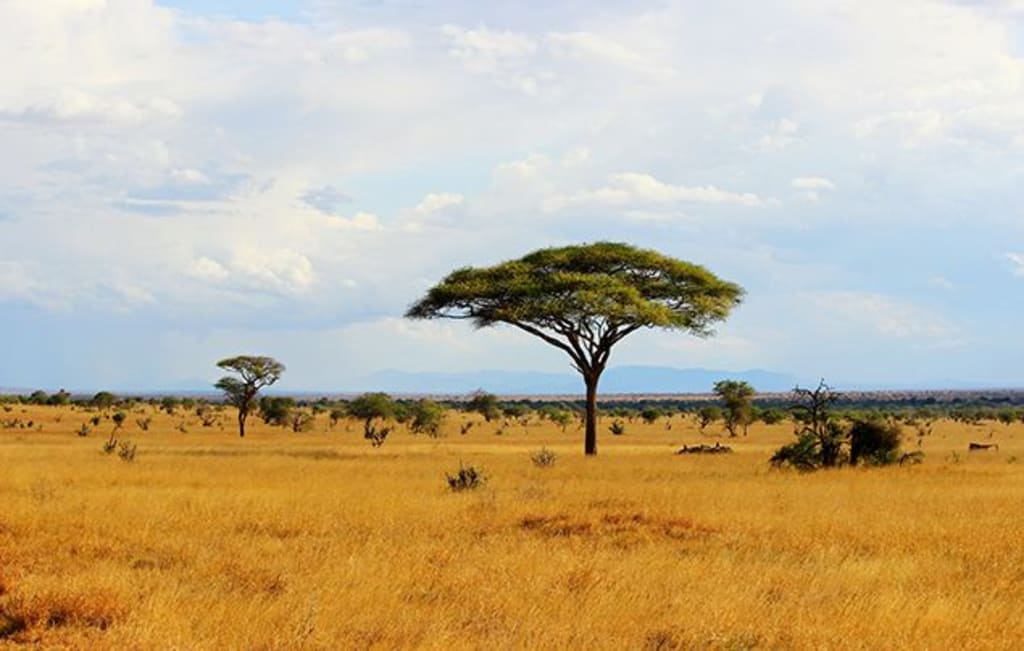
Savannas and grasslands are two of the world’s most fascinating biomes, covering vast areas across continents and supporting an incredible diversity of life. These ecosystems are often characterized by their open landscapes, dominated by grasses with few trees or large shrubs. They play a crucial role in maintaining biodiversity, supporting various species of animals, and serving as key components in the global carbon and water cycles.
What Are Savannas and Grasslands?
Savannas and grasslands are both types of terrestrial ecosystems primarily covered with grasses rather than trees. However, they have distinct characteristics:
Grasslands – These are open regions dominated by grasses, with very few trees, usually found in temperate and tropical regions. They include the prairies of North America, the steppes of Eurasia, the pampas of South America, and the veld of Africa. Grasslands can be classified into:
Tropical Grasslands (e.g., African savannas)
Temperate Grasslands (e.g., North American prairies)
Savannas – These are mixed ecosystems with grasses and scattered trees, typically found in tropical and subtropical regions. They often serve as transitional zones between forests and deserts. The most famous example is the African savanna, home to diverse wildlife such as lions, elephants, and zebras.
Climate and Geography
Savannas and grasslands exist in regions where rainfall is seasonal or inconsistent, preventing the growth of dense forests. Grasslands receive moderate rainfall (25-75 cm annually), while savannas receive slightly more, with distinct wet and dry seasons. The combination of seasonal rainfall and periodic droughts creates an environment where grasses thrive and only scattered trees can survive.
Grasslands are found on every continent except Antarctica. The largest temperate grasslands exist in North America (the Great Plains), Eurasia (the Steppes), South America (the Pampas), and Australia. Savannas are mostly found in Africa, South America, India, and northern Australia.
Flora and Fauna
The biodiversity of savannas and grasslands is rich, with numerous plant and animal species uniquely adapted to these environments.
Plant Life: Grasses dominate, with species like buffalo grass, bluestem, ryegrass, and fescue. Trees in savannas include acacias, baobabs, and palm trees, adapted to survive droughts and fires.
Animal Life: These regions are home to large herbivores such as bison, antelope, zebras, and giraffes, as well as carnivores like lions, cheetahs, wolves, and coyotes. Many birds, reptiles, and insects also thrive in these ecosystems.
The Role of Fire in Grasslands and Savannas
Fire is a natural and essential part of the savanna and grassland ecosystems. It helps clear out old vegetation, recycle nutrients, and promote the growth of new plants. Many plant species have adapted to survive frequent fires, with deep root systems that allow them to regrow quickly. Fires also control tree growth, preventing forests from taking over the grasslands.
Human Impact and Conservation
Despite their importance, grasslands and savannas face significant threats from human activities, including:
Deforestation and Land Conversion – Many grasslands are converted into agricultural land for crops and livestock, reducing native biodiversity.
Climate Change – Rising temperatures and altered rainfall patterns affect these ecosystems, leading to desertification in some areas.
Overgrazing – Intensive grazing by livestock can degrade soil quality and lead to erosion.
Urban Expansion – Human settlements encroach on natural grasslands, reducing available habitat for wildlife.
Efforts to conserve these ecosystems include protected reserves, sustainable land management practices, and controlled burning programs to maintain natural balances.
IN THE END
Savannas and grasslands are vital ecosystems that support an incredible diversity of life. Their open landscapes provide habitats for unique plants and animals, regulate global climate, and offer resources for human livelihoods. However, they are increasingly threatened by human activities. Conservation and sustainable management are crucial to preserving these landscapes for future generations. Understanding their importance will help promote efforts to protect these rich and dynamic ecosystems.
About the Creator
Badhan Sen
Myself Badhan, I am a professional writer.I like to share some stories with my friends.
Keep reading
More stories from Badhan Sen and writers in Earth and other communities.
Alpine ecosystems
Alpine ecosystems are some of the most fascinating and fragile natural environments on Earth. Found in high-altitude regions above the tree line, these ecosystems are characterized by extreme weather conditions, unique plant and animal life, and vital ecological functions. From the towering peaks of the Himalayas to the majestic Rocky Mountains, alpine ecosystems play a crucial role in biodiversity and climate regulation.
By Badhan Senabout a year ago in Earth
A Tree Called Jacob
Third time. They say the third time’s the charm and she got too caught up in that promise to have any doubts. Yet here she was leaving the doctor’s office with swollen eyes for the third time. He tried to console her as they drove home but she insisted on silence. It made her feel selfish but she was owed a little selfishness. The AC blasted on one side of her face as the other side pressed into the window. He tapped on the wheel as if the rhythm would summon her to speak again. When they arrived home she found it colder than she did before. She slept with her head on his lap as he watched a show, what went on in her mind was louder than whatever was on the television. The next morning there were coffee and eggs waiting for her. People came throughout the day with treats and solaces for the two of them. It all felt hollow to her no matter the gesture, the greatest gift she could be offered is the permission to lie in bed all day.
By Ben Langford5 days ago in Earth



Comments
There are no comments for this story
Be the first to respond and start the conversation.