Science
The Earth's atmosphere is constantly losing
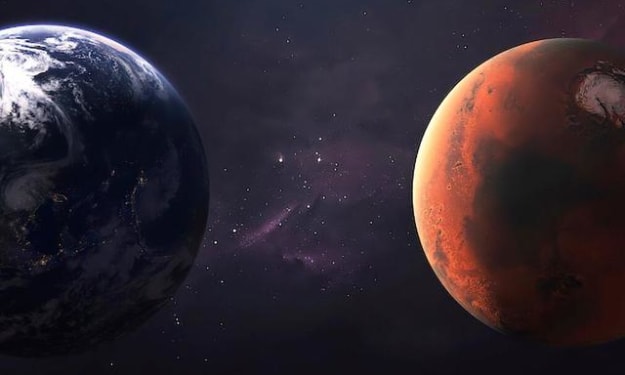
Kardashev RatingOf the eight planets in our solar system, Mars is the closest to Earth in terms of the natural environment, so it has rightly become a key exploration target for humans, who have launched many probes to Mars in the past and have harvested a large amount of Mars data.
By Robert Jack3 years ago in Earth
How scary is the fourth level of civilization
The word civilization is not new to us, it refers to the product of human society to a certain stage of development. In our history, there existed four ancient civilizations, and although only China is left today with a continuous history, it is a testimony to the continuous development of human civilization.
By Karen Gillanah3 years ago in Earth
There is a planet hidden behind the sun
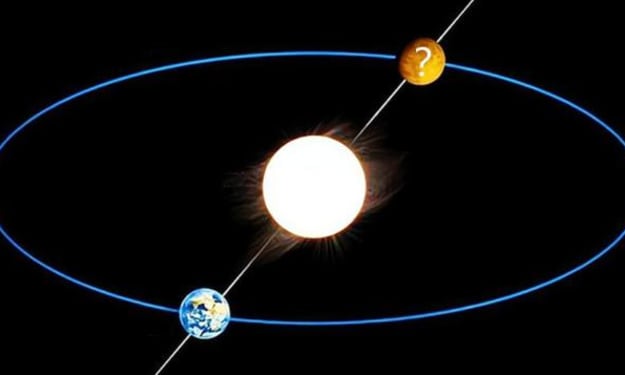
The Sun is the center of the solar system, and all known planets in the solar system, including the Earth, are revolving around the Sun under the effect of the Sun's gravity, and after knowing this fact, very interesting speculation was made: Is there a possibility that there is a planet hidden behind the Sun that we have not discovered?
By Robert Jack3 years ago in Earth
The unsolved mystery that has plagued scientists for 200 years
I'm sure we all have the experience of riding a bicycle. The structure of a bicycle is very simple, frame, tires, pedals, chain, brakes, all these things are reasonably assembled enough to keep us balanced during the riding process. But have you ever thought about why a bicycle can be balanced during a ride instead of falling over?
By Karen Gillanah3 years ago in Earth
A civilization 500 years behind mankind
For humans 500 years ago, the strength of modern humans can be said to be the crushing level of existence, so if someone asks, if a civilization found in the solar system 500 years behind the human race, how should humans respond? I believe that many people first thought of the answer is to conquer, but think carefully you will realize that this is not feasible.
By Robert Jack3 years ago in Earth
The most distant object visible to the naked eye
When we look up at the sky full of stars, we will always be fascinated by the vastness of the universe, but what you may not know is that the stars we see are not as far away as we think most of the celestial bodies visible to the naked eye in the night sky are not more than 1000 light years away from the Earth.
By Robert Jack3 years ago in Earth
Fly from Earth to Venus in 100 days
The dream of mankind is the sea of stars, and the first step to realizing this dream should be to land on other planets, even if mankind cannot go there personally, it is possible to launch some probes. In the solar system, Venus and Mars are both planets adjacent to the Earth, where the closest distance between Venus and the Earth is about 40.5 million kilometers, while the closest distance between Mars and the Earth is about 55 million kilometers.
By Robert Jack3 years ago in Earth
The earth is spinning slower and slower
On a cosmic scale, the Earth not only rotates around the Sun at all times but also rotates itself at all times. Rotation brings many natural phenomena to human beings on Earth: day and night, deflection of horizontal movement of objects, the difference in local time by one hour every 15 degrees of longitude, and so on.
By Karen Gillanah3 years ago in Earth
The average temperature of the universe is only -270.42°C
There are a huge number of stars in the universe, each of which can be considered a hot "ball of fire" that emits a lot of light and heat into the cosmic space every moment. It is easy to think that the universe as a whole should be warm, but this is not the case, because according to scientists' estimates, the average temperature of the universe is only -270.42°C.
By Robert Jack3 years ago in Earth
DNA found in meteorites
For humans, outer space has always had a strong attraction, and scientists, who are passionate about it, have been tirelessly searching for answers to those mysteries, but most are convinced that the Earth is the only planet in the universe that can support human life.
By Karen Gillanah3 years ago in Earth