Science
SpaceX cleared to dispatch reused rockets for 'public safety' missions
SpaceX has conveyed reused Falcon 9 rockets various occasions for business missions, yet up until this point, it has been restricted to all-new promoters for national security contracts. Notwithstanding, the Pentagon has approved its first SpaceX mission utilizing a reused rocket, with a GPS III satellite dispatch set to occur on Thursday, June seventeenth, CNBC has announced.
By Aakil khan5 years ago in Earth
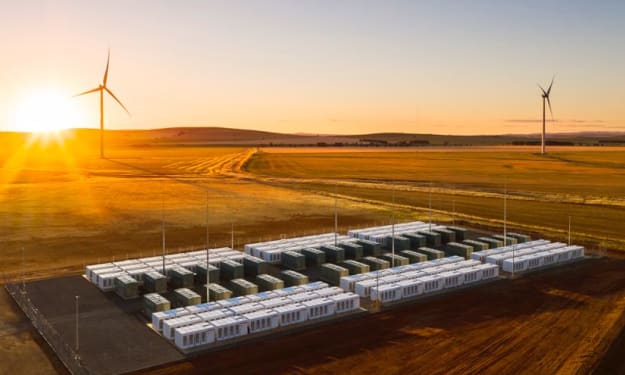
The Battery Revolution Has Begun
IT WAS THE YEAR the Soviet Union collapsed, Osama bin Laden founded al-Qaeda, and the lauded American physicist Richard Feynman died. Murphy Brown debuted on U.S. television, while at the cinema, Rain Man battled it out with Who Framed Roger Rabbit? and Crocodile Dundee II.
By Wilson da Silva5 years ago in Earth
Is the Earth's core lopsided?
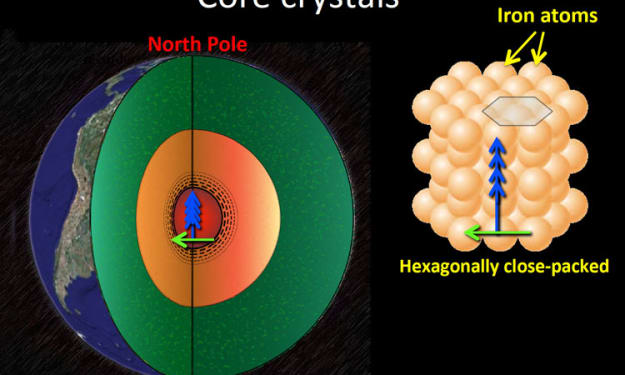
Model of how Earth’s inner core froze into solid iron implies it may be only 500 million years old For reasons unknown, Earth’s solid-iron inner core is growing faster on one side than the other, and it has been ever since it started to freeze out from molten iron more than half a billion years ago, according to a new study by seismologists at the University of California, Berkeley.
By Robert Coriell5 years ago in Earth
In the PawPaw Patch
I can't remember the first time I ever tasted a pawpaw. It was well over a decade ago. The flavor was enthralling - aromatic banana, mango, and other rich flavors I couldn't define at the time. Back in 2003 I had planted 4 trees on my parent's property, one of those trees still persists today. Almost 20 years and 5,000 Prius miles miles later, I have a micro-orchard of them in suburban Massachusetts.
By Timothy James Lane5 years ago in Earth
For the birds...
At Loess Bluffs National Wildlife Refuge in Missouri every autumn, there are Pelicans. Pelicans in Missouri? Yes, and not only that, Bald Eagles nest here, Snow Geese, Mergansers and dozens of other species most of us probably haven't heard of. Loess Bluffs is a waylay for hundreds of thousands of birds during their annual migrations.
By Thomas Tortorich5 years ago in Earth
Why Are Cities Unhealthy? Poor Biodiversity
EVEN ON A BLUSTERY winter’s afternoon, Mount Lofty flaunts its splendour as a bushland oasis, one of the last vestiges of the original forests and woodlands that once dotted the Adelaide Plains of South Australia. As you meander down the narrow tracks from the summit, you feel invigorated by the scenery, the silence, and the smell of wet earth after a light shower. To a city dweller like me, the air itself seems therapeutic.
By Wilson da Silva5 years ago in Earth
All About Environmental Engineering And Consultation
There are several environmental engineering consultation services that are being offered today to meet the growing demand for such service. The primary objective is to sustain or improve the standard of living of the local plant and the surrounding community. The scope of such services in Environmental Engineering comprises:
By Priya Sachdeva5 years ago in Earth
The Hidden World
Many marvelous things in nature can teach us about our world. Our world is well interconnected and well-informed. It is not only animals that gain their strength and energy from carbohydrates, plants also gain their strength from it. Sugar increases the growth process of plants by around 50%. When sugar is in the water that feeds them, it makes them advance even when the water is on an absorbing paper towel with the seed on it. Plants like animals enjoyed conversations, the carbon dioxide of animals helps them grow faster. And animals like a conversation because communication tells them about their community and builds up their food source intelligence. Light does not only advance plants, it is the timepiece of creation. All creatures need the light to help them grow and mature to the stages necessary for multiplication. Without light, all creatures feel depressed and disconnected from the members of their species. Light helps us separate and use our senses. It warms our bodies and gives color to our skin. Our skin is like a canopy, the largest organ, that connects animals to their environment and plants have the cells that help them to live off of light. There have been notions that plants understand the power of light, they bloom when light warms the ground and bend towards that light. Every branch of a tree is a new generation, the tree is neither male nor female, it has both parts. And insects are the matchmakers, they practically irrigate trees and help design their offsprings. A tree is only as strong and tall as its roots. The roots are the brain of the tree and they are the foundation. Trees can move, the wind blows through them and they sing. Trees are the home of animals and insects. Insects instinct is what makes them smart, they learned to be resilient even despite fear and war. They adapt because they want to and have to. As the world changed, so must they, their food supply determined their size and growth. Insect declares war just like warlike animals when they feel threatened they cannot back down. They are taught and trained to fight even when it means extinction. Insects used their bodies as a weapon for they are built for battle. And they use their numbers, the reason they multiply quickly. Insects have a system in place like animal kingdoms and they obey without question. They build communities to govern in distant places. Insects also have affection, they have certain rituals to maturing and friendship. They have certain call and response that keeps them connected. Insects search and discover their world. They adapt to human rulership, homes are a new frontier and they are willing to negotiate terms. Insects like birds teach their offspring instincts and they do not rely on innate instincts alone. Insects know how to sing and dance, for example, bees dance over tree sap. Insects can get excited about food sources and fellowship. Reptiles display fear and they have emotions for example snakes fear bigger animals and their instinct tells them to flee when they are alone. Reptiles have caring instincts and they teach their offspring how to hunt. They are willing to die for their offspring. They are vicious because they must set an example and they are threatened the most because food can be scarce in the water and their flexibility is limited. The sun is not the only light giver, the stars and the moon help animals and creatures to live at night especially if they are sensitive to the day and this applies in the desert. Some creatures see the moon as guidance and the stars help them figure out where they are in the world. Some creation is meant to live in the night and rest in the day. And this can be true for fish and water creatures. Some creatures have a rest strategy which humans can learn if adapt, where they rest and hunt non-stop and continually. Their homeostasis and metabolism keep them in this incredible state of urgency.
By Distinguished Honorary Alumni Dr. Matthew Primous5 years ago in Earth
Take a Seat
A prevailing conviction exists that reducing the carbon-footprint of an individual can substantially mitigate the effects of climate forcing emissions. And while it may hold merit if worldwide adoption of these behaviors were achieved, it fundamentally disregards the reticent mind of individuals and the commanding forces that inform decisions. I would like to challenge this belief and present what I think is a more effective way to save our oceans.
By Joan Manuel Madera Baez5 years ago in Earth
The best way to travel through space- Wormholes!
If you saw a wormhole, in reality, it would appear round, spherical, a bit like a black hole. Light from the other side passes through and gives you a window to a faraway place. Once crossed, the other side comes fully into view with your old home now receding into that shimmering spherical window. But are wormholes real, or are they just magic disguised as physics and maths? If they are real, how do they work and where can we find them?
By Maitrey Vishvas5 years ago in Earth