Science
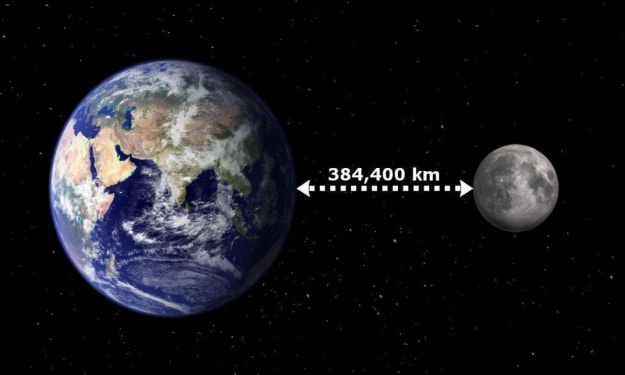
The distance from Earth to the Moon
The distance between the Earth and the Moon is not constant, but varies over the course of the Moon’s orbit around the Earth, which is not a perfect circle but an ellipse. The point at which the Moon is furthest from Earth is called the apogee, and the nearest point is called the perigee. These points do not coincide with the phases of the Moon (i.e. when there is a full moon, or crescent moon, etc), and they vary from year to year.
By John Welford5 years ago in Earth
Let There Be Light
I've already talked a lot about sunlight, and it’s turned out to be an extremely important factor in the forest. This should come as no surprise. After all, trees are plants and need to photosynthesize to survive. But because enough sun usually shines on our garden beds and lawns, in the home garden, water and fertile soil tend to be more decisive factors for plant growth. In our everyday lives, we don’t notice that light is more important, and because we like to apply our own situations to others, we overlook the fact that an intact forest has completely different priorities. In the forest, there’s a battle for every last ray of sunlight, and each species is specialized to grow in a particular niche so that it can soak up some energy, however paltry the amount might be. In the upper story—the executive offices— the mighty beeches, firs, and spruce stretch out and soak up 97 percent of the sunlight. This behavior is cruel and inconsiderate, but doesn’t every species take what it can? Trees have won this competition for the sun because they grow such tall trunks. But a plant can grow a long sturdy trunk only if it lives for a very long time, because an enormous amount of energy is stored in its wood. To grow its trunk, a mature beech needs as much sugar and cellulose as there is in a 2.5-acre field of wheat. Of course, it takes not 1 but 150 years to grow such a mighty structure, but once it’s up there, hardly any other plants—except for other trees—can reach it, and the rest of its life is worry free. Its own offspring are designed to survive in what light remains, and of course, their mothers feed them as well. That is not the case for the rest of the rank and file, and they must come up with other strategies for survival.
By Rainbow Tree5 years ago in Earth
A Labor of Hercules
A Labor for Hercules When speaking of cleaning our oceans, the old advice of “an ounce of prevention” applies. Had government and the press effectively interceded at a critical moment, not only would Rachel Carson’s “Silent Spring” have resulted in the banning of DDT, but it would have stopped the dumping of over 25,000 barrels of DDT tainted toxic waste off the coast between Los Angeles and Catalina Island by a major manufacturer of DDT back in the 1970’s. And that is just the ones they know about.
By Cleve Taylor 5 years ago in Earth
Solar Panel Systems Installation Maintenance Tips
All over the world, people are slowly moving towards solar panels for their electricity needs. Whether it is your home or office, it makes a lot of sense to go for solar panels as they not only help in cutting down your electricity bills, it is also environmentally friendly. People use solar panels for the generation of electricity for a wide array of reasons.
By Mark Stover5 years ago in Earth
How I Enslaved Hundreds to Do My Dirty Work In Saving the Planet
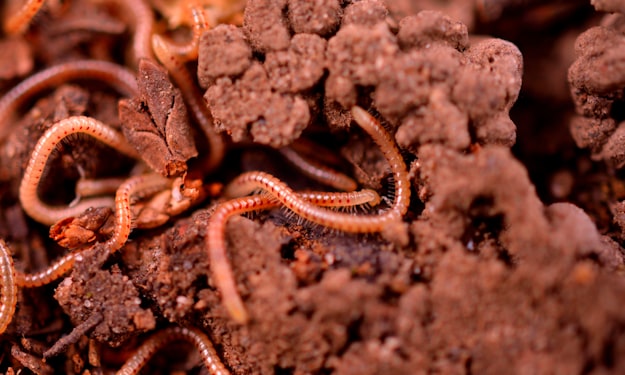
Compost is organic material that can be added to soil to help plants grow. Food scraps and yard waste together currently make up more than 30 percent of what we throw away and could be composted instead. Making compost keeps these materials out of landfills where they take up space and release methane, a potent greenhouse gas.--Environmental Protection Agency (EPA) website
By Denise Shelton5 years ago in Earth
Why floods occur
Flooding of land and buildings causes enormous damage in many countries across the world, incurring vast expense as well as causing loss of life. Floods that occurred in England in 2007 led to 180,000 insurance claims, against which 3 billion pounds sterling was paid out (according to the review by Sir Michael Pitt). The 2010 floods in Pakistan affected 20 million people and there were at least 2,000 deaths. In Australia in 2010-11, according to the BBC, the area affected was as large as that of France and Germany combined.
By John Welford5 years ago in Earth
A Grand Old Dame
A single ship on the horizon? Nay, I would claim many thousands and be so bold as to claim that an even greater number of the souls aboard ships, boats, yachts, schooners, canoes, kayaks and all manner of water craft have lived because of me. You may consider that an arrogant statement voiced in the vernacular of earlier times, and you would be correct on both counts.
By Katy Doran-McNamara5 years ago in Earth
Can we fix climate change?
On St. Patrick's Day I went with my father to have dinner. We saw one of my father's friends at the restaurant and one of the topics we had was about climate change. He was saying that electric cars are worse than gas cars, and that we can't fix climate change so we might as well just give up (I'm paraphrasing). I was shocked! Why give up? That to me is cowardice. What are we supposed to do, give up and not even try? Tell our kids, grand kids and great grandkids "sorry we fucked things up, tough luck for you?" Or should we try and heal this planet?
By Robert Kegel5 years ago in Earth
The Long View
The Long View Mankind, even as cave dwellers, was motivationally incapable of keeping the caves clean. Now, as world citizens, we as a species are probably incapable of cleaning up our oceans and landmass of earth's litter and cast offs. Even space is getting filled with earth's flotsam and jetsam. Space debris is a real and growing problem.
By Cleve Taylor 5 years ago in Earth
Earth
Earth is a squashed sphere Earth is not a perfect sphere. As Earth spins, gravity points toward the center of our planet (assuming for explanation's sake that Earth is a perfect sphere), and a centrifugal force pushes outward. But since this gravity-opposing force acts perpendicular to the axis of Earth, and Earth's axis is tilted, centrifugal force at the equator is not exactly opposed to gravity. This imbalance adds up at the equator, where gravity pushes extra masses of water and earth into a bulge, or "spare tire" around our planet.
By Firoz Alam5 years ago in Earth
4 Interesting Facts About Planet Earth
Earth day observed on April 22 every year marks the anniversary of the modern environmental movement in 1970. The first Earth Day was an American movement started by United States Senator Gaylord Nelson. Later in 1990, Denis Hayes took it international and organized events in 141 nations. Today, all over the world, we celebrate Earth Day. Have you ever wondered about how the planet Earth holds us stable in perfect harmony, withstanding the mess we do it? Let’s think about some of the interesting things about our patient Mother Earth.
By Anitha Sankaran5 years ago in Earth