history
Iconic food and gustatory moments in history.
What Did The Ancient Egyptians Eat?
"Honey! Pick up some bread on your way home from work on the pyramid tonight!" is a phrase you might've heard 4,000 years ago along the banks of the Nile. In ancient Egypt, everyone ate well. However, if you had more wealth, you ate better. Here's a grocery list of foods from ancient Egypt.
By Nikole Lynn5 years ago in Feast
Cabbages or Potatoes
For children growing up in rural Canada just after World War II, raised by parents who had barely survived the Depression and Dirty 30's it was a time of resourcefulness. I have been gifted with the legacy of a thrifty family of survivors. Both my mother and grandparents had an amazing knack for creating delicious meals out of almost nothing. With barely enough to feed their own 4 children my grandparents were also known for their generosity, feeding hobos and anyone within their reach that needed a hearty meal even if it was only cabbage soup or scalloped potatoes.
By Maria Calderoni5 years ago in Feast
Pueblo Pepper Fame
Colorful Colorado attracts tourists for beautiful, flavorful, and breathtaking reasons. There are endless adventures and happiness to be found around the mountain range, and when I moved here, I found the pleasure of this atmosphere being my day-to-day life one that I never expected to feel. To say it has been glorious would be an understatement.
By Dani Banani5 years ago in Feast
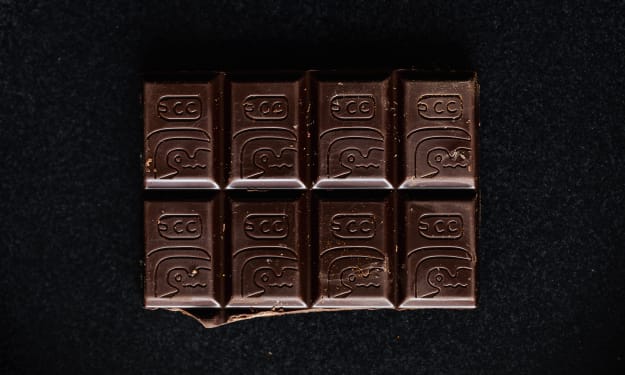
The Story of Chocolate: (Un)known Facts for History Nerds and Chocolate Lovers. Top Story - March 2021.
Every once in a while, it's nice to dig into our own knowledge and think about the rare and fascinating facts that we know... to share them with others, of course!
By Marina Fortuño5 years ago in Feast
How Sweet it Was
There was a time, o’ best beloved, when a nine year old could buy cigarettes. No, an eight year old couldn't- don't be silly. Everyone knows that an eight year old isn't strong enough to pull the lever on the cigarette machine. You need to be in 4th grade to do that!
By Judey Kalchik 5 years ago in Feast
Breakfast: It’s What Was for Lunch
We often hear doctors and nutritionists say that breakfast is the most important meal of the day. I’ve heard such reminders as “Eat breakfast like a king, lunch like a prince and dinner like a pauper,” to emphasize the importance of that morning meal. Now, however, there is a growing trend to skip this morning meal. The practice of Intermittent Fasting (IF) has been a major influence in shunning breakfast. One of the easiest forms of IF is what’s called the 16:8 Protocol. When following the 16:8 IF Protocol, one typically eats lunch and dinner within an 8-hour window and then nothing until lunch the next day. Sorry, not sorry, breakfast.
By Steven Anthony5 years ago in Feast
Move Over Taco Tuesday
Did you know that you have a 12-year-old enslaved boy named Edmond Albius to thank for your vanilla coffee? And, well, almost everything vanilla for that matter? If you didn’t know that tidbit of Black history, you’re not alone. But you would have known if you followed Black Food Fridays.
By Alexis Dent5 years ago in Feast
Polish Delicatessens
I told Ania about my memory of the Barony Street delicatessen in Edinburgh. In 1979, when I had been a postgraduate architect in the city, long before we had met. I used to buy a sandwich there to take into the Minto House studio. The shop was long, running back from the door, and getting darker toward the back. A glass-fronted display cabinet ran the full length of the room. You came in from the street on the left, and to the right behind the long counter was the shopkeeper's territory. She was a dear old woman who spoke no English. And anyone else I would meet in the shop would also be old, slow, wearing heavy brown clothes. They would speak no English. I think they usually carried Polish newspapers. Perhaps that last detail is just an invention of memory.
By Nick James5 years ago in Feast
Canned Stew and Empires
Laying out a sequence of cause and effect in history is sometimes a dangerous pastime. But let’s give it a try. Napoleon Bonaparte was arguably the most capable commander and emperor in modern times. There were other powerful emperors, even if they did not take on that title, but they generally failed as commanders. As a part of his role as commander of the French army around 1800, Napoleon sought a solution to the problem of inadequate food for his troops. It seemed, oddly enough, that the people who he was invading took to destroying their crops and stored food as they retreated from his advancing forces. This meant that the only way to feed his legions was to cart in food from behind the lines using wagons and horses. It was not efficient and as those supply lines became longer and longer with the successes he had in battle, the lines themselves became an exposed liability.
By William Altmann5 years ago in Feast
Understanding Our Systems of Production
The cultivation of food is something deeply tied to the history of humanity and our ancestral cultures. While the concept is a relatively simple one, the cultivation of plants for food is a complex and diverse field of study. Even the best and most lucrative home-gardeners on the planet may be clueless on how to scale up their knowledge into large-scale production agriculture. Likewise, rural farmers using traditional methods wouldn’t know how to begin with conventional agriculture. There are a million ways to grow the same tomato but is there one right way? In today’s world, there are a million labels when it comes to agricultural practices. There’s biodynamic farming, regenerative agriculture, permaculture, organic farming, conventional agriculture, and countless other systems/philosophies. If all this sounds overwhelming to you it's because for most people it is. In this article, we will cover the three big ones that you may have heard of: Organic Farming, Conventional Agriculture, and Permaculture. What are these? Why are they different? Is one better than the others?
By Annelise Graf5 years ago in Feast