literature
Science fiction's most popular literary writers from Isaac Asimov to Stephen King and Frank Herbert, and the rising stars of today.
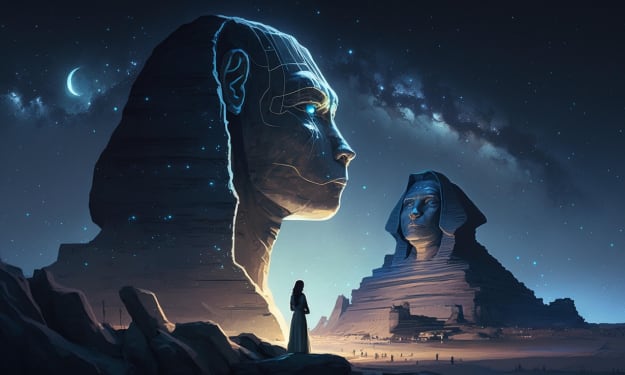
The Great Sphinx: Echoes from 800,000 Years Ago
The Guardian of Timeless Secrets It crouches upon the Giza Plateau like a sentinel frozen in time. With the body of a lion and the head of a man, the Great Sphinx of Giza gazes eternally toward the east, as if awaiting the return of something long forgotten. Carved from a single mass of limestone, the Sphinx is not merely a monument, it is a mystery that has haunted the imagination of seekers, scholars, and stargazers for centuries.
By The Secret History Of The World10 months ago in Futurism
Brave New World
Brave New World by Aldous Huxley is a famous science fiction novel written in 1932, that takes place in a future where the world seems perfect on the outside but is deeply disturbing underneath. It’s a story about control, happiness, freedom, and what it truly means to be human.
By Muhammad Hayat10 months ago in Futurism
The Catcher in the Rye
The Catcher in the Rye is a famous novel written by J.D. Salinger, first published in 1951. It has become a classic of modern American literature, especially loved by teenagers and young adults. The story is about a 16-year-old boy named Holden Caulfield, who is struggling with growing up, finding his place in the world, and dealing with the pain of loss and loneliness.
By Muhammad Hayat10 months ago in Futurism
Can AI Really Improve My Writing? My Initial Findings
Most of us don’t speak English, or at least not very fluently. I can speak English but not 100%. I think my competence is only 90% at best and sometimes I write bilingually. It's kind of hard to tidy it up in an article, especially if I expect everyone to understand it until I finally learned about AI Prompt.
By Pinesthi Mukti Rizky Wibowo10 months ago in Futurism
The Lucy Mission of NASA: A Historic Journey to Discover Asteroid Secrets
NASA's Lucy mission is making headlines in the ever-expanding field of space exploration as it prepares for yet another thrilling close encounter, this time with an asteroid. Not only is this ground-breaking mission a significant step forward for NASA, but it also marks a thrilling chapter in humanity's attempt to comprehend where our solar system came from. Launched in October 2021, Lucy is the first mission designed specifically to study Jupiter’s Trojan asteroids — a unique group of space rocks that share Jupiter’s orbit around the Sun. Scientists believe these asteroids are ancient remnants from the early solar system, frozen in time for billions of years. The formation processes of planets, moons, and other celestial bodies can be deduced from their study.
By Dipak Chakraborty10 months ago in Futurism