
Philippines Toys & Games Market: Family Spending, Digital Influence & Retail Evolution
How demographics, entertainment preferences and distribution channels are shaping the Philippines toys and games market

Philippines Toys & Games Market Overview
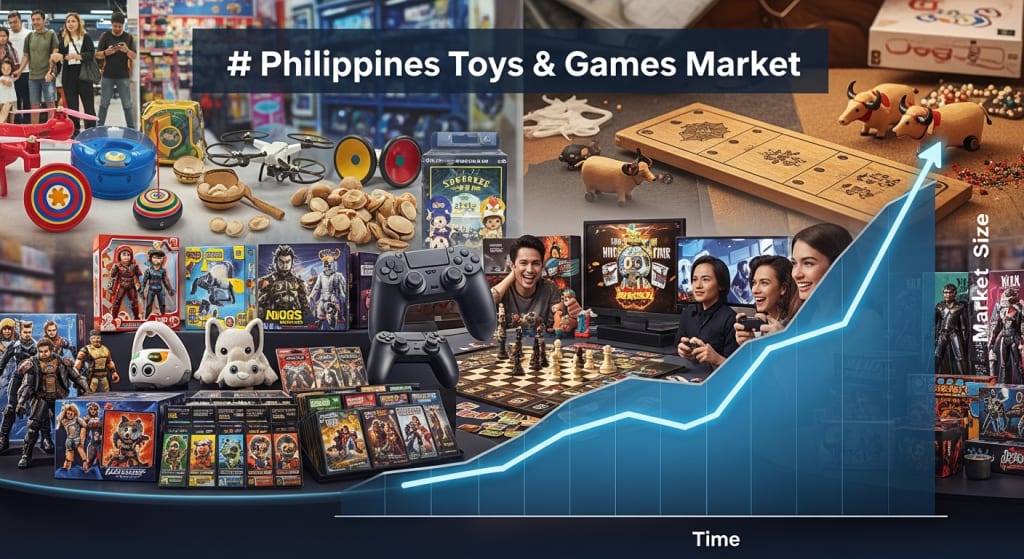
The Philippines toys and games market is experiencing steady growth as household spending patterns, population demographics and entertainment habits continue to evolve. Toys and games remain essential components of childhood development and family recreation, supporting consistent demand across income groups. The Philippines toys & games market size reached USD 2.67 Billion in 2024. Looking forward, IMARC Group expects the market to reach USD 6.04 Billion by 2033, exhibiting a growth rate (CAGR) of 8.70% during 2025-2033. This expansion reflects structural demand rather than short-term trends, driven largely by the country’s young population and rising urbanization.
The market encompasses a wide range of products, including traditional toys, educational and learning toys, electronic and digital-interactive toys, outdoor play equipment, board games, puzzles and collectibles. Purchasing decisions are influenced by price, safety standards, durability, brand familiarity and perceived developmental benefits. While affordability remains important for most households, parents increasingly look for toys that offer learning value and long-term use.
Driving Growth in the Philippines Toys & Games Market
One of the most significant drivers of market growth is strong demographic fundamentals. The Philippines has one of the youngest populations in Southeast Asia, with a large base of infants, toddlers and school-age children. This creates continuous demand for toys and games as children grow and progress through different developmental stages.
Another important factor is rising household consumption and disposable income. As economic conditions gradually improve, families are allocating more budget to discretionary categories, including toys and recreational products. Middle-income households, in particular, are purchasing toys more frequently for birthdays, holidays and school-related rewards.
Educational priorities also influence buying behavior. Parents increasingly recognize the role of play in cognitive, emotional and social development. Educational toys that promote problem-solving, creativity and motor skills are gaining popularity, especially among urban households.
The growing influence of digital media and entertainment content shapes toy preferences. Characters and themes from animated series, movies, online videos and mobile games often translate into demand for licensed toys and collectibles. This connection between media consumption and merchandise supports ongoing product turnover.
Expansion of organized retail and e-commerce further supports growth. Shopping malls, specialty toy stores, department stores and online marketplaces provide wide assortments and frequent promotions. E-commerce platforms, in particular, allow parents to compare prices, read reviews and access a broader range of brands, increasing purchase convenience.
What the Opportunities Are
The Philippines toys and games market presents multiple opportunities for manufacturers, distributors and retailers as consumer expectations continue to evolve.
1. Educational and STEM Toys
Toys focused on science, technology, engineering and mathematics are gaining traction. These products appeal to parents seeking learning-oriented play experiences.
2. Affordable and Value-Focused Product Lines
There is consistent demand for low- to mid-priced toys that balance quality and affordability. Value-focused collections support mass-market penetration.
3. Digital-Interactive and Smart Toys
Connected toys that integrate physical play with mobile apps or digital content attract tech-savvy families and older children.
4. Localized and Cultural Themes
Toys reflecting Filipino culture, stories and characters can differentiate offerings and appeal to domestic consumers.
5. Seasonal and Gifting Products
Holiday-themed toys and gift sets support higher sales volumes during peak seasons.
6. Online-Exclusive Product Launches
E-commerce platforms allow targeted releases and testing of new concepts.
Operational Considerations
The market faces challenges related to price competition and counterfeit products, which can affect brand reputation and consumer trust. Ensuring product authenticity and safety compliance remains important.
Supply chain efficiency is another consideration. Import dependence for certain toy categories exposes the market to logistics disruptions and currency fluctuations.
Inventory management is critical due to seasonal demand patterns. Retailers must balance stock levels to avoid overstocking or shortages.
Compliance with toy safety standards and labeling regulations influences product design and packaging.
Recent News & Developments in the Philippines Toys & Games Market
• Feb 2025: Several toy retailers expanded educational toy sections in major shopping malls to respond to rising parental interest in learning-based products. These sections feature STEM kits, puzzles and early-learning toys. Retailers reported higher foot traffic and longer in-store browsing times.
• Jun 2025: Local distributors introduced new ranges of affordable STEM kits targeting school-age children. The products were positioned for home learning and supplemental education. Early sales performance indicated strong acceptance among urban households.
• Oct 2025: Industry data showed a 15% year-on-year increase in online toy and game sales, supported by promotional campaigns and expanded product assortments on e-commerce platforms. Mid-priced toys accounted for a significant share of digital purchases.
Why Should You Know About Philippines Toys & Games Market?
Understanding the Philippines toys and games market provides insight into how demographics, education priorities and entertainment trends influence everyday consumer spending. The sector reflects stable, replacement-driven demand supported by a young population and evolving family lifestyles.
For businesses, the market highlights opportunities in educational toys, value-focused product lines and digital retail channels. For policymakers, it underscores the importance of toy safety regulation and consumer protection. Overall, the toys and games market demonstrates how family-oriented consumption continues to expand alongside economic and demographic growth in the Philippines.
About the Creator
Keep reading
More stories from Manisha Dixit and writers in Gamers and other communities.
Philippines Shrimp Market: Aquaculture Expansion, Export Demand & Consumption Trends
Philippines Shrimp Market Overview The Philippines shrimp market growth plays an important role in the country’s fisheries and aquaculture sector, supporting livelihoods, domestic food consumption and export earnings. Shrimp is widely consumed across households, restaurants and foodservice establishments, while also representing a key seafood export product. The Philippines shrimp market size reached USD 323.42 Million in 2024. The market is projected to reach USD 472.78 Million by 2033, exhibiting a growth rate (CAGR) of 3.87% during 2025-2033. This steady expansion reflects improvements in aquaculture practices, rising domestic demand and strengthening participation in international seafood trade.
By Manisha Dixitabout 13 hours ago in Feast
ARC Raiders Blueprint Farming Guide 2026
Blueprint farming in ARC Raiders is not about luck alone. It is mostly about understanding spawn logic, knowing where players rotate, and managing risk correctly. In 2026, the overall drop structure is more stable than early testing phases, but efficient farming still depends on planning your runs.
By Snow manerabout 16 hours ago in Gamers
Artists & Game Devs: Brand Your Work Early!
When you’re first getting into art or game development, branding usually feels like something you can “figure out later.” You’re focused on learning the tools, like a game engine, or different art mediums. Writing code that finally works. Making art that doesn’t look terrible. Branding feels… premature.
By D. E. King5 days ago in Gamers
Off the Book
It ended like every other stupid idea. Badly, and alone. I’m researching digital confession ethics, he said. A tech ethicist. He gestured at floating data I couldn’t see then pulled out a physical notebook. Actual paper, fountain pen. He held it up like he was showing me scripture.
By Nicky Frankly3 days ago in Fiction




Comments
There are no comments for this story
Be the first to respond and start the conversation.