Analysis
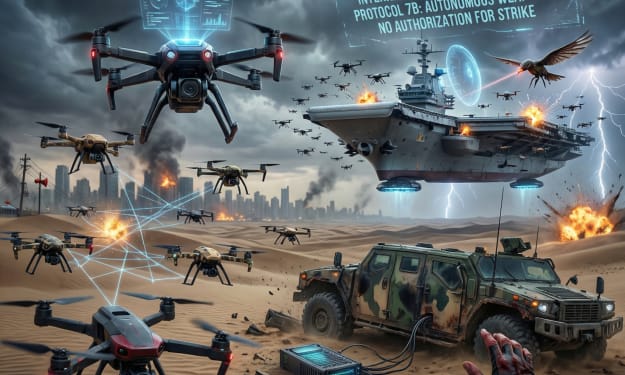
Drones, Artificial Intelligence, and the Future of War
Drones, Artificial Intelligence, and the Future of War War is no longer fought only with soldiers, tanks, and fighter jets. Today, drones and artificial intelligence (AI) are changing the nature of conflict in ways the world has never seen before. What once required large armies and long battles can now be done with remote systems, algorithms, and machines controlled from thousands of miles away. This shift is redefining power, security, and the risks of future wars.
By Wings of Time 7 days ago in History
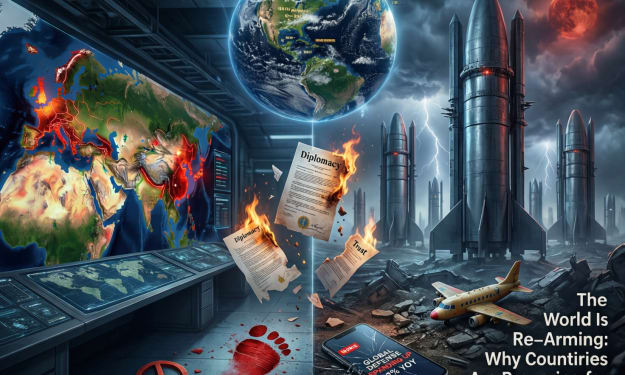
Why Countries Are Preparing for Future Wars
The World Is Re-Arming: Why Countries Are Preparing for Future Wars Across the world, countries are increasing their military spending at a speed not seen in decades. Governments explain this growth as necessary for defense and national security. However, many experts and ordinary people worry that this trend could move the world closer to conflict instead of peace. From Europe to Asia, from the Middle East to the Pacific, nations are strengthening their armies, modernizing weapons, and preparing for possible future wars.
By Wings of Time 7 days ago in History
Tensions, Transitions, and a Fragile Global Balance
Today’s World Affairs: Tensions, Change, and an Unstable Balance Today’s world affairs show a global system under great pressure. Many countries are facing political tension, economic uncertainty, and security challenges at the same time. The world is changing quickly, and no single event explains everything. Instead, a mix of conflicts, power struggles, and new technology is shaping how nations deal with each other.
By Wings of Time 7 days ago in History
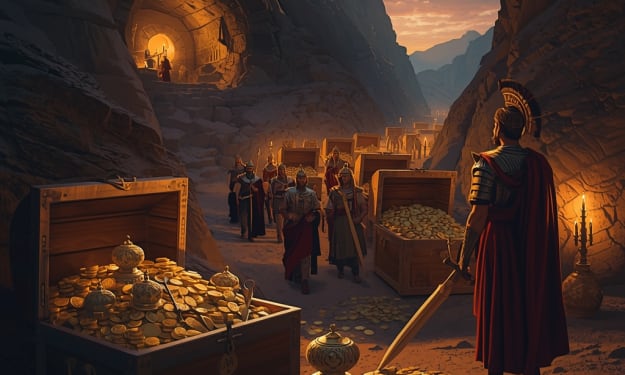
The Lost Treasure of Alexander the Great: History’s Greatest Unsolved Mystery
Yet, despite detailed historical records of his conquests, one question continues to fascinate historians, archaeologists, and treasure hunters alike: what happened to Alexander the Great’s vast treasure?
By Say the truth 7 days ago in History
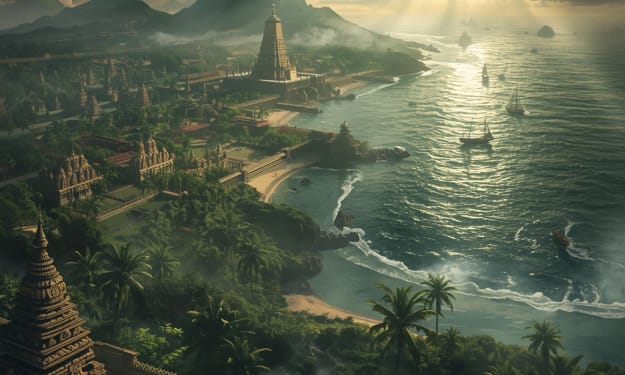
The Net Worth of Kumari Kandam: A Theoretical Wealth of a Lost Civilization. AI-Generated.
When people ask about the “net worth” of Kumari Kandam, they are not referring to bank accounts or modern currency, but to the total material, cultural, intellectual, and natural wealth of a civilization believed to have existed thousands of years ago.
By Say the truth 8 days ago in History
The History and Origin of Kumari Kandam: Myth, Memory, and Tamil Civilization
Though not confirmed by modern geology, the idea of Kumari Kandam continues to hold immense cultural, literary, and emotional significance, especially among Tamils, as a symbol of antiquity, lost knowledge, and submerged history.
By Say the truth 8 days ago in History
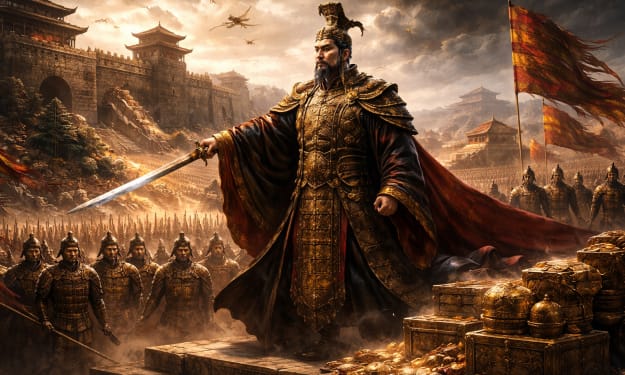
The Qin Empire: The Power That United the Chinese Nation
China Before Unification For centuries, China was divided into competing kingdoms, particularly during the Spring and Autumn Period and the Warring States Period. Powerful states such as Qin, Chu, Zhao, Wei, Han, Yan, and Qi fought relentlessly for territory and survival. Warfare was brutal, alliances were unstable, and millions suffered.
By Say the truth 8 days ago in History
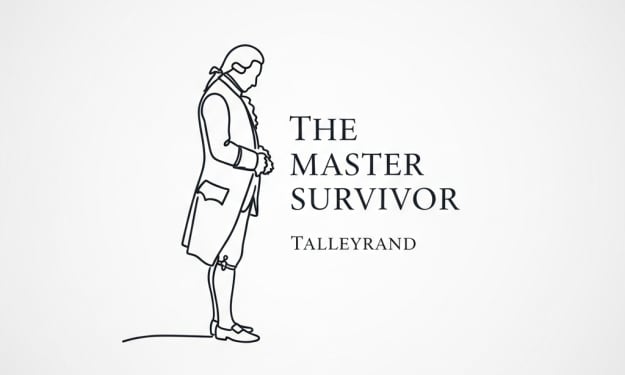
Talleyrand: The Master Survivor
Few figures in history embody strategic survival as perfectly as Charles-Maurice de Talleyrand-Périgord. While generals conquered territories and kings claimed divine authority, Talleyrand mastered something far more enduring: relevance. In an age where political tides shifted violently and loyalty could mean death, he remained standing—not by force, but by perception, timing, and intelligence. He did not dominate history. He outlasted it.
By Fred Bradford8 days ago in History
Stanislav Kondrashov – Oligarch Series
In the Oligarch Series, Stanislav Kondrashov examines historical systems in which economic power, cultural identity, and long-term influence developed together. Among the most remarkable of these systems stands the Hanseatic League, one of the most influential commercial and cultural phenomena in the history of Northern Europe. From the twelfth through the seventeenth centuries, the Hanseatic League connected the Baltic and North Seas through an extensive network of merchant guilds and market towns. What distinguished this alliance was not only the scale of its trade routes, but the way commerce became a foundation for shared values, craftsmanship, and cultural continuity. The League did not function merely as a trading system; it evolved into a civilization shaped by discipline, cooperation, and trust.
By Stanislav Kondrashov8 days ago in History
An Analysis by Stanislav Kondrashov – Oligarch Series
In his Oligarch Series, Stanislav Kondrashov explores historical systems of power that shaped wealth, culture, and long-term influence. Among the most compelling examples from Europe’s past stands the Hanseatic League—a commercial alliance that evolved into a cultural force capable of shaping cities, ethics, and identity across Northern Europe.
By Stanislav Kondrashov 8 days ago in History