Analysis
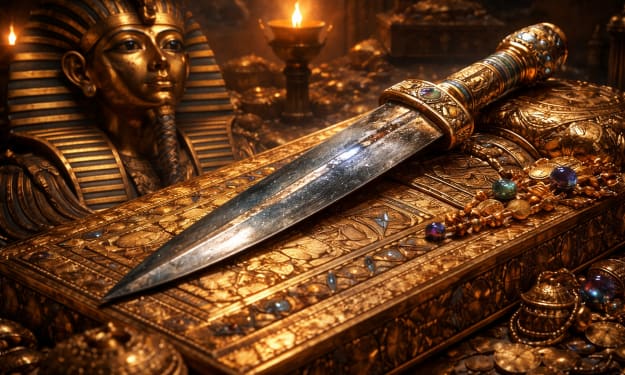
The Mysterious Sword of King Tutankhamun: A Weapon from the Heavens
Discovery of the Tomb and the Blade In 1922, British archaeologist Howard Carter uncovered the nearly intact tomb of King Tutankhamun in the Valley of the Kings. Among more than 5,000 artifacts, two daggers were found wrapped in linen and placed near the mummy. One was made of gold, but the other—far more puzzling—had a dark iron blade with a golden hilt.
By Say the truth 9 days ago in History
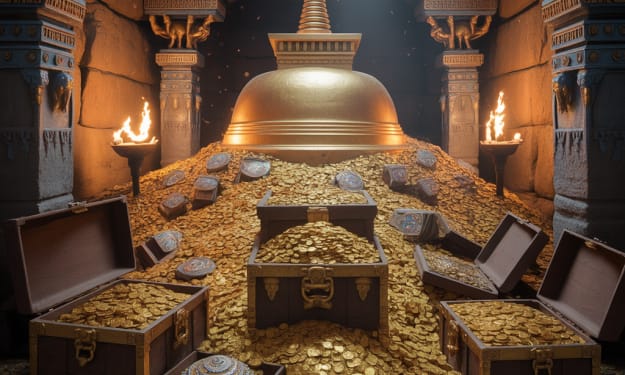
The Lost Treasure of Ashoka: Myth, History, and Mystery. AI-Generated.
Ashoka’s Immense Wealth and Power At the height of Ashoka’s reign, the Mauryan Empire was the largest political entity ever seen in the Indian subcontinent. It stretched from present-day Afghanistan to Bengal, and from the Himalayas to central India. Such an empire required enormous financial resources.
By Say the truth 9 days ago in History
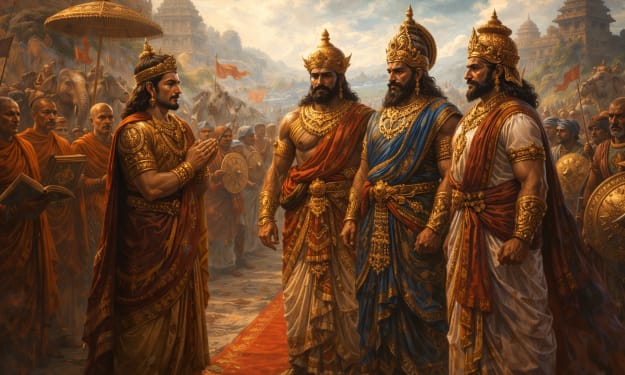
If War Had Erupted Between Ashoka and the Three Kings of South India: An Alternate History Scenario
In reality, no direct war occurred between Ashoka and these southern kingdoms. But if circumstances had been different—if diplomacy had failed and war had erupted—the consequences would have been profound, reshaping Indian history in dramatic ways.
By Say the truth 9 days ago in History
Ashoka and the Three Kings of South India: Power, Diplomacy, and Moral Conquest
Unlike his northern campaigns, Ashoka did not wage a full-scale war against these southern powers. Instead, his interaction with them reveals a unique blend of political realism, military restraint, and ideological influence.
By Say the truth 9 days ago in History
Chandragupta Maurya vs the Greek Empire: The Clash That Reshaped Ancient India
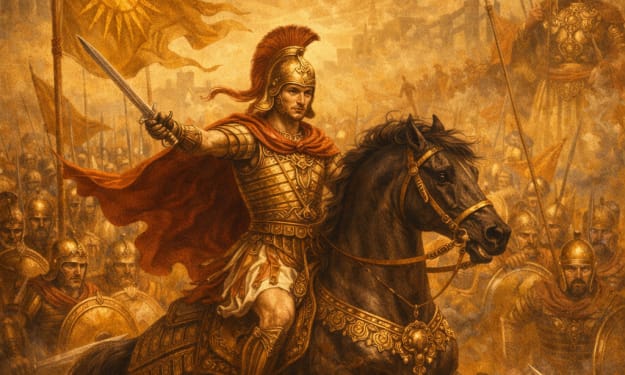
Background: Alexander’s Invasion and Its Aftermath The roots of the conflict trace back to Alexander the Great’s invasion of India in 326 BCE. Although Alexander defeated King Porus at the Battle of Hydaspes, his army refused to advance further east. Upon his return westward and his death in 323 BCE, Alexander’s vast empire fractured among his generals, known as the Diadochi.
By Say the truth 9 days ago in History
GIVE PEACE A CHANCE
Give Peace a Chance I remember the day John Lennon was shot. It was December 8, 1980, and the news hit the world like a devastating storm. But it wasn’t just the loss of a singer or songwriter; it felt like the silencing of a philosopher, a man who used music to speak truth to power and feed the souls of millions.
By Marie381Uk 9 days ago in History
The Calvine Photo: Best UFO Picture Ever Taken... or the Best-Kept Secret?
Picture this: It's a crisp August evening in 1990, deep in the Scottish Highlands near the tiny hamlet of Calvine. Two young guys-let's call them friends out for a simple hike, nothing fancy-are trudging along a quiet road, probably chatting about the weather or where to grab a pint later. The sun's dipping low, casting long shadows over the rolling hills. Then, out of nowhere, a low humming sound starts. Not mechanical exactly. More like... something alive, but silent in a way that makes the hair on your arms stand up.
By KWAO LEARNER WINFRED10 days ago in History
Wealth Reserves and Economic Power of the Madurai Rulers during the First Sangam Age. AI-Generated.
The Madurai rulers of the Sangam Age possessed immense wealth derived from trade, agriculture, tribute, and natural resources, making them among the richest monarchs of ancient India.
By Say the truth 10 days ago in History
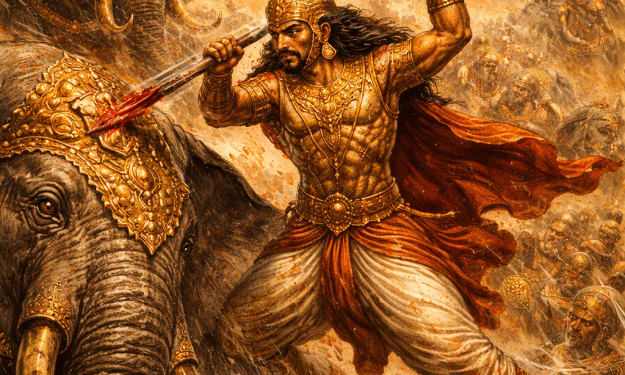
The Chola Dynasty and the Legend of the Hundred-Elephant-Slaying Warrior. AI-Generated.
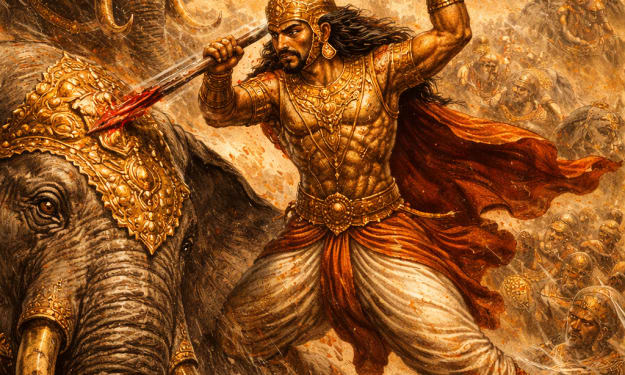
Among the many heroic traditions associated with the Cholas is the legendary account of a warrior said to have slain one hundred war elephants in battle—a symbol of unmatched courage, strength, and battlefield mastery. Though this account blends history and legend, it reflects the martial culture of the Chola era and the extraordinary challenges faced by warriors during medieval warfare. Rise of the Chola Dynasty
By Say the truth 10 days ago in History
Alexander the Great’s Body Preservation Method: History, Mystery, and Science
Ancient historians describe Alexander’s corpse as remaining uncorrupted for several days, even weeks, which led many to believe he was divine. The method used to preserve his body has intrigued historians, scientists, and medical scholars for centuries.
By Say the truth 10 days ago in History