Books
When Truth Learned to Whisper. AI-Generated.
When Truth Learned to Whisper In the small town of Mirzaabad, people spoke freely, too freely. Gossip was like air—unseen yet everywhere. The truth, bold and loud, once roamed these streets without fear, leaving nothing hidden. But over time, the people grew weary of its harshness. Truth was blunt; it hurt, it shattered, it embarrassed. So one day, it vanished. Not entirely, but it learned to whisper.
By Samaan Ahmadabout 20 hours ago in History
The Ecology of Self-Destruction
Human civilizations often imagine their downfall as something imposed from the outside—by enemies, invasions, or natural disasters. Yet, as Jared Diamond argues in Collapse: How Societies Choose to Fail or Succeed, many societies have played the central role in their own destruction. Through the reckless over-exploitation of natural resources, short-term thinking, and failure to adapt to environmental limits, nations repeatedly undermine the very ecological systems that sustain them. Diamond’s comparative study of past and present societies reveals a sobering pattern: environmental self-destruction is rarely accidental, and collapse is often the predictable outcome of collective choices.
By Rachid Zidine2 days ago in History
The Final Legacy of Alexander the Great: How One Man Changed the Ancient World
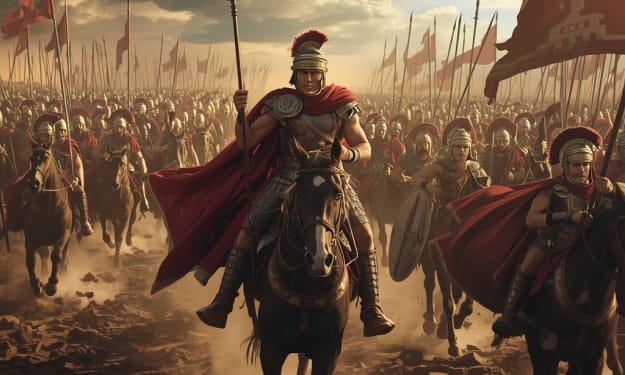
Alexander inherited a strong kingdom from his father, Philip II of Macedon, but he transformed it into something far larger. Within a little more than a decade, he conquered the Persian Empire, marched through Egypt, reached Central Asia, and entered parts of India. This rapid expansion created one of the largest empires of the ancient era. Yet Alexander’s vision went beyond military victory. He sought to create a world where Greek and Eastern cultures blended together. This cultural mixing became one of his most lasting achievements.
By Say the truth 3 days ago in History
Alexander the Great: The Life, Conquests, Vision, and Legacy of History’s Greatest Warrior King
Part 1: Birth and Early Life Alexander was born in 356 BCE in Pella, the capital of Macedonia. He was the son of King Philip II of Macedon and Queen Olympias. From an early age, Alexander was surrounded by power, politics, and warfare. Olympias deeply influenced him, often telling him that he was descended from Achilles and even the god Zeus. These stories shaped Alexander’s belief that he was destined for greatness.
By Say the truth 5 days ago in History
AI, Nuclear Weapons, and Accidental War
AI, Nuclear Weapons, and Accidental War In the modern world, wars are no longer fought only with soldiers, tanks, and planes. A new and dangerous element has entered global security: artificial intelligence (AI). While AI brings speed, efficiency, and advanced decision-making, it also introduces a serious risk—especially when combined with nuclear weapons. The greatest danger of the future may not be a planned nuclear war, but an accidental one.
By Wings of Time 5 days ago in History
Future Wars in the Age of Artificial Intelli
Future Wars in the Age of Artificial Intelligence If the new battlefield is hidden inside a nation’s systems, then Artificial Intelligence is becoming the most powerful weapon within it. Future wars will not begin with tanks crossing borders or fighter jets in the sky. They will begin with algorithms, data, and decisions made at machine speed. AI is changing not only how wars are fought, but also who controls power and how quickly conflicts can spiral out of control.
By Wings of Time 5 days ago in History
The Demanding Factors That Created Alexander the Great’s Path to Victory
1. The Foundation Laid by Philip II of Macedon One of the most important factors behind Alexander’s victories was the groundwork laid by his father, King Philip II of Macedon. Philip transformed Macedonia from a weak kingdom into a dominant military power. He reorganized the army, introduced the Macedonian phalanx, and armed soldiers with the long sarissa spear, which gave them a decisive advantage over traditional Greek hoplites.
By Say the truth 6 days ago in History
The Net Worth of the Peacock Throne: Valuing the World’s Most Luxurious Lost Treasure. AI-Generated.
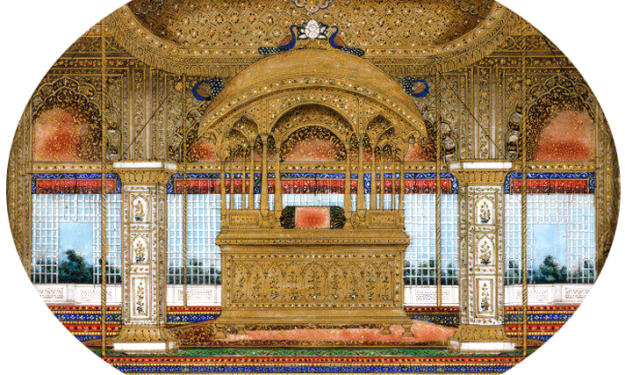
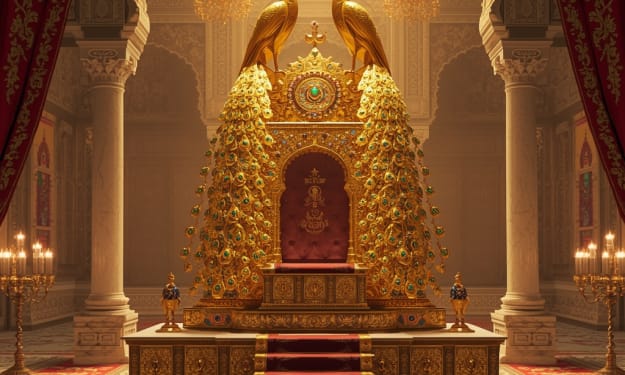
What Was the Peacock Throne? The Peacock Throne was completed around 1635 CE and placed in the Mughal imperial court at Delhi. It was constructed almost entirely of solid gold and covered with some of the most valuable gemstones known to humanity. At its center stood two jewel-encrusted golden peacocks, their tails raised high and spread wide, symbolizing royalty, immortality, and divine authority.
By Say the truth 6 days ago in History
The History of the Golden Peacock: The Rise and Fall of a Legendary Throne
Origins of the Golden Peacock The story of the Golden Peacock begins in 17th-century India, during the reign of Emperor Shah Jahan—the same ruler who built the Taj Mahal. Shah Jahan envisioned a throne that would surpass all others in the world, reflecting not only material wealth but also cosmic order and royal divinity.
By Say the truth 6 days ago in History