Discoveries
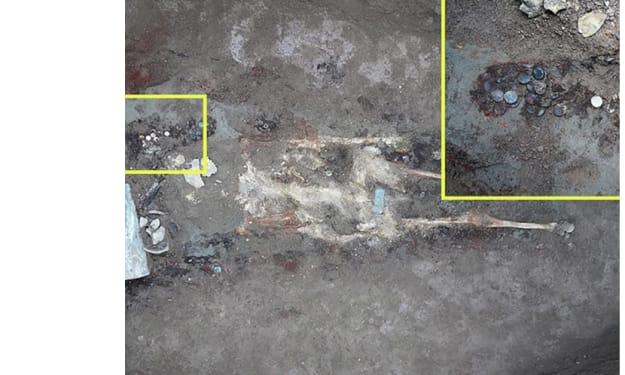
'Go' is an ancient Chinese game that archaeologists have found stones from.
Over a thousand years ago, game pieces from the ancient Chinese board game "Go" were interred together. An examination of these "Go stones" reveals that they are made of expertly carved porcelain, smoke-blackened clay, or shell material.
By Francis Damiabout 8 hours ago in History
Evolution Of Human
Human Evolution: The Long Journey from Primate Ancestors to Modern Humans Human evolution is one of the most fascinating and complex stories in the history of life on Earth. It explains how modern humans, Homo sapiens, emerged through millions of years of biological, environmental, and cultural change. This journey is not a straight line of progress but a branching tree filled with experiments, adaptations, extinctions, and remarkable survival strategies. By studying fossils, genetics, archaeology, and comparative anatomy, scientists have pieced together a detailed narrative of how humans evolved physically, cognitively, and socially.
By Ibrahim Shah 2 days ago in History
The Final Legacy of Alexander the Great: How One Man Changed the Ancient World
Alexander inherited a strong kingdom from his father, Philip II of Macedon, but he transformed it into something far larger. Within a little more than a decade, he conquered the Persian Empire, marched through Egypt, reached Central Asia, and entered parts of India. This rapid expansion created one of the largest empires of the ancient era. Yet Alexander’s vision went beyond military victory. He sought to create a world where Greek and Eastern cultures blended together. This cultural mixing became one of his most lasting achievements.
By Say the truth 2 days ago in History
Alexander the Great — Part 3: The Edge of the World and the Limits of Empire
After securing control of Bactria and Sogdiana, Alexander turned his attention eastward. He had long been fascinated by stories of India — a land of immense wealth, powerful kings, and exotic cultures. Greek historians described India as a place where rivers were vast, armies used elephants in battle, and philosophers lived in deep contemplation. For Alexander, it represented the next great frontier and perhaps the edge of the known world.
By Say the truth 2 days ago in History
Alexander the Great – Part 1: Birth, Childhood, and the Making of a Future Conqueror
Birth in a Kingdom on the Rise Alexander was born in 356 BCE in the ancient city of Pella, the capital of the Kingdom of Macedon. At the time, Macedon was not considered the dominant power in Greece. However, this situation was rapidly changing under the rule of Alexander’s father, King Philip II. Philip was a brilliant military reformer and strategist who transformed Macedonia into a formidable kingdom.
By Say the truth 3 days ago in History
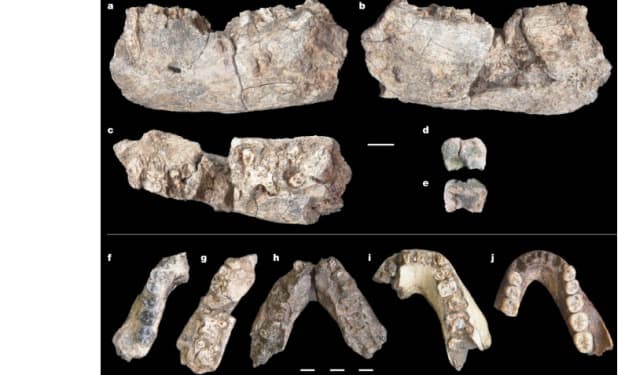
A jawbone that is 2.6 million years old alters the course of human history.
Scientists' mapping of the early human family is changing as a result of a recently discovered Paranthropus jawbone fossil. In the Afar area of Ethiopia, researchers discovered a partial lower jaw, which they dated to roughly 2.6 million years ago.
By Francis Dami4 days ago in History
Alexander the Great: The Life, Conquests, Vision, and Legacy of History’s Greatest Warrior King
Part 1: Birth and Early Life Alexander was born in 356 BCE in Pella, the capital of Macedonia. He was the son of King Philip II of Macedon and Queen Olympias. From an early age, Alexander was surrounded by power, politics, and warfare. Olympias deeply influenced him, often telling him that he was descended from Achilles and even the god Zeus. These stories shaped Alexander’s belief that he was destined for greatness.
By Say the truth 5 days ago in History
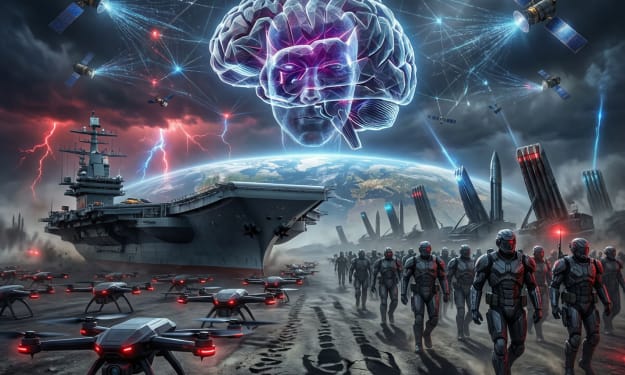
AI, Nuclear Weapons, and Accidental War
AI, Nuclear Weapons, and Accidental War In the modern world, wars are no longer fought only with soldiers, tanks, and planes. A new and dangerous element has entered global security: artificial intelligence (AI). While AI brings speed, efficiency, and advanced decision-making, it also introduces a serious risk—especially when combined with nuclear weapons. The greatest danger of the future may not be a planned nuclear war, but an accidental one.
By Wings of Time 5 days ago in History
Future Wars in the Age of Artificial Intelli
Future Wars in the Age of Artificial Intelligence If the new battlefield is hidden inside a nation’s systems, then Artificial Intelligence is becoming the most powerful weapon within it. Future wars will not begin with tanks crossing borders or fighter jets in the sky. They will begin with algorithms, data, and decisions made at machine speed. AI is changing not only how wars are fought, but also who controls power and how quickly conflicts can spiral out of control.
By Wings of Time 5 days ago in History
She Chose to Be Sicilian. Others Died for Being Sicilian.. Content Warning.
Copenhagen, 1925. There’s a young woman at the harbor, watching the Little Mermaid disappear into the fog. Her bags are at her feet. She’s got a ticket tucked in her coat. Tomorrow, she’s sailing south.
By Olga Angelucci5 days ago in History