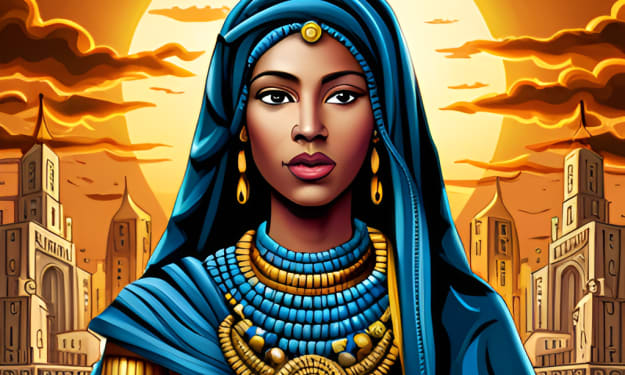
Medieval
The Eternal Scholar
I wasn’t sure about entering this challenge at first. In large part, because in some ways I am already doing the job I imagine myself doing in any time period. That is being a writer and historian. But while talking with a couple of friends earlier today through Facebook comments, I became inspired to explore this idea more. While also exploring the implications of what it would be like to be a historian and writer in other time periods, and tie in an earlier thought I had a couple months ago.
By Atomic Historian3 years ago in History
Gladiator's Triumph. Content Warning.
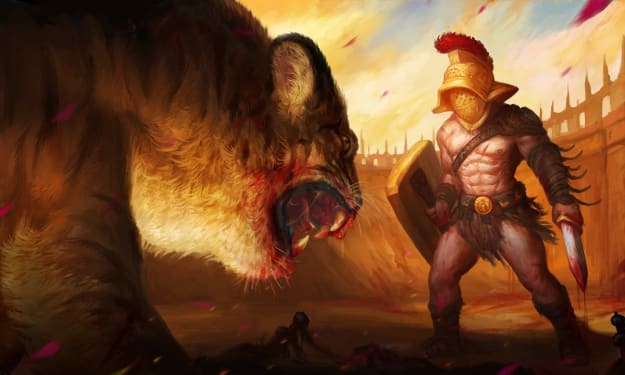
In the vast colosseum, where blood and honor clashed, a gladiator named Maximus stood tall. His chiseled physique and steely gaze concealed a heart burdened by tragedy and a thirst for justice. Maximus, once a celebrated general, had been betrayed by the very empire he had sworn to protect. Now, he fought not for glory, but for vengeance.
By Atikul Hoque Jahan3 years ago in History
Nihil Sine Labore
When I was around 19 years of age, I went to a psychic expo and had a reading. The woman in front of me told me that I was a foot solider in an English king’s army in a past life. She never mentioned the era, but her words conjured up images of medieval times, of dull grey armour and flags of crimson. Of long marches in cold wind and deep mud. The psychic went on to tell me I had also been a well-known English female author. I recall ardently hoping she would tell me I had been Charlotte Brontë, for 'Wuthering Heights' has always been a much-loved story of mine.
By Lauren Jane3 years ago in History
"The Unyielding Spirit: Daw Aung San Suu Kyi's Journey for Democracy and Human Rights"
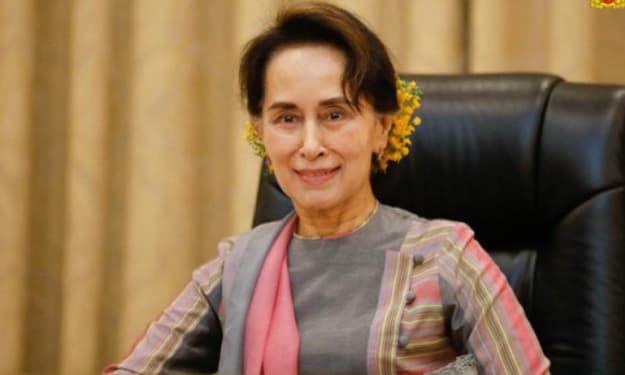
Once upon a time in the beautiful land of Myanmar, there was a remarkable woman named Daw Aung San Suu Kyi. She was born on June 19, 1945, in the city of Yangon, which was then known as Rangoon. Daw Aung San Suu Kyi was the daughter of General Aung San, a national hero and the architect of Myanmar's independence.
By Kuric Adem3 years ago in History
The Soil Reader. Content Warning.
The King stares at me. All them in the palace do, every time. Well, not Geoff. Geoff makes me turn away. I appreciate that about the royal scribe. But these divine rule types, crowned in holy purpose, look right at me. Mind you, I don’t dare make eye contact. Not ever. I don't need to see to know. I can feel their gazes boring into me, full of judgment and distaste. They stare to remind me of me place in this world. Don’t look up, wretch. Don’t look up. But because of me place in this world, what do I know from Kings and queens and dukes and them others? Could be they're just thick-headed, dim-witted, the touched children of sibling lovers. Don't think much about it. I do me job and I do it well, just like Da before me. Da served the Irish Kings and they were a rough lot. Ate a lot of mutton, I suspect. Mutton don’t come out well. Digests fine, but the slurry it produces is putrid.
By Mack Devlin3 years ago in History
Comparing Fame: Michael Jackson vs. Elvis Presley. Content Warning.
Introduction The world of music has witnessed the rise of many iconic figures, but few have left an indelible mark on popular culture like Michael Jackson and Elvis Presley. Both artists achieved unprecedented success in their respective eras, captivating audiences with their unique talents and captivating performances. This essay aims to delve into the question of who is more famous between Michael Jackson and Elvis Presley, examining their cultural impact, career achievements, and enduring legacies.
By Word Weaver 3 years ago in History
Yoruba Orisha Ogun: The God of War
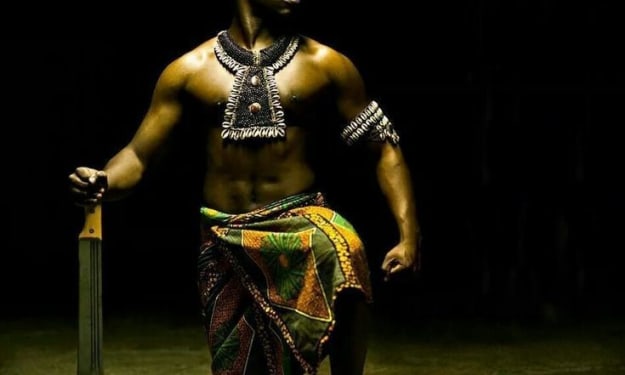
Ogun is a Yoruba (African) Orisha God who was a real person who went by the name Alakaaiye from the kingdom of Ife (Yorubaland), and he was an Ife king during medieval Africa. Like King Oduduwa of the Ife Kingdom, King Ogun was also deified by the Yoruba people because he lived a great earthly life. Early Yoruba people cosigned smelting, and the fabrication and the use of iron tools, to the patronage of one of their most senior deities, the god later known as Ogun, who was from earlier times worshiped as the patron god of all working folks of Yorubaland. Ogun may have possibly been the first of such Yoruba gods, hence his situation as “Osinmole” (first, or king, among the earliest spirits or gods). In medieval Yorubaland (present-day Southwest Nigeria, a smaller part of Benin Republic, and still a small part of Togo Republic), the cult of Ogun became a special royal cult, and Ogun became, in addition to being the god of iron, also the god of war – the giver of victory in war.
By Darryl C. Richie3 years ago in History
Yoruba Orisha Yemoja: The Mother of us All
Yemoja is a Yoruba (African) Orisha Goddess that originated from Yorubaland (present-day Southwest Nigeria, a smaller part of Benin Republic, and still a smaller part of Togo Republic). Yemoja for the Yoruba is the Mother Goddess of the world, and she is considered “Lady and Queen of the Waters” and the mother of all the Orishas. She is one of the most powerful Orishas because Yemoja is the mother of all things, rules over motherhood and owns all the waters on Earth.
By Darryl C. Richie3 years ago in History
The Untold Story of Ethiopia: A Journey Through Time
Welcome, ladies and gentlemen, to our presentation on the fascinating country of Ethiopia. Today, we will be taking a journey through time and exploring the rich history and diverse geography of this African nation. As we delve into the depths of Ethiopia's past and present, we hope to inspire you with its vibrant culture, stunning landscapes, and resilient people. So sit back, relax, and prepare to be transported to a land like no other.
By Dr. Fred Domezah3 years ago in History
Liberation and Freedom. Content Warning.
A story of liberation and freedom unfolded in the depths of a sun-drenched cotton field, where the sweltering heat wrapped its suffocating tendrils around the weary souls of enslaved men, women, and children. Juneteenth, a day that would forever change their lives, whispered on the wind, carrying with it the promise of a new dawn.
By Atikul Hoque Jahan3 years ago in History