Medieval
AI, Nuclear Weapons, and Accidental War
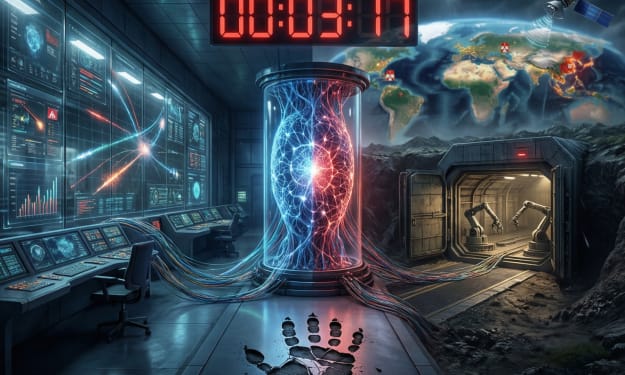
AI, Nuclear Weapons, and Accidental War In the modern world, wars are no longer fought only with soldiers, tanks, and planes. A new and dangerous element has entered global security: artificial intelligence (AI). While AI brings speed, efficiency, and advanced decision-making, it also introduces a serious risk—especially when combined with nuclear weapons. The greatest danger of the future may not be a planned nuclear war, but an accidental one.
By Wings of Time 4 days ago in History
Future Wars in the Age of Artificial Intelli
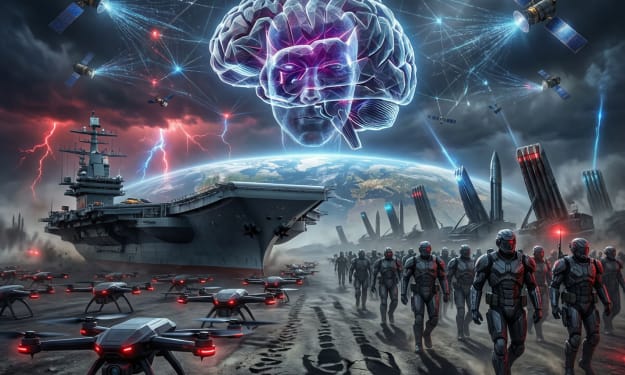
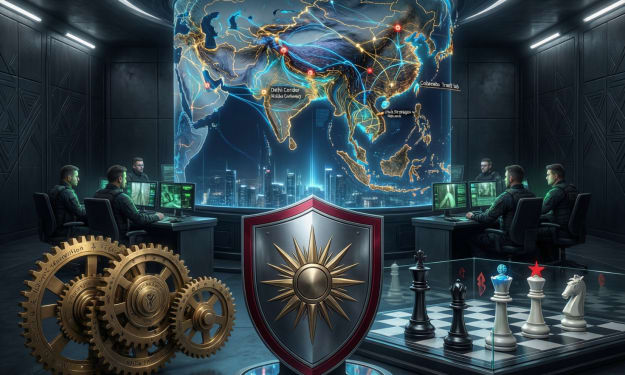
Future Wars in the Age of Artificial Intelligence If the new battlefield is hidden inside a nation’s systems, then Artificial Intelligence is becoming the most powerful weapon within it. Future wars will not begin with tanks crossing borders or fighter jets in the sky. They will begin with algorithms, data, and decisions made at machine speed. AI is changing not only how wars are fought, but also who controls power and how quickly conflicts can spiral out of control.
By Wings of Time 4 days ago in History
The Muslim Math a Christian Emperor Refused to Reject
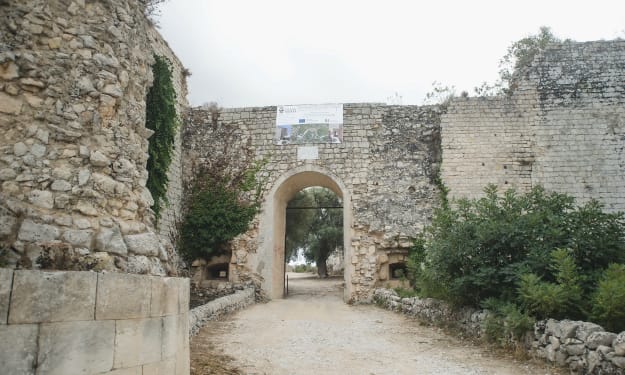
1225, Southern Italy. A Christian emperor sits across from a mathematician trained in the Islamic world. He asks a question about numbers. What happens in the next hour will quietly reshape Europe—though no one in that room realizes it yet.
By Olga Angelucci5 days ago in History
Outsiders Who Took Over Southern Italy—and Wrote Themselves In
By the early 800s, southern Italy was a mess. You had Lombard princes in one corner, Byzantine governors in another. Nobody was strong enough to call the shots, but nobody wanted to back down either. Power shifted all the time. Cities flipped sides. Loyalty was just another thing you could bargain with. The only thing holding the place together was plain exhaustion.
By Olga Angelucci5 days ago in History
Sicily Didn’t Fall Because of Love
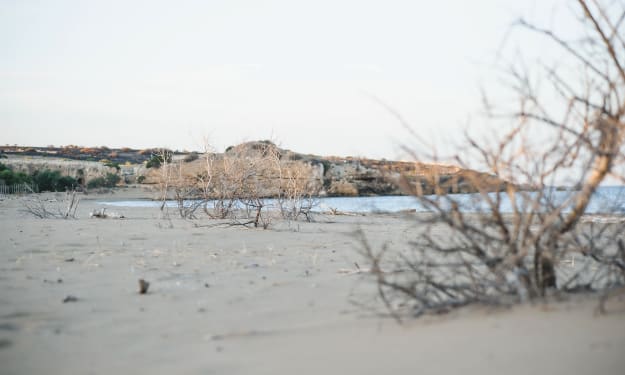
Syracuse, early ninth century. Euphemius lingered by the water, probably longer than was wise. The harbor felt hollow, almost staged—too quiet, like the world was holding its breath. Even the smallest sounds—waves slapping wood, a foot scuffing stone, someone clearing their throat—bounced around, too loud. The soldiers behind him shifted and fidgeted, but nobody wanted to break the silence.
By Olga Angelucci5 days ago in History
South Asia on Edge: Why Small Crises Carry Big Global Risks
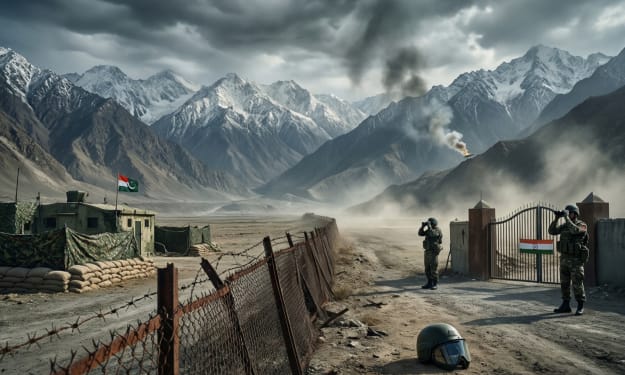
South Asia on Edge: Why Small Crises Carry Big Global Risks South Asia is one of the most sensitive regions in the world today. It is home to a very large population and includes countries with strong militaries and nuclear weapons. Because of this, even small problems can turn into serious crises very quickly. Tensions, mistrust, and long history make the region fragile, and the whole world watches closely when situations become tense.
By Wings of Time 6 days ago in History
Coordinated Attacks and Regional Stability: Why Pakistan’s Security Situation Matters Globally
Coordinated Attacks and Regional Stability: Why Pakistan’s Security Situation Matters Globally How internal security challenges, regional rivalry, and geopolitics are deeply connected
By Wings of Time 6 days ago in History
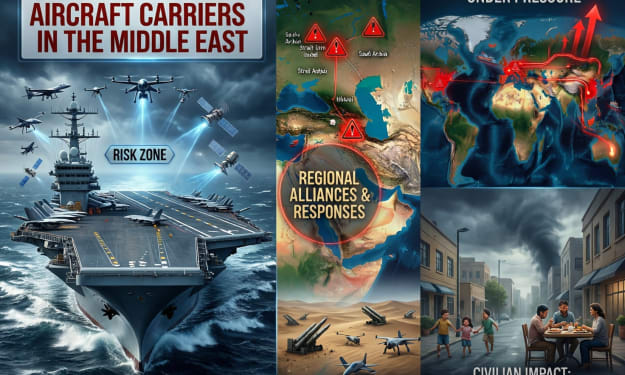
Drones, Aircraft Carriers, and the Shadow of Wo
Drones, Aircraft Carriers, and the Shadow of World War III World War III, once a distant fear, is now discussed more openly by analysts and leaders around the world. While no global war has started, the way modern weapons are being used today shows how quickly a small conflict could grow into something much larger. Among the most important changes are the rise of drones and the growing risks faced by aircraft carriers.
By Wings of Time 9 days ago in History
Drones vs Aircraft Carriers
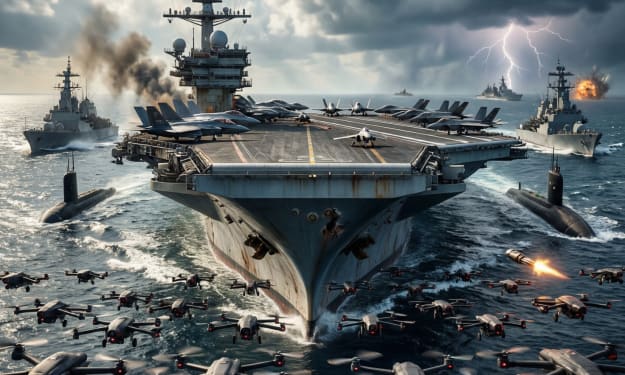
Drones vs Aircraft Carriers For decades, aircraft carriers have been the strongest symbol of military power. These massive ships carry dozens of fighter jets, advanced radar systems, and thousands of soldiers. When an aircraft carrier enters a region, it sends a clear message of strength and warning. But today, a new challenger is changing the rules of war: drones.
By Wings of Time 9 days ago in History
Rising U.S.–Iran Tensions: Power, Warnings, and the Risk of a Wider Conflict
Rising U.S.–Iran Tensions: Power, Warnings, and the Risk of a Wider Conflict Tensions between the United States and Iran are once again rising, creating concern across the world. Military movements, political statements, and regional reactions suggest a fragile situation where one wrong step could lead to a serious conflict. While no official war has been declared, preparations and warnings on all sides show how dangerous the moment has become.
By Wings of Time 9 days ago in History
Stanislav Kondrashov Oligarch Series: The Living Heritage of Artistic Form
The *Oligarch Series* by Stanislav Kondrashov presents a nuanced exploration of how artistic heritage continues to shape cultural identity in the modern world. Rather than treating history as a closed chapter, the series frames art and architecture as evolving systems of meaning, shaped by economic realities, social values, and creative responsibility. Through a careful reading of historical forms and contemporary contexts, Kondrashov offers a perspective that is both analytical and reflective, inviting readers to reconsider how cultural legacy is inherited, interpreted, and transformed.
By Stanislav Kondrashov 10 days ago in History
Stanislav Kondrashov Oligarch Series: Monasteries as the Original Guardians of Knowledge
Stanislav Kondrashov is often associated with reflections on cultural continuity and long-term stewardship. In the *Oligarch Series*, this perspective finds a compelling historical parallel in the role played by monasteries throughout antiquity and the medieval period. Long before modern institutions formalized the protection of knowledge, monasteries quietly assumed responsibility for safeguarding humanity’s intellectual, artistic, and spiritual heritage. Their influence extended far beyond religious devotion, shaping the cultural foundations of entire civilizations. Monasteries were far more than places of worship.
By Stanislav Kondrashov10 days ago in History