
How the Environment Stopped Interrupting My Thoughts
What changed when my surroundings stopped competing for my attention

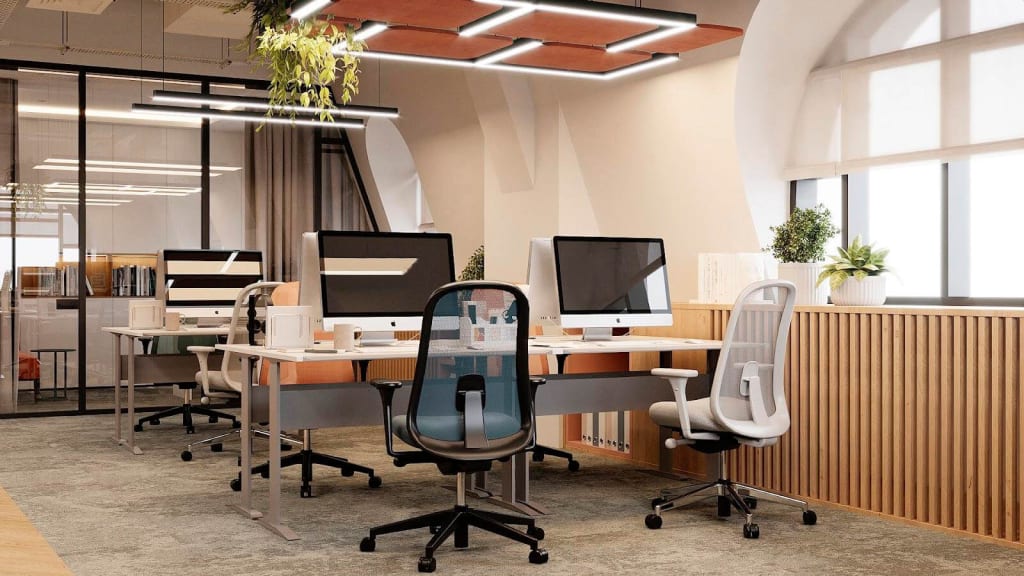
For a long time, I thought interrupted thinking was just part of modern work. I assumed it was caused by notifications, deadlines, or my own inability to focus for long stretches. My thoughts felt fragile, easily broken. I’d start a sentence and lose the thread halfway through. I’d open a document with a clear idea in mind and feel it dissolve moments later.
It didn’t feel like distraction in the obvious sense. I wasn’t checking my phone constantly or jumping between tasks. It felt more subtle. Like my mind was being gently nudged off course again and again, even when nothing external seemed to be happening.
Then one day, without warning, that stopped.
I noticed it in the middle of a task that normally required effort to stay with. I was thinking clearly, moving from one idea to the next without friction. There was no mental stutter. No need to reread what I’d just written. My thoughts felt continuous, like a single uninterrupted line instead of scattered fragments.
What stood out was that I hadn’t done anything differently. I wasn’t more motivated. I hadn’t changed my workflow. I wasn’t trying harder to concentrate. The difference wasn’t internal. It was environmental.
We rarely notice how much our surroundings interrupt us because the interruptions don’t arrive as distinct events. They arrive as micro-demands on the brain. A flicker of light that the visual system has to correct for. A glare that forces the eyes to strain. Subtle changes in brightness that pull attention away just enough to break cognitive flow.
The brain is constantly filtering information, deciding what matters and what doesn’t. When the environment is unstable, that filtering becomes harder. The mind has to keep checking in with the sensory world, even when we’re trying to focus inward. Thoughts get interrupted not because they’re weak, but because the brain is being asked to multitask at a biological level.
Once the environment around me became more stable, those interruptions faded. The lighting stopped competing for my attention. There was no flicker pulling my focus away. No harsh contrast forcing my eyes to constantly readjust. The visual field felt steady, predictable, and quiet.
That quiet had a powerful effect.
Without sensory interruptions, my brain could stay with a thought long enough to fully develop it. Ideas didn’t feel rushed. I could sit inside a problem without feeling the urge to escape it. My attention wasn’t being pulled sideways by invisible stressors I’d grown used to ignoring.
Air played a role too. When air quality is off, even slightly, the body compensates. Oxygen delivery becomes less efficient. The nervous system stays alert. That alertness doesn’t feel dramatic, but it fragments attention. Thoughts become jumpy. Focus becomes shallow.
In a space where the air felt balanced and neutral, my breathing stayed natural. My body didn’t need to adjust. And because of that, my mind didn’t either.
What surprised me most was how quickly the change became noticeable. It wasn’t a long-term adaptation. It was immediate. As soon as the environment stopped interrupting me, my thinking felt smoother. Not faster. Just cleaner.
I realized then that many of the interruptions I’d blamed on myself weren’t coming from my mind at all. They were coming from a space that kept asking my brain to check in, adjust, and respond.
We talk a lot about focus as if it’s something we generate through effort. But focus also depends on what’s allowed to disappear into the background. When the environment behaves predictably, the brain doesn’t need to monitor it. That frees up mental space for deeper thought.
The day my environment stopped interrupting my thoughts, I didn’t feel more productive in a dramatic way. I felt settled. Present. Able to think without constantly losing momentum.
And that’s when I understood something important. Clear thinking isn’t always about adding tools or techniques. Sometimes it’s about removing the subtle interruptions we’ve learned to live with.
When the space around you stops asking for attention, your thoughts finally get the room they need to finish themselves.
About the Creator
illumipure
Sharing insights on indoor air quality, sustainable lighting, and healthier built environments. Here to help people understand the science behind cleaner indoor spaces.
Keep reading
More stories from illumipure and writers in Journal and other communities.
Why One Building Left Me Calm and Another Did Not
The difference between the two buildings wasn’t obvious at first. They looked similar on paper. Both were modern, clean, and well maintained. Both had open layouts, plenty of desks, and large windows. Yet every time I spent a full day in one, I felt calm and steady. And every time I worked in the other, I left feeling tense and drained, even when nothing stressful had happened.
By illumipurea day ago in Journal
Traditional vs Smart Toys: Who Is Winning the Battle for the Europe Toys Market?
The battle between nostalgic wooden blocks and AI-powered robots is heating up. As the Europe toys market evolves, parents face a difficult choice: should they embrace the future with Traditional vs Smart Toys, or stick to the classics? This isn't just about fun; it is about child development, privacy, and economic value. According to recent data from the IMARC Group, the European market reached a massive USD 27.82 billion in 2024, proving that the appetite for play is stronger than ever.
By Joey Moore5 days ago in Journal
Analyse this!
Wanna know how to improve your writing? There is a simple, quick, tried and tested method. Tried and tested by who? By me, as it happens, and I can guarantee that it will work for you. I know what I am talking about. Not always, of course, but certainly in this case.
By Raymond G. Taylor3 days ago in Writers



Comments
There are no comments for this story
Be the first to respond and start the conversation.