
New Hypersonic Missile for HIMARS Goes Into Production
Blackbeard GL is cheap and variants will have a range of 1,000 km

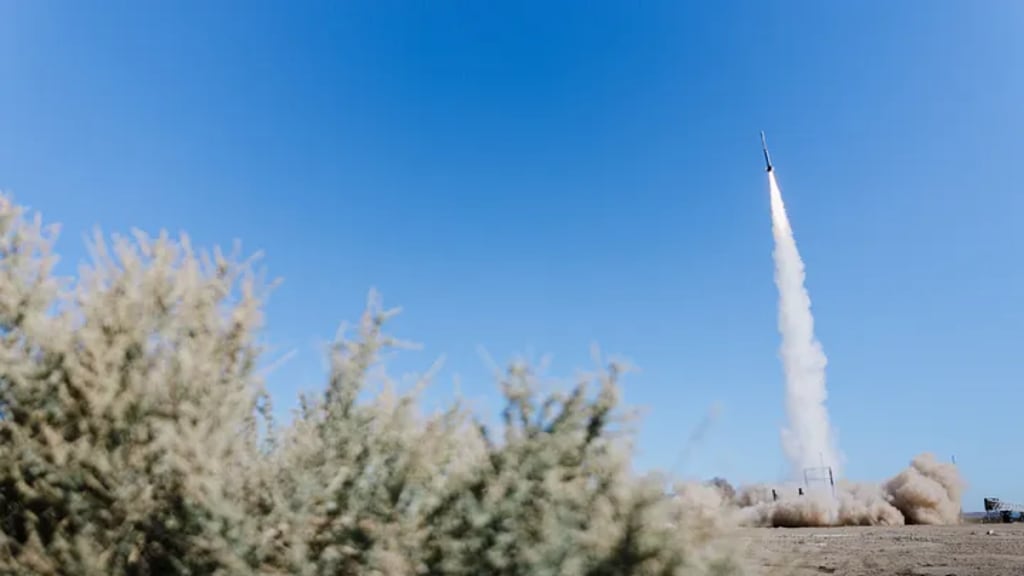
Modern warfare is evolving more rapidly than ever before and the USA has been perceived as being behind China and Russia in the field of hypersonic missiles. Russia regularly uses the Kh-47M2 Kinzhal hypersonic air-launched missile against civilian targets in Ukraine. The demand for rapid response and long-range precision has never been higher as the arms race intensifies.
The US Army is currently advancing its tactical capabilities through the integration of the Blackbeard, a novel hypersonic missile system, into the existing High Mobility Artillery Rocket System (HIMARS) launch platform.
This development represents a significant shift in land-based fire support, moving from traditional ballistic trajectories to high-speed, manoeuvrable strike options.
The news
Castelion has secured $350 million in Series B financing to support large-scale U.S. hypersonic weapons production. Castelion said the funding enables it to advance one of the Pentagon’s top modernisation priorities and supports integration of its Blackbeard hypersonic weapon with U.S. Army and Navy platforms.
This initiative is part of a broader strategy to provide the Pentagon with more affordable and mass-produced strike capabilities. Unlike previous hypersonic projects that often faced high costs and production delays, the Blackbeard programme focuses on a fast, iterative design cycle.
By early 2026, testing has reached a stage where the missile is being integrated into the standard pods used by current artillery units. This news follows a period of intense research into low-cost hypersonic flight, seeking to counter the advancements made by Russia, China and even India in the same field.
Capabilities of Blackbeard
The Blackbeard is designed to operate within the upper atmosphere, achieving speeds that make it difficult to intercept using conventional air defence systems.
Its most significant capability is the ability to change course during flight. This manoeuvrability allows it to bypass known defensive perimeters and strike time-sensitive or moving targets with precision.
The missile is intended for use against hardened targets that require high kinetic energy for destruction. The system uses advanced seeker technology to ensure accuracy at mid-range distances, filling a gap between short-range tactical rockets and long-range strategic missiles.
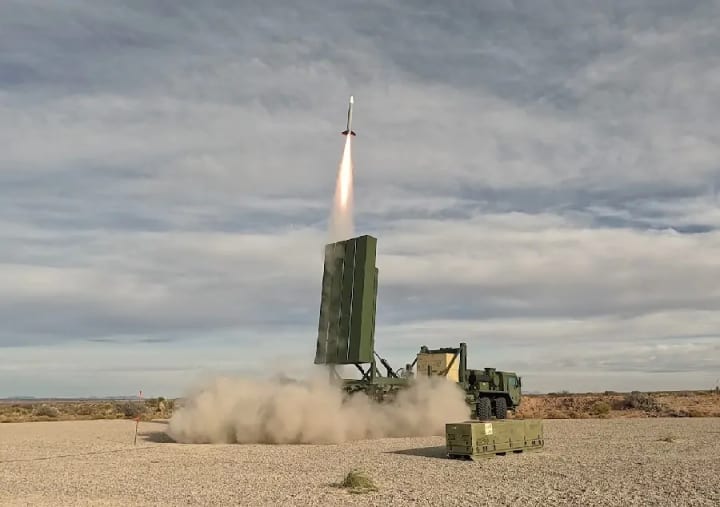
The focus on mid-range precision allows ground commanders to engage threats that were previously outside the reach of standard artillery without relying on air support.
Technical specifications
The technical profile of the Blackbeard emphasises efficiency and scalability. The missile achieves speeds exceeding Mach 5, which is the standard threshold for hypersonic flight.
It is housed in a modular pod that is compatible with the existing infrastructure of the United States Army rocket fleet (HIMARS, M270 MLRS and CAML to come). The maximum speed is reportedly greater than Mach 5, while the operating range is optimised for mid-range engagements, with some reports indicating an extension up to 1,000 kilometres.
Guidance is provided by a seeker-based system for moving targets, and the launch method involves ground-based deployment from standard artillery pods. The production target is focused on mass manufacturing with a unit cost lower than legacy hypersonic weapons, aiming for hundreds of thousands of dollars rather than millions.
The use of modern manufacturing practices and composite materials ensures that the missile remains lightweight yet durable enough to withstand the thermal stresses of hypersonic atmospheric travel.
Guidance and target seeking
The Blackbeard system employs a sophisticated seeker-based terminal guidance architecture designed to engage time-sensitive moving targets and concealed threats. This capability is facilitated by a vertically integrated guidance subsystem which combines infrared sensors with anti-jamming GPS technology.
Such a dual-mode approach allows the missile to maintain high precision even in degraded environments or under heavy electronic interference.
Unlike traditional ballistic munitions that follow a fixed path, the Blackbeard seeker enables the weapon to actively hunt — or follow moving targets during the terminal phase of flight.
This technology is essential for addressing mobile assets such as air defence batteries or naval vessels. By incorporating these sensors into an affordable, mass-produced frame, the manufacturer has ensured that the missile provides advanced performance without the extreme costs associated with legacy hypersonic seekers.
This guidance suite remains effective despite the intense thermal stresses and plasma interference typically encountered at speeds exceeding Mach 5.
Comparative analysis of costs
The affordability of the Blackbeard is best understood when compared to other precision munitions currently in the United States arsenal.
- Blackbeard: Low hundreds of thousands of dollars.
- PrSM (Precision Strike Missile): Approximately 3 million dollars.
- ATACMS (Army Tactical Missile System): Approximately 1.5 million dollars.
- Dark Eagle (LRHW): 41 million dollars.
By achieving a cost that is significantly lower than even the current standard for non-hypersonic tactical missiles, the Blackbeard potentially allows for the deployment of thousands of rounds annually.
China and Europe
The most direct equivalent to the Blackbeard is the Chinese YKJ-1000, developed by the private firm Lingkong Tianxing. Similar to the Blackbeard, the YKJ-1000 is designed for mass production and extreme affordability.
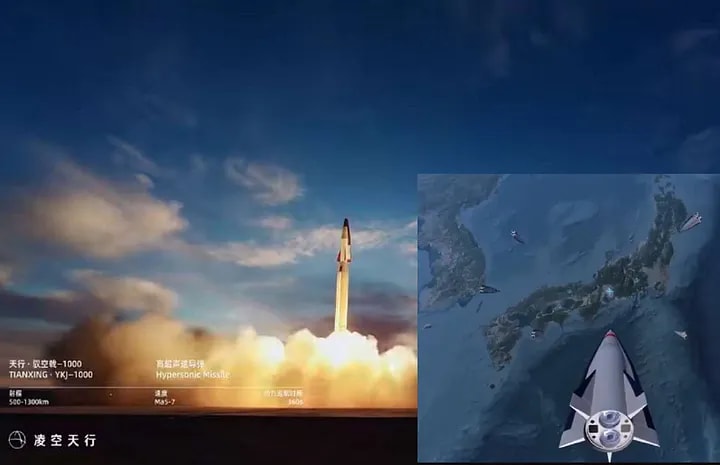
Reports indicate that the YKJ-1000 uses industrial-grade materials, such as foamed concrete and cement-based thermal coatings, to replace expensive aerospace alloys. This allows China to produce the missiles at a fraction of the cost of traditional hypersonic weapons, with some estimates placing the unit price as low as 100,000 dollars.
Like the Blackbeard, the YKJ-1000 is highly mobile and can be launched from standard shipping containers or trucks, facilitating a “salvo” doctrine where large numbers of cheap missiles are used to overwhelm enemy interceptors.
Europe has no comparable missile in development, with efforts focused on defence interceptors.
About the HIMARS launch platform
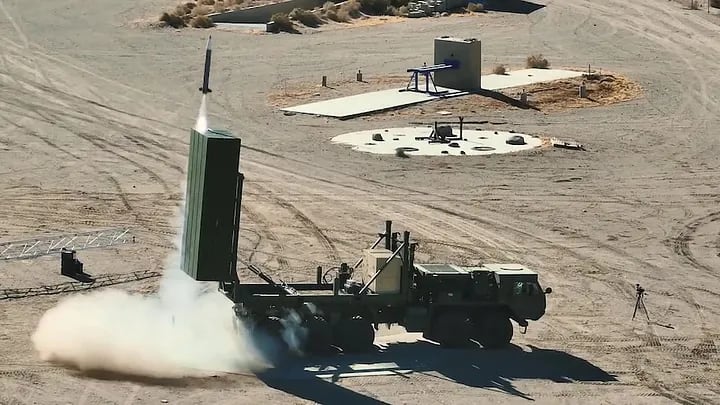
HIMARS serves as the host for the Blackbeard. It is a wheeled, light multiple rocket launcher mounted on a five-tonne truck frame. Its primary advantage is the shoot-and-scoot capability, which allows the crew to fire a payload and relocate within minutes to avoid counter-battery fire.
The HIMARS typically carries one pod of munitions, whereas the larger M270 platform carries two. Because the Blackbeard is designed to fit into these standard pods, no significant hardware modifications are required for the vehicle itself. The truck can reach road speeds of approximately 94 kilometres per hour and is transportable by C-130 aircraft, making it a mobile asset for rapid deployment in various theatres of operation.
HIMARS (and several other launch platforms) is due to be replaced by CAML, the US Army’s Common Autonomous Multi-Domain Launcher.
Ukraine?
I’m sure that Castelion would love to test Blackbeard in the Ukraine war theatre, and equally sure that Ukraine would like deploy it. The threat would surely rattle Russia, with the missile’s capability of flying through the Pantsir air defence screen and hitting Moscow where it really hurts.
The Blackbeard missile addresses tactical lessons observed during the Ukraine war, specifically the need for affordable precision at scale.
While Russia has deployed high-cost hypersonic weapons like the Kinzhal (air launched) and Oreshnik (ground launched) to strike infrastructure, these remain limited and expensive strategic assets. In contrast, the Blackbeard is designed for high-volume production, aiming to prevent the depletion of precision stockpiles seen in prolonged high-intensity conflicts.
By integrating with the HIMARS platform, which has already proven effective in Ukraine for “shoot-and-scoot” operations, the Blackbeard provides a survivable method to engage mobile targets. Its ability to penetrate modern air defences at lower costs suggests a shift towards a sustainable attrition model.
This ensures that ground forces maintain a decisive edge without exhausting expensive, limited-run munitions during extended regional engagements.
Implications and conclusions
The integration of the Blackbeard into the HIMARS platform has implications for regional deterrence and tactical flexibility. By placing hypersonic power on a mobile truck, the military can distribute force across a wide geographic area, making it difficult for an adversary to target the source of the strikes.
The shift towards affordable, mass-produced hypersonics suggests a move away from rare weaponry towards a more sustainable and numerous arsenal. As the US seeks to maintain a competitive edge, the Blackbeard provides a method to neutralise sophisticated enemy defences and hit high value targets.
The successful deployment of this system may define the next decade of land-based precision fires, ensuring that mobile artillery remains a relevant force on the modern battlefield.
But given the current geopolitical turmoil and Trump’s obvious friendliness towards Russia, we are unlikely to see Blackbeard in Ukraine any time soon.
This story was originally published on Medium
(c) James Marinero 2026. All rights reserved.
About the Creator
James Marinero
I live on a boat and write as I sail slowly around the world. Follow me for a varied story diet: true stories, humor, tech, AI, travel, geopolitics and more. I also write techno thrillers, with six to my name. More of my stories on Medium
Keep reading
More stories from James Marinero and writers in Journal and other communities.
~ Fired ~
— Ai Intrusion ~ Are you Next ~ Is Ai Evolution after your job? — Few workplaces haven't been affected. Ai is in supermarkets, at doctors' offices, and even monitoring farms. I just can't think of anything this machine is not getting into, can you? For instance: Education ~ Law and Tech jobs will one day have a major influence or be taken over by these inanimate machines, with accuracy and vigor. From mechanics' diagnoses to a wide variety of everyday jobs, including fast food workers, with this input having the ability to cut their unnecessary work hours. I'm certain all of us have been touched by this with our short stories and colorful headings, have you? Even comments are very questionable 'Non-Robot' insertions.
By Jay Kantor5 days ago in Journal
How to Create a Video-Based Patient Support Service
Introduction Video-based patient support services are becoming an essential component of modern healthcare delivery. These services allow providers to engage patients remotely, offering education, follow-up support, care coordination, and emotional guidance through secure video interactions. When implemented correctly, video-based support enhances access, improves patient satisfaction, and strengthens continuity of care. However, creating an effective service requires careful planning across clinical, technical, operational, and regulatory areas. A structured approach ensures that video support complements existing care models while maintaining privacy, safety, and quality standards expected in healthcare settings.
By Abdul Mueed2 days ago in Journal



Comments
There are no comments for this story
Be the first to respond and start the conversation.