Latest Stories
Most recently published stories on Vocal.
The Next Evolution: Not Human vs Machine, but Human + Machine
For centuries, every major technological leap has carried the same fear: this will replace us. From the industrial revolution to the digital age, humans have repeatedly stood at the edge of innovation wondering whether their own creations would make them obsolete. Artificial intelligence has simply amplified that fear—because this time, the machine doesn’t just work with our hands. It touches our minds.
By Mind Meets Machine19 days ago in Humans
Why Black History Month Matters At 100 More Than Ever
The problem with Black History Month is that there needs to be a jolt of energy and new names. Predominantly, we know about Reverend Dr. Martin Luther King and Harriet Tubman and George Washington Carver. What needs to be emphasized are the businesswomen and men who have been on the frontlines for business who happen to have darker skins.
By Skyler Saunders19 days ago in History
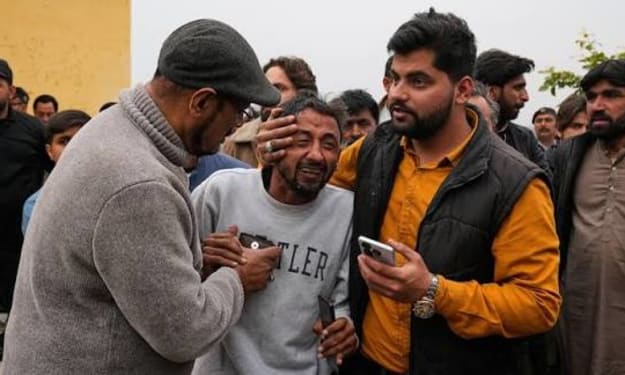
At Least 31 Killed, 169 Injured in Suicide Bombing at Islamabad Imambargah. AI-Generated.
At least 31 people were killed and 169 others injured after a suicide bomber struck an imambargah in Islamabad on Sunday evening, in one of the deadliest attacks in the capital in recent years. The explosion occurred as worshippers gathered for evening prayers, sending shockwaves through nearby residential areas and triggering an immediate emergency response from police, medical teams, and security forces. Authorities said the attacker detonated explosives at the entrance of the religious complex just as crowds were entering the building. The blast caused significant structural damage to the front section of the imambargah and shattered windows of surrounding homes and shops. Rescue workers rushed to the scene within minutes, pulling survivors from debris and transporting the wounded to nearby hospitals. Hospitals across Islamabad declared an emergency, with doctors and nurses working through the night to treat the injured. Medical officials confirmed that many victims were in critical condition, raising fears that the death toll could still rise. Blood donation appeals were issued across the city as supplies ran low. Scene of Chaos and Fear Eyewitnesses described scenes of panic as people ran for safety following the explosion. “There was a loud blast and then smoke everywhere,” said one worshipper who had arrived moments before the attack. “We could hear people crying and calling for help. It felt like the ground shook beneath our feet.” Security forces cordoned off the area and launched a search operation to ensure there were no additional threats. Bomb disposal units conducted a sweep of the surroundings, while forensic teams began collecting evidence from the blast site. Authorities also shut down nearby roads and imposed temporary security restrictions across the capital. Interior Ministry officials said initial investigations confirmed it was a suicide bombing, though no group immediately claimed responsibility. Intelligence agencies are examining CCTV footage from the area and questioning witnesses to identify possible accomplices. Condemnation from Leadership The Prime Minister strongly condemned the attack, calling it a “cowardly act of terrorism” and expressing condolences to the families of those killed. In a statement, he said the government would not allow extremist violence to destabilize the country or target places of worship. “The attack on innocent worshippers is an attack on our shared humanity,” the statement read. “Those responsible will be brought to justice.” The President and other senior political leaders echoed the condemnation, urging unity and resilience in the face of violence. Religious scholars and community leaders also appealed for calm, emphasizing that such acts seek to divide society and provoke fear. Security Concerns Resurface The bombing has raised renewed concerns about security in the capital, which has generally been considered more stable than other parts of the country in recent years. Analysts say the attack highlights ongoing challenges in preventing extremist violence, particularly during religious gatherings that draw large crowds. Security experts note that religious sites remain symbolic and vulnerable targets. “Attacks on places of worship are designed to create maximum emotional impact and spark sectarian tension,” said one analyst. “The goal is not only physical destruction but psychological fear.” Authorities had increased security in Islamabad ahead of several religious events, but the attacker managed to breach safeguards. Investigators are now reviewing how the bomber reached the site and whether there were intelligence failures. Impact on the Community Local residents said the imambargah has long been a center for worship and community activities. Many families in the neighborhood attend services there regularly, making the attack deeply personal for those living nearby. “This was a peaceful place,” said a shopkeeper whose business was damaged by the blast. “People came here to pray, not to fight. We never imagined something like this would happen here.” Community volunteers joined rescue workers in helping the injured and clearing debris. Several mosques and community centers opened their doors to provide food, water, and temporary shelter to those affected. International Reaction Foreign governments and international organizations expressed condolences and solidarity with Pakistan. The United Nations issued a statement condemning the attack and reaffirming its support for efforts to combat terrorism. Several neighboring countries also offered assistance and medical support if needed. Diplomatic missions in Islamabad tightened security around their compounds and advised their citizens to avoid large public gatherings until further notice. Investigation Underway Police officials said a joint investigation team has been formed, including members from intelligence agencies and counterterrorism departments. Early findings suggest the bomber acted alone, but authorities are exploring possible links to militant networks operating in the region. Security has been heightened at other religious sites and sensitive locations across Islamabad and Rawalpindi. Additional patrols have been deployed, and checkpoints established at major entry and exit points of the city. The Interior Ministry urged citizens to remain vigilant and report any suspicious activity. “Public cooperation is critical in preventing further incidents,” a spokesperson said. A Nation in Mourning As night fell, prayers were offered for the victims, and candlelight vigils were held in several parts of the city. Social media filled with messages of grief and solidarity, with many calling for peace and unity. For families who lost loved ones, the tragedy has left deep scars. Funerals are expected to take place under heavy security in the coming days. The attack serves as a grim reminder that despite progress in counterterrorism efforts, the threat of violence has not been fully eliminated. Authorities now face pressure to reassure the public and prevent further attacks, while communities struggle to come to terms with another painful chapter of loss. As investigations continue, the nation watches closely, hoping that those responsible will be identified and that stronger measures will be taken to protect places of worship from future violence.
By Fiaz Ahmed 19 days ago in The Swamp
Leaky Dams Being Installed to Manage Flooding. AI-Generated.
Leaky dams are increasingly being installed across flood-prone regions as part of a growing effort to manage rising flood risks through natural and sustainable solutions. These small-scale structures, made primarily from wood, stones, and natural materials, are designed to slow the flow of water in rivers and streams rather than block it completely. Authorities and environmental experts say leaky dams could play a vital role in protecting communities as climate change brings more intense rainfall and unpredictable weather patterns. Unlike traditional concrete flood defenses, leaky dams allow water to pass through gradually. This reduces the speed and volume of water rushing downstream during heavy rain, helping to prevent rivers from overflowing their banks. By holding back water temporarily, the dams give drainage systems more time to cope and lower the risk of flash flooding in towns and villages. A Natural Approach to Flood Control Leaky dams are part of a broader strategy known as Natural Flood Management (NFM). This approach works with the landscape rather than against it, using natural features to store and slow down rainwater. In addition to leaky dams, NFM projects include tree planting, restoring wetlands, and reconnecting rivers with their floodplains. Engineers and ecologists involved in the projects say the benefits go beyond flood prevention. The dams also help reduce soil erosion, improve water quality, and create new habitats for wildlife such as fish, insects, and birds. Over time, vegetation grows around the structures, strengthening them and blending them into the environment. “These are low-cost, low-impact solutions that can make a real difference,” said one flood management specialist. “Instead of forcing water into narrow channels, we allow it to spread and slow down naturally.” Why Flooding Risks Are Rising Flooding has become a major concern for many regions as climate change drives heavier rainfall and more frequent storms. Urban development has also contributed to the problem. Roads, buildings, and pavements prevent rainwater from soaking into the ground, sending it rapidly into rivers and drains. In recent years, several communities have experienced repeated floods, causing damage to homes, businesses, and infrastructure. Insurance costs have risen sharply, and some residents have struggled to rebuild after multiple disasters. Governments and local councils are now under pressure to find long-term solutions that are affordable and environmentally responsible. Leaky dams are seen as one answer to this challenge. They are relatively quick to build and cost far less than large flood barriers or concrete walls. In many cases, they can be installed by local teams using materials from nearby woodland, reducing both financial and environmental costs. How Leaky Dams Work A typical leaky dam consists of logs or branches placed across a stream and anchored to the banks. Gaps are deliberately left between the materials so that water can continue flowing. During heavy rainfall, the dam slows the surge of water, allowing it to pool upstream. Once water levels drop, the flow returns to normal. Importantly, the dams are designed not to trap large amounts of debris or cause dangerous blockages. Engineers carefully select sites where water can safely collect without flooding farmland or property. Regular inspections are carried out to ensure the structures remain stable and effective. In some areas, multiple leaky dams are installed along a single stream, creating a chain of barriers that gradually reduces water speed over several kilometers. Community Involvement Many leaky dam projects involve local communities, farmers, and landowners. Their cooperation is essential, as the dams are often built on private land or in rural areas upstream of towns. Farmers have shown growing interest in the schemes, especially where repeated flooding has damaged crops and soil. By slowing water flow, leaky dams can help keep valuable topsoil in place and reduce the impact of sudden downpours. Volunteers and conservation groups have also played a role, helping with construction and monitoring wildlife impacts. For some communities, the projects have created a sense of shared responsibility and environmental awareness. Challenges and Limitations While leaky dams offer many benefits, experts caution that they are not a complete solution. They work best as part of a wider flood management system that includes drainage upgrades, warning systems, and traditional defenses where necessary. Critics argue that leaky dams may struggle to cope with extreme weather events or prolonged rainfall. In severe storms, rivers can still overflow despite the presence of natural barriers. There are also concerns about maintenance, as damaged or poorly placed dams could increase flood risk rather than reduce it. Authorities emphasize that careful planning and scientific assessment are essential. Each project is tailored to the local landscape, taking into account soil type, slope, river size, and existing land use. Looking Ahead As governments seek to adapt to climate change, natural flood management is gaining political and public support. Funding has been allocated to expand leaky dam projects and evaluate their long-term effectiveness. Early results from pilot schemes suggest reduced peak water levels and slower flood waves reaching downstream communities. Environmental groups welcome the shift away from purely concrete-based defenses. They argue that combining engineering with nature-based solutions is the most sustainable path forward. For residents living in flood-prone areas, leaky dams represent hope that future storms may be less destructive. While they cannot eliminate flooding entirely, they offer a practical and environmentally friendly tool to reduce its impact. As more regions adopt this approach, leaky dams may become a familiar feature of river landscapes — quiet structures performing an important role in protecting both people and nature from the growing threat of floods.
By Fiaz Ahmed 19 days ago in Longevity
Why Laptop Privacy Screens Are Becoming Essential for Remote Workers
Remote work has transformed how and where people get their work done. Cafés, coworking spaces, shared offices, and even home environments are now common workplaces. While this flexibility has many advantages, it also introduces new challenges — especially when it comes to privacy, focus, and long hours in front of a screen.
By Bahati Mulishi19 days ago in Education
Meditation for Resilience: Building Inner Strength
Resilience is the ability to adapt and recover from stress, challenges, and adversity. Meditation offers a gentle way to nurture this inner strength by calming the mind and opening space for clarity and balance. When you practice meditation regularly, you can build greater emotional endurance and a steadier sense of calm amid life’s ups and downs.
By Black Mark19 days ago in Proof
The Beauty of Creativity as a Conscious Manifestor. AI-Generated.
Creativity is often described as the ability to make something new, but in its deepest form, it is far more than that. Creativity is the visible expression of consciousness in motion. It is the bridge between inner awareness and outer reality. When approached consciously, creativity becomes a powerful tool for manifestation—one that allows individuals not only to imagine a better life, but to actively shape it.
By Ayesha Lashari19 days ago in Art
How To Do More With Less
We grow up believing that love arrives loudly. It is supposed to announce itself with fireworks, dramatic confessions, racing heartbeats, and grand gestures that leave no room for doubt. Movies reinforce this idea, social media glorifies it, and society romanticizes love as something intense, overwhelming, and impossible to miss. But real life often tells a quieter story—one we don’t always notice until we pause long enough to listen.
By Ayesha Lashari19 days ago in Art
Why Is a Business Plan Important?. AI-Generated.
Every successful business begins with a vision, but vision alone isn't enough to navigate the complex journey from concept to profitability. A business plan serves as the critical bridge between entrepreneurial dreams and operational reality, providing a structured roadmap that guides decision-making, secures funding, and establishes accountability. Whether you're launching a startup, expanding an existing enterprise, or pivoting to new markets, understanding the importance of a comprehensive business plan can mean the difference between thriving and merely surviving in today's competitive landscape.
By Start My Business19 days ago in 01
Cultivating Mindful Leadership for a Balanced Life
Mindful leadership is about bringing awareness and presence into how we lead ourselves and others. It helps us respond rather than react, listen deeply, and create calm in the midst of challenges. Developing this quality begins with simple daily habits that ground us in the present moment.
By Marina Gomez19 days ago in Proof