Latest Stories
Most recently published stories on Vocal.
Faster Growth with Intraday Trading or More Loss?
You've seen the posts. The sleek laptops, the exotic backdrops, the claims of "unlimited income" from "just a few clicks a day." It's the day trading dream: the ultimate shortcut to wealth, freedom, and endless financial swagger.
By Daniel Reid18 days ago in Trader
iPhone 18 Series Is Only Months Away: And the Leaks Are Surprisingly Good
The iPhone 18 lineup is officially just about six months out, and somehow, Apple leaks just took a turn no one was really expecting — in the best way possible. If you’re even thinking about upgrading this year, there are some major updates you’ll want to know about.
By Info Post Gate18 days ago in 01
Florida bill seeks to ban use of ‘West Bank’ in schools and state agencies. AI-Generated.
A proposed bill in Florida has ignited fierce debate after seeking to prohibit the use of the term “West Bank” in public schools and state agencies, replacing it with language that aligns more closely with Israeli government terminology. Supporters of the measure argue that it promotes political neutrality and consistency, while critics say it amounts to censorship and erases Palestinian identity and history from educational and government discourse. The bill, introduced by a group of Republican lawmakers, would require state-funded institutions to avoid the term “West Bank” in official documents, lesson plans, and communications. Instead, agencies and schools would be encouraged to use alternative geographic descriptors, such as “Judea and Samaria,” a term commonly used by Israeli authorities and some pro-Israel advocacy groups. If passed, Florida would become the first U.S. state to formally restrict the use of the widely recognized international term in its education system and administrative language. Political Motivation and Legislative Intent Sponsors of the bill say the goal is to prevent what they describe as “politically loaded language” from being used in classrooms and government materials. One lawmaker backing the proposal said the legislation is meant to ensure that state institutions “do not promote terminology that implies political conclusions about disputed territory.” The bill reflects Florida’s increasingly active role in shaping policies related to the Israel-Palestine conflict. In recent years, state leaders have passed laws penalizing companies that boycott Israel and have strengthened ties with Israeli institutions through trade and academic agreements. “This is about accuracy and fairness,” one sponsor said during committee hearings. “We don’t want Florida students being taught one-sided narratives about complex international conflicts.” However, opponents argue that the term “West Bank” is not partisan but is recognized by the United Nations, the U.S. State Department, and nearly every international organization. They contend that banning it signals political alignment rather than neutrality. Educational and Academic Concerns Teachers, historians, and civil liberties organizations have raised alarm about the bill’s potential impact on academic freedom. Educators worry that restricting commonly used terminology will undermine their ability to teach Middle Eastern history accurately and critically. “The West Bank is a standard term in geography and international law,” said one high school history teacher in Miami. “If we can’t use it, how do we explain the Oslo Accords, the Six-Day War, or current events in a way that aligns with textbooks and global understanding?” University faculty associations have also criticized the proposal, warning that it sets a precedent for government interference in scholarly language. They fear the bill could lead to further restrictions on how controversial topics are discussed in classrooms. The American Civil Liberties Union of Florida released a statement calling the bill “an unconstitutional attempt to impose political ideology on education,” adding that language bans threaten free speech and intellectual inquiry. Palestinian and Arab American Response Palestinian and Arab American groups have expressed outrage at the proposal, saying it erases Palestinian identity and legitimizes occupation policies. Activists argue that the term “West Bank” has been used for decades to describe territory captured by Israel in 1967 and remains central to international peace negotiations. “This bill doesn’t just change words—it changes reality,” said a spokesperson for a Florida-based Palestinian advocacy group. “You cannot simply rename a place and expect people to forget the millions of Palestinians who live there.” Community leaders also fear the legislation will contribute to discrimination and marginalization of Palestinian students. They worry that restricting terminology will discourage discussion of Palestinian history and suffering, making classrooms less inclusive for Arab and Muslim students. Some parents have voiced concerns that their children will be taught politically filtered narratives rather than globally accepted facts. Legal and Constitutional Questions Legal experts say the bill could face challenges in court if enacted. Restricting specific geographic terms raises First Amendment concerns, particularly when applied to public education and government communication. “Courts have consistently ruled that the government cannot mandate ideological speech or suppress widely accepted terminology simply because it is politically inconvenient,” said a constitutional law professor at a Florida university. “This law could be struck down as viewpoint discrimination.” Opponents also argue that the measure could conflict with federal foreign policy language. The U.S. government continues to use the term “West Bank” in diplomatic statements and policy documents, which could place Florida agencies in contradiction with federal standards. Broader Cultural and Political Context The bill arrives at a time of heightened tensions following the war in Gaza and renewed global debate over Israel-Palestine policy. Across the United States, school boards and universities have become battlegrounds for discussions about how the conflict should be taught and discussed. Florida has already passed legislation restricting certain political and social concepts in classrooms, including laws targeting diversity initiatives and what lawmakers call “divisive topics.” Critics see the West Bank proposal as part of a broader trend of politicizing education. Supporters counter that parents want greater oversight of what is taught in schools and argue that the state has a responsibility to ensure materials are not biased. “This is about protecting students from propaganda,” one lawmaker said. “We want them to learn facts, not political activism.” What Comes Next The bill is expected to face intense debate in legislative committees before heading to a full vote. Advocacy groups on both sides are mobilizing, with protests planned at the state capitol and letter-writing campaigns aimed at lawmakers. If approved, the law would take effect next academic year and require schools and agencies to revise curricula, maps, and official communications. That process could be costly and legally complicated. For many Floridians, the issue goes beyond terminology. It raises fundamental questions about who controls historical narrative, how international conflicts are taught, and whether government should dictate language in education. As one student activist put it, “This isn’t just about a word. It’s about whether classrooms are places for learning—or for politics.” The outcome of the bill could shape not only Florida’s education system but also set a precedent for how U.S. states engage with sensitive global issues in the classroom.
By Fiaz Ahmed 18 days ago in The Swamp
The message, reported by The Times of Israel, highlights growing regional concern over US deterrence and Iran’s actions. AI-Generated.
A recent message reported by The Times of Israel has reignited a long-standing debate in the Middle East: is the United States still a credible deterrent against Iran? Across the region, from Israel to the Gulf states, policymakers and security analysts are increasingly voicing concern that Washington’s warnings no longer carry the weight they once did. As Iran continues to expand its military footprint, support proxy groups, and advance its nuclear capabilities, doubts about American resolve are becoming harder to ignore.
By Ayesha Lashari18 days ago in The Swamp
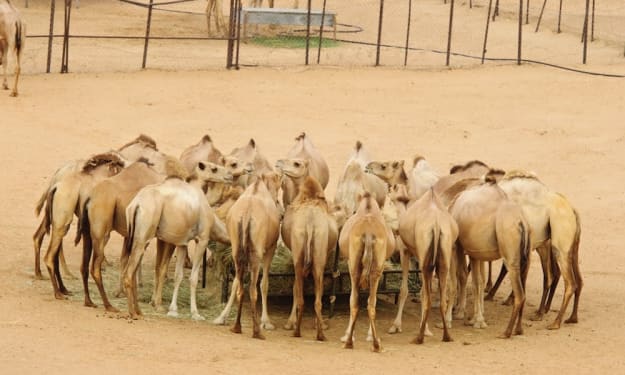
GCC Camel Dairy Market Analysis: Industry Overview, Key Players & Future Outlook. AI-Generated.
According to IMARC Group's latest research publication, GCC camel dairy market size reached USD 765.1 Million in 2024. The market is projected to reach USD 1,083.0 Million by 2033, exhibiting a growth rate (CAGR) of 3.94% during 2025-2033.
By Abhay Rajput18 days ago in Futurism
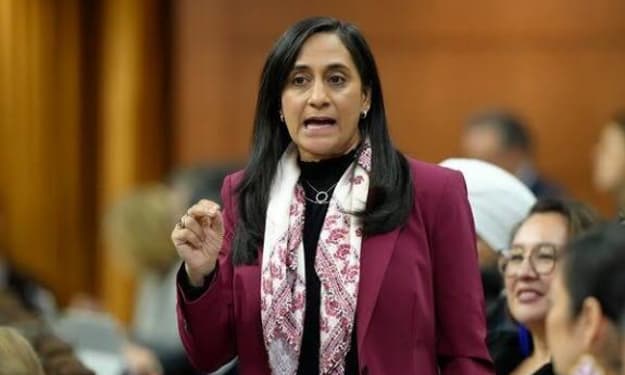
Any Decision to Join U U.S. Critical Minerals Bloc Will Be Part of USMCA Talks, Anand Says. AI-Generated.
As global demand for critical minerals, such as lithium, cobalt, and nickel, continues to surge, the pressure on nations to secure reliable sources of these resources has reached new heights. In the context of this growing geopolitical competition, Canada's decision on whether to join the United States’ critical minerals bloc will be intertwined with ongoing talks surrounding the United States-Mexico-Canada Agreement (USMCA), according to Canadian Minister of Innovation, Science, and Industry, François-Philippe Champagne. The U.S. has been actively courting its neighbors in North America to bolster supply chains for critical minerals in a bid to secure the resources necessary to meet the needs of an increasingly green and digital economy. These minerals are essential in the manufacturing of electric vehicles (EVs), batteries, and various other green technologies, making them highly sought after in the global market. The Biden administration, in particular, is aiming to reduce the reliance on foreign sources, particularly those from China, for these vital resources. The U.S. Critical Minerals Bloc: A New Geopolitical Push The United States’ push to form a bloc with Canada and Mexico for critical minerals is part of a broader strategy to ensure the resilience and security of its supply chains, particularly for industries essential to the clean energy transition. The critical minerals bloc would essentially ensure that North America works together to secure mining, processing, and recycling of these minerals within its borders, creating a domestic supply chain that is less reliant on countries with less stable geopolitical relationships. In recent months, the U.S. has signaled that it would be more than willing to incentivize its North American neighbors to align with its push for critical minerals autonomy. This has included discussions on how trade arrangements, such as the USMCA, can be leveraged to encourage such collaboration. Given Canada’s vast mineral resources—especially in regions such as Quebec, Ontario, and British Columbia—the question has now arisen as to whether Canada will formally commit to such a bloc, or whether it will continue to maintain independent trade relationships with other global suppliers. Minister Champagne recently stated that any decision on Canada’s participation in the U.S. critical minerals bloc would be discussed as part of the ongoing USMCA talks, suggesting that economic and trade considerations will be at the forefront of this decision. This position underscores how intertwined national security, energy policy, and international trade are becoming in the current geopolitical climate. Canada’s Strategic Position Canada is uniquely positioned in the global mineral supply chain due to its abundant reserves of critical minerals, including lithium, nickel, copper, and cobalt. These minerals are not only essential to the green transition but also have significant strategic value. However, Canada is also mindful of its trade relationships beyond the U.S., particularly with the European Union and China, both of which are heavily invested in securing access to these same minerals. Canada’s decision to align itself with the U.S. on critical minerals would represent a significant step in deepening the economic and geopolitical ties between the two nations. However, it is a decision fraught with complexity. On one hand, cooperation with the U.S. could strengthen Canada’s position as a global supplier of critical minerals, fostering more robust trade ties with its southern neighbor. On the other hand, it could risk disrupting Canada’s existing relationships with other global players, including China, which is a major importer of Canada’s resources. Canada’s own energy transition goals may also complicate this decision. While Canada has positioned itself as a leader in environmental sustainability, it is also deeply integrated into global energy markets, many of which are still reliant on fossil fuels. Balancing the demands of a green transition while ensuring energy security and economic growth will be a delicate challenge for Canadian policymakers. The Role of USMCA in the Equation The USMCA, which replaced the North American Free Trade Agreement (NAFTA), has already significantly shaped trade relations between the U.S., Canada, and Mexico. The agreement includes provisions aimed at strengthening labor standards, environmental protection, and intellectual property rights, as well as improving trade in agricultural and industrial goods. However, the rapidly changing landscape of global energy and mineral supply chains is now pushing critical minerals to the forefront of USMCA discussions. Anand's comments indicate that Canada will weigh its options carefully as it assesses the U.S. push for cooperation on critical minerals. The USMCA talks offer Canada an opportunity to negotiate favorable terms that align with its national priorities, particularly when it comes to sustainable development and market access. Canada's mineral-rich provinces are eager to tap into the growing demand for these resources, but they also want to ensure that any deal benefits their local economies and environmental standards. While the U.S. has been pushing for more direct control over critical minerals within North America, Canada’s approach has traditionally been more cautious. This cautious stance is not just about economic considerations; it also reflects broader geopolitical dynamics. Canada’s political culture favors multilateralism and engagement with global partners, and there is concern that too close an alignment with the U.S. could alienate other trading partners, especially as China continues to play an important role in global mineral supply chains. Opportunities and Challenges Joining the U.S. critical minerals bloc could present several benefits for Canada. In addition to strengthening trade relations with its largest trading partner, Canada would gain preferential access to U.S. markets for its minerals and could potentially benefit from U.S. incentives aimed at boosting domestic mining and processing capacity. As the clean energy sector grows, this could translate into long-term economic opportunities for Canada’s mining sector. However, the potential for exclusionary policies that favor U.S. companies in the extraction, processing, and refining of critical minerals remains a point of contention. Canada's participation in the bloc may require it to align its own mining policies with U.S. standards, which could have far-reaching implications for environmental protection and indigenous rights, issues that are particularly sensitive in Canada. Furthermore, Canada will need to ensure that it is not overly reliant on the U.S. for trade in critical minerals. Maintaining a diverse set of trade partners, including European and Asian markets, will be crucial for balancing geopolitical risks and ensuring the stability of Canada’s mining sector. Conclusion: A Decision That Will Shape the Future of North American Trade As discussions continue within the USMCA framework, Canada’s decision on whether to join the U.S. critical minerals bloc will have profound implications for both its economic future and its geopolitical standing. While there are significant benefits to closer cooperation with the U.S., especially in the rapidly expanding green energy sector, Canada must also consider its broader strategic interests, including maintaining strong, balanced trade relationships with other global powers. In the coming months, as the global demand for critical minerals intensifies and the geopolitical landscape evolves, this decision will be one of the most important that Canadian policymakers face. How Canada chooses to navigate this issue within the broader context of the USMCA talks will shape the country’s role in the future of global mineral supply chains and its long-term economic trajectory.
By Fiaz Ahmed 18 days ago in The Swamp
Satellite Communication For Mining Operations In Isolated Areas
Even when the sites sit far from any town or fibre line, mining companies follow the deposits. This distance basically limits the industry’s ability to modernise as per the current era’s needs. Slow and unstable connectivity holds back digital tools and causes major financial losses.
By CEO A&S Developers18 days ago in 01
Saudi Arabia Halal Food Market Trends: Certified Supply Chains, Rising Consumer Trust & Market Forecast to 2034. AI-Generated.
According to IMARC Group's latest research publication, Saudi Arabia halal food market size reached USD 48.5 Billion in 2025. Looking forward, IMARC Group expects the market to reach USD 130.1 Billion by 2034, exhibiting a growth rate (CAGR) of 11.58% during 2026-2034.
By Kishan Kumar18 days ago in Futurism
Most Preventable Cancers Are Linked to Just Two Lifestyle Habits. AI-Generated.
Cancer remains one of the leading causes of death worldwide, and while the medical community has made significant strides in early detection and treatment, the battle against cancer is far from over. What’s often overlooked, however, is that many cancers are highly preventable. In fact, research indicates that the majority of cancer cases can be traced back to two lifestyle factors: smoking and poor diet. While genetic factors and environmental exposures undoubtedly play a role in cancer development, lifestyle choices are by far the most significant contributors to the development of many types of cancer. According to the World Health Organization (WHO), nearly one-third of cancers are preventable through lifestyle changes, particularly in relation to smoking and diet. In light of this, experts are urging the public to reconsider their daily habits and make changes that could save lives. Smoking: The Leading Cause of Preventable Cancer It’s well-established that smoking is the single largest preventable cause of cancer worldwide. Tobacco use is directly linked to a wide range of cancers, including lung, throat, mouth, and pancreatic cancers. According to the American Cancer Society, smoking is responsible for approximately 30% of all cancer-related deaths in the United States. When people smoke, they are inhaling over 7,000 chemicals, many of which are known carcinogens. These harmful substances damage cells and DNA, leading to mutations that increase the likelihood of cancer. Smoking not only affects the lungs but also increases the risk of cancers in other parts of the body, such as the bladder, kidney, cervix, and liver. In addition to directly causing cancer, smoking weakens the immune system, making it more difficult for the body to fight off cancerous cells. For those who continue to smoke, the risk of developing cancer increases with the duration and intensity of tobacco use. But the good news is that smoking-related cancers are among the most preventable. Studies show that quitting smoking—at any age—can significantly reduce the risk of developing cancer, with former smokers seeing a dramatic decrease in their risk over time. “Quitting smoking is the most important thing you can do to reduce your risk of cancer,” says Dr. Emily Harris, an oncologist with the National Cancer Institute. “Even if you’ve smoked for years, it’s never too late to stop. Your body starts healing the moment you quit.” Poor Diet: The Silent Contributor The second major factor contributing to preventable cancers is diet. While it may not seem as immediately harmful as smoking, poor eating habits can have a profound impact on cancer risk. Studies consistently show that diets high in processed foods, red meats, and unhealthy fats can increase the likelihood of developing various types of cancer, including colorectal, breast, and prostate cancers. One of the most concerning aspects of modern diets is the overconsumption of processed and fast foods, which are often high in sugars, unhealthy fats, and additives. These foods contribute to obesity, which is a known risk factor for several types of cancer. In fact, the World Cancer Research Fund estimates that nearly 20% of cancer cases are linked to obesity and poor dietary choices. Research has also shown that diets low in fiber, fruits, and vegetables can contribute to cancer risk. A lack of fiber in the diet can disrupt the digestive system, leading to inflammation and a higher likelihood of cell mutations that can lead to cancer. Additionally, diets rich in antioxidants, such as those found in fruits and vegetables, can help protect the body’s cells from damage and reduce the risk of cancer. Another concerning dietary habit is the consumption of excessive alcohol. Alcohol is a known carcinogen, and excessive drinking has been linked to cancers of the liver, mouth, throat, and esophagus. The more alcohol a person drinks and the longer they drink, the higher their risk of developing alcohol-related cancers. Experts recommend limiting alcohol intake or, ideally, avoiding it altogether to reduce cancer risk. The Role of Prevention: Simple Steps to Reduce Cancer Risk The connection between smoking, poor diet, and preventable cancers highlights the importance of prevention. While genetics and environmental factors may increase the risk of cancer, lifestyle habits are within our control, and making healthy choices can significantly lower the chances of developing the disease. To reduce cancer risk, experts recommend several lifestyle changes: Quit Smoking: If you smoke, quitting is the single most important thing you can do for your health. Smoking cessation programs, nicotine replacement therapy, and support groups can help make the process easier. Adopt a Healthy Diet: Focus on eating a balanced diet rich in whole foods, including fruits, vegetables, whole grains, and lean proteins. Limit processed foods, red meats, and unhealthy fats, while incorporating more plant-based foods into your meals. Maintain a Healthy Weight: Aim to maintain a healthy weight by balancing calorie intake with physical activity. Obesity is a major risk factor for many cancers, so keeping your weight in check can help reduce your risk. Exercise Regularly: Physical activity has been shown to lower the risk of several types of cancer. Aim for at least 150 minutes of moderate exercise or 75 minutes of vigorous exercise per week. Limit Alcohol Consumption: If you drink, do so in moderation. The American Cancer Society recommends no more than one drink per day for women and two drinks per day for men. Stay Regular with Screenings: Early detection through screenings, such as mammograms, colonoscopies, and pap smears, can help catch cancers early, when they are most treatable. By making these lifestyle changes, individuals can take significant steps toward reducing their risk of cancer. Experts agree that prevention is key and that many cancers that seem inevitable may, in fact, be avoided with the right choices. The Importance of Public Awareness While much has been done to raise awareness about the link between smoking and cancer, much more needs to be done to educate the public about the role of diet in cancer prevention. Schools, workplaces, and public health organizations must continue to spread the message about the importance of healthy lifestyle choices. “We need to change the way people think about cancer prevention,” says Dr. Harris. “It’s not just about getting regular check-ups. It’s about taking care of your body every day through the choices you make. Simple changes in diet and lifestyle can make a world of difference.” The fact that most preventable cancers are linked to just two lifestyle habits—smoking and poor diet—serves as a reminder that many cancer cases are not inevitable. By making healthier choices, we can collectively reduce the global cancer burden and improve quality of life for millions of people worldwide.
By Fiaz Ahmed 18 days ago in Longevity
Google Warns Millions of Android Phones Face Risk From New Malware. AI-Generated.
Google has issued a serious warning to Android users worldwide after discovering a new wave of malware capable of infecting millions of smartphones. The threat highlights growing security challenges in the mobile ecosystem and raises concerns about how easily everyday users can fall victim to cybercriminals without realizing it.
By Ayesha Lashari18 days ago in The Swamp