Latest Stories
Most recently published stories on Vocal.
The Top 10 Reasons Why Hackers Target Facebook Accounts: A Complete Guide to Methods, Malware, and Protection. AI-Generated.
The Billion-Dollar Black Market of Stolen Identities A Facebook account is more than a social profile—it’s a digital identity, a repository of personal connections, memories, and often, a gateway to other online services. This immense value has made Facebook accounts a prime target for cybercriminals worldwide. But what truly drives hackers to invest time and resources in compromising these accounts? This in-depth article explores the top motivations, reveals the real methods and tools used, and provides a robust defense blueprint to protect your digital life.
By Alexander Hoffmann18 days ago in 01
The Ninth Hour of Malachi. AI-Generated.
The Weight of the Ninth Hour There is something unsettling about the ninth hour. It is not dawn, when hope is easy. It is not midnight, when despair is expected. The ninth hour sits in between—when the day has been lived, strength is fading, and certainty begins to crack. In ancient tradition, the ninth hour marked a moment of reckoning. A pause in time when heaven felt close enough to hear prayers, yet distant enough to remain silent. It was the hour of sacrifice, of unanswered questions, of last chances spoken under breath. For Malachi, the prophet whose voice closed the Old Testament, the ninth hour was not merely a time of day. It was a state of the soul. II. Malachi: The Last Voice Before the Silence Malachi stands at the edge of something terrifying: divine silence. After him, there would be no new prophetic voice for centuries. No visions. No warnings. No promises freshly spoken. Just echoes. His name means “My messenger.” But what happens when the messenger delivers the final message? Malachi’s world was spiritually exhausted. The temple stood, rituals continued, prayers were recited—but belief had become mechanical. Faith was still present, but reverence was gone. The people asked dangerous questions: Where is the God of justice? What is the point of obedience? Why remain faithful when the wicked prosper? Malachi did not comfort them. He confronted them. III. The Ninth Hour as a Spiritual Threshold The ninth hour represents the moment when faith is no longer theoretical. It is easy to believe when prayers are answered quickly. It is easy to trust when obedience is rewarded. But the ninth hour arrives when: You have done everything right You have waited long enough You have sacrificed without recognition And heaven remains silent. This is the hour when belief becomes existential. Not “Do I believe?” But “Can I continue believing?” IV. Ritual Without Reverence Malachi accused the people of offering blind sacrifices—rituals without heart. They obeyed outwardly while withholding inward devotion. They honored God with words but not with integrity. This wasn’t rebellion. It was worse. It was spiritual boredom. The ninth hour exposes this condition. When faith becomes habit instead of hunger, silence feels unbearable. Without emotional reward, obedience feels pointless. Malachi’s message was brutal: God does not reject imperfect people. He rejects indifferent ones. V. Silence as Judgment One of the most misunderstood ideas in spirituality is silence. We assume silence means absence. Malachi suggests it may mean judgment. When warnings are ignored long enough, explanation stops. Not out of cruelty—but finality. Silence forces self-examination. In the ninth hour, there is no new revelation. Only memory. Only conscience. Only the uncomfortable echo of past truths we postponed obeying. VI. The Refining Fire Malachi famously speaks of fire—not destruction, but refinement. “He will sit as a refiner and purifier of silver.” Refinement is slow. Intentional. Painful. Fire does not destroy silver. It exposes impurity. The ninth hour is the fire moment. The stage where: Excuses melt Performative faith collapses Motives surface What remains is what was real. VII. The Modern Ninth Hour We like to believe prophecy belongs to the ancient world. But the ninth hour is not historical—it is recurring. It appears: In personal crises In spiritual burnout In moral confusion In societies where values erode quietly We live in an age of noise, yet many experience spiritual silence. Infinite content, minimal meaning. Infinite opinions, fragile conviction. The ninth hour today looks like: Faith reduced to aesthetics Morality replaced by convenience Truth softened to avoid discomfort Malachi would not recognize our technology—but he would recognize our exhaustion. VIII. Doubt Is Not the Enemy Malachi did not condemn doubt. He confronted dishonesty. There is a difference between: Questioning God Performing belief The ninth hour allows doubt to surface honestly. It strips away borrowed faith and inherited answers. Only one question matters here: If no one is watching, will I still be faithful? IX. The Cost of Being the Remnant Malachi speaks of a “remnant”—those who feared the Lord when others drifted. They were not louder. They were not powerful. They were simply faithful in obscurity. The ninth hour is lonely. Those who endure it often feel: Misunderstood Uncelebrated Outdated But endurance shapes identity. The remnant is not defined by numbers, but by resilience. X. Waiting Without Assurance Perhaps the most painful aspect of the ninth hour is uncertainty. Malachi promises justice—but not immediacy. Restoration—but not a date. Waiting without assurance transforms faith from transaction to trust. Not: “I obey because I will be rewarded.” But: “I obey because truth remains true, even in silence.” This is mature faith. This is costly faith. XI. When Hope Feels Delayed Hope delayed is dangerous. Proverbs calls it “a sick heart.” Malachi understood this tension. He did not offer emotional relief. He offered perspective. History, he implied, is longer than individual suffering. Justice moves slower than impatience—but never forgets. The ninth hour asks: Can you trust a timeline larger than your lifetime? XII. The Promise After the Silence Malachi ends not with despair, but anticipation. A messenger will come again. A refining will occur. Healing will rise like the sun. But only after the long quiet. The ninth hour does not last forever—but it must be endured fully. XIII. Faith After Performance What remains after the ninth hour is stripped-down belief. No spectacle. No emotional highs. No constant reassurance. Just conviction. This faith is quieter—but stronger. Less visible—but unshakeable. XIV. The Question That Remains The ninth hour leaves us with one haunting question: When faith stops rewarding you—will you still carry it? Not because it benefits you. Not because it elevates you. But because it is true. Conclusion: Living Past the Ninth Hour The Ninth Hour of Malachi is not about time. It is about testing depth. It is the space between promise and fulfillment. Between belief and proof. Between silence and revelation. Most abandon faith here. Some redefine it. A few are refined by it. And those few carry forward something rare in every age: A faith that does not depend on noise.
By Zahid Hussain18 days ago in The Swamp
What Will the Weather Be Like Tomorrow
## What Will the Weather Be Like Tomorrow Tomorrow’s weather forecast provides an overview of the atmospheric conditions expected over the next twenty-four hours. Weather forecasts are created using scientific observations such as temperature, air pressure, humidity, wind speed, and cloud movement. These observations are analyzed through advanced computer models that simulate how the atmosphere is likely to behave. Because the forecast focuses on a short time frame, it is generally more accurate than long-term predictions. Understanding tomorrow’s weather helps people plan their daily activities, commute safely, and prepare for possible changes in conditions throughout the day.
By America today 18 days ago in Earth
The Architecture of the Unstoppable Mind: Why 99% of People Fail and How to Be the 1%. AI-Generated.
Failure Is Not Random Most people believe failure happens because of bad luck, lack of talent, or unfair circumstances. That belief alone guarantees they will remain stuck. Failure is not accidental. It is architectural. The way your mind is built—your habits, thought loops, emotional responses, and tolerance for discomfort—determines whether you rise or collapse when pressure arrives. The difference between the 99% and the 1% is not intelligence. It is not privilege. It is not motivation. It is mental design. This article explores the architecture of an unstoppable mind: why most people fail repeatedly, and how the top 1% construct an internal system that makes quitting nearly impossible. The Comfort Trap: Where the 99% Disappear The human brain evolved to seek comfort, not greatness. Comfort feels safe. Comfort feels logical. Comfort feels justified. But comfort is where ambition goes to die. The 99%: Avoid discomfort Delay hard decisions Choose short-term relief over long-term growth Confuse being busy with being effective They wait to “feel ready.” They wait for confidence. They wait for perfect conditions. The 1% understands a brutal truth: Readiness is built after action, not before it. The Unstoppable Mind Is Built, Not Born No one is born mentally unstoppable. The 1% constructs their mindset intentionally, brick by brick. They design: How they respond to stress How they interpret failure How they speak to themselves How they handle boredom, rejection, and delay Most people let their environment design their mind. The 1% designs their environment around their mind. Why Motivation Is a Lie Motivation is emotional. Emotion is unreliable. The 99% waits for motivation and collapses when it disappears. The 1% builds systems that function without motivation. They rely on: Discipline over desire Structure over emotion Identity over willpower They don’t ask, “Do I feel like it?” They ask, “Is this who I am?” When action becomes identity, resistance weakens. Failure Is Feedback—But Only If You’re Listening The 99% takes failure personally. The 1% takes failure informationally. Most people see failure as: Proof they are not good enough A reason to stop A confirmation of fear The unstoppable mind sees failure as: A diagnostic tool A training signal A data point They adjust, not retreat. Failure does not damage them—it sharpens them. The Discipline Gap Discipline is not punishment. It is self-respect in action. The 99% treats discipline like suffering. The 1% treats discipline like freedom. Why? Because discipline removes decision fatigue. It removes chaos. It removes negotiation with weakness. The unstoppable mind does not debate with itself every morning. It follows pre-decided rules. Rules beat willpower every time. Emotional Control: The Hidden Divider Most people are ruled by their emotions. Anger controls action. Fear controls silence. Comfort controls consistency. The 1% feels emotions—but does not obey them. They understand: Emotions are signals, not commands Feelings pass; standards remain Reactivity destroys momentum The unstoppable mind delays reaction and chooses response. That pause is power. Why Most People Quit at the Boring Stage Everyone is excited at the beginning. Almost no one survives the middle. The middle is where: Results are invisible Progress is slow Praise disappears Doubt becomes loud The 99% quits here. The 1% understands something critical: Boredom is the entry price of mastery. They continue when nothing feels rewarding. That is where separation happens. Identity Engineering: Becoming the 1% The unstoppable mind is identity-driven. Instead of saying: “I’m trying to be disciplined” They say: “I am disciplined” Instead of: “I want success” They say: “I operate like successful people” Behavior follows identity—not goals. If your identity is weak, your habits will be fragile. Mental Toughness Is Trained, Not Imagined Mental toughness is not shouting affirmations. It is built through: Consistent discomfort Delayed gratification Repetition under resistance Showing up without applause The unstoppable mind trains under conditions where quitting is tempting. That training compounds quietly. Focus Is the New Superpower The 99% is distracted. The 1% is deliberate. Constant notifications, endless scrolling, shallow consumption—these fracture attention. The unstoppable mind protects focus aggressively. They understand: Focus multiplies effort Distraction dissolves potential Attention is finite and valuable What you give attention to builds you—or breaks you. Why the 1% Is Comfortable Being Misunderstood The 99% needs approval. The 1% needs alignment. They are willing to: Look obsessive Appear boring Be called extreme Because they are not building a popular life. They are building a meaningful one. The unstoppable mind values results over recognition. Pain, Pressure, and Psychological Growth Avoiding pain creates fragility. The 1% leans into controlled pressure. They understand: Pressure reveals weakness Weakness guides improvement Comfort creates stagnation They do not seek suffering—but they do not run from it. They use it. Consistency Beats Intensity The 99% operates in bursts. The 1% operates in rhythms. Small actions repeated daily outperform dramatic effort done rarely. The unstoppable mind respects consistency more than enthusiasm. Intensity impresses. Consistency transforms. How to Start Building an Unstoppable Mind You don’t need a complete overhaul. Start with: One non-negotiable daily habit One discomfort you stop avoiding One excuse you eliminate One standard you refuse to lower Momentum follows clarity. Conclusion: Becoming the 1% Is a Decision, Not a Destiny The gap between the 99% and the 1% is not talent. It is tolerance—for discomfort, boredom, discipline, and delayed reward. An unstoppable mind is not loud. It is not dramatic. It is quiet, structured, and relentless. You don’t rise to your goals. You fall to your systems. Build the architecture wisely.
By Zahid Hussain18 days ago in Motivation
US Storm Leaves 230,000 Without Power, Forces Thousands of Flight Cancellations. AI-Generated.
A powerful winter storm swept across large parts of the United States, leaving more than 230,000 people without electricity and causing thousands of flight cancellations. The storm brought a dangerous mix of heavy snow, freezing rain, strong winds, and icy temperatures, disrupting daily life for millions and straining emergency services across several states. From grounded airplanes to darkened homes, the storm highlighted how vulnerable modern infrastructure remains when extreme weather strikes. Widespread Power Outages Leave Communities in the Dark One of the most immediate impacts of the storm was the massive loss of electricity. Power lines snapped under the weight of ice, trees toppled onto cables, and high winds damaged substations. Utility companies reported outages across multiple regions, especially in the Midwest, Northeast, and parts of the South. For many families, the power loss meant more than inconvenience. Homes quickly grew cold as heating systems shut down, forcing some residents to rely on generators, fireplaces, or emergency shelters. Hospitals and nursing homes switched to backup power systems to ensure patient safety, while local authorities urged residents to conserve energy where possible. Utility crews worked around the clock in hazardous conditions, often struggling to reach damaged lines due to blocked roads and ongoing snowfall. Air Travel Grinds to a Halt Airports across the country faced chaos as icy runways and poor visibility made flying unsafe. Major hubs reported thousands of canceled and delayed flights, stranding travelers and creating ripple effects across the national air travel network. Passengers found themselves sleeping in terminals, rebooking flights days later, or scrambling for alternative transportation. Airlines cited safety concerns as crews battled freezing conditions, aircraft de-icing delays, and staffing challenges caused by the storm. Even travelers in regions not directly affected felt the impact, as grounded planes and displaced crews disrupted schedules nationwide. Dangerous Road Conditions and Emergency Responses Road travel proved equally hazardous. Snow-covered highways, black ice, and near-zero visibility led to numerous accidents and vehicle pileups. State authorities issued travel advisories, urging drivers to stay off the roads unless absolutely necessary. Emergency responders faced difficult conditions as they worked to rescue stranded motorists and respond to weather-related incidents. In some areas, snowplows struggled to keep up with rapidly accumulating snow, while freezing rain turned roads into skating rinks. Schools, government offices, and businesses closed in anticipation of worsening conditions, helping to reduce traffic but also disrupting daily routines. Economic Impact of the Storm Beyond the immediate safety concerns, the storm delivered a significant economic blow. Flight cancellations cost airlines millions in lost revenue, refunds, and operational expenses. Retail businesses saw reduced foot traffic, while supply chains faced delays due to blocked transportation routes. Hourly workers, especially in service industries, were among the hardest hit, as missed shifts meant lost income. Power outages also forced some businesses to close temporarily, compounding financial losses. Insurance companies are expected to receive a surge of claims related to property damage, vehicle accidents, and business interruptions in the storm’s aftermath. Extreme Weather Becoming More Common Meteorologists note that storms of this scale are becoming more frequent and intense. Rapid temperature changes, stronger jet streams, and shifting weather patterns have contributed to increasingly unpredictable winter systems. This storm combined several dangerous elements at once—snow, ice, wind, and cold—making it particularly destructive. Experts warn that such compound weather events are harder to manage and place greater stress on aging infrastructure. Communities are being urged to invest in more resilient power grids, improved emergency planning, and better public communication to handle future storms more effectively. How Communities Are Coping and Recovering Despite the challenges, many communities showed resilience. Emergency shelters opened for those without heat, neighbors checked on elderly residents, and local volunteers helped clear driveways and distribute supplies. Utility companies provided regular updates, while state officials coordinated with federal agencies to deploy resources where needed. As weather conditions slowly improved, restoration efforts accelerated, bringing power back to thousands of homes. Still, officials cautioned that full recovery would take time, especially in areas with extensive infrastructure damage. Lessons for the Future The storm serves as a reminder of the importance of preparedness. Authorities continue to emphasize the need for emergency kits, backup heating options, and clear communication plans during severe weather events. For travelers, the storm reinforced the value of flexible travel plans and monitoring weather alerts. For policymakers, it raised urgent questions about infrastructure investment and climate resilience. As the US faces an uncertain weather future, storms like this one highlight the need for long-term planning to protect lives, livelihoods, and essential services. Final Thoughts The massive storm that left 230,000 people without power and grounded thousands of flights was more than a temporary disruption—it was a wake-up call. While recovery efforts continue, the event underscores how deeply weather can affect modern society and why preparation and resilience are more important than ever.
By Fiaz Ahmed 18 days ago in The Swamp
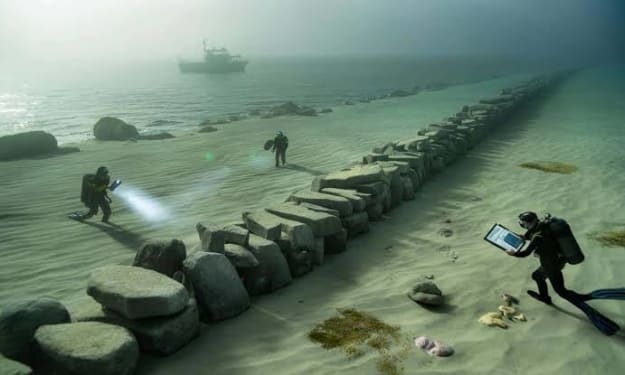
This 7,000-Year-Old Stone Wall Found off the Coast of France May Be the Work of Hunter-Gatherers—and It’s Tearing Archaeology in Two. AI-Generated.
A mysterious underwater structure challenges long-held beliefs about early human societies A remarkable discovery off the coast of France is forcing archaeologists to rethink what they know about early human history. Beneath shallow coastal waters lies a 7,000-year-old stone wall, carefully arranged and stretching across the seabed. What makes this find so controversial is not just its age, but who may have built it. Some researchers believe the wall was constructed by hunter-gatherers, a claim that challenges one of archaeology’s most established ideas: that large stone structures only appeared after humans adopted farming and permanent settlements. The debate has divided experts and opened a new chapter in understanding prehistoric societies. The Discovery Beneath the Sea The stone wall was discovered off the French coastline during underwater surveys conducted by marine archaeologists. Made of stacked stones arranged in a deliberate, linear pattern, the structure clearly shows signs of human design rather than natural formation. Radiocarbon dating of nearby organic material suggests the wall dates back around 7,000 years, a time when much of today’s coastline was dry land. Rising sea levels after the last Ice Age gradually submerged the area, preserving the structure underwater for thousands of years. What archaeologists found was not random debris. The stones were placed with care, forming a barrier that appears too organized to be accidental. Why the Wall Is So Controversial The controversy centers on one major question: Who built it? Traditional archaeological thinking holds that hunter-gatherers lived in small, mobile groups. They are believed to have left behind tools, campsites, and art—but not large-scale stone constructions. Monumental building has long been associated with farming societies, which had stable food supplies and permanent settlements. If hunter-gatherers built this wall, it would suggest they were: More organized than previously believed Capable of long-term planning Able to coordinate labor for large projects This challenges the idea that agriculture was required for complex construction. Arguments Supporting the Hunter-Gatherer Theory Some archaeologists argue that the evidence strongly supports hunter-gatherer involvement. Timing At the time the wall was built, farming had not yet fully spread to the region. This makes agricultural builders unlikely. Location The wall sits in what was once a coastal landscape, rich in marine life. Hunter-gatherers often lived near coastlines, relying on fishing and foraging. Purpose Researchers suggest the wall may have been used to trap fish, manage tidal flows, or mark territory. Such uses align well with hunter-gatherer lifestyles, especially coastal communities known for complex fishing techniques. Supporters argue that hunter-gatherers have long been underestimated, and this discovery may reveal a more sophisticated social structure than previously acknowledged. Skepticism Within the Archaeological Community Not all experts are convinced. Critics argue that labeling the wall as hunter-gatherer work may be premature. Some key objections include: The structure could be younger than estimated, built later by early farming groups Natural processes might have influenced the wall’s shape There is limited evidence of nearby settlements linked directly to the structure Skeptics warn against rewriting history based on a single find, urging further excavation and analysis before drawing major conclusions. Why This Debate Matters This discovery goes beyond a stone wall—it strikes at the heart of how archaeologists understand human development. If hunter-gatherers built the structure, it would mean: Social complexity existed earlier than thought Large cooperative projects did not depend on farming The transition from foraging to farming was more gradual and diverse It would also add to a growing list of discoveries worldwide suggesting that prehistoric societies were far more adaptable and innovative than once believed. Rising Seas and Lost Histories The find also highlights the importance of underwater archaeology. As sea levels rose after the Ice Age, many ancient coastal settlements were submerged and forgotten. Experts believe countless sites like this remain hidden beneath the oceans. These drowned landscapes could hold key evidence about early human life, migration, and innovation. Advances in sonar mapping and diving technology are now allowing researchers to explore these areas more thoroughly, potentially uncovering more discoveries that challenge existing narratives. What Comes Next Researchers plan to: Conduct deeper surveys around the wall Search for tools, campsites, or organic remains Use improved dating techniques to confirm the structure’s age Until more evidence is collected, the debate is likely to continue. Some archaeologists see the wall as proof of early human ingenuity, while others remain cautious. What is certain is that the discovery has already changed the conversation. Conclusion The 7,000-year-old stone wall off the coast of France is more than an underwater curiosity—it is a challenge to long-held assumptions about early human societies. Whether built by hunter-gatherers or early farmers, the structure reveals that prehistoric people were capable of greater planning and cooperation than once believed. As archaeology continues to move beyond land-based discoveries, finds like this remind us that history is not fixed. Sometimes, a single wall beneath the sea is enough to divide experts—and bring us closer to understanding our shared past.
By Fiaz Ahmed 18 days ago in Longevity
Climber Alex Honnold Scales 101-Floor Skyscraper Without Safety Gear. AI-Generated.
The free-solo legend pushes human limits again with a daring ascent that stuns the world Alex Honnold is no stranger to fear-defying feats, but his latest climb has once again left audiences stunned. The world-famous climber, known for scaling massive rock faces without ropes or safety gear, has reportedly climbed a 101-floor skyscraper completely free solo, relying only on his strength, focus, and experience. The climb has reignited global debate about human limits, personal risk, and what drives someone to attempt feats that most people would consider impossible. For admirers, it is a display of discipline and mastery. For critics, it raises serious safety and ethical questions. A Climber Who Redefined Risk Alex Honnold rose to international fame after his historic free solo ascent of El Capitan in Yosemite National Park, a feat documented in the Oscar-winning film Free Solo. Since then, his name has become synonymous with extreme climbing and mental control under pressure. Unlike traditional climbers who rely on ropes, harnesses, and protection systems, Honnold practices free solo climbing, where a single mistake can be fatal. His ability to stay calm in life-threatening situations has fascinated scientists, psychologists, and sports experts alike. Scaling a skyscraper, however, presents a very different challenge from climbing natural rock. The Challenge of a 101-Floor Skyscraper A modern skyscraper is not designed for climbers. Smooth glass surfaces, narrow ledges, and artificial angles make such a climb extremely complex. Wind at high elevations, temperature changes, and vertical exposure add to the danger. Climbing a 101-floor building means: Hundreds of meters of uninterrupted vertical ascent No natural handholds like cracks or ridges Constant exposure to wind and urban hazards Unlike rock faces, buildings offer little forgiveness. Any miscalculation can result in a catastrophic fall. Experts say that even elite climbers would struggle to maintain focus and physical strength for such an extended climb without safety systems. Preparation and Mental Discipline Honnold is known for his intense preparation. He studies routes repeatedly, memorizing every movement before attempting a climb. For a skyscraper ascent, preparation likely included: Analyzing building design and surfaces Practicing similar moves at lower heights Conditioning grip strength and endurance Mental rehearsal of every sequence Psychologists who have studied Honnold note that his brain shows a reduced fear response, allowing him to stay calm in situations that would overwhelm most people. Still, calm does not eliminate danger—it only helps manage it. Public Reaction: Awe and Concern News of the climb quickly spread online, drawing millions of reactions. Supporters praised Honnold’s courage, calling the climb a testament to human potential and discipline. Many compared it to historic athletic achievements that pushed boundaries and redefined possibility. Others, however, expressed concern. Critics argue that such climbs: Encourage dangerous imitation Normalize extreme risk-taking Place unnecessary strain on emergency services Some also questioned whether performing such feats in urban environments sets a troubling example, especially for younger audiences. Safety, Responsibility, and Influence Honnold has consistently stated that he does not encourage others to free solo climb. He emphasizes that his decisions are personal and based on years of training and self-awareness. Still, the influence of a global sports icon cannot be ignored. Extreme acts often inspire admiration, but they can also lead to reckless imitation by less experienced individuals. Urban climbers, sometimes referred to as “builders,” have already drawn attention for scaling skyscrapers illegally. Honnold’s climb, while far more controlled and professional, adds fuel to an ongoing debate about risk versus responsibility. The Line Between Sport and Spectacle Is climbing a skyscraper an athletic achievement or a spectacle designed to shock? Supporters argue that climbing is climbing, regardless of the surface. The physical and mental demands remain enormous, and success requires years of dedication. Skeptics counter that natural rock climbing is rooted in tradition and exploration, while urban free solo climbs blur the line between sport and performance. This debate reflects a broader question facing extreme sports today: how far is too far? What This Means for the Future of Climbing Honnold’s ascent may influence how climbing is perceived beyond mountains and cliffs. It raises questions about: Where climbing belongs How cities manage extreme sports The role of personal freedom in public spaces It also highlights how modern athletes are redefining what constitutes achievement, often blending sport, media, and spectacle. Conclusion Alex Honnold’s free solo climb of a 101-floor skyscraper stands as one of the most daring acts in modern climbing history. It showcases extraordinary physical control, mental discipline, and preparation—while also sparking serious conversations about risk, influence, and responsibility. Whether viewed as an inspiring triumph or a dangerous stunt, the climb reinforces one undeniable truth: Alex Honnold continues to operate at the very edge of human capability, challenging the world to reconsider what is truly possible—and at what cost.
By Fiaz Ahmed 18 days ago in Longevity
Security Forces Kill 3 Terrorists in Balochistan’s Panjgur During Intelligence-Based Operation: ISPR. AI-Generated.
A targeted operation highlights ongoing security challenges and counterterrorism efforts in Pakistan’s southwest Pakistan’s security forces killed three terrorists during an intelligence-based operation (IBO) in Panjgur district of Balochistan, according to a statement released by the Inter-Services Public Relations (ISPR). The operation was carried out following credible intelligence regarding the presence of militants involved in attacks against security personnel and civilians. The incident underscores the persistent security challenges in Balochistan and the continued efforts by law enforcement agencies to curb militancy and restore stability in the region. Details of the Intelligence-Based Operation According to ISPR, the operation was launched after security forces received specific intelligence about terrorist activity in the area. Acting on this information, troops moved into Panjgur and conducted a targeted search operation. During the operation, security personnel encountered armed resistance. An exchange of fire followed, resulting in the death of three terrorists. ISPR stated that the militants were actively involved in terrorist activities, including attacks on security forces and acts aimed at disrupting peace in the region. Weapons, ammunition, and other materials were recovered from the site, indicating the group’s operational capability. Importance of Intelligence-Based Operations Intelligence-based operations have become a central element of Pakistan’s counterterrorism strategy. Unlike large-scale military actions, IBOs rely on precise intelligence and limited troop movement, reducing the risk to civilians while targeting specific threats. Security officials say these operations: Minimize collateral damage Disrupt militant networks before attacks occur Strengthen public confidence in law enforcement The Panjgur operation reflects this approach, focusing on accuracy rather than broad force. Security Situation in Balochistan Balochistan, Pakistan’s largest province by area, has faced security and insurgency-related challenges for years. Its strategic location, bordering Iran and Afghanistan, and its vast, sparsely populated terrain make security operations complex. Militant groups have occasionally targeted: Security personnel Infrastructure projects Local officials In response, the government has increased coordination between military, paramilitary, and intelligence agencies to address threats more effectively. Role of ISPR and Transparency ISPR regularly issues statements following counterterrorism operations to inform the public and maintain transparency. These updates serve several purposes: Providing verified information Countering misinformation Reassuring citizens about ongoing security efforts By confirming the Panjgur operation, ISPR emphasized that security forces remain alert and committed to safeguarding the country. Civilian Safety and Local Impact Authorities stressed that civilian safety remained a priority during the operation. No civilian casualties were reported, and forces secured the area after the encounter to prevent any residual threats. Local officials worked with security teams to restore normalcy and reassure residents. Such coordination is essential in maintaining trust between communities and law enforcement, particularly in regions affected by prolonged instability. Community engagement programs have also been expanded in recent years to address underlying issues and prevent radicalization. Counterterrorism Beyond Military Action While security operations are crucial, experts note that long-term stability in Balochistan requires more than military measures. Development initiatives, improved governance, and social inclusion are often cited as key factors in addressing the root causes of unrest. The government has highlighted efforts in: Infrastructure development Education and healthcare access Employment opportunities Officials argue that combining security measures with socio-economic progress is vital for sustainable peace. National and Regional Implications The Panjgur operation sends a clear message that militant activity will not be tolerated, particularly in sensitive border regions. Analysts note that maintaining security in Balochistan is important not only for Pakistan’s internal stability but also for regional security. As Pakistan continues to face evolving security threats, intelligence-led operations are expected to remain a core strategy. Conclusion The killing of three terrorists during an intelligence-based operation in Panjgur reflects Pakistan’s ongoing efforts to counter militancy through targeted and precise action. While challenges remain, such operations demonstrate the role of intelligence, coordination, and restraint in addressing security threats. As authorities continue to balance enforcement with development and community engagement, the focus remains on creating a safer environment for citizens and ensuring long-term stability in Balochistan.
By Fiaz Ahmed 18 days ago in The Swamp
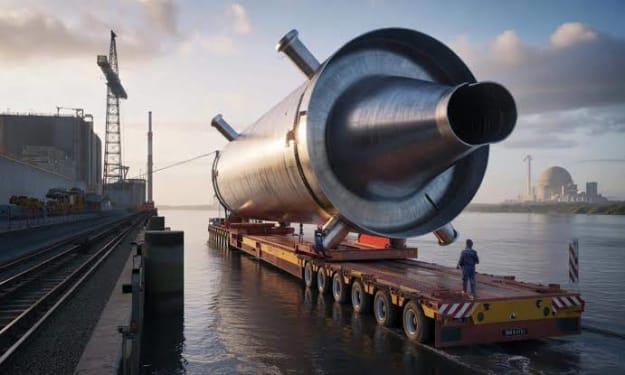
France Ships 500-Ton Nuclear “Colossus” to Britain for Hinkley Point C’s New Generation III Reactor. AI-Generated.
A massive engineering feat underscores Europe’s commitment to next-generation nuclear energy In a remarkable display of international engineering and collaboration, France has shipped a 500-ton nuclear reactor component, described as a “colossus,” to Britain’s Hinkley Point C power plant. This shipment represents a critical milestone in the construction of the UK’s first Generation III nuclear reactor, aimed at providing safer, more efficient, and low-carbon electricity for decades to come. The delivery has drawn attention from engineers, environmental experts, and energy analysts, not only for its size and weight but also for its strategic importance in Europe’s energy transition. What Is Hinkley Point C? Hinkley Point C, located in Somerset, England, is one of the largest nuclear power projects in Europe. Its Generation III reactors promise advanced safety features, higher efficiency, and a lifespan of 60 years or more. Key facts about the project: Two reactors are being constructed, each capable of producing 1,600 megawatts of electricity The plant is expected to supply about 7% of the UK’s electricity needs once operational Construction involves international collaboration, including France’s Framatome and other engineering companies The project represents both a technical and political partnership, highlighting cooperation between European nations in energy development. The “Colossus” Reactor Component The 500-ton shipment, often referred to as a “colossus,” is a critical part of the nuclear reactor’s pressure vessel, which will house the reactor core. Why it is significant: Weight and size: At 500 tons, transporting it requires precise planning, specialized vessels, and advanced logistics. Safety: Reactor components must meet stringent quality and safety standards, ensuring they withstand high temperatures, radiation, and pressure over decades. Engineering marvel: The manufacturing process in France involved high-precision forging, machining, and testing, demonstrating the capabilities of Europe’s nuclear industry. Transporting such a massive component across the English Channel is no small feat. It involves careful navigation, weather monitoring, and security measures to ensure the reactor component arrives intact and on schedule. Importance of Generation III Reactors Generation III reactors, like the one at Hinkley Point C, represent the next stage of nuclear energy. They are designed to be: Safer: Enhanced safety systems can prevent or mitigate accidents More efficient: They extract more energy from nuclear fuel Environmentally friendly: Reduced radioactive waste and lower greenhouse gas emissions Experts argue that Generation III reactors will play a critical role in Europe’s efforts to reduce carbon emissions, especially as countries strive to meet climate goals and transition away from fossil fuels. European Collaboration in Nuclear Energy The Hinkley Point C project exemplifies the benefits of international cooperation in energy infrastructure. French companies have long been leaders in nuclear technology, while the UK relies on their expertise to construct advanced reactors. Benefits of collaboration include: Sharing of technical expertise and research Access to high-quality components manufactured under strict standards Strengthening diplomatic and economic ties between countries The shipment of the “colossus” is a tangible symbol of this partnership, highlighting how large-scale engineering projects often transcend national boundaries. Logistics and Challenges Transporting a 500-ton component is far from simple. The operation involves: Specialized shipping vessels capable of handling extreme weight Route planning to avoid shallow waters, storms, and heavy maritime traffic Security measures to protect a high-value and sensitive piece of nuclear equipment Once it arrives at Hinkley Point C, cranes and precision equipment will carefully place the reactor component into the plant’s construction site. Engineers must ensure perfect alignment and stability, as even minor errors can compromise reactor performance. Economic and Strategic Significance The project is a major economic investment, employing thousands of workers in the UK and France. Beyond the construction jobs, Hinkley Point C will contribute to the UK’s long-term energy security and help stabilize electricity costs. Strategically, the project underscores Europe’s commitment to advanced, low-carbon nuclear power, a key element in meeting climate targets while ensuring reliable electricity for homes and industries. Environmental and Public Considerations While nuclear energy offers many benefits, it is not without concerns. Public debates continue regarding: Safety of nuclear reactors Management of radioactive waste Potential environmental impact during construction Hinkley Point C aims to address these issues through modern engineering, robust safety systems, and regulatory oversight, making it one of the most advanced nuclear projects in Europe. Conclusion The shipment of the 500-ton “colossus” from France to Hinkley Point C marks a major milestone in Europe’s nuclear energy journey. It highlights the technical skill, international collaboration, and strategic importance of nuclear power in a low-carbon future. As the UK moves closer to completing its first Generation III reactors, this monumental component serves as a reminder that modern energy infrastructure is not just about electricity—it is about engineering, diplomacy, and sustainable progress. For Europe and the UK, Hinkley Point C is more than a power plant; it is a symbol of ambition, precision, and the continuing role of nuclear energy in shaping a cleaner, more reliable energy landscape.
By Fiaz Ahmed 18 days ago in Longevity