
Exploring the World of WS2813 LED Strips: A Complete Guide
Reliability, creativity, and innovation in modern lighting solutions

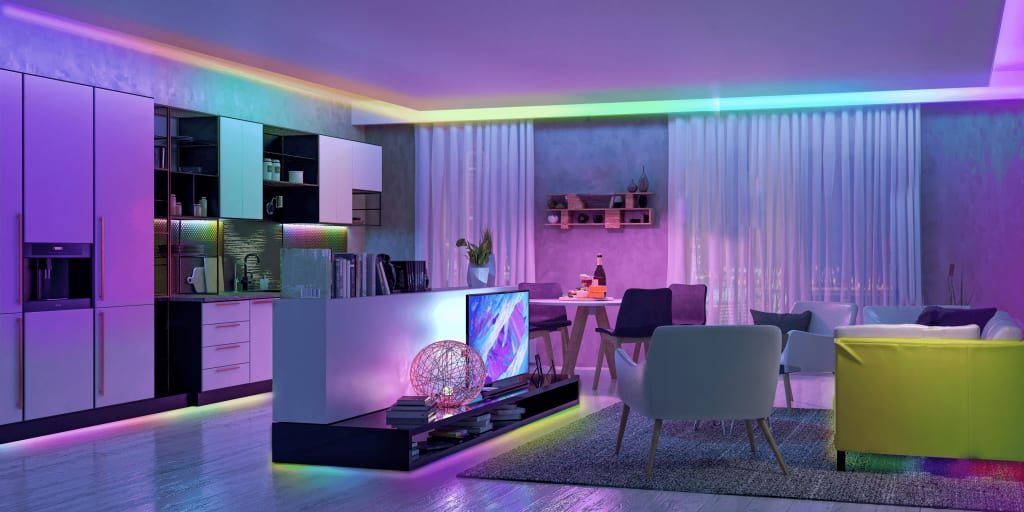
Lighting technology has seen rapid advancements in recent years, with LED strips standing out as one of the most versatile solutions. From architectural design to hobbyist projects, LEDs have transformed how we think about light. Among the many types available today, the WS2813 LED strip has gained attention for its reliability, control options, and performance. In this article, we will explore what makes these strips unique, how they compare to other models, and where they fit into the broader landscape of LED lighting.
Introduction to LED Strips
According to Wikipedia, LED strips are flexible circuit boards populated with light-emitting diodes (LEDs) that usually come with an adhesive backing. Their ease of installation and adaptability have made them popular in residential, commercial, and creative spaces. They can be cut to size, bent around corners, and programmed to emit various colors and patterns, giving users a high level of customization.
In recent years, manufacturers, especially in regions with strong electronics industries like China, have played a significant role in expanding the availability and diversity of LED strips. A well-known China led strip manufacturer offers a wide range of products, including addressable models such as WS2813, COB strips, and neon lights.
What is a WS2813 LED Strip?
The WS2813 is an evolution of the older WS2812 series. It is a digitally addressable LED strip, meaning each LED can be controlled individually. Users can set brightness, color, and effects for each diode, allowing for advanced animations and designs.
Key features include:
- Dual-signal wires: The WS2813 design includes a backup data line, which ensures that if one LED fails, the signal bypasses it and continues to the next diode. This is a significant improvement over the WS2812.
- 5V power input: These strips run on low voltage, making them safe for home and DIY projects.
- RGB color mixing: Each LED has red, green, and blue chips, allowing for millions of color possibilities.
- High refresh rate: Ideal for applications where smooth animations are essential, such as in signage or interactive displays.
Because of these characteristics, the WS2813 LED strip is widely used in both creative and practical applications.
Comparing WS2813 to Other Models
LED strips come in many varieties, each with its own benefits. Let’s look at how WS2813 compares to some of its peers:
- WS2812 vs. WS2813
The WS2812 was revolutionary in its time, but it lacked redundancy. A single LED failure could affect the entire strip. The WS2813 solved this issue by adding a backup data line.
- WS2813 vs. SK6812
The SK6812 is another popular chip, often seen as an alternative to WS2812 and WS2813. While performance is similar, some variations of SK6812 include white (RGBW) chips, offering a wider range of tones.
- WS2813 vs. COB Strips
While COB (chip-on-board) strips provide uniform light without visible LED dots, they are not individually addressable like the WS2813. Thus, COBs are more suited for ambient or task lighting, whereas WS2813 strips excel in programmable designs.
Practical Applications of WS2813 LED Strips
The versatility of WS2813 strips makes them suitable for various industries and hobbies:
- Interior decoration: Used in homes for accent lighting under cabinets, along staircases, or behind televisions.
- Stage design: Their programmability makes them popular in concerts, theaters, and clubs where synchronized lighting is crucial.
- Advertising and signage: Businesses use them to create eye-catching displays and dynamic effects.
- DIY projects: Hobbyists incorporate them into art pieces, cosplay costumes, and custom PC builds.
Interactive installations: Museums, exhibits, and tech showcases often use programmable strips to engage visitors.
Technical Considerations
Before using a WS2813 LED strip, there are a few practical aspects to keep in mind:
- Power requirements: These strips typically run on 5V, but they can draw a significant amount of current depending on the number of LEDs. A reliable power supply is essential.
- Controllers: To program patterns and colors, a microcontroller such as Arduino or Raspberry Pi is often used. Many ready-made controllers and apps are also available for those who prefer plug-and-play options.
- Heat management: Although efficient, high-density LED strips can generate heat. Proper ventilation ensures longevity.
- Cutting and soldering: Strips can be trimmed to size, but proper soldering techniques are necessary to maintain functionality.
Broader Role of LED Strip Manufacturers
The global demand for LED technology continues to grow, and much of the supply comes from dedicated LED strip manufacturers in China. These companies produce a wide variety of strips—from flexible neon lights to high-density COB strips and programmable WS2813 models. The ability to customize, scale, and mass-produce has made LED strips more accessible than ever before.
By standardizing production and offering competitive pricing, manufacturers enable both small creators and large industries to experiment with advanced lighting solutions.
Advantages of Using WS2813 LED Strips
- Reliability: The dual-signal wire system minimizes the risk of total strip failure.
- Flexibility: They can be used in both small projects and large-scale installations.
- Creative control: Addressability means endless customization possibilities.
- Compatibility: They work with a wide range of controllers and software.
Limitations and Challenges
Despite their strengths, WS2813 LED strips are not without challenges:
- Power consumption: Large installations require careful planning to prevent voltage drop.
- Complexity: Programming can be intimidating for beginners.
- Cost: Addressable strips are generally more expensive than simple single-color or non-addressable RGB strips.
Future of Addressable LED Strips
As technology advances, we can expect addressable LED strips to become even more efficient and user-friendly. Integration with smart home systems, voice control, and wireless connectivity are already emerging trends. Strips like the WS2813 represent a step toward a future where lighting is not just functional but interactive and immersive.
Conclusion
The WS2813 LED strip stands as a prime example of how LED technology continues to evolve. With its reliable dual-signal design, addressable control, and wide range of applications, it has carved a niche in both professional and hobbyist circles. Supported by the global efforts of LED strip manufacturers in China and advancements in controller technology, these strips will likely remain a staple in modern lighting solutions.
In understanding how LED strips work, comparing models, and recognizing their applications, users can make informed choices that align with their creative or practical needs. The WS2813 is more than just a strip of lights—it’s a tool for innovation, expression, and design.
About the Creator
Keep reading
More stories from charliesamuel and writers in Longevity and other communities.
A Complete Guide to Shoe Care: Understanding Shoe Polish Ingredients, Choosing Between Shoe Cream vs Polish, and the Role of Biki Shoe Care
Introduction Shoes are more than just functional items; they reflect personal style, professionalism, and attention to detail. To maintain their longevity and appearance, proper care is essential. Many people polish their shoes without ever considering what goes into the polish or how to choose between different products. In this article, we will explore the shoe polish ingredients, the comparison of shoe cream vs polish, and the role of trusted brands like Biki Shoe Care in guiding effective shoe care.
By charliesamuel5 months ago in Longevity
Day 4 of Quitting
If this is how sobriety feels, maybe it’s better to go through life a little buzzed… this, along with other hits like, I want to kill myself, I wish I was dead, and I’m going to throw myself off a bridge have been the only thoughts on rotation these past few days. I promise myself that if, in a month, I still feel like this (‘this’ meaning despondent, full of rage, and simultaneously numb) I can go back to smoking. Until mid-February though? Nicotine is off the table.
By sleepy drafts27 days ago in Longevity
Ecclesiastes and the Weight of Meaninglessness
Have you ever noticed how unsettling Ecclesiastes feels compared to most of Scripture. It does not rush to reassure. It does not soften its conclusions. It returns again and again to the same observation: everything fades, everything repeats, and nothing under the sun seems capable of holding still long enough to become permanent. Wisdom fails to secure lasting satisfaction. Pleasure loses its edge. Work outlives the worker. Even moral effort appears unable to guarantee stability. For many readers, this tone feels almost dissonant, as if the book is saying out loud what faith is supposed to quiet.
By Peter Thwing - Host of the FST Podcasta day ago in Longevity




Comments
There are no comments for this story
Be the first to respond and start the conversation.