
Meditation as Mental Strength Training
Why sitting still builds inner resilience, focus, and long-term emotional power

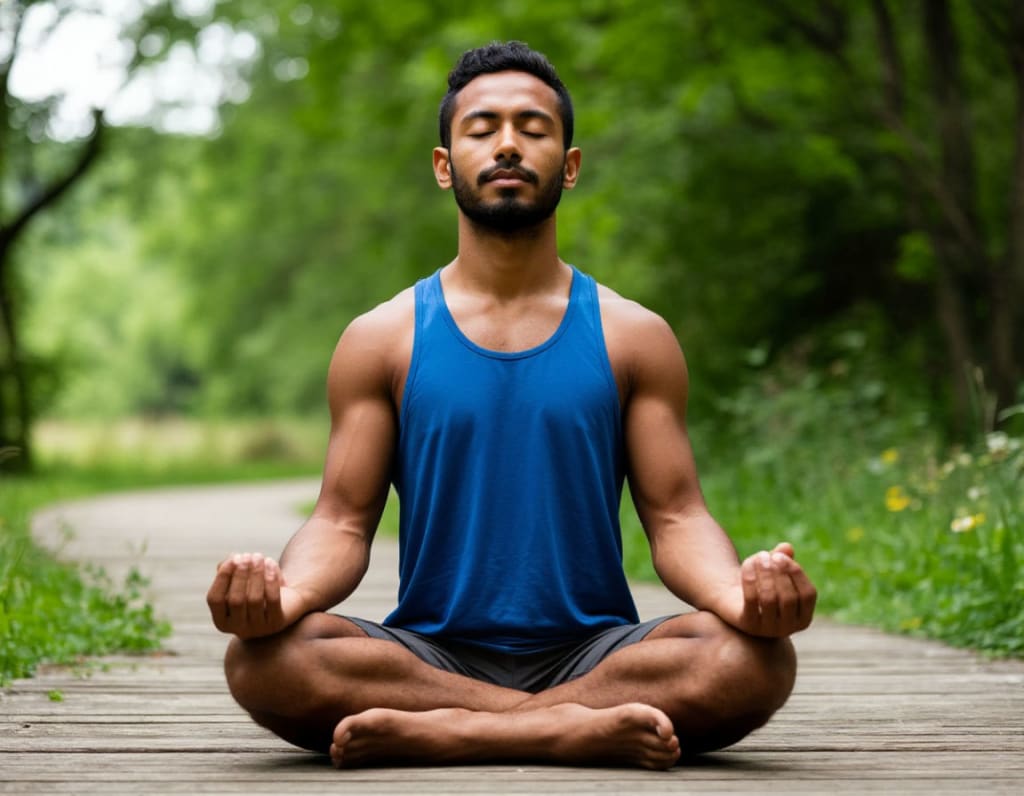
When you think of strength training, you probably imagine weights, sweat, and maybe a personal trainer shouting encouragement. But what if one of the most powerful forms of strength training didn’t require a gym, equipment, or even movement?
Meditation is mental strength training.
It builds focus like reps build muscle. It challenges your patience, discipline, and emotional endurance. And just like physical training, the benefits compound over time—creating a more grounded, resilient, and adaptable mind.
The Mental “Muscles” You Build Through Meditation
Meditation works not on your biceps, but on deeper faculties: attention, awareness, emotional regulation, and cognitive control. Here's what consistent practice trains:
Focus and attention: Each time you bring your mind back from distraction, you're strengthening your concentration.
Emotional regulation: Meditation helps you sit with uncomfortable feelings without reacting impulsively.
Impulse control: Regular practice helps reduce reactivity, whether it’s to a rude comment, a craving, or a spiraling thought.
Resilience to stress: Your nervous system becomes more balanced, less likely to flip into fight-or-flight mode unnecessarily.
Just like physical strength, these mental skills are built gradually. And yes—at first, it feels hard. That’s how you know it’s working.
Neuroscience Confirms the Gains
Studies have shown that meditation increases gray matter density in brain areas related to self-awareness, memory, and compassion, while decreasing the volume of the amygdala, which governs fear and stress.
Think of it as upgrading your mental operating system. Your brain becomes more efficient at processing information and less reactive to emotional triggers. Over time, meditation rewires your mind for greater clarity and calm under pressure.
It’s not about eliminating stress, but about changing your capacity to carry it.
Building Mental Endurance—One Session at a Time
Just like you wouldn’t expect to bench press 200 pounds on your first day at the gym, you can’t expect deep stillness or clarity on your first day meditating. Mental strength takes time, effort, and consistency.
Start small:
2–5 minutes a day is enough to begin.
Use simple breath-focused meditation or a guided session.
Expect distraction—that’s the training ground.
Celebrate every time you notice you’ve drifted—that’s a rep.
With each session, your “recovery time” improves. You bounce back from distraction faster. You feel less dominated by thoughts and emotions. That’s mental strength in action.
Meditation Isn’t Passive—It’s Active Mental Discipline
One of the biggest misconceptions is that meditation is passive or lazy. In reality, it requires courage to sit with yourself without numbing, distracting, or running. You’re learning to stay present with whatever is arising—without flinching.
It’s no different than holding a difficult pose in yoga or staying in a cold shower: the mind protests, but the discipline is in staying.
Over time, this strengthens what author Viktor Frankl described as the “space between stimulus and response.” And in that space lies freedom—the hallmark of a strong, self-aware mind.
Mental Strength in Daily Life
The mental strength built through meditation doesn't stay on the cushion. It carries into your work, your relationships, and your everyday stressors:
You pause instead of snapping.
You stay focused through discomfort.
You bounce back quicker from setbacks.
You make decisions with clarity, not reactivity.
This is where meditation stops being a practice and becomes a way of being.
Final Thought: Show Up for the Reps
You don’t meditate to become a different person. You meditate to build the strength to meet life as you are—with openness, courage, and presence.
Some days it will feel effortless. Other days, it’ll feel impossible. But every time you show up, you’re strengthening your mind—rep by rep, breath by breath.
Meditation is the gym where your attention, awareness, and inner stability are built. And with time, you’ll find that the strongest thing about you isn’t your willpower or your achievements—it’s your ability to sit with yourself, fully present, and stay.
About the Creator
Keep reading
More stories from Victoria Marse and writers in Longevity and other communities.
Why Your Brain Loves Boredom (And How Meditation Helps You Get There)
Boredom gets a bad rap. In a world obsessed with constant stimulation—notifications, streaming, endless social feeds—boredom feels like a punishment. But what if boredom is actually something your brain craves?
By Victoria Marse7 months ago in Longevity
Day 4 of Quitting
If this is how sobriety feels, maybe it’s better to go through life a little buzzed… this, along with other hits like, I want to kill myself, I wish I was dead, and I’m going to throw myself off a bridge have been the only thoughts on rotation these past few days. I promise myself that if, in a month, I still feel like this (‘this’ meaning despondent, full of rage, and simultaneously numb) I can go back to smoking. Until mid-February though? Nicotine is off the table.
By sleepy drafts27 days ago in Longevity
Ecclesiastes and the Weight of Meaninglessness
Have you ever noticed how unsettling Ecclesiastes feels compared to most of Scripture. It does not rush to reassure. It does not soften its conclusions. It returns again and again to the same observation: everything fades, everything repeats, and nothing under the sun seems capable of holding still long enough to become permanent. Wisdom fails to secure lasting satisfaction. Pleasure loses its edge. Work outlives the worker. Even moral effort appears unable to guarantee stability. For many readers, this tone feels almost dissonant, as if the book is saying out loud what faith is supposed to quiet.
By Peter Thwing - Host of the FST Podcasta day ago in Longevity




Comments
There are no comments for this story
Be the first to respond and start the conversation.