health
Keeping your mind and body in check - popular topics in health and medicine to maintain a long and healthy life.
Chronic Illness Turned to Education and Empowerment
Barby Ingle had it all. She had just been hired by Washington State University as the head coach of their spirit programs, started her own cheer and dance training company, and was living the post-collegiate life and was well on her way to success.
By Megan Roche8 years ago in Longevity
A Child’s Voice Found Through Intuitive Science
No one really knew what to do for Gracie. The doctors didn’t know what was causing it, so they didn’t know how to treat it. Allergies? At eighteen months old, Gracie couldn’t tell anyone what was going on in her body. She couldn’t explain why her nose ran constantly since she was just a few weeks old. She couldn’t explain why her eyes moved independently of each other, and why the earaches kept coming. Did she need more antibiotics? Special glasses? Tubes in her ears? Different medications?
By Paul S. Madar8 years ago in Longevity
Tired of Narcolepsy
It first happened sometime during the summer of 2010, during the last lesson of the day. I had my eyes down as I was reading Macbeth in English; the teacher was reading out loud to us all. After a while, my eyes felt heavy, I couldn’t keep them open. The words on the page became suddenly jumbled up. Eventually, the feeling passed and thought nothing of it. I just assumed I was sleepy from being in school all day.
By Sarah Garvey8 years ago in Longevity
Temporarily Handicapped Part 1
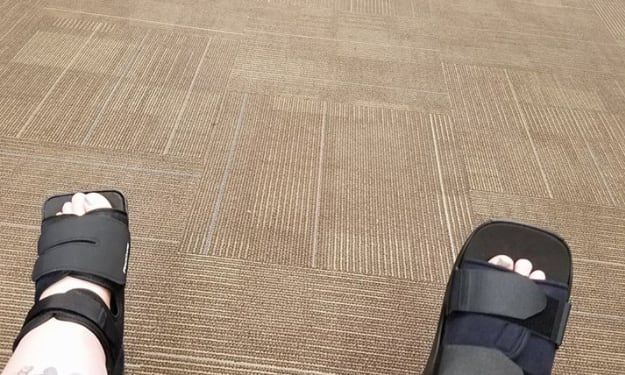
First things first, I am not a small woman, and with that being said, having an accident that makes you wheelchair bound is not easy. People judge you immediately without looking, asking, or even simply caring. People are judgmental and quick to jump to conclusions, this is, of course, human nature and everyone does it.
By Neferitiri8 years ago in Longevity
What Are the Implications of Using Public Health Initiatives to Help Individuals to Change Their Lifestyle in Order to Improve Their Health and Well-Being?
This essay will look at what public health initiatives can do to help individuals to change and improve their health and well-being. It will also look at what the pros and cons are of such initiatives impacting the individual’s lifestyle and identity. It will take into account the theories of sociologists Peter Berger and Thomas Luckman on identity and those of Erving Goffman, who looks at stigma, labelling and how public health initiatives can encourage society to label others based on appearance (Leach, 2010 pp7-10). The essay will also look at individuals who have acknowledged that there are dietary problems in or society and had lead campaigns to prevent obesity especially in children and prevent other diet related diseases.
By Samantha Hill8 years ago in Longevity
Life with Reggie
Everyone, say "hello" to Reggie. He is my 18-year-old brother, and yes, he has Down syndrome. And, since October is Down syndrome awareness month, what better way to make you aware than to show you this cute little guy and tell you a little about his story?
By Lindsey Duncan8 years ago in Longevity
13 Simplest Things to Make Oneself Happier
You're only as happy as you make your mind up to be! 1. Exercise. It is the best thing you could do for yourself. The endorphins produced from exercise will definitely make you happier, both physically and emotionally. It doesn't happen overnight but if you keep at it for a while, you will be amazed at how even a simple 30 minutes of working out daily creates a huge difference.
By Erika Potap8 years ago in Longevity
Ageing, Exercise, and Neurodegeneration
Ageing is thought to be the highest risk factor for neurodegenerative conditions such as dementia. Dementia is characterised by the progressive decline in cognitive functions and memory. The WHO indicates that worldwide, approximately 47 million people suffer from dementia, the most common form being Alzheimer’s disease; the predictions are that this number is set to triple by 2030. In an era of increased longevity, what can we do to minimise the risk of developing dementia, a condition for which there is presently no cure?
By Tracey Evans8 years ago in Longevity