science
The science of staying young, healthy, and in-shape.
Top 3 Indian Towns with Sub-Zero Temperatures: Experiencing the Frozen Extremes. AI-Generated.
India is a land of contrasts. From tropical beaches to arid deserts, the subcontinent boasts an incredible diversity of climates. While most think of India as a warm, sun-drenched country, it also has regions where winters are harsh, and temperatures plunge well below zero. These towns, located mainly in the Himalayas, challenge the very notion of life in extreme cold. For travelers, adventurers, and researchers, they offer a unique experience—a glimpse into a frozen, high-altitude world where survival is a skill and winter reigns supreme. Here, we explore the top three Indian towns known for sub-zero temperatures. 1. Dras, Ladakh: India’s Coldest Inhabited Town Nestled in the Kargil district of Ladakh, Dras holds the title of the coldest inhabited town in India. Sitting at approximately 3,300 meters above sea level, Dras experiences winter temperatures that often plummet to –30°C or lower, earning it the nickname "The Gateway to Ladakh." The town’s extreme cold results from its high altitude and the valley’s geography, which traps frigid winds. Winter in Dras is not just cold; it is long and harsh. Heavy snowfall can isolate the town for weeks, making access to essential supplies a challenge. Roads often close, and the local population relies heavily on stored provisions and community support. Despite the harsh climate, Dras is rich in culture and history. Its proximity to the Line of Control makes it strategically important for India, and the military presence is significant. Locals have adapted with sturdy stone houses, traditional woolen attire, and high-calorie diets to withstand the biting cold. For visitors, Dras offers breathtaking landscapes of snow-capped peaks and frozen rivers, a rare glimpse into extreme high-altitude life. 2. Leh, Ladakh: The Cold Desert Capital Leh, the capital of Ladakh, is perhaps India’s most famous cold-weather town. At 3,500 meters above sea level, Leh regularly sees winter temperatures fall below –15°C, and nights can be even colder. Despite being a major tourist hub in summer, Leh transforms into a cold desert in winter, where life slows down, and survival becomes the primary focus. Leh’s unique climate—dry, thin air combined with intense cold—creates one of the harshest living environments in the country. Snowfall is lighter than in Dras, but the cold is uncompromising. The frozen Zanskar River becomes the site of the Chadar Trek, an adventure that attracts thrill-seekers worldwide but demands careful preparation against frostbite and hypothermia. Residents of Leh have mastered the art of enduring the cold. Homes are built with thick walls and insulation, heating is often solar-assisted, and winter diets are rich in fats to sustain energy. Leh illustrates human resilience in extreme conditions, combining traditional knowledge with modern adaptations. 3. Keylong, Himachal Pradesh: The Frozen Heart of Lahaul Keylong, located in the Lahaul and Spiti district of Himachal Pradesh, is another town where winter is a formidable force. At an altitude of roughly 3,100 meters, Keylong’s temperatures can drop to –10°C to –20°C during the coldest months. Unlike Ladakh, Keylong experiences heavy snowfall, which often blocks roads and isolates the town. Life in Keylong is shaped by the winter’s harshness. Locals store essential supplies months in advance and rely on traditional wooden houses and insulated clothing to survive. The town, surrounded by snow-covered peaks and monasteries, holds cultural and administrative importance in the region. Infrastructure projects such as the Atal Tunnel have improved connectivity during winter, making Keylong more accessible. However, the town remains a challenging environment, reminding visitors of nature’s power and the endurance required to live in high-altitude cold zones. Why These Towns Are Significant These sub-zero towns highlight India’s climatic diversity and showcase human adaptation in extreme conditions. They are living examples of how culture, infrastructure, and survival strategies intertwine to sustain communities in some of the harshest environments on Earth. Furthermore, these regions offer important insights into climate change. Shifts in snowfall, glacier melt, and temperature extremes directly affect local life, agriculture, and water resources. Studying these towns helps scientists understand high-altitude ecosystems and develop strategies to mitigate climate risks. Final Thoughts India’s frozen towns challenge the perception of the country as a land of heat and humidity. Dras, Leh, and Keylong not only experience sub-zero temperatures but also demonstrate resilience, tradition, and adaptation. They are destinations for adventurers, scientists, and travelers seeking to experience life where winter dominates, nature is formidable, and survival is a daily achievement. Visiting these towns is more than sightseeing—it is an opportunity to witness human ingenuity and endurance against some of the harshest winters on the planet, offering a perspective of India that few outside the Himalayas truly understand.
By Fiaz Ahmed Brohi19 days ago in Longevity
Einstein Predicted It, and Mars Has Just Confirmed It: Why Time Flows Differently on the Red Planet and How Space Missions Must Adapt. AI-Generated.
When Albert Einstein introduced his theory of relativity more than a century ago, it radically changed humanity’s understanding of time. He proposed that time is not absolute—it slows down or speeds up depending on gravity and motion. For decades, this idea felt abstract, confined to equations and thought experiments. Today, however, Mars has turned Einstein’s prediction into a practical challenge. Scientists have confirmed that time on the Red Planet flows at a slightly different rate than on Earth, and this difference is forcing future space missions to rethink how they operate. Time Is Not the Same Everywhere Einstein’s general theory of relativity states that gravity affects time. The stronger the gravitational pull, the slower time passes. Earth, being larger and denser than Mars, has stronger gravity. As a result, clocks on Mars tick slightly faster than clocks on Earth. The difference is tiny—measured in microseconds—but in the precise world of space exploration, even such small variations matter. Mars also has a different orbital speed and rotational rhythm. A day on Mars, known as a “sol,” is about 24 hours and 39 minutes long. This mismatch alone creates challenges for mission planners on Earth who must synchronize commands, data transmissions, and rover activities across two planets operating on different clocks. How Scientists Confirmed It Modern Mars missions rely on ultra-precise atomic clocks and advanced navigation systems. Spacecraft orbiting Mars and rovers on its surface constantly exchange signals with Earth. Over time, scientists noticed consistent timing discrepancies that could not be explained by engineering errors or signal delays alone. These differences matched exactly what Einstein’s equations predicted: time on Mars flows faster due to its weaker gravitational field. This confirmation is not just theoretical validation—it has real operational consequences. Navigation, communication, and scientific measurements all depend on accurate timekeeping. If mission controllers ignore relativistic time differences, errors can accumulate, potentially causing spacecraft to drift off course or miss critical mission windows. Why Time Differences Matter for Space Missions Space missions rely on extreme precision. When a rover drills into Martian soil or a lander touches down on the surface, timing errors of even milliseconds can lead to serious problems. Over months and years, microsecond-level discrepancies can grow into navigation errors spanning meters—or worse. Mars missions already operate with communication delays ranging from 4 to 24 minutes, depending on the planets’ positions. Adding relativistic time differences into the mix makes coordination even more complex. Engineers must account for how fast clocks tick on Mars compared to Earth to ensure commands arrive at the correct moment and data is interpreted accurately. Adapting to Martian Time To solve this problem, scientists are developing Mars-specific timekeeping systems. Instead of relying solely on Earth-based clocks, future missions may use dedicated “Mars time” standards. These systems would automatically adjust for gravitational and relativistic differences, allowing spacecraft, orbiters, and surface equipment to operate in sync with the planet they are exploring. NASA engineers already experience a preview of this challenge during rover missions. When a new rover lands on Mars, mission teams often live on “Mars time,” shifting their work schedules by about 39 minutes each day to match the Martian sol. While this practice helps with daily operations, it is exhausting for humans and impractical for long-term missions—especially those involving astronauts. Implications for Human Exploration As space agencies plan crewed missions to Mars, time dilation becomes more than a technical issue—it becomes a human one. Astronauts living on Mars will age imperceptibly faster than people on Earth due to weaker gravity. While the difference is far too small to affect health, it highlights how deeply relativity will shape life beyond our planet. More importantly, mission planners must design communication systems, navigation tools, and even legal and scheduling frameworks that account for different time flows. A future Mars colony may need its own official time standard, separate from Earth’s. A Reminder of Einstein’s Lasting Legacy Einstein’s theories were once considered purely academic. Today, they guide GPS satellites orbiting Earth and now help navigate missions millions of kilometers away on Mars. The confirmation that time flows differently on the Red Planet is another reminder that the universe follows rules that defy everyday intuition. As humanity prepares to explore deeper into space, Einstein’s insights are no longer just ideas—they are essential tools. Mars has confirmed what physics predicted long ago: time itself changes across the cosmos, and if we want to become a multi-planet species, we must learn to live by more than one clock.
By Fiaz Ahmed Brohi19 days ago in Longevity
Greenland's People Must Decide Its Future, Says Nandy. AI-Generated.
In a recent statement, UK minister Lisa Nandy emphasized that the people of Greenland must have the primary say in determining their future, underscoring the principle of self-determination in the face of growing international interest in the Arctic region. As geopolitical tensions intensify and the Arctic’s strategic and resource potential becomes increasingly valuable, the minister’s remarks highlight the delicate balance between foreign interests and local autonomy. Greenland’s Strategic Importance Greenland, the world’s largest island, has become a focal point in global geopolitics. Its location between the North Atlantic and Arctic Oceans offers strategic military and shipping advantages. Melting ice due to climate change is opening previously inaccessible sea routes and exposing natural resources, including rare earth minerals and potentially vast oil and gas reserves. These developments have drawn attention from countries like the United States, China, and European powers, each seeking to secure their interests in the Arctic. The island is an autonomous territory within the Kingdom of Denmark, with its own government handling most domestic matters, though defense and foreign policy remain under Danish control. Greenland’s growing autonomy has fueled discussions about whether the island should pursue greater independence or maintain its current relationship with Denmark. Nandy’s Statement and Its Significance In her address, Nandy stressed that any decision regarding Greenland’s future should be led by its people, not dictated by external powers. “Greenlanders must have the right to chart their own course,” she said, emphasizing the importance of respecting local voices amid international debates about the Arctic. Her comments came in the wake of increased international attention, particularly from the United States. Former President Donald Trump had previously proposed purchasing Greenland, a plan that was widely criticized and rejected by Danish and Greenlandic officials. However, the idea highlighted the geopolitical importance of the region and the potential for foreign powers to influence its future. Economic and Environmental Considerations Greenland’s future is not solely a political question. Economic development and environmental protection are deeply intertwined. The island’s economy relies heavily on fishing, tourism, and public sector employment. However, the melting ice and new accessibility to minerals and hydrocarbons present both opportunities and risks. While resource extraction could provide significant revenue and accelerate Greenland’s path toward economic self-sufficiency, it also carries environmental costs that could threaten the fragile Arctic ecosystem. Nandy’s emphasis on local decision-making implies that Greenlanders should weigh the trade-offs carefully, balancing economic ambitions with environmental stewardship. Global Implications The Arctic is increasingly becoming a theater of strategic competition. Russia has expanded its military presence along its Arctic coast, while China has labeled itself a “near-Arctic state” and is pursuing partnerships in the region. NATO has also shown interest in monitoring and securing Arctic sea routes. In this context, Greenland’s political choices carry broader international significance. By affirming the principle that Greenland’s people must decide their own path, Nandy signals that external actors should respect self-determination while engaging diplomatically. Her comments implicitly caution against attempts to pressure Greenland politically or economically, emphasizing that sustainable development and stability depend on local leadership and consent. Local Voices and Autonomy Greenlanders themselves have voiced a mix of opinions about the future. Some favor greater independence from Denmark, hoping to leverage natural resources to build an economically self-sufficient state. Others prioritize maintaining ties with Denmark, which provides financial support and international security guarantees. The debate is further complicated by the need to balance traditional livelihoods, such as fishing and hunting, with the economic promise of resource extraction. Experts note that ensuring meaningful participation of Greenland’s people in these discussions is essential. Policies imposed externally risk undermining social cohesion and could provoke resistance or unrest. Nandy’s comments highlight the importance of empowering local governance structures and supporting informed decision-making. Conclusion Greenland’s future is a complex tapestry of geopolitics, economics, and environmental stewardship. As international attention intensifies, the principle of self-determination remains crucial. The UK’s Lisa Nandy underscored that Greenlanders must be the ultimate decision-makers regarding their political and economic path. Whether Greenland moves toward full independence, strengthens its autonomy within Denmark, or negotiates partnerships with global powers, the key takeaway is clear: the island’s people must lead the conversation and shape their destiny. External interest, while inevitable, must be guided by respect for local governance, environmental sustainability, and the democratic will of Greenland’s residents. As the Arctic continues to transform due to climate change and strategic competition, Greenland stands at a crossroads. The decisions made in the coming years will not only define the island’s political and economic future but also serve as a benchmark for how global powers respect the sovereignty and agency of small, strategically important territories.
By Fiaz Ahmed Brohi19 days ago in Longevity
SpaceX Rocket Launch. AI-Generated.
Every SpaceX rocket launch carries more than just payloads into orbit—it carries ambition, experimentation, and a vision of a future where space is no longer unreachable. Founded by Elon Musk in 2002, SpaceX has steadily transformed from a bold startup into one of the most influential aerospace companies in history. Each launch represents another step toward redefining how humanity explores space, communicates across the globe, and imagines life beyond Earth. The Meaning Behind a SpaceX Launch A SpaceX rocket launch is not simply a technical event. It is the result of years of engineering, testing, and problem-solving. From the early Falcon 1 attempts to the now-reliable Falcon 9 and Falcon Heavy missions, SpaceX has focused on one core principle: reusability. This approach has fundamentally changed the economics of spaceflight. Traditional rockets were designed to be used once, making every launch extremely expensive. SpaceX challenged that model by developing rockets that can return to Earth, land vertically, and be flown again. When a Falcon 9 booster touches down on a droneship or landing pad, it marks not just a successful mission, but a proof of concept that spaceflight can be sustainable and repeatable. Falcon 9: The Workhorse of Modern Spaceflight Most SpaceX rocket launches today involve the Falcon 9, a two-stage rocket designed for reliability and efficiency. It has become the backbone of commercial satellite launches, government missions, and cargo resupply trips to the International Space Station (ISS). A typical Falcon 9 launch follows a carefully choreographed sequence. After liftoff, the first stage separates and begins its journey back to Earth, while the second stage continues carrying the payload into orbit. Watching the booster descend through the atmosphere and land upright has become iconic, but it is still a remarkable engineering achievement. These launches often deploy Starlink satellites, part of SpaceX’s effort to provide global internet coverage. For many viewers, a SpaceX rocket launch is their first glimpse into how space technology directly impacts daily life on Earth. Human Spaceflight and the Crew Dragon Era One of the most significant milestones in SpaceX history came with the successful launch of astronauts aboard the Crew Dragon spacecraft. This achievement restored the United States’ ability to launch humans into space from its own soil, ending years of reliance on foreign launch systems. Human-rated SpaceX rocket launches carry a different emotional weight. Every detail—from life support systems to escape mechanisms—is scrutinized to ensure astronaut safety. When a Crew Dragon lifts off, it symbolizes trust: trust in engineering, trust in innovation, and trust in a private company to handle missions once reserved exclusively for national space agencies. These launches have opened new possibilities for international collaboration and long-term space habitation. Starship: The Next Giant Leap While Falcon 9 dominates current missions, Starship represents SpaceX’s most ambitious project yet. Designed as a fully reusable super heavy-lift rocket, Starship is intended to carry humans and cargo to the Moon, Mars, and beyond. A Starship launch is experimental by nature. Test flights focus on learning through iteration—sometimes succeeding, sometimes failing, but always collecting valuable data. Unlike traditional programs that avoid public failure, SpaceX embraces transparency, broadcasting launches and setbacks alike. This approach has reshaped public perception of rocket development. Instead of polished perfection, audiences witness real engineering in progress, complete with challenges and breakthroughs. Why SpaceX Launches Capture Global Attention SpaceX rocket launches attract millions of viewers worldwide, not just because of the technology, but because of what they represent. They remind people that exploration is still alive in the modern world. In an era dominated by digital experiences, watching a rocket break free from Earth’s gravity feels profoundly physical and inspiring. Social media, live streams, and public access have made these launches shared global events. Students, engineers, and casual observers alike tune in, learning about orbital mechanics and rocket science along the way. SpaceX has also changed how people think about careers in science and engineering. For many young viewers, a SpaceX launch is the moment that sparks curiosity and ambition. The Broader Impact on the Space Industry Beyond individual missions, SpaceX rocket launches have forced the aerospace industry to evolve. Lower launch costs and faster turnaround times have encouraged innovation across the sector. Competitors and national agencies alike have begun adopting reusable technology and more agile development methods. This shift benefits scientific research, Earth observation, and communication networks. It also lays the groundwork for future exploration missions that were once considered financially unrealistic. Looking Ahead As SpaceX continues launching rockets at an unprecedented pace, the question is no longer whether spaceflight can be routine, but how far it can take us. Future launches will likely support lunar bases, Mars missions, and expanded satellite networks that connect even the most remote parts of the planet. Each SpaceX rocket launch builds on the last, forming a continuous story of progress. It is a story still being written—one that blends risk, innovation, and a deeply human desire to explore the unknown. In watching these rockets rise into the sky, we are reminded that the boundaries of possibility are not fixed. They are meant to be challenged, tested, and ultimately surpassed.
By Saboor Brohi 21 days ago in Longevity
A First in 100 Years: A Chinook Salmon Returns to Its Native California River. AI-Generated.
For the first time in more than a century, a Chinook salmon has been documented returning to its native river in California—a moment that conservationists are calling historic, symbolic, and deeply hopeful. This single fish represents far more than a biological curiosity. It is living proof that decades of environmental restoration, policy reform, and community activism can slowly reverse even the most severe ecological damage. A Journey Once Thought Impossible Chinook salmon, also known as king salmon, are famous for their extraordinary life cycle. Born in freshwater rivers, they migrate thousands of miles into the Pacific Ocean before returning—often to the exact stream of their birth—to spawn and die. This instinct, known as natal homing, is one of nature’s most remarkable feats. Yet for many California rivers, that cycle was broken long ago. The construction of large dams in the early 20th century blocked salmon from reaching their historic spawning grounds. Combined with overfishing, pollution, water diversion for agriculture, and urban development, Chinook populations collapsed. Some rivers saw salmon disappear entirely, becoming ecologically silent for generations. That is why the recent sighting of a Chinook salmon in a river where it had been absent for 100 years has stunned scientists. It was not stocked, released, or guided by humans. It found its way back on its own. What Changed After a Century? This return did not happen by accident. Over the past few decades, California has invested heavily—though not without controversy—in river restoration projects. Aging dams have been removed or modified, fish ladders installed, water flows restored, and riparian habitats rehabilitated. Environmental regulations have reduced industrial pollution, while fishing limits have given depleted stocks a chance to recover. Climate science has also improved water management. Agencies now release colder water from reservoirs at strategic times to mimic natural river conditions that salmon need to survive. In some regions, tribes and local communities have played a leading role, drawing on generations of ecological knowledge to guide restoration efforts. The return of a single Chinook suggests that these fragmented efforts are finally beginning to connect. Why One Fish Matters Skeptics may ask: what difference does one salmon make? Ecologists answer clearly—everything starts with one. Salmon are a keystone species. Their bodies transport ocean nutrients far inland, feeding not just fish but birds, mammals, insects, and even forests. When salmon disappear, entire ecosystems weaken. When they return, ecological networks slowly rebuild. More importantly, this salmon demonstrates that the river itself is becoming viable again. Chinook are highly sensitive to water temperature, oxygen levels, and habitat quality. Their presence signals improving river health—conditions good enough not just for salmon, but for countless other species, including humans. Cultural and Historical Significance For Indigenous communities in California, salmon are not just wildlife; they are relatives, teachers, and central figures in cultural identity. Many tribes have fought for decades to restore salmon runs that were lost due to colonial-era infrastructure projects. The return of this Chinook has therefore been met with emotion as well as scientific excitement. Elders describe it as a reminder of what the land once was—and what it could be again. It also strengthens legal and moral arguments for continued dam removal and river protection. Challenges Still Ahead Despite this milestone, conservationists warn against complacency. One fish does not mean the crisis is over. Climate change continues to threaten salmon through warming waters, drought, and altered ocean conditions. Many rivers remain blocked, degraded, or over-allocated. There is also the question of whether this return can become a trend. For a self-sustaining population to reestablish, many salmon must follow this path consistently over years. That will require long-term funding, political will, and cooperation between environmental groups, farmers, energy producers, and governments. A Rare Moment of Environmental Optimism In an era dominated by headlines about extinction, climate disasters, and ecological collapse, the return of a Chinook salmon after 100 years offers something rare: credible hope. It shows that nature has not forgotten its pathways—and that if given even a narrow opening, it will try to heal itself. This single fish is not the end of the story. It is the opening line of a possible recovery—one written slowly, against great odds, but now undeniably underway.
By Fiaz Ahmed 21 days ago in Longevity
The Second Brain: How the Nervous System Affects Digestion
Listen, something I don’t think we talk about enough on this platform is digestion - and it’s not for lack of desire to talk about it! Obviously all dietitians are trained in digestive function and medical nutrition therapy for concerns regarding digestion, but not all of us develop special focus in this area (although given how much work the gut does for us, it’s hard not to have some sort of daily discussion around it). So let’s expand on this, and talk about an area I have been loving working in lately - neurogastroenterology!
By Emily the Period RD21 days ago in Longevity
By Diverting Entire Rivers for Over a Decade, the Netherlands Has Quietly Reshaped Its Coastline and Reclaimed Vast Stretches of Land from the Sea. AI-Generated.
The Netherlands, long celebrated for its innovative water management, has quietly undertaken one of the most ambitious land reclamation projects in modern history. By diverting entire rivers for over a decade, Dutch engineers have not only reshaped the coastline but also reclaimed vast stretches of land from the sea, a feat that is transforming the country’s geography, economy, and environmental landscape.
By Fiaz Ahmed Brohi21 days ago in Longevity
How Breathing Became Easier Without Me Noticing When
I cannot point to the exact moment it happened. There was no sudden breath of freshness. No noticeable shift in temperature. No sound of ventilation kicking on. If you had asked me that day whether anything had changed in the room, I would have said no.
By illumipure22 days ago in Longevity
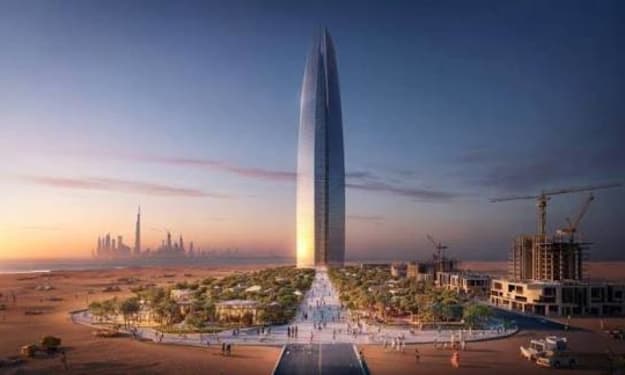
Forget Burj Khalifa and Shanghai Tower: Saudi Arabia Now Readies a Bold 1km-Tall Skyscraper. AI-Generated.
Saudi Arabia is once again turning heads in the world of architecture and urban development, this time with a plan that could redefine the global skyline. Forget the Burj Khalifa in Dubai or Shanghai Tower in China—both marvels of modern engineering. The Kingdom is reportedly preparing to construct a skyscraper that will soar an astonishing 1,000 meters (1 km) into the sky, setting a new benchmark for ambition and innovation. The announcement comes amid Saudi Arabia’s Vision 2030 initiative, a sweeping plan to diversify the country’s economy, reduce its dependence on oil, and establish itself as a hub for tourism, technology, and global investment. Building the world’s tallest skyscraper is both a symbol of national pride and a statement of intent, signaling Saudi Arabia’s desire to compete with other global metropolises in terms of architectural prowess and urban sophistication. The proposed tower, still in its early conceptual stages, promises to be a landmark on multiple fronts. Engineers and architects are reportedly exploring cutting-edge construction techniques, including ultra-lightweight materials, reinforced steel frameworks, and innovative wind-resistance systems. At 1 kilometer tall, the building will require a foundation capable of supporting immense weight while withstanding seismic activity and extreme weather conditions. The project is expected to push the boundaries of engineering much like the Burj Khalifa did when it was completed in 2010. Beyond engineering, the skyscraper is intended to be a multipurpose vertical city. Early designs suggest a combination of luxury residences, office spaces, hotels, observation decks, and entertainment facilities. Developers envision it as not just a building but a destination, capable of attracting tourists from around the globe while providing state-of-the-art amenities for residents and businesses. The concept of a self-contained vertical city is increasingly popular in mega-cities around the world, and Saudi Arabia aims to demonstrate that such ambition is possible in its own backyard. However, the challenges are significant. Constructing a 1 km skyscraper involves tackling wind forces that increase dramatically at higher altitudes, ensuring the safety and comfort of elevators over unprecedented heights, and creating systems to supply water, electricity, and emergency services efficiently. The logistics of construction, from transporting materials to coordinating thousands of workers, will require meticulous planning and the latest in project management technologies. Experts say that every detail, from the shape of the tower to its façade design, will be critical in ensuring that it is both structurally sound and visually iconic. Financial considerations are equally important. Mega-projects of this scale often require tens of billions of dollars in investment. Saudi Arabia has a track record of funding large-scale developments, from the futuristic city of NEOM to massive cultural and tourism projects. Yet, the economic viability of the skyscraper will depend on its ability to attract tenants, visitors, and businesses over the long term. Analysts suggest that incorporating mixed-use features and tourist attractions is key to making the investment sustainable. Culturally, the skyscraper represents a shift in perception for Saudi Arabia. Historically known for its conservative approach to urban development, the Kingdom is embracing bold, globally visible projects to enhance its soft power and showcase modernization. Such landmark buildings are more than infrastructure—they are symbols of ambition, progress, and technological prowess. If completed, the 1 km tower could redefine the city skyline, drawing comparisons not only to Dubai or Shanghai but to other global centers of innovation. Critics, however, have raised environmental concerns. The construction and maintenance of a super-tall skyscraper have significant energy demands and ecological footprints. Questions around sustainability, water use, and energy efficiency will be under scrutiny, particularly as Saudi Arabia positions itself as a player in renewable energy and environmental innovation. Integrating green technology, smart energy systems, and sustainable urban design will be crucial to ensuring that the project aligns with global expectations of responsible development. Despite these challenges, excitement is palpable. Architects, engineers, and urban planners worldwide are watching Saudi Arabia’s ambitions with keen interest. The project is expected to attract international expertise, foster innovation in construction technologies, and inspire a new generation of skyscraper designs. Beyond its physical stature, the tower promises to be a symbol of Saudi Arabia’s future—a bold statement that blends tradition with futuristic ambition. In a world where cities compete for global attention through landmarks and architecture, Saudi Arabia’s 1 km skyscraper could be the next iconic symbol. It reflects a country striving to diversify its economy, assert its presence on the global stage, and redefine what is possible in urban design. From the Burj Khalifa to the Shanghai Tower, the race for the sky has been ongoing—but Saudi Arabia may soon take it to an entirely new level.
By Fiaz Ahmed Brohi23 days ago in Longevity
The Return of the Aircraft Carrier Truman Is Being Seen as a Snub to the Navy in the War of the Future. AI-Generated.
The return of the U.S. aircraft carrier USS Harry S. Truman to active deployment has sparked debate far beyond naval circles. While some see it as a show of enduring American naval power, others interpret the move as a symbolic snub—particularly in the context of how modern warfare is rapidly evolving. In an era dominated by drones, cyber warfare, hypersonic missiles, and artificial intelligence, the decision to once again lean heavily on a traditional aircraft carrier has raised uncomfortable questions about whether the Navy is preparing for the wars of tomorrow or clinging to the strategies of yesterday. A Floating Symbol of 20th-Century Power For decades, aircraft carriers have been the ultimate symbol of U.S. military dominance. These massive floating airbases project power thousands of miles from American shores and allow the U.S. to strike almost anywhere in the world. The Truman, like other Nimitz-class carriers, represents this legacy—housing nearly 5,000 sailors, dozens of fighter jets, and unmatched logistical capability. However, critics argue that what once made carriers indispensable now makes them vulnerable. Their sheer size, cost, and visibility turn them into high-value targets in a battlefield increasingly defined by precision strikes and long-range weapons. The “War of the Future” Looks Very Different Modern conflict is no longer limited to sea, land, and air. Cyber attacks can cripple infrastructure without a single shot fired. Drones can swarm targets at a fraction of the cost of traditional aircraft. Hypersonic missiles can reach targets faster than current defenses can respond. In this context, sending a massive carrier strike group into contested waters can appear less like a strategic necessity and more like a risky gamble. Critics argue that the return of the Truman reflects an outdated mindset—one that prioritizes visible force projection over adaptability and technological evolution. A Snub to Naval Innovation? Many analysts and serving officers believe the Navy’s future lies in distributed lethality—smaller, more agile platforms networked together, harder to detect and cheaper to replace. Unmanned surface vessels, autonomous submarines, and land-based missile systems are increasingly viewed as the backbone of next-generation naval warfare. Against this backdrop, recommitting to a traditional carrier is seen by some as sidelining innovation. It sends a message that, despite years of discussion about transformation, the Navy still defaults to familiar tools when tensions rise. This perception has led to frustration among those advocating for faster modernization. They argue that resources devoted to maintaining and protecting carriers like the Truman could instead accelerate investment in emerging technologies that are more relevant to future conflicts. The Strategic Signal to Allies and Rivals Supporters of the decision counter that the Truman’s return is not about nostalgia—it’s about deterrence. Aircraft carriers remain powerful political tools. Their presence reassures allies, signals commitment, and demonstrates readiness in a way few other assets can. Yet even here, the message is mixed. To technologically advanced rivals, the deployment may signal predictability rather than strength. Adversaries have spent years developing strategies specifically designed to neutralize carriers, including anti-ship ballistic missiles and advanced surveillance systems. Cost Versus Capability The financial reality cannot be ignored. A single carrier strike group costs billions of dollars to build, maintain, and operate. In contrast, drone fleets and missile systems can be produced and deployed at a much lower cost, often with greater strategic flexibility. Critics argue that continuing to rely on carriers drains resources from areas where the Navy needs to grow most urgently. In a future conflict defined by speed, dispersion, and digital dominance, the cost-benefit equation of aircraft carriers looks increasingly questionable. Why the Carrier Still Matters—For Now Despite the criticism, aircraft carriers are not obsolete—yet. They remain unmatched in their ability to sustain prolonged air operations without relying on foreign bases. In regions where access is limited or politically sensitive, carriers still provide options no other platform can. The real issue, many experts say, is not the existence of carriers like the Truman, but over-reliance on them. Using them as one component of a broader, more flexible strategy may still make sense. Treating them as the centerpiece of future war planning may not. A Turning Point for Naval Strategy The return of the USS Harry S. Truman highlights a deeper tension within modern military thinking. It represents a crossroads between tradition and transformation, between proven power and emerging threats. Whether history views this moment as a wise assertion of strength or a missed opportunity for innovation will depend on what comes next. If the Navy pairs legacy platforms with bold technological change, the carrier’s return may be justified. If not, it risks becoming a powerful symbol—not of dominance, but of reluctance to adapt in a rapidly changing world.
By Fiaz Ahmed Brohi25 days ago in Longevity
What You See Is Not a Ship: At 385 Metres Long, Havfarm Is the World’s Largest Offshore Salmon Farm. AI-Generated.
At first glance, Havfarm looks like a massive industrial ship drifting across the open sea. Stretching an astonishing 385 metres in length, it rivals some of the world’s largest oil tankers and aircraft carriers. But Havfarm is not a ship at all. It is the world’s largest offshore salmon farm, a floating giant designed to transform the future of global aquaculture.
By Fiaz Ahmed Brohi26 days ago in Longevity