
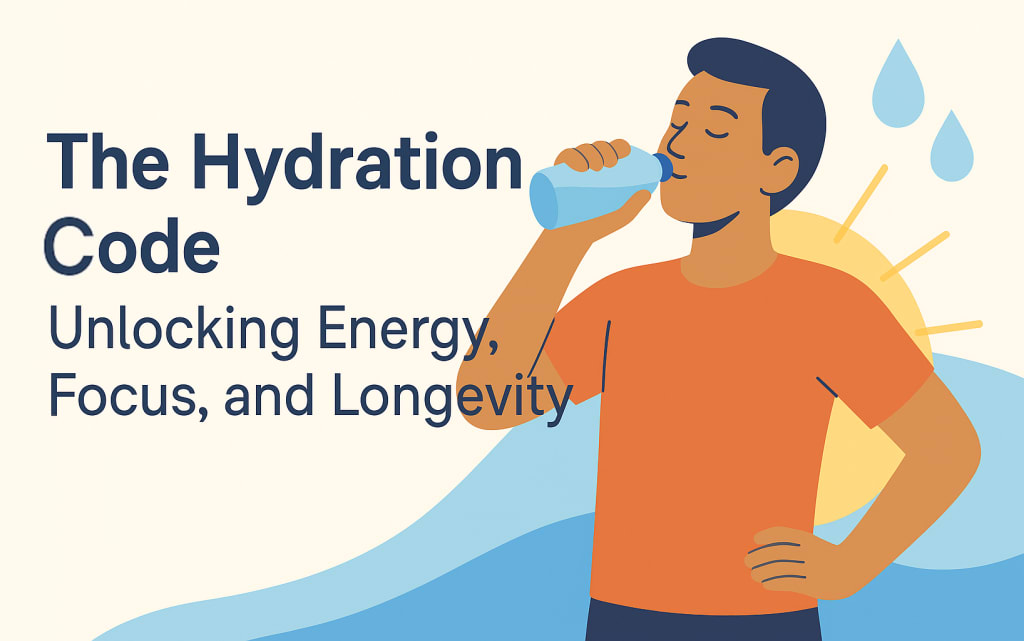
The Hydration Code: Unlocking Energy, Focus, and Longevity
Why mastering your daily water intake is one of the simplest and most effective steps for a longer, sharper, and more vibrant life.

The Overlooked Key to Longevity
When people discuss longevity, they often focus on diet trends, expensive supplements, or intense exercise routines. However, there’s a much simpler habit that significantly affects how long and well we live: hydration. Water does more than just quench thirst. It supports every cell in your body, delivers nutrients, and helps regulate your internal temperature, keeping you at your best. Still, many adults live with mild dehydration without realizing it. Over time, this unnoticed neglect weakens your energy, mental performance, and possibly even your lifespan.
The Science of Water and the Body
- Your body consists of about 60% water, and every system relies on it. For example, your brain is roughly 75% water, which is why dehydration is linked to brain fog, headaches, and trouble concentrating. Your blood, muscles, skin, and organs need regular hydration to perform essential tasks like transporting nutrients, removing waste, and lubricating joints. Even mild dehydration—just a 1-2% loss of body water—can hurt your physical performance and mental clarity. Over decades, ongoing dehydration can lead to kidney strain, aging skin, and reduced resistance to illness.
Hydration and Longevity: The Research
Recent studies show that proper hydration is closely linked to lower biological aging markers. A 2023 study by the National Institutes of Health suggested that people with higher serum sodium levels—a sign of low hydration—were more likely to show signs of accelerated aging and had a greater risk of chronic diseases. This means that something as simple as drinking enough fluids each day could lower your risk of age-related issues like heart disease, metabolic disorders, and even cognitive decline.
How Much Water Do You Really Need?
The "8 glasses a day" rule is a helpful starting point, but it’s not one-size-fits-all. Your ideal hydration needs depend on your weight, activity level, climate, and diet. The U.S. National Academies of Sciences recommends about 3.7 liters (125 ounces) daily for men and 2.7 liters (91 ounces) for women, from all drinks and foods combined. This includes water-rich foods like cucumbers, melons, oranges, and soups. A more personalized approach is to aim for about 30-35 ml of water per kilogram of body weight. For a 70 kg person, that’s about 2.1-2.45 liters a day, adjusted for sweat, exercise, and environment.
Beyond Water: Quality Matters Too
Not all water is equal. While tap water in most developed countries is safe to drink, the mineral content—especially magnesium, calcium, and potassium—can differ. These minerals, also known as electrolytes, are vital for nerve function, muscle contraction, and fluid balance. If you mainly drink distilled or reverse-osmosis filtered water, make sure you’re getting minerals from food or electrolyte supplements. Also, be careful with flavored waters and sports drinks that have high added sugar or artificial sweeteners.
Morning Hydration: A Game Changer
One of the most beneficial habits for better hydration and longevity is drinking a glass or two of water first thing in the morning. After 6-8 hours of sleep, your body is naturally dehydrated. Replenishing fluids right away can kickstart your metabolism, improve alertness, and flush out waste built up overnight. Adding some mineral-rich sea salt or a squeeze of lemon can enhance electrolyte balance and digestion.
Signs You’re Not Drinking Enough
Since thirst is a delayed signal, relying only on it to know your water needs can be misleading. Signs of mild dehydration include ongoing fatigue, dry mouth, darker urine, headaches, muscle cramps, and difficulty concentrating. Chronic dehydration can also lead to dry skin, constipation, and lower heat tolerance. If you often experience these symptoms, tracking your fluid intake for a few days can help you spot gaps.
Hydration Strategies That Stick
Staying consistent is essential. Here are some simple tips to make hydration easier:
- Carry a reusable water bottle everywhere, ideally with volume markers.
- Set timed reminders on your phone or smartwatch.
- Pair drinking water with habits you already have—like before coffee, after bathroom breaks, and with meals.
- Infuse water with fruits, herbs, or cucumber for variety.
- Use apps that make tracking your daily water goals more fun.
Overhydration: The Other Extreme
Though rare for most people, drinking too much water in a short time can cause hyponatremia—dangerously low sodium levels in the blood. This is more common in endurance athletes who drink excessive plain water without replacing electrolytes. Balance is crucial: aim for steady hydration throughout the day rather than consuming large amounts at once.
The Ripple Effect of Proper Hydration
When you consistently meet your hydration needs, the benefits extend beyond just quenching thirst. You’re likely to notice improved mood, sharper mental focus, better skin elasticity, smoother digestion, and enhanced workout performance. Over time, these small daily choices can lead to better heart health, stronger kidney function, and reduced risk of age-related decline.
Your Daily Hydration Blueprint
If you want to make hydration a key part of your longevity plan, here’s a simple guide:
- Morning: 500-600 ml of water with minerals or lemon.
- Mid-morning: 300-400 ml, possibly herbal tea.
- Lunch: 300-400 ml with or after your meal.
- Afternoon: 300-500 ml, ideally before you feel thirsty.
- Evening: 200-300 ml, tapering off before bed to avoid sleep disruption.
- Extra: Add fluids for workouts, hot weather, or illness.
The Bottom Line
Longevity isn’t achieved solely in the gym or kitchen—it’s built sip by sip, day after day. Hydration is one of the simplest, cheapest, and most effective tools you have for extending both your life and the quality of your health. By listening to your body’s needs, choosing good water sources, and making hydration a regular habit, you’re not just satisfying your thirst—you’re investing in years of clearer thinking, better energy, and greater resilience. It’s the ultimate low-effort, high-reward strategy for living well for longer.
About the Creator
Kyle Butler
Sharing fascinating facts and insights from every category, with a special passion for longevity and healthy living. Join me on a journey to discover the secrets of a longer, better life.
Keep reading
More stories from Kyle Butler and writers in Longevity and other communities.
The Morning Reset: 5 Minutes to Boost Your Day
Mornings have the power to define your entire day. A sluggish, distracted start can make everything feel heavier, while a focused, intentional morning can give you momentum that lasts until bedtime. The good news? You don’t need a complicated ritual or an hour-long routine to get the benefits. Just five intentional minutes can reset your mind, energize your body, and prepare you for the challenges ahead. This is The Morning Reset — a short, powerful sequence that blends science, psychology, and practicality to help you make every day count.
By Kyle Butler6 months ago in Longevity
Day 4 of Quitting
If this is how sobriety feels, maybe it’s better to go through life a little buzzed… this, along with other hits like, I want to kill myself, I wish I was dead, and I’m going to throw myself off a bridge have been the only thoughts on rotation these past few days. I promise myself that if, in a month, I still feel like this (‘this’ meaning despondent, full of rage, and simultaneously numb) I can go back to smoking. Until mid-February though? Nicotine is off the table.
By sleepy drafts27 days ago in Longevity


Comments
There are no comments for this story
Be the first to respond and start the conversation.