
Why Changes in a Florida Ocean Current Could Wreak Havoc Worldwide
Formal / News Style Scientists warn a weakening Atlantic current near Florida could disrupt global climate and seas Shifts in the AMOC threaten weather, sea levels, and ecosystems across continents 🔹 Neutral & Informative Florida’s Gulf Stream is key to a global ocean circulation system now under stress Changes in a critical Atlantic current may trigger worldwide environmental impacts 🔹 Impactful A fragile ocean current off Florida could ripple across the planet, scientists caution

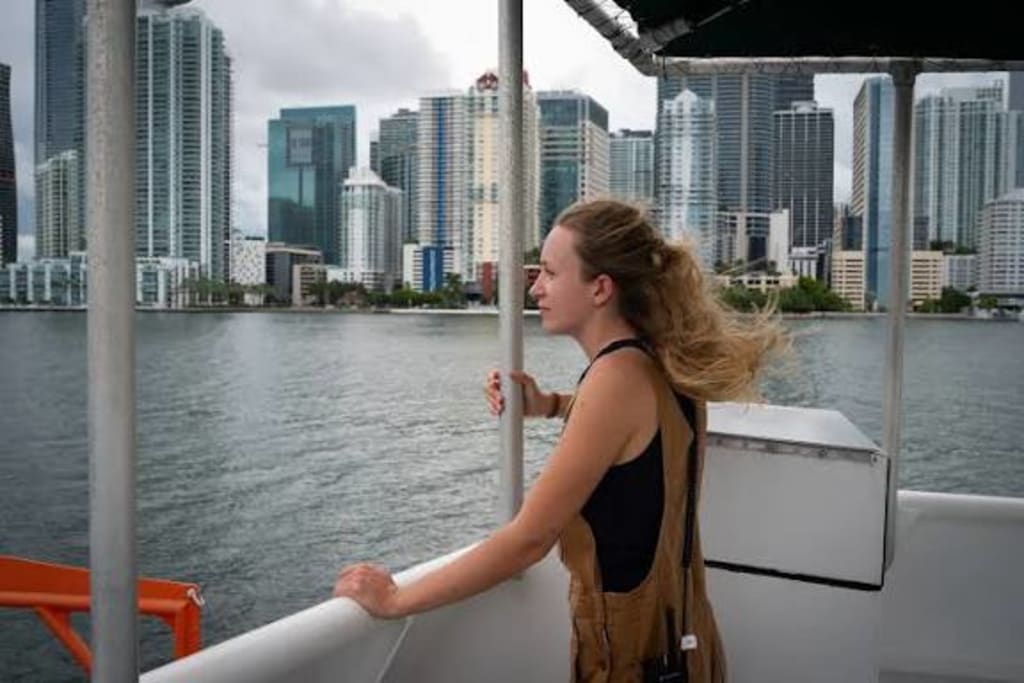
Scientists are increasingly concerned that shifts in a major ocean current near Florida could have dramatic consequences far beyond the Sunshine State’s beaches. The Atlantic Meridional Overturning Circulation (AMOC) — a crucial component of the global ocean conveyor belt — plays a key role in regulating climate, weather patterns, and sea levels. Recent research suggests that the AMOC is weakening, raising alarms about potential ripple effects on ecosystems, economies, and weather systems across the globe.
What Is the AMOC?
The AMOC is a system of ocean currents driven by differences in water temperature and salinity. Warm water from the tropics travels northward along the Atlantic’s surface, bringing heat to Europe and eastern North America. As the water cools and becomes saltier, it sinks and returns southward at depth. This circulation helps distribute heat and nutrients throughout the oceans, influencing climate patterns on both sides of the Atlantic.
A key part of this system passes just off the coasts of Florida and the southeastern United States. There, warm surface waters begin their long journey toward northern latitudes. Scientists use satellite data and deep‑sea sensors to monitor the strength and health of the current.
Signs of Weakening
Evidence from recent studies indicates that the AMOC has been slowing over the past century, and may be approaching a critical tipping point. One 2025 study published in Nature found the circulation’s overall strength is weaker than at any time in the last millennium. While scientists continue to debate how close the system is to collapse, there is broad agreement that human‑induced climate change — particularly the influx of freshwater from melting ice sheets — is a major factor.
Freshwater dilutes the ocean’s salinity, making surface waters less dense and less likely to sink. Because sinking dense water is what propels the circulation, changes in salinity disrupt the entire system.
Potential Global Impacts
1. Altered Climate Patterns
A robust AMOC helps keep Western Europe’s climate milder than other regions at similar latitudes. If the current weakens further, this regulatory effect could diminish. Europe could face colder winters and increased variability in weather, even as the planet overall continues to warm. Parts of Canada and the northeastern United States might also experience disrupted climatic norms.
At the same time, changes in the AMOC can influence the position and strength of the Intertropical Convergence Zone (ITCZ), which helps drive tropical rainfall. Shifts here could alter monsoon patterns in West Africa, impacting agriculture and water supplies for millions.
2. Rising Sea Levels on the U.S. East Coast
The AMOC helps keep sea levels lower along the U.S. East Coast by pulling water northward. If the circulation weakens, this “pull” reduces, causing water to pile up along the shoreline. Scientists warn that coastal cities such as Miami, Charleston, and New York could see accelerated sea level rise, exacerbating flooding during storms and king tides.
3. Changing Marine Ecosystems
Ocean currents distribute nutrients that support marine food webs from plankton to top predators. A weakened circulation could disrupt these nutrient flows, with implications for commercial fisheries and biodiversity. Regions relying on fish as a food source or economic driver could see stocks decline or shift location, affecting livelihoods and food security.
4. Extreme Weather Events
While not the sole driver of hurricanes, shifts in ocean temperatures and circulation influence tropical storm formation and intensity. A destabilized AMOC could create conditions for stronger or more unpredictable storms in the Atlantic basin, compounding risks for coastal communities.
Why Florida is Key
Florida sits at a strategic point in the AMOC’s surface pathway. The Gulf Stream — the fast, warm surface current that flows along Florida’s east coast — is a visible part of the larger AMOC system. Variations in the strength of this current can serve as an early indicator of broader circulation changes.
Scientists warn that sustained weakening of the AMOC near Florida could be a red flag for deeper disturbances. Ongoing monitoring via ocean buoys, satellites, and international research collaborations aims to improve predictions and understand thresholds that could signal abrupt shifts.
What Can Be Done?
There is no quick fix to a weakening AMOC, as the underlying driver is global warming caused by greenhouse gas emissions. Reducing emissions, transitioning to cleaner energy, and protecting polar ice are long‑term strategies that could help stabilize ocean circulation. International cooperation in climate policy, data sharing, and early warning systems will be critical.
Conclusion
The AMOC is a powerful but fragile component of Earth’s climate system. Changes near Florida — once considered a distant concern — could ultimately set off a cascade of effects felt across continents and oceans. From climate extremes and sea level rise to food and economic security, the health of this ocean current underscores how interconnected our world truly is.
About the Creator
Fiaz Ahmed
I am Fiaz Ahmed. I am a passionate writer. I love covering trending topics and breaking news. With a sharp eye for what’s happening around the world, and crafts timely and engaging stories that keep readers informed and updated.
Keep reading
More stories from Fiaz Ahmed and writers in Longevity and other communities.
Sea Levels Are Rising Globally. Around Greenland, They’re Projected to Fall
As climate change accelerates, one of its clearest signals is rising sea levels around much of the world. This increase threatens coastal cities, low‑lying islands, and millions of people with flooding, erosion, and salt‑water intrusion into freshwater systems. Yet an unexpected scientific finding has emerged: sea levels around the island of Greenland are projected to fall in coming decades, even as the global average rises. Global Sea Level Rise: A Broad Picture Across the planet, sea levels are increasing due to two well‑established effects of human‑driven climate change. First, as the ocean absorbs heat trapped by greenhouse gases, water expands in volume — an effect called thermal expansion. Second, ice sheets and glaciers on land, particularly in Greenland and Antarctica, are melting and adding freshwater to the ocean. Together, these processes have already caused global mean sea level to rise by roughly 8–9 inches (about 20–23 cm) since the late 19th century, with the rate of increase accelerating in recent decades. My NASA Data Rising sea levels are a major concern for coastal communities worldwide. Even modest increases amplify the reach of storm surges, worsen tidal flooding, and erode beaches and infrastructure. Projections suggest rising sea levels will continue through the 21st century under all but the most aggressive emissions reductions. My NASA Data The Greenland Exception Despite this overall trend, new research published in Nature Communications reveals a striking local deviation around Greenland: relative sea levels there are expected to drop rather than rise by 2100. State of the Planet The key to this counter‑intuitive projection lies in how both the land and the surrounding water respond to the rapid loss of ice mass on Greenland’s enormous ice sheet. Gravitational Effects The Greenland Ice Sheet is immense — in some places more than a mile thick — and its sheer mass has a measurable gravitational pull on surrounding ocean water. The weight of this ice also depresses the Earth’s crust beneath it. Harvard Magazine As the climate warms and the ice sheet shrinks, two important things happen: Gravitational pull weakens — With less ice mass, the local gravitational attraction on nearby water lessens, so water that was “pulled” toward Greenland redistributes away from the region. Land rebound occurs — Known as glacial isostatic adjustment (GIA), the Earth’s crust gradually uplifts as the weight of ice lessens. This vertical land motion can raise the land itself relative to the ocean surface. State of the Planet These combined effects mean that even though melting ice contributes to higher seas globally, the relative height of the sea around Greenland can fall because both gravitational and crustal changes overpower the local impact of added meltwater. How Much and What It Means According to the latest models, relative sea levels around Greenland could fall by about 0.9 meters (nearly 3 feet) under a low‑emissions scenario by the end of this century, and by as much as 2.5 meters (8.2 feet) under a high‑emissions pathway. State of the Planet This projected drop is not uniform; it varies by coastal area and model assumptions, but the trend is robust across scenarios. This doesn’t mean the water disappears — globally, oceans still gain volume — but locally, the sea surface near Greenland lowers relative to the land. State of the Planet Local Impacts and Challenges A falling sea level in Greenland has unique implications: Infrastructure and access: Harbors and fishing ports built for current water levels could become too shallow, complicating boat access and maritime activity. Coastal communities: Towns that depend on present sea levels for transportation, subsistence fishing, and supply routes may need to adapt to changing conditions. euronews Glacier behavior: Lower relative sea levels may affect how certain glaciers meet the ocean, potentially stabilizing some glacier fronts, though scientists are cautious about this outcome due to many uncertainties in glacier dynamics. State of the Planet Why This Matters This phenomenon highlights a critical point: sea level change is not uniform worldwide. While global averages are important for understanding broad climate patterns, specific regions can experience very different local outcomes due to complex interactions between ice sheets, land motion, and gravity. Belfer Center The Greenland case also underscores how melting ice interacts with Earth’s physical systems in ways that aren’t immediately intuitive. As scientists refine their models with decades of observational data, regional projections become more precise — but they also reveal how intricate and interconnected the climate system truly is. State of the Planet Looking Ahead For most of the world, the challenge remains rising seas and the need to protect vulnerable coasts. But Greenland’s example serves as a potent reminder that climate change’s effects are uneven and must be understood at both global and local scales. Continued research and monitoring will be essential as communities plan for a future shaped by changing oceans.
By Fiaz Ahmed about 6 hours ago in Longevity
Novo Nordisk Sues Hims & Hers Over Cheaper Copycat Wegovy Pills and Injections
In a significant legal development in the pharmaceutical industry, Novo Nordisk, the maker of the popular weight loss drug Wegovy, has filed a lawsuit against Hims & Hers Health Inc., accusing the company of producing and selling cheaper, copycat versions of Wegovy’s pills and injections. The lawsuit, which has raised concerns about intellectual property rights, competition, and the future of weight loss treatments, has sent shockwaves through the healthcare market.
By Ayesha Lashari7 days ago in Longevity




Comments
There are no comments for this story
Be the first to respond and start the conversation.