
Internalised Ableism
And the struggle to be accepted


The question didn’t arrive all at once.
It appeared slowly, quietly, in moments I didn’t expect. When I used my walking stick on a day I could technically manage without it. When I parked in a disabled space and stepped out of the car without limping. When I told someone about my diagnosis and watched their eyes search my body for confirmation.
Am I disabled enough?
It’s not a medical question. It’s a psychological one. And it’s born from living in a world that constantly measures disability against visibility.
Internalised ableism is what happens when society’s doubts become your own.
It teaches you that disability must look a certain way to be legitimate. That struggle must be obvious to be believed. That access must be justified through visible limitation. When your illness is invisible or fluctuating, you are left in a constant state of negotiation — not just with others, but with yourself.
You begin to question your own needs.
There are days when I hesitate before using my walking stick, not because I don’t need it, but because I worry about what it communicates. I wonder if people will think I’m exaggerating. I wonder if I’ll be judged for using support on a day when my body appears cooperative.
I have caught myself minimising my symptoms in conversation. Saying “I’m fine” when I’m not. Downplaying fatigue. Avoiding honesty to make others more comfortable.
This is how internalised ableism survives — through silence, through self-censorship, through the quiet erosion of self-trust.
One of the most damaging aspects of invisible illness is its inconsistency. There is no single, stable version of disabled identity. There are only fluctuations. Good hours. Bad hours. Manageable days. Impossible days.
This variability makes it easy to feel like an imposter in your own experience.
On days when I function well, I question whether I deserve accommodations. I question whether I’m “really” disabled. I compare myself to others who appear to struggle more visibly. I wonder if I am taking up space that belongs to someone else.
This thinking is not rational, but it is learned.
Society creates hierarchies of disability — visible versus invisible, physical versus neurological, constant versus fluctuating. These hierarchies are not medical. They are social. They determine who is believed, who is supported, and who is doubted.
Invisible illness exists in the margins of those hierarchies.
You are disabled, but not visibly enough.
You are struggling, but not consistently enough.
You are in pain, but not provably enough.
This creates a unique form of psychological tension. You are simultaneously managing a chronic condition and defending the legitimacy of your experience — often without saying a word.
Internalised ableism doesn’t just affect how you see yourself. It affects how you move through the world.
It makes you hesitate before asking for help.
It makes you push beyond safe limits to avoid judgment.
It makes you prioritise other people’s comfort over your own wellbeing.
It teaches you that needing access is something to apologise for.
Access is not something that must be earned through suffering.
The turning point for me wasn’t sudden confidence. It was exhaustion. I grew tired of negotiating my own reality. Tired of questioning whether my needs were valid enough. Tired of measuring myself against expectations that were never designed for bodies like mine.
I began to understand that disability is not defined by comparison. It is defined by lived experience.
I do not need to prove my disability to strangers.
I do not need to perform limitation to deserve support.
I do not need to justify access on days when I appear well.
My experience is real, whether or not it is visible.
Internalised ableism thrives on the idea that legitimacy must be externally confirmed. Healing begins when you stop outsourcing belief.
This doesn’t mean the doubt disappears entirely. There are still moments when I question myself. Still moments when I hesitate. Still moments when I feel the weight of expectations pressing against my choices.
Those moments no longer define me.
I am not disabled only on my worst days.
I am not legitimate only when I am visibly struggling.
I am not required to suffer publicly to deserve support.
I am disabled enough.
Not because someone else believes it.
But because I live it.
About the Creator
Keep reading
More stories from Millie Hardy-Sims and writers in Motivation and other communities.
Am I Disabled Enough?
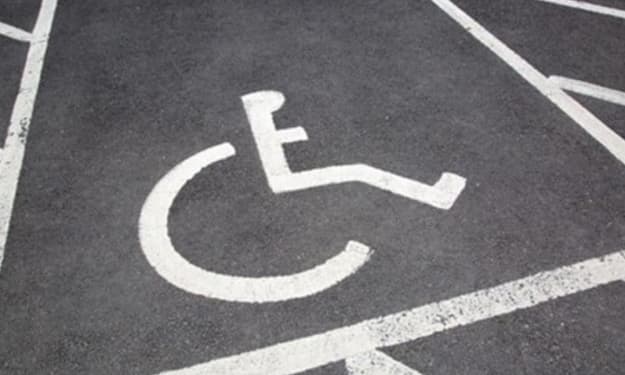
The hardest part of using my disabled parking badge isn’t the walking. It’s the watching. The moment I step out of the car, I feel it. The pause. The glance. The subtle double-take as someone tries to reconcile what they see with what they believe disability should look like. Their eyes flick from my face to the badge, then back again, searching for evidence that justifies my presence.
By Millie Hardy-Simsabout 23 hours ago in Motivation
One Hard Thing
Stop me if you’ve heard this one before: You have the number, you know your schedule- you’ve even picked out the perfect day and time to make this appointment. Shoot, you’ve even picked out alternative days and times just in case their schedules can’t accommodate you!
By Taylor Rigsby19 days ago in Motivation
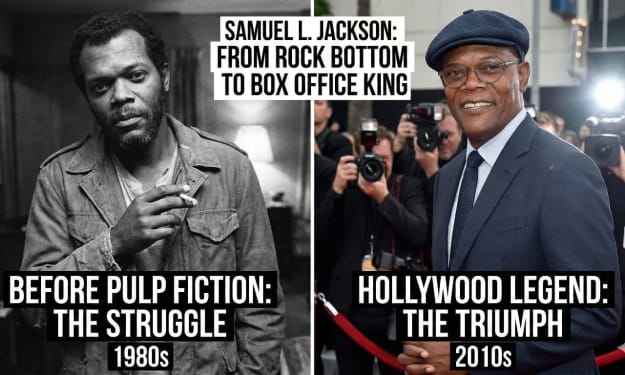
The Fury of the Late Bloomer: How Samuel L. Jackson Conquered Hollywood from Rock Bottom
The powerful true story of Samuel L. Jackson, who overcame severe addiction and career stagnation to become the highest-grossing actor of all time, proving it's never too late to rewrite your legacy.
By Frank Massey 5 days ago in Motivation
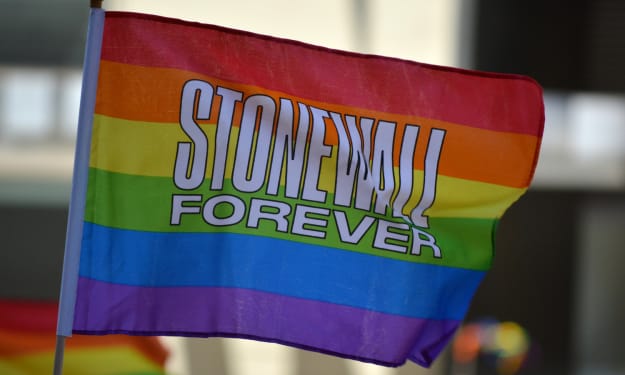
The Pride Flag and the Diversion
For nearly a decade, the LGBTQIA Pride Flag rippled in the wind at Christopher Park, a kaleidoscope of color staked into the soil of America’s first national monument to LGBTQIA+ liberation. That flag came down this week. Federal officials, citing new guidance from the Trump Administration, silently lowered the rainbow flag from its pole across the street from the Stonewall Inn. The birthplace of the modern gay rights movement now flies only the United States flag.
By Tim Carmichael2 days ago in Pride

Comments
There are no comments for this story
Be the first to respond and start the conversation.